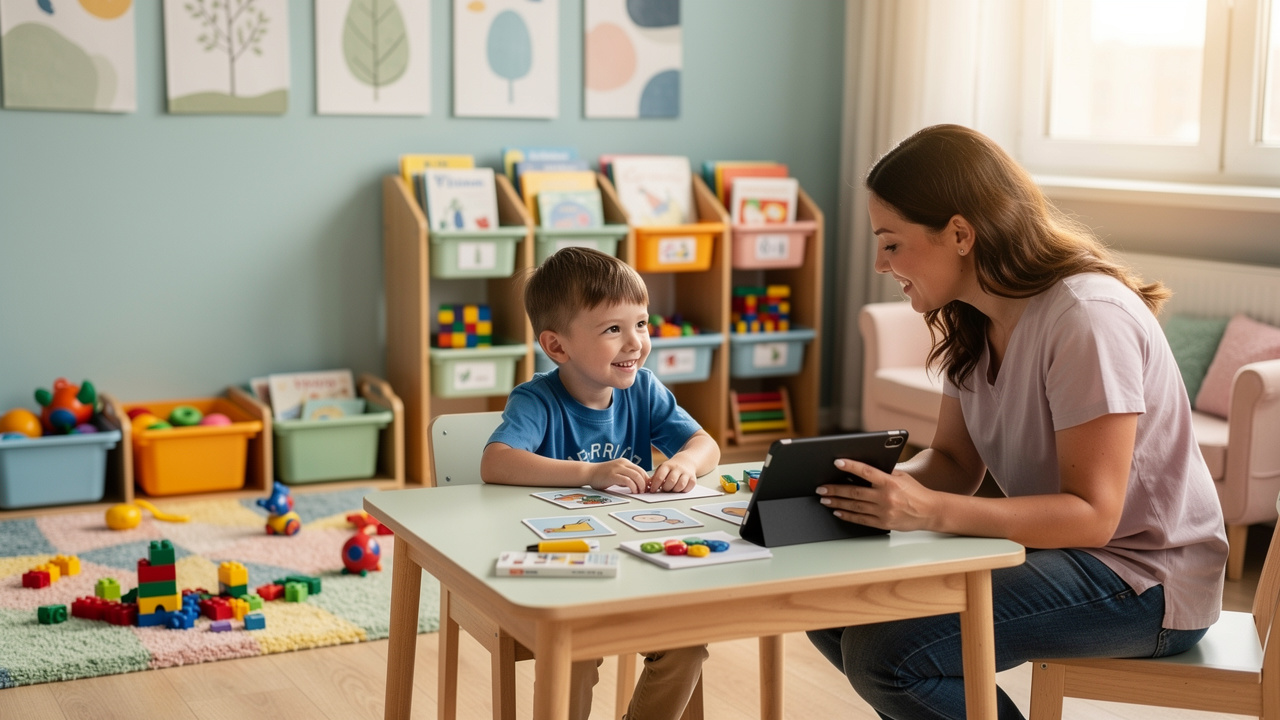
Navigating social interactions can be tough for children with autism, can’t it? That’s why developing effective social skills is so important for helping them build meaningful connections. By using evidence-based strategies that cater to each child’s unique needs, caregivers and therapists can create warm environments where these kids can truly thrive socially.
But here’s the big question: how can families put these strategies into action to see real improvements in communication and interaction? 🤔 In this article, we’ll explore ten impactful methods designed to boost social skills in children with autism. Together, we’ll pave the way for greater confidence and engagement in their communities. Let’s dive in!
At Rori Behavioral Innovations Inc., we implement by taking a data-driven approach to Applied Behavior Analysis (ABA) therapy, focusing on . We know that are essential for identifying specific interpersonal challenges and can guide the implementation of . This helps us create for improving social skills in children with autism that truly make a difference.
This personalized approach not only boosts engagement but also utilizes , creating a . We utilize fun methods such as as during our therapy sessions. This provides kids a chance to by utilizing .
Research shows that can lead to . This really highlights how effective our evidence-based strategies for improving social skills in children with autism are in fostering meaningful connections. So, let’s explore this together! We’re here to help you every step of the way!

, including , offer individuals with autism the opportunity to learn and practice vital social skills in a friendly setting. Think of it as a safe space where kids can , join group activities, and get direct guidance. At Rori Care, our clinical leadership team is all about and helping young individuals thrive. We make sure these are not just effective but also enjoyable!
Research shows that are effective , significantly . This makes them a key part of . Plus, when we equip caregivers with ABA principles and strategies, we empower them to actively. It’s all about that maximizes the impact of these interventions. Let’s explore this together and see how we can make a difference!

When it comes to kids with autism, important interpersonal skills include , , maintaining eye contact, and understanding personal space. Developing effective interventions relies on . By honing in on these areas, therapists can develop that help kids navigate social interactions more smoothly. For example, teaching kids to recognize facial expressions can in social situations. Did you know that research shows direct teaching in emotional recognition can lead to a 52% improvement in ? This really highlights how vital these skills are for fostering community involvement and emotional well-being.
is another key area. often employs , incorporating fun methods like role-playing and peer support to give kids practical opportunities to practice in encouraging environments. As therapists emphasize the importance of and conversation starters, they implement , thus opening doors for young people to build . Plus, it’s essential to equip caregivers with the knowledge and tools to support these behavioral goals through active involvement and data collection. This collaborative approach not only maximizes the impact of interventions but also creates a consistent and nurturing environment for kids, boosting their overall development. Let’s explore this together!

Organized activities, including group games and role-playing scenarios, serve as in children with autism and related disorders to connect with others. These fun activities give youngsters a chance to in a way that feels engaging and enjoyable. For example, teach kids about sharing and patience, while can with friends.
By incorporating evidence-based strategies for improving into therapy, kids can develop essential social skills in a . This not only builds their confidence but also enhances their ability to interact with others. At Rori Care, we’re committed to neurodiversity, ensuring that these strategies are tailored to empower both youth and their caregivers. Together, we can enhance in their development.
Let’s explore this together! We’re here to !

can be a game-changer for youth with autism, offering a wealth of benefits like , communication skills, and self-confidence. When kids engage in these , they can without the pressures that often come with unstructured settings. For instance, studies show that youngsters involved in programs like those at Rori Care see real progress in how they connect with peers and navigate their communities.
Take , for example. They’re all about , which are so important for community growth. Plus, these organized settings help ease anxiety by providing clear expectations and routines, making kids feel more secure. Evidence suggests that participating in these programs can lead to a , allowing for smoother interactions.
Overall, are essential in utilizing in children with autism. This paves the way for . As William Sanders, Sr., the CEO of Rori Care, puts it, "Structure in after-school hours helps reduce anxiety for kids with behavioral health needs."
And it doesn’t stop there! Engaging in organized recreational activities also boosts interpersonal skills through interactions with teachers, friends, and counselors, ultimately enhancing emotional well-being. Rori Care is dedicated to , equipping them with the tools and knowledge they need to support their children's growth effectively.
Let’s explore this together! We’re here to help you every step of the way!

Comprehensive studies show just how effective can be for enhancing interaction abilities among youth with autism. For many parents, navigating these challenges can feel overwhelming. But guess what? A found that these interventions serve as , effectively enhancing communication and peer interactions!
Think about it: key practices like modeling, role-playing, and are examples of that have consistently delivered positive results for individuals on the autism spectrum. For instance, research suggests that , including peer-mediated methods, lead to significant advancements in . One study even found that individuals in peer-mediated groups experienced greater improvements that lasted over time. Isn’t that encouraging?
And let’s not forget about the role of . By equipping caregivers with the knowledge and skills they need, Rori Care helps them support their children more effectively. This means better and improved family dynamics. When caregivers feel empowered, it enhances professional interventions and supports the implementation of , creating a stable and supportive environment for kids as they develop those crucial .
So, how can we use this strong evidence? Practitioners can confidently incorporate into their organized , promoting meaningful interpersonal growth for young individuals with autism. Let’s explore this together! We’re here to help you every step of the way!

are fantastic tools that can be used as . These resources make it easier for young people to grasp cues and expectations, turning interactions into a more manageable experience. For instance, in different social situations, guiding kids on how to respond in various contexts.
, offering a clear outline of daily activities that fosters predictability and helps reduce anxiety. Research shows that , including the use of narratives about interactions, can lead to . In fact, studies reveal that kids who engage with these resources often show enhanced interpersonal skills and communication abilities, which can be attributed to .
By incorporating into therapy, children can navigate social interactions with greater confidence and develop . The incorporates , ensuring that supports are tailored to each child's unique needs and enhancing their learning experience.
Involving caregivers in this journey is key! When parents actively participate, it can lead to - 90% of kids see significant gains when the recommended hours are fully utilized. Additionally, participating in , led by trained therapists, can utilize , enhancing communication and relationships among peers and further supporting a child's growth in social competence.
And here’s something important: is the only scientifically proven treatment for autism that insurance covers, making it a viable option for families looking for effective interventions. Let’s explore this together and find the best path for your child!

Effective communication strategies are essential for kids with autism to connect with their peers, incorporating . Think about it: when we model appropriate language, give clear instructions, and encourage active listening, we really help enhance their . Plus, opens up new ways for these young individuals to express themselves.
At Rori Care, our caring clinical leadership team is all about . We empower caregivers with , like using , to help their kids reach their . By implementing , therapists can significantly enhance kids' communication abilities, foster meaningful connections, and improve their overall social skills.
Let’s explore this together! We’re here to !

Establishing best practices for social skills groups is essential for utilizing in children with autism, enabling them to learn and interact positively. Think about it: when the setting is organized, it creates a safe space where children can feel secure and focused. Plus, having helps everyone understand what’s expected and track their progress, which is key for staying motivated and successful.
really make a difference, too! They ensure that each child gets the they need. This tailored approach not only boosts engagement but also allows therapists to adjust activities on the fly based on how the kids are responding. And let’s not forget about mixing things up with , games, and collaborative projects - these can really enhance the learning experience!
Research supports this, indicating that evidence-based strategies for improving , including , significantly enhance interpersonal skills. By incorporating during sessions, therapists can really help kids learn and develop their social skills, along the way.
So, let’s explore this together! If you’re a parent looking for ways to support your child, remember that you’re not alone. We’re here to !

When it comes to developing , organized methods like (SST) really shine. They focus on specific abilities and provide . Research shows that in children with autism lead to more consistent improvements. For instance, kids who participate in SST often show and friendships compared to those who engage in .
But let’s not forget the value of ! It’s crucial for sparking spontaneous interactions and creativity, both of which are key for real-world socialization. So, what’s the best way forward? A that combines with opportunities for might just be the ticket. This way, children can thrive in various , feeling confident and connected.
Let’s explore this together! By blending evidence-based strategies for improving in children with autism, we can help our kids develop the they need to navigate the world around them.

Enhancing social skills in children with autism is a journey that’s both critical and achievable! By focusing on personalized approaches and structured interventions, caregivers and professionals can create supportive environments that really foster meaningful interactions. Tailored strategies ensure that each child gets the attention they need to thrive socially, paving the way for better communication and relationship-building.
Throughout this article, we’ve highlighted some key insights about the importance of structured activities, visual supports, and effective communication techniques. Engaging children in organized settings not only helps reduce anxiety but also gives them a chance to practice essential social skills in a safe and enjoyable way. The teamwork between caregivers and therapists is so important in maximizing the impact of these interventions, leading to real improvements in social competence and emotional well-being.
As research continues to evolve, the need for effective methods to enhance social skills in children with autism remains crucial. Embracing a balanced approach that combines structured and unstructured opportunities will empower young individuals to navigate their social worlds with confidence. Remember, using evidence-based strategies isn’t just about teaching skills; it’s about fostering connections and building a community where every child can flourish.
Let’s explore this together! We’re here to help you every step of the way!
What is Rori Care's approach to improving social skills in children with autism?
Rori Care utilizes evidence-based strategies within Applied Behavior Analysis (ABA) therapy, focusing on personalized strategies tailored to each child's unique needs. This approach involves thorough assessments by healthcare professionals to identify specific interpersonal challenges and guide the implementation of targeted interventions.
What methods does Rori Care use during therapy sessions?
Rori Care employs fun methods such as role-playing, interpersonal stories, and peer modeling to enhance social skills. These evidence-based strategies provide children with opportunities to practice and improve their skills in a safe and supportive environment.
How effective are structured interventions for children with autism?
Research shows that structured interventions significantly boost communication, reciprocity, and joint attention in children with autism. They provide a friendly setting for role-playing and group activities, making them a key part of evidence-based strategies for improving social skills.
What crucial social skills are targeted for children with autism?
Important interpersonal skills for children with autism include recognizing emotions, starting conversations, maintaining eye contact, and understanding personal space. Focusing on these areas helps therapists develop effective interventions.
How does teaching emotional recognition impact children with autism?
Direct teaching in emotional recognition can lead to a 52% improvement in the quality of life for autistic individuals, highlighting the importance of these skills for fostering community involvement and emotional well-being.
Why is caregiver involvement important in the social skills development process?
Equipping caregivers with ABA principles and strategies empowers them to actively support their children's behavioral goals. This collaborative approach maximizes the impact of interventions and creates a consistent and nurturing environment for children.
What is the overall goal of Rori Care's interventions?
The overall goal is to create a nurturing environment where children with autism can thrive socially, improving their communication and interaction skills to foster meaningful connections.