Creating inclusive environments for children with autism isn’t just a noble goal; it’s a vital necessity for fostering a sense of belonging in our communities. 🌟 As public spaces become more accessible, thoughtful strategies can truly enhance the experiences of autistic individuals and their families. But here’s the question: how can we, as communities, adapt to meet the diverse needs of these children while ensuring they feel welcomed and supported?
In this article, we’ll explore ten impactful inclusion strategies that can transform public spaces, making them more accommodating and enriching for children with autism. Let’s dive in and discover how we can make a difference together!
At Rori Behavioral Innovations Inc., we understand that every child with autism has unique needs. That’s why we offer tailored just for them. In community settings, where challenges can vary, this personalized approach makes a real difference.
Our clinicians use to create . These strategies help kids , , and engage with their surroundings effectively. It’s all about , which opens up more opportunities for for children with autism in public spaces.
Let’s explore this together! We’re here to !
Implementing is essential, and one way to achieve this is by making communal areas . Think about it: , lower noise levels, and quiet spots where individuals can take a breather when things get a bit too much. These elements can really make a difference! Calming colors, soft textures, and varied décor all contribute to a .
Research shows that are vital for in public spaces, as they help boost engagement, lift moods, and improve behavior. By reducing stress, these spaces encourage participation and interaction. By prioritizing these , community spaces can effectively employ inclusion strategies for children with autism in public spaces, that empower autistic individuals to connect more fully with their surroundings.
Architects and designers emphasize that creating inclusive environments goes beyond just making things accessible. It’s about understanding the of everyone involved, ensuring that each person has the opportunity to thrive in community settings by implementing inclusion strategies for children with autism in public spaces. The ASPECTSS framework - focusing on Acoustics, Space, Predominance of visual cues, Environmental quality, Safety, and Syracuse elements - serves as a guiding principle to help achieve these goals.
Let’s explore this together! By embracing these ideas, we can foster a sense of belonging and support for all.

Reducing in public spaces can feel like a daunting task, but it’s all about identifying those triggers and putting some thoughtful in place. For instance, can be a game-changer for kids with autism, acting as a shield against overwhelming sounds. And how about creating ? These little havens allow kids to retreat and recharge whenever they need a breather. Plus, can really help, giving young ones a heads-up for transitions and boosting their confidence as they navigate their surroundings.
It’s also super important to of sensory overload. When they understand and , they can respond in ways that make kids feel supported, even in bustling environments. Lately, there’s been a push to enhance community spaces with , like noise reduction strategies and visual aids. These changes can truly transform the experience for kids with developmental differences and their families. By embracing in public spaces, we can create a more welcoming environment that allows our youngsters to thrive in their communities. Let’s explore this together!

Community acceptance plays a vital role in promoting in public spaces to ensure inclusivity for children with . 🌟 Awareness campaigns, workshops, and are fantastic ways to inform everyone about . They help dispel myths and . For instance, when local businesses adopt , it can truly enhance the experiences of in our neighborhoods.
As Temple Grandin wisely said, '.' This quote beautifully highlights the importance of recognizing and valuing neurodiversity. Moreover, campaigns that emphasize inclusion strategies for children with autism in public spaces can shift societal perceptions, creating environments where individuals with developmental differences feel welcomed and supported. By nurturing a culture of understanding, we can empower autistic individuals to thrive and fully participate in our communities.
Let’s explore this together! By working hand in hand, we can make a difference and ensure that everyone feels included and valued.

like picture schedules, social narratives, and are essential components of in public spaces. These tools help set , making it easier for young ones to understand what to expect in different situations. Plus, when is led by trained therapists, it boosts their and communication within a group, helping them build better relationships.
Caregivers and staff can utilize in public spaces by bringing visual aids into communal areas and pairing them with group therapy to create smoother interactions and ease anxiety for autistic children. This way, outings can become a lot more enjoyable! Let’s explore this together and see how these tools can help your child thrive!

Educating staff about and best practices is so important for in our communities. Think about it: when personnel are trained in areas like , , and spotting , they can really make a difference for . By equipping them with the right knowledge and skills, we can develop in public spaces, making these areas more inclusive for everyone who visits.
Successful have shown that when staff understand and empathize with autistic individuals, interactions improve significantly. This not only but also enhances the experience for all patrons. It’s all about and support, right? Let’s explore this together and see how we can make our communities more inclusive!

Creating spaces that truly welcome autistic individuals requires a thoughtful approach that caters to their unique needs. For instance, can make a world of difference. And let’s not forget about where kids can retreat during those overwhelming sensory moments. It’s all about using that help minimize discomfort, right?
and open layouts are also key. They allow for different , promoting comfort for everyone. When communities prioritize in public spaces, they enhance the experiences of these children and foster where all families can thrive.
Just think about it: airports with sensory rooms and parks featuring are perfect examples of how can positively impact accessibility and engagement. It’s inspiring to see how these designs can create a welcoming atmosphere for all. Let’s explore this together and see how we can make our environments more accommodating!

Supporting autistic individuals in is all about providing the right that cater to their unique needs. Think about - these can include fidget toys, weighted blankets, and noise-canceling headphones. They’re not just items; they play a crucial role in helping kids feel comfortable and engaged. often highlight how these kits can really ease anxiety and promote self-regulation, allowing young people to interact more positively with their environment.
And let’s not forget the importance of having designated sensory rooms or where children can take a breather. These spaces offer a much-needed escape from overwhelming stimuli and help with and social interaction. It’s heartening to see how sensory kits and quiet areas have been successfully implemented in various , proving their effectiveness in fostering inclusivity.
By prioritizing these sensory accommodations, public spaces can implement in public spaces, creating a welcoming atmosphere for all families. This not only but also helps them thrive in their surroundings. So, let’s explore this together and see how we can make our communities more supportive!

Getting the community involved in inclusion strategies is so important for . Think about it: when we host , we’re not just informing people - we’re building . It’s heartening to see how local businesses that embrace inclusive practices can create a welcoming atmosphere, encouraging families affected by developmental disorders to get more involved.
When companies team up with , it really boosts these efforts. They can provide resources and support that benefit everyone in the community. in promoting understanding and acceptance, which leads to more . By about inclusion, we can make public spaces more accessible and inviting for everyone, no matter their abilities.
This collaborative approach not only raises awareness but also nurtures a - something that’s crucial for the well-being of individuals with autism and their families. Plus, when we equip caregivers with knowledge and skills based on ABA principles, they can effectively . By focusing on active involvement and , families can create a consistent and supportive environment that really maximizes the impact of interventions.
Let’s explore this together! We’re here to help you every step of the way!

with autistic youngsters can be both fulfilling and a bit challenging for parents. To make these outings smoother, why not prepare a ? Fill it with like:
These little tools can really help . Plus, using to outline the day's activities can provide that much-needed structure and predictability, which is so important for minimizing stress. And don’t forget about ! They can set clear expectations and make .
Timing is everything! Visiting communal areas during off-peak hours allows children to gradually adjust to their surroundings, which can help prevent overwhelming situations. By implementing , you can not only encourage a more enjoyable outing but also create . With these , families can navigate these environments with greater confidence and ease. Let’s explore this together!
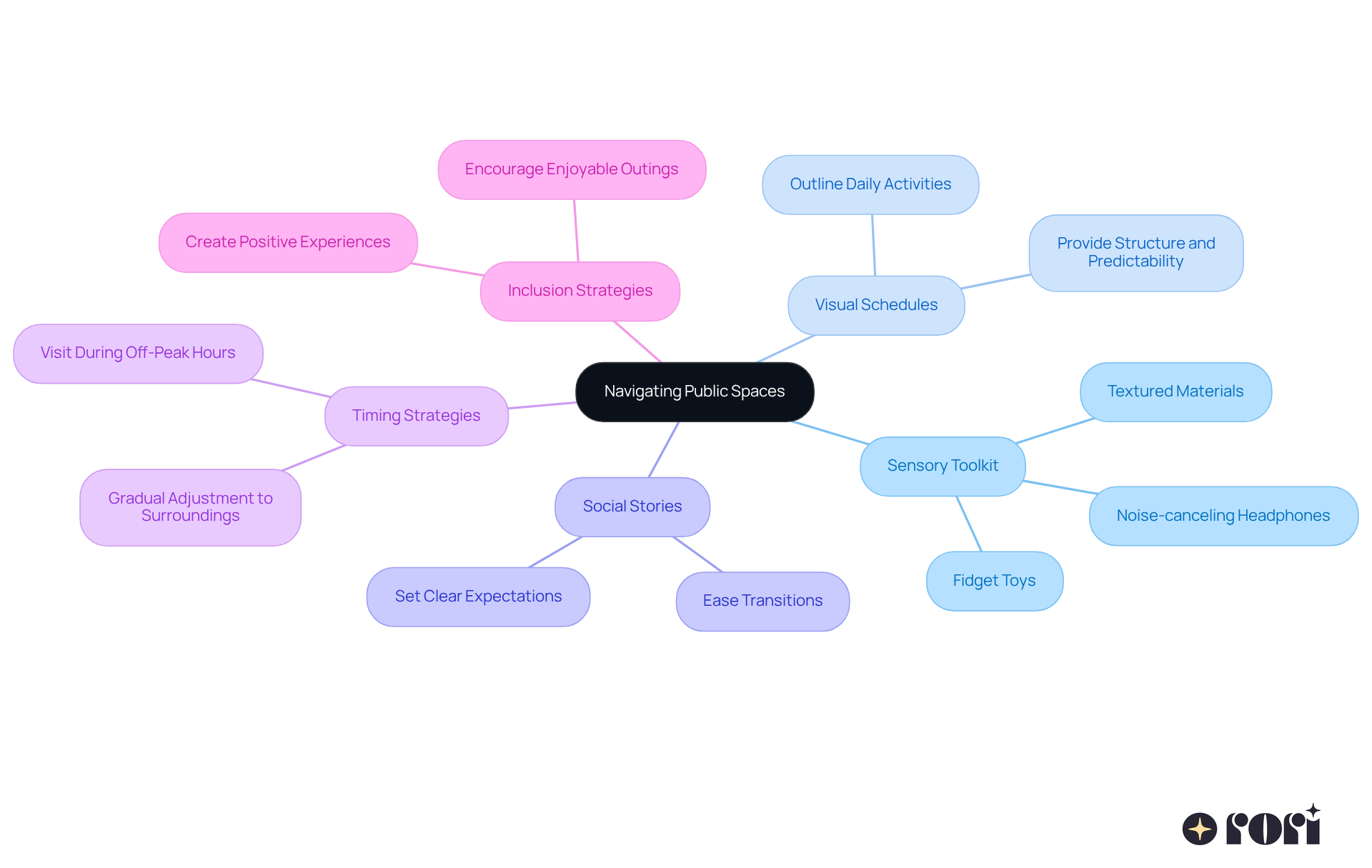
Creating inclusive public spaces for children with autism isn’t just a nice idea; it’s a must! It helps foster understanding and acceptance in our communities. In this article, we’ve explored some great strategies that can really enhance the experiences of autistic individuals in public settings. It’s all about tailored approaches that meet their unique needs.
Let’s talk about some key insights! First up, creating sensory-friendly environments can make a world of difference. Then there’s the implementation of visual supports, which really helps in communication. And don’t forget about promoting community acceptance! Each of these strategies plays a vital role in reducing sensory overload and ensuring that children with autism feel welcomed and understood. Plus, training staff and engaging the community are essential for building a culture of inclusivity where everyone can thrive together.
So, what’s the takeaway? The call to action is clear: by prioritizing these inclusion strategies, we can transform public spaces into welcoming environments for all. It’s so important to keep advocating for autism-friendly practices, raising awareness, and fostering a spirit of collaboration. Together, we can make a profound difference, ensuring that every child has the chance to engage, interact, and flourish in their community. Let’s explore this together!
What is Rori Care's approach to ABA therapy for children with autism?
Rori Care offers customized ABA therapy tailored to the unique needs of each child with autism, utilizing data-driven evaluations to create focused strategies that help children navigate social interactions, manage sensory overload, and engage effectively with their surroundings.
How does Rori Care support children with autism in public spaces?
Rori Care's clinicians develop personalized strategies that build confidence and independence in children, facilitating meaningful inclusion in public spaces.
What are sensory-friendly environments and why are they important?
Sensory-friendly environments are communal areas designed with soft lighting, lower noise levels, and quiet spots to help reduce stress for individuals with autism. These environments enhance engagement, lift moods, and improve behavior, making inclusion strategies more effective in public spaces.
What design principles contribute to creating sensory-friendly environments?
Key design principles include calming colors, soft textures, varied décor, and attention to acoustics, space, visual cues, environmental quality, safety, and other elements outlined in the ASPECTSS framework.
How can sensory overload be reduced in public areas?
Sensory overload can be reduced by identifying triggers and implementing strategies such as using noise-canceling headphones, creating designated quiet zones, and providing visual schedules to help children navigate transitions.
What role does staff training play in supporting children with autism in public spaces?
Training staff to recognize signs of sensory overload and understand developmental disorders and sensory sensitivities enables them to provide appropriate support, creating a more welcoming environment for children with autism and their families.
What is the overall goal of implementing inclusion strategies for children with autism in public spaces?
The goal is to create enriching experiences that empower autistic individuals to connect more fully with their surroundings, fostering a sense of belonging and support within the community.