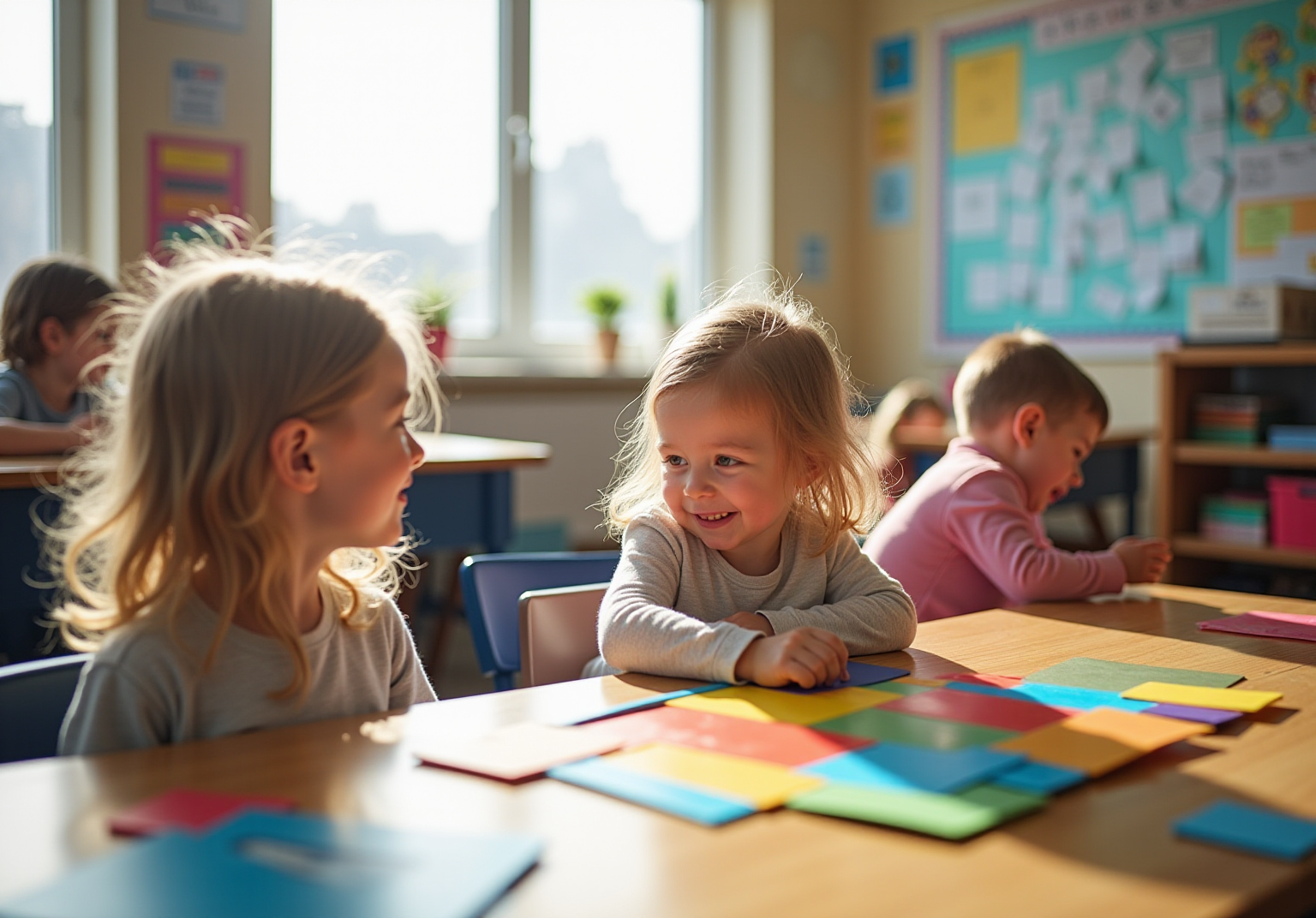
Play is often seen as just a simple pastime, but for children with autism, it’s so much more - it’s a powerful way to communicate and connect with others. By using play-based ABA approaches, caregivers and therapists can create fun environments that not only grab children's attention but also boost their communication skills significantly.
As families look for effective ways to support their children's growth, a common question pops up: how can these playful methods fit into daily routines to encourage meaningful interactions? Let’s explore this together! In this article, we’ll dive into ten innovative play-based strategies that can truly change the communication landscape for children with autism. We’ll share insights and practical tips that parents and caregivers can use right away.
So, are you ready to discover how play can open up new avenues for connection? We’re here to help you every step of the way!
At Rori Behavioral Innovations Inc., we’re all about making learning fun! We know that integrating into ABA therapy can really help young learners thrive. By using play as a therapeutic tool, we create that not only capture children's interests but also .
Imagine your child laughing and playing while learning important social skills - how wonderful is that? This approach fosters a , encouraging that are so vital in . Research shows that for can lead to significant improvements in interaction skills, making them a key strategy in autism therapy.
So, let’s explore this together! If you’re a parent looking for ways to , know that we’re here to help you every step of the way!

are so important for weaving learning into our everyday routines and interactions. Consider playtime; it's an ideal opportunity for caregivers to apply by encouraging little ones to express their needs or ideas. This not only makes learning feel natural but also helps kids use language in meaningful ways, which boosts their ability to remember and apply what they've learned. By blending learning into daily tasks, children get to practice communication in real-life situations, making it all the more relevant and impactful.
For example, using play-based ABA approaches for improving communication in autism, role-playing during play can really help kids build , giving them the tools to navigate interactions with their peers. As Dr. Temple Grandin beautifully puts it, "," reminding us of the . This perspective emphasizes the importance of tailoring learning experiences to fit each child's unique needs, leading to better outcomes in their communication development.
It's also crucial to remember that autism is a spectrum, which reinforces the need for . At Rori Care, we’re dedicated to improving , ensuring that 90% of kids make significant strides when the recommended hours are fully utilized with active caregiver involvement. Our behavior care engine updates intervention and skill acquisition plans after each session, based on the progress made, allowing for a flexible and responsive treatment process.
By equipping caregivers with ABA principles and strategies, we empower them to support their children's behavioral goals, ultimately leading to . To effectively implement , caregivers can create chances for interaction during everyday activities - like asking open-ended questions during meals or playtime. Let’s explore this together! We’re here to help you every step of the way!

, including and role-playing scenarios, are essential when implementing . These activities set clear goals that encourage young ones to join in on . For example, when kids play board games, they naturally ask for turns and share their thoughts and feelings about the game.
Adding to these sessions can really boost engagement! They provide that make interaction even more fun. Research shows that organized activities, such as play-based ABA approaches for improving communication in autism, can significantly enhance interaction skills; studies reveal that kids involved in turn-taking games show improved social exchanges and verbal abilities.
create a safe space for kids to build essential , helping them navigate social situations with more confidence. By incorporating organized activities and token boards into therapy, clinicians can create enjoyable opportunities for kids to enhance their expressive skills in a supportive environment through play-based ABA approaches for improving communication in autism. Plus, these activities foster teamwork, cooperation, and .
Let’s explore this together! If you’re looking for ways to support your child’s , consider these engaging activities!

, like picture cards or visual schedules, can really enhance play activities and improve interaction. For example, using picture cards during a game helps little ones express their choices or feelings more clearly. These supports provide a visual reference that can ease frustration and boost understanding, making communication easier for individuals with autism through .
This approach aligns beautifully with the principles of play-based ABA approaches for improving communication in autism, which focus on being patient-centered and adaptable to each child's . By actively involving caregivers in the process and sharing , they can make informed choices that positively impact their child's progress. This leads to and a .
Let’s explore this together! By incorporating these visual aids, you’re not just helping your child communicate better; you’re also creating a more engaging and supportive environment for everyone involved. We’re here to help you every step of the way!

Encouraging is so important for helping kids with autism improve their ! When they join in or work on projects together, it opens up fantastic opportunities for them to practice starting conversations, responding to others, and picking up on social cues. Research shows that can lead to moderate improvements in social competence, with effect sizes around 0.51. That’s a pretty good sign that these activities really help boost interaction skills!
For instance, games like ECHOES and even have shown great promise in creating fun, interactive settings that encourage kids to engage socially. These interactions not only but also help build friendships and , giving kids a real sense of belonging. By integrating into therapy, children can learn in a nurturing and enjoyable environment, ultimately leading to better social interactions and emotional well-being.
At Rori Care, our clinical leadership team is dedicated to promoting . This commitment enhances the support we provide to youth. Plus, the variety of play-based ABA approaches for improving communication in autism underscores the importance of inclusive research that considers the unique perspectives of autistic individuals. Let’s explore this together and see how we can make a difference!

Modeling is a fantastic way to support kids with autism! in fun and engaging ways. For instance, during playtime, you might or express excitement about a game. This not only gives clear examples but also where learning can thrive.
Research shows that when caregivers actively model interactions, kids often see great improvements in their . Isn’t that encouraging? Studies have found that can lead to . Experts agree that incorporating modeling into for really helps kids understand and motivates them to use these skills naturally.
By joining in on activities and showcasing interaction skills, caregivers can have a . It makes learning enjoyable and effective! So, let’s explore this together and see how you can make a difference in your child’s journey!

Incorporating technology into for improving can significantly . Tools like and interactive apps offer fun ways for young ones to express themselves during play. For example, apps that let kids choose images or phrases not only make interactions more lively but also turn learning into an enjoyable experience.
Studies show that kids using speech-generating devices often see big improvements in their communication skills, especially in social settings. At Rori Care, our clinical leadership team is all about neurodiversity and supporting young individuals. We know how important caregiver involvement is in this journey.
Experts agree that play-based ABA approaches for can , aiding in both language development and social skills. Plus, using can really amp up the effectiveness of these tools. When adults engage with kids during screen time, it transforms those moments into .
By finding a good balance between screen time and creating screen-free zones, caregivers can foster an environment where kids feel empowered to communicate. This, in turn, enhances their overall development. Rori Care also offers that equip families with the knowledge and skills they need to support their children's growth effectively. This leads to informed decision-making and better behavioral outcomes.
Let’s explore this together! We’re here to help you every step of the way!

Involving families in by utilizing ! Parents are encouraged to jump right in during these sessions, where they can practice . This teamwork not only strengthens the bond between parent and child but also ensures that those interaction skills are consistently supported in different environments.
Research shows that when parents take an active role, the benefits can be significant, with an effect size of around 0.55. That really highlights how important ! By utilizing play-based ABA approaches for improving communication in autism, parents can engage in activities together to pick up on their kids' preferences and needs, which helps them develop that promote .
This equips caregivers with the knowledge and skills they need to support their children's . It creates a that boosts both the child's development and the family's overall well-being. To make the most of these benefits, it’s a great idea for parents to carve out specific times each week for . This way, they can ensure consistent practice and engagement.
Rori Care offers specialized programs that guide families in implementing these strategies effectively. Let’s explore this together and see how we can make a positive impact!

Regular input and support during recreational activities are crucial for utilizing and helping kids enhance their interaction skills. Imagine a young one successfully saying a word or phrase during playtime-when you give them immediate praise or a small reward, it really reinforces that behavior! This not only motivates them to keep developing their interaction abilities but also in future encounters.
Studies show that . Kids often show remarkable progress in expressing themselves clearly and understanding others better. Experts highlight that incorporating is vital in [play-based ABA approaches for improving communication in autism](https://rori.care/post/exploring-the-benefits-of-dra-in-aba-therapy-a-comprehensive-guide), as it nurtures communication and strengthens social bonds. Play-based ABA approaches for improving communication in autism are a vital part of effective therapy!
And let’s not forget about the role of caregivers. The means treatment plans can adapt based on progress reports and . When caregivers learn about ABA principles and strategies, they become even better at . This partnership among experts-like speech-language pathologists and behavior analysts-and families ensures that skills are reinforced in everyday settings. Ultimately, this leads to better behavioral outcomes and informed decision-making.
So, let’s explore this together! Your makes a world of difference!
To truly help kids enhance their , it’s crucial to use for improving communication in autism by practicing these abilities in various fun settings. For example, let’s encourage our little ones to use their communication skills not just during structured therapy sessions but also while hanging out with friends or family. You know, studies show that kids who get to play in various tend to adapt better in their communication skills, which really helps them grow overall.
Did you know that research found 47% of kids in intensive ABA programs reached normal intellectual and educational functioning? This highlights just how crucial it is to have . Experts agree that [play-based ABA approaches for improving communication in autism](https://rori.care/post/10-effective-functional-communication-training-aba-examples-you-can-use-today) are fundamental to learning! It sparks creativity and builds resilience, making it essential for children to . This way, they can smoothly transfer those skills to real-life situations.
So, let’s explore this together! Encouraging our kids to can make a world of difference in their communication journey.

Integrating play-based ABA approaches into autism therapy opens up a wonderful way to boost communication skills! By tapping into the natural joy of play, caregivers and therapists can create lively learning environments that encourage interaction, expression, and social skills in children with autism. This method not only makes learning fun but also highlights the need for personalized strategies that cater to each child's unique needs.
Throughout this article, we’ve explored various strategies, like naturalistic teaching methods, structured play activities, and visual supports. Each of these techniques plays a vital role in helping children communicate better, whether it’s through role-playing, peer interactions, or using technology. The evidence shows that these engaging methods lead to real improvements in social skills and verbal abilities, proving just how effective play-based therapy can be.
The importance of play in developing communication skills really can’t be overstated. Encouraging families to get involved in these therapeutic play sessions can amplify the benefits, creating a supportive network that enhances learning and builds emotional connections. By embracing these play-based approaches, caregivers can empower their children to thrive in communication, paving the way for a brighter future filled with meaningful interactions and social connections. Let’s explore this together!
What is Rori Care's approach to ABA therapy?
Rori Care utilizes play-based approaches in ABA therapy, integrating activity-based methods to create engaging experiences that enhance children's interaction skills while making learning enjoyable.
How does play-based ABA therapy benefit children with autism?
Play-based ABA therapy fosters a positive learning environment, encourages spontaneous interactions, and has been shown to lead to significant improvements in communication and interaction skills for children with autism.
What are naturalistic teaching methods?
Naturalistic teaching methods involve weaving learning into everyday routines and interactions, such as playtime, to help children express their needs and ideas naturally, enhancing their communication skills in real-life situations.
Why is personalized teaching important in autism therapy?
Autism is a spectrum, and personalized teaching approaches are crucial to meet each child's unique needs, leading to better outcomes in their communication development.
How does Rori Care ensure effective treatment plans?
Rori Care improves treatment plans based on progress reports and ensures that 90% of kids make significant strides when the recommended hours are utilized with active caregiver involvement. Their behavior care engine updates intervention plans after each session based on progress.
What role do caregivers play in supporting children's communication goals?
Caregivers are equipped with ABA principles and strategies to support their children's behavioral goals, enhancing interaction outcomes by creating opportunities for communication during everyday activities.
What structured play activities can foster communication development?
Organized play activities, such as turn-taking games and role-playing scenarios, encourage verbal exchanges and help children build essential interpersonal skills in a supportive environment.
How can token boards enhance engagement during play activities?
Token boards provide visual cues and rewards that make interaction more enjoyable, boosting engagement in structured play activities and enhancing children's social exchanges and verbal abilities.