

Introduction
Understanding the ins and outs of executive functioning can feel overwhelming, especially for parents of children with autism. These cognitive processes are crucial for handling daily tasks, like organizing schedules and managing emotions. In this article, we’ll share practical strategies that can help you boost your child’s executive functioning skills, paving the way for more independence and success.
But how can you, as a caregiver, effectively put these techniques into practice in a way that truly resonates with your child’s unique needs and learning style? Let’s explore this together!
Imagine a day where your child feels confident managing their own schedule or regulating their emotions during a tough moment. It’s possible! By understanding these skills better, you can create a supportive environment that encourages growth. We’re here to help you every step of the way!
Establish Consistent Routines
Establishing a daily routine with , meals, schoolwork, play, and bedtime can really help young people manage their time and responsibilities better. You know, research shows that having creates the best learning environment, especially for kids with autism. It allows them to focus on tasks without feeling overwhelmed by uncertainty.
are particularly effective! They provide a clear picture of daily activities, helping kids anticipate transitions and ease anxiety. Plus, sticking to a consistent routine can by creating chances for . When these schedules are followed successfully, they and give kids the chance to practice self-help skills, which ultimately enhances their executive functioning.
Caregivers can offer on developing in children with autism by weaving organized routines into daily life, which creates a nurturing atmosphere that improves focus, reduces stress, and supports overall well-being. And let’s not forget about the principles of ! By understanding concepts like reinforcement and prompting, caregivers can make informed choices that positively influence their child’s progress, leading to lasting behavioral improvements.
So, let’s explore this together! If you’re looking for ways to implement these strategies, we’re here to help you every step of the way!

Use Visual Supports for Clarity
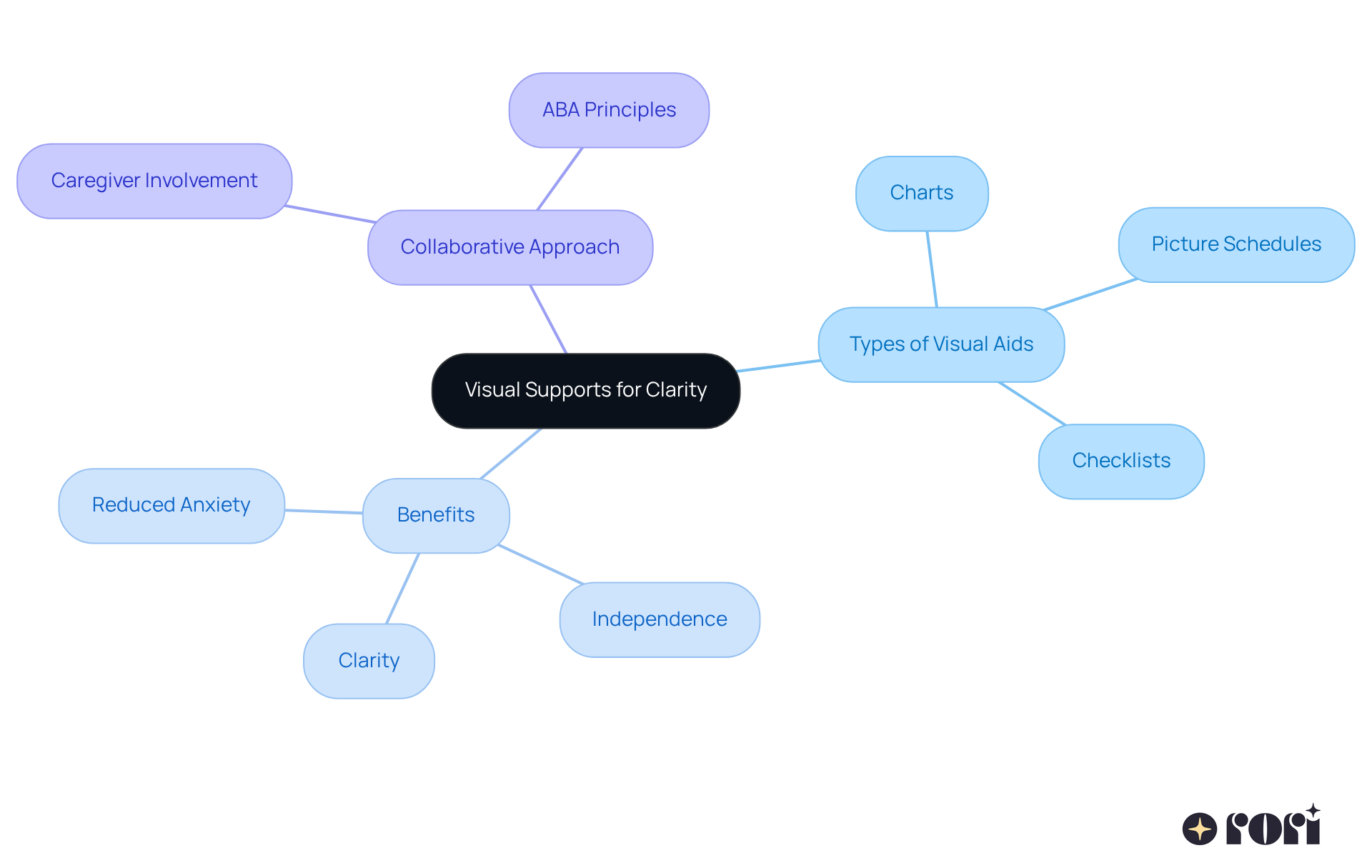
Integrating like charts, picture schedules, and checklists can really help your child understand their daily responsibilities and expectations. These tools make complex instructions simpler, giving young learners a clear reference point to stay organized and focused. Research shows that can boost completion rates among autistic youth, easing anxiety around transitions. For example, break tasks into manageable steps, letting kids process information at their own pace.
Educators have noticed that using visual aids not only clarifies expectations but also encourages independence. This helps students with more confidence. One teacher shared that consistent routines created through visual schedules help young learners follow along without needing constant verbal cues. By actively involving caregivers in using these , Rori Care offers on developing in children with autism, empowering families to align with therapeutic strategies and making more effective.
This collaborative approach not only promotes consistency at home but also leads to better for individuals with Autism Spectrum Disorders. Plus, as caregivers learn more about , they become better equipped to make informed decisions that positively impact their child’s progress. Let’s explore this together!
Teach Problem-Solving Skills
Encouraging your kids to tackle problems can be a game-changer! One effective way is to break those challenges down into smaller, manageable steps. Think about that mimic real-life situations. This not only gives them a chance to practice different but also helps them learn to evaluate options and make decisions.
Research shows that role-playing can really boost self-efficacy and , making it a fantastic tool in autism therapy. When kids engage in these activities, they build – traits that are super important for navigating life’s challenges. Behavioral therapists often highlight the importance of . They’ve noticed that when we present kids with challenges instead of just handing them solutions, it sparks greater understanding and creativity.
And let’s not forget about the caregivers! Providing them with offers practical advice for parents on developing in children with autism. This leads to better and . By actively involving caregivers in the learning process, Rori Care – ABA Therapy ensures that families can create a consistent and supportive environment for their children. Let’s explore this together!

Promote Emotional Regulation Techniques
Introducing like deep breathing, , and sensory breaks can really help your child manage their emotions more effectively. 🌈 , such as simple breathing techniques and mindful coloring, have shown to significantly enhance in kids with autism. Research even suggests that these exercises can , making them fantastic tools for emotional management.
For example, a 12-week mindfulness program in elementary schools revealed that students who participated experienced , like rumination and emotional arousal, while also improving their skills. Isn’t that amazing?
Additionally, creating an can be a great way for your child to identify and express their feelings more clearly. This fosters better communication and understanding of their emotional states. By incorporating these techniques into , you’re not just supporting their emotional well-being; you’re empowering them to with greater confidence. Let’s explore this together!

Practice Time Management Skills
Helping your child manage their time can feel like a big task, but it doesn’t have to be! Using timers, visual schedules, and planners can serve as practical advice for parents on developing , making this process smoother and more enjoyable for both of you. Start by encouraging your little one to guess how long activities will take. This simple practice can really help them become more aware of time.
Breaking down larger assignments into smaller, can also make a world of difference. It reduces that overwhelming feeling and helps them focus better. are fantastic tools that offer ! They lay out activities in a clear sequence, which helps kids know what’s coming next and eases any anxiety during transitions.
Research provides practical advice for parents on developing , showing that , especially for kids with ADHD. For example, studies reveal that children using visual timers tend to stay focused and manage transitions more smoothly, needing less prompting from adults. Educators often provide , emphasizing how these tools aid in skill development, , and foster independence.
At Rori Care, we believe in the power of involving caregivers in this journey. By sharing , we empower families to support their children’s behavioral goals effectively. This collaboration leads to and improved outcomes, making the strategies you use even more effective. As Paul J. Meyer wisely said, “Productivity is never an accident. It’s always the result of a commitment to excellence, intelligent planning, and focused effort.”
So, let’s explore these strategies together! By consistently using these tools and inviting your child to help create their schedules, you’re not just teaching them about time management-you’re empowering them to take charge of their tasks and build .

Celebrate Small Achievements
Celebrating your child’s efforts, no matter how small, is so important for their growth! 🌱 A little verbal praise, along with some small rewards or fun activities, can really . You know, research shows that when we , it helps kids feel a sense of achievement and encourages them to dive into their studies with enthusiasm.
Child development specialists often highlight that but also reinforces the behaviors we want to see. It creates a positive feedback loop! 🎉 gives on developing , empowering our kids to tackle challenges and build resilience.
And here’s a thought: when caregivers understand , they’re better equipped to provide the right . This not only complements professional help but also encourages consistency. It’s all about making informed choices that enhance the effectiveness of , leading to .
So, let’s explore this together! We’re here to help you every step of the way!

Incorporate Technology for Skill Development
Integrating technology into your child’s routine offers practical advice for parents on developing . Think about using and , ADHD, and other behavioral challenges. These interactive tools not only make learning fun but also .
For instance, by up to 65% and improve independent task completion by 45%! Plus, educational games that offer in children with autism can sharpen cognitive skills and task management, making learning both enjoyable and effective. Research shows that regularly using these apps can lead to real improvements in areas like social communication and academic performance.
As you explore these tools, it’s important to choose . Make sure they align with your child’s cognitive and language levels while allowing for growth. And remember, these apps should complement a broader support strategy that includes personal interaction, as that connection is key for effective learning.
Also, keep an eye on screen time to balance app usage with other activities, promoting a well-rounded approach to your child’s development. By thoughtfully integrating technology alongside like , which emphasizes tracking progress and the , you can offer practical advice for parents on developing to empower them to thrive on their learning journey. Let’s explore this together!

Collaborate with Therapists for Consistency
Keeping open lines of is so important for making sure everyone’s on the same page when it comes to treatment. At Rori Care, our amazing clinicians are here to with compassionate . We want to make sure you feel equipped to reinforce strategies at home!
Regular chats about your child’s progress and any bumps in the road can really help us adjust our approaches in a timely manner. This way, everyone involved can work together effectively. Research shows that when parents and therapists for children with autism. It’s all about creating a .
By getting involved in therapy discussions, you can really strengthen what’s happening at home. It bridges the gap between therapy sessions and daily routines. This consistent application of techniques not only helps in developing essential skills but also builds trust and credibility in the therapeutic relationship.
As behavioral analysts often point out, having is key to maximizing the benefits of interventions. This ultimately leads to in young people. Embracing this collaborative approach empowers families to create a nurturing environment that supports their child’s growth and development. Plus, it boosts caregiver confidence and informed decision-making through the insights gained from Rori Care’s .
Let’s explore this together! We’re here to help you every step of the way!

Model Executive Functioning Behaviors
, organization, and emotional regulation in your daily life is so important for your child’s development. Think about real-life situations where you can show them how to tackle activities and navigate challenges. For example, when planning a family outing, why not involve your kids in the process? Discuss the schedule, set goals, and prioritize activities together. This not only reinforces their learning through observation but also empowers them to take ownership of their responsibilities. It aligns beautifully with the principles of , which emphasizes a patient-centered and adaptable approach.
Research shows that has a big impact on management skills in autistic youth. By demonstrating how you handle your time-whether it’s balancing work with family activities or organizing household chores-you provide a to follow. For instance, can help them grasp the sequence of daily tasks, making it easier for them to join in. This active participation is key, as studies indicate that 90% of youngsters make significant progress when caregivers are involved in their learning process.
Plus, integrating into daily situations can really boost your child’s ability to manage stress and frustration. When you face a challenging moment, share your thought process and . If you hit a delay while running errands, express your feelings and talk about how you plan to adapt. This not only teaches resilience but also encourages your little one to articulate their emotions and seek solutions. It reinforces the importance of in achieving better behavioral outcomes.
By consistently modeling these behaviors and embracing ABA principles, you provide practical advice for parents on developing in children with autism, creating a supportive environment. This ultimately leads to greater independence and confidence in managing their own tasks. Let’s explore this together!

Seek Resources and Support from Rori Care
Discover the amazing resources available through Rori Care! From workshops to articles and , we’re here to on their . not only keeps you informed but also connects you with other families facing similar challenges.
By diving into , you can boost your ability to . This leads to and a more harmonious family dynamic. Together, we can and with confidence. Let’s explore this journey together!
Conclusion
Establishing effective executive functioning skills in children with autism can feel like a journey filled with ups and downs. It takes patience, consistency, and a bit of teamwork. By setting up structured routines, using visual supports, and encouraging problem-solving, parents can create a space that helps their kids thrive. These strategies not only help children manage tasks but also give them the confidence to tackle daily challenges.
Throughout this article, we’ve explored some key points that really matter. Integrating technology, celebrating those little wins, and working alongside therapists can create a solid support system. Each tip is crafted to reinforce essential skills, making learning both fun and effective. When you understand and apply these techniques, you can see real improvements in your child’s executive functioning, which contributes to their overall growth.
Incorporating these strategies into everyday life isn’t just good for the kids; it also brings families closer together and nurtures a loving environment. By actively participating in their child’s development and seeking out resources from supportive organizations like Rori Care, parents can confidently navigate the complexities of autism care. Embracing this journey together not only enhances children’s skills but also lays the groundwork for lifelong success.
Let’s explore this together! Remember, you’re not alone on this path, and we’re here to help you every step of the way!
Frequently Asked Questions
How can establishing consistent routines benefit young people, especially those with autism?
Establishing consistent routines helps young people manage their time and responsibilities better. Research shows that predictable routines create an optimal learning environment, particularly for kids with autism, allowing them to focus on tasks without feeling overwhelmed.
What role do visual schedules play in supporting children with autism?
Visual schedules provide a clear picture of daily activities, helping children anticipate transitions and reduce anxiety. They also promote independence and offer opportunities for practicing self-help skills, which enhances executive functioning.
How can caregivers assist parents in developing executive functioning skills in children with autism?
Caregivers can provide practical advice on integrating organized routines into daily life, creating a nurturing atmosphere that improves focus, reduces stress, and supports overall well-being.
What are some effective visual supports for helping children understand their daily responsibilities?
Effective visual supports include charts, picture schedules, and checklists. These tools simplify complex instructions, provide clear reference points, and help children stay organized and focused.
How do visual aids impact the independence of students with autism?
Visual aids clarify expectations and encourage independence, allowing students to manage their routines with more confidence without needing constant verbal cues.
What problem-solving skills can be taught to children with autism?
Children can be encouraged to tackle problems by breaking challenges into smaller, manageable steps and engaging in role-playing scenarios that mimic real-life situations. This practice helps them evaluate options and make decisions.
How does role-playing benefit children with autism in terms of problem-solving?
Role-playing boosts self-efficacy and critical thinking skills, helping children build resilience and adaptability, which are essential for navigating life’s challenges.
How can caregivers enhance the learning process for children with autism?
By providing caregivers with ABA concepts and techniques, they can offer practical advice for developing executive functioning skills, leading to better behavioral outcomes and informed decision-making for their children.
List of Sources
- Establish Consistent Routines
- 12 Benefits of Predictable Routines for Kids with Autism (https://aimhigheraba.com/12-benefits-of-predictable-routines-for-children-with-autism)
- Inspiring Quotes on Child Learning and Development (https://vincegowmon.com/inspiring-quotes-on-child-learning-and-development)
- The Efficacy of Visual Activity Schedule Intervention in Reducing Problem Behaviors in Children With Attention-Deficit/Hyperactivity Disorder Between the Age of 5 and 12 Years: A Systematic Review – PMC (https://pmc.ncbi.nlm.nih.gov/articles/PMC8733412)
- Study: Daily Routines Impact Childhood Development – University at Albany-SUNY (https://albany.edu/news/75004.php)
- Use Visual Supports for Clarity
- Using Visual Aids to Support Autism Learning (https://magnetaba.com/blog/using-visual-aids-in-autism)
- The use of visual schedules to increase academic-related on-task behaviors of individuals with autism: a literature review (https://tandfonline.com/doi/full/10.1080/20473869.2024.2402124)
- The Effectiveness of Visual Supports for Students with Autism Spectrum Disorder – (https://naset.com/publications/autism-spectrum-disorders-series/the-effectiveness-of-visual-supports-for-students-with-autism-spectrum-disorder)
- Piloting a Home Visual Support Intervention with Families of Autistic Children and Children with Related Needs Aged 0–12 – PMC (https://pmc.ncbi.nlm.nih.gov/articles/PMC10001844)
- THE IMPACT OF CHECKLIST-BASED TRAINING ON TEACHERS’ USE OF THE ZONE DEFENSE SCHEDULE – PMC (https://pmc.ncbi.nlm.nih.gov/articles/PMC3120080)
- Teach Problem-Solving Skills
- 27 Quotes to Change How You Think About Problems (https://entrepreneur.com/leadership/27-quotes-to-change-how-you-think-about-problems/288957)
- Comparison of the effects of role-playing, small group discussion, and traditional teaching methods on nursing students’ self-efficacy – PMC (https://pmc.ncbi.nlm.nih.gov/articles/PMC12502234)
- Great Expectations (https://greatexpectations.org/resources/life-principles/problem-solving/quotes-about-problem-solving)
- Effects of Role-Play for Problem-Solving Skills and Engagement in Online Forums (https://digitalcommons.georgiasouthern.edu/leadership-facpubs/226)
- Promote Emotional Regulation Techniques
- The Power of Mindfulness – Child Mind Institute (https://childmind.org/article/the-power-of-mindfulness)
- 19+ Mindfulness Quotes to Inspire Your Practice (https://positivepsychology.com/mindfulness-quotes)
- School-based mindfulness programs can help students cope with stress – Child Trends (https://childtrends.org/publications/school-based-mindfulness-programs-help-students-cope-with-stress)
- Effects of mindfulness-based intervention on adolescents emotional disorders: A protocol for systematic review and meta-analysis – PMC (https://pmc.ncbi.nlm.nih.gov/articles/PMC8701759)
- Teaching Children Mindfulness can Help Them Regulate Emotions and Improve Focus (https://fraser.org/resources/blog/teaching-children-mindfulness-can-help-them-regulate-emotions-and-improve-focus-)
- Practice Time Management Skills
- Visual Schedules, Timers, and Checklists—Why They Work (and How to Use Them) – Midwest Educational Therapists & Associates (https://metaoh.org/visual-schedules-timers-and-checklists-why-they-work-and-how-to-use-them)
- The best time management quotes of all time | Spica (https://spica.com/blog/the-best-time-management-quotes)
- 46 Positive Quotes on Time Management to Inspire You (https://ca.indeed.com/career-advice/career-development/quotes-on-time-management)
- How Visual Timers Support Time Management Skills | Sunray ABA (https://sunrayaba.com/post/how-visual-timers-support-time-management-skills)
- Measurement of time processing ability and daily time management in children with disabilities – PubMed (https://pubmed.ncbi.nlm.nih.gov/21122738)
- Celebrate Small Achievements
- 80 Inspiring Quotes on Autism Awareness and Support – Empower ABA (https://empoweraba.com/80-inspiring-quotes-on-autism-awareness-and-support)
- Why Celebrating Small Wins Matters – Harvard Summer School (https://summer.harvard.edu/blog/why-celebrating-small-wins-matters)
- Inspiring Quotes on Child Learning and Development (https://vincegowmon.com/inspiring-quotes-on-child-learning-and-development)
- Every Little Step Counts: The Importance of Recognizing Small Victories (https://mebefamily.com/every-little-step-counts)
- How Celebrating Small Wins Can Make a Big Difference (https://snhu.edu/about-us/newsroom/community/celebrating-small-wins)
- Incorporate Technology for Skill Development
- Emerging evidence suggests interactive apps benefit early academic skills in children | 2 Minute Medicine (https://2minutemedicine.com/emerging-evidence-suggests-interactive-apps-benefit-early-academic-skills-in-children)
- The Ultimate Guide To Autism Apps For Children (https://kidsclubaba.com/the-ultimate-guide-to-autism-apps-for-children)
- Evaluation of Mobile Apps Effectiveness in Children with Autism Social Training via Digital Social Stories
| International Journal of Interactive Mobile Technologies (iJIM) (https://online-journals.org/index.php/i-jim/article/view/10281) - 30 Quotes from 30 People with Autism (https://elsforautism.org/30-quotes-from-30-people-with-autism)
- Collaborate with Therapists for Consistency
- Quotes That Highlight The Importance Of Consistency In The Workplace – AfroTech (https://afrotech.com/consistency-quotes)
- The Importance of Collaboration Between Therapists and Parents in Autism Treatment (https://buildingblockstherapy.org/blog/the-importance-of-collaboration-between-therapists-and-parents-in-autism-treatment)
- The Importance of Collaboration Between ABA Therapists and Parents (https://magnetaba.com/blog/the-importance-of-collaboration-between-aba-therapists-and-parents)
- My Top 50 Quotes On Consistency, Habits, & Productivity (https://medium.com/@cole_53948/my-top-50-quotes-on-consistency-habits-productivity-55770e138aab)
- The Importance of Consistency and Repetition in ABA Therapy (https://totalcareaba.com/autism/the-importance-of-consistency-and-repetition-in-aba-therapy)
- Model Executive Functioning Behaviors
- Children with Autism Spectrum Disorders: Three Case Studies (https://leader.pubs.asha.org/doi/10.1044/leader.FTR2.15012010.14)
- 25 Learning and Development Quotes to Inspire You (https://skillshub.com/blog/learning-and-development-quotes)
- Boosting Kids’ Time Management Skills | Scripps AMG (https://scrippsamg.com/time-management-skills-for-kids)
- Researchers use multimodal approach to see if executive function predicts academic and social skills in autistic kindergartners | Frank Porter Graham Child Development Institute (https://fpg.unc.edu/news/researchers-use-multimodal-approach-see-if-executive-function-predicts-academic-and-social)
- Seek Resources and Support from Rori Care
- 80 Inspiring Quotes on Autism Awareness and Support – Empower ABA (https://empoweraba.com/80-inspiring-quotes-on-autism-awareness-and-support)
- The Numbers Don’t Lie: Revealing Autism Therapy Statistics | Above and Beyond Therapy (https://abtaba.com/blog/autism-therapy-statistics)
- 2022 Report to Congress – Research on Supportive Services that are Beneficial to Improved Outcomes for People with Autism | IACC (https://iacc.hhs.gov/publications/report-to-congress/2022/research.shtml)
- 20 Inspiring Quotes About Autism Every Parent Must Read Today (https://circlecareservices.com/20-quotes-about-autism-and-parenting)
- Who joins support groups among parents of children with autism? – PMC (https://pmc.ncbi.nlm.nih.gov/articles/PMC2861432)