Navigating the complexities of parenting a child with autism spectrum disorder (ASD) can be both rewarding and challenging. Many parents find themselves juggling various strategies to enhance their child's executive functioning skills - skills that are so critical for success in daily life and social interactions. It’s not always easy, but practical strategies can make a world of difference!
In this article, we’ll explore ten actionable tips designed to empower you on this journey. From establishing structured routines to fostering flexible thinking, these strategies can truly transform everyday experiences for children with ASD. So, how can these tips help, and what role do you play in this developmental journey? Let’s dive in together!
At Rori Care, we understand that parenting a child with developmental disorders can be challenging. That’s why we offer tailored just for your little ones! Our clinicians provide practical tips for parents to foster by using data-driven approaches to craft that enhance those all-important skills.
Think about it: skills like are crucial for success in school and social situations. We want to help your child thrive! Plus, we encourage parents to dive into Rori Care's resources, which offer practical tips for parents to foster executive functioning in children with asd. They’re designed to help you implement these strategies at home effectively. Let’s explore this together!
Creating organized routines is so important for individuals with autism! It helps them know what to expect during their day, which can really . Parents can use by establishing :
Research indicates that [practical tips for parents to foster executive functioning in children with ASD](https://rori.care/post/10-effective-examples-of-positive-punishment-in-aba-therapy), such as , provide kids with a .
You know, it’s pretty amazing that 90% of kids show progress when they stick to the (ABA) therapy, especially when parents are actively involved. Using offers practical tips for parents to foster executive functioning in children with ASD by making daily tasks clearer and routines feel more manageable and less overwhelming. This predictability is a game-changer! Implementing practical tips for parents to foster executive functioning in children with ASD helps young individuals with developmental disorders feel more in control of their environment, leading to better behavior and emotional well-being.
And let’s not forget how crucial is in providing practical tips for parents to foster executive functioning in children with ASD! It equips parents with the knowledge and skills to support their child’s behavioral goals, maximizing the impact of the intervention. So, let’s explore this together! We’re here to help you every step of the way!

like charts, checklists, and picture schedules are game-changers for enhancing . These tools offer clear, visual snapshots of activities and expectations, making it so much easier for little ones to understand and tackle their responsibilities. Research shows that using visual supports can really boost completion rates, with studies highlighting significant increases in on-task behaviors when these aids are in play. For instance, can help and , allowing kids to manage their daily routines more effectively.
Educators rave about how effective these tools are! They help children break down complex tasks into bite-sized steps, which builds confidence and a sense of capability. One teacher shared, "Visual schedules provide significant benefits for students with autism, helping them feel more in control of their environment." This sentiment is echoed in various studies that underline the positive impact of visual aids on organizational skills and .
Real-life examples really bring this to life. Take a classroom that implemented a checklist system for daily activities - students showed a remarkable improvement in their ability to complete tasks independently! Parents have discovered that implementing picture schedules at home serves as to foster in children with ASD, as it not only boosts their kids' task completion but also alleviates the anxiety that often accompanies transitions.
Integrating visual aids into daily routines can truly empower individuals on the autism spectrum, helping them manage their tasks with greater ease and confidence. Moreover, offering practical tips for parents to foster executive functioning in children with ASD is essential for maximizing the effectiveness of these strategies. When caregivers understand like reinforcement and prompting, they can offer even better support at home, complementing professional interventions and ensuring consistency. With individuals with developmental differences making up 1.6% of students receiving special education services, the importance of like visual supports - backed by knowledgeable and empowered caregivers - can’t be overstated. Let’s explore this together!

Breaking activities down into smaller, can really help kids with autism feel less overwhelmed and more capable of handling their responsibilities. This approach, known as , allows caregivers to guide their children through complex tasks in a systematic way. For example, when helping a little one clean their room, parents can break it down into :
This not only makes the process smoother but also gives kids a sense of achievement as they complete each step. Behavioral therapists emphasize that is crucial for and confidence in children with developmental disorders. It helps them tackle activities without feeling daunted by their complexity. Parents can use to foster in children with ASD by breaking tasks down, creating a that encourages skill development and boosts overall task completion rates.
Let’s explore this together! By using task analysis, you’re not just helping your child; you’re also that can make a world of difference.

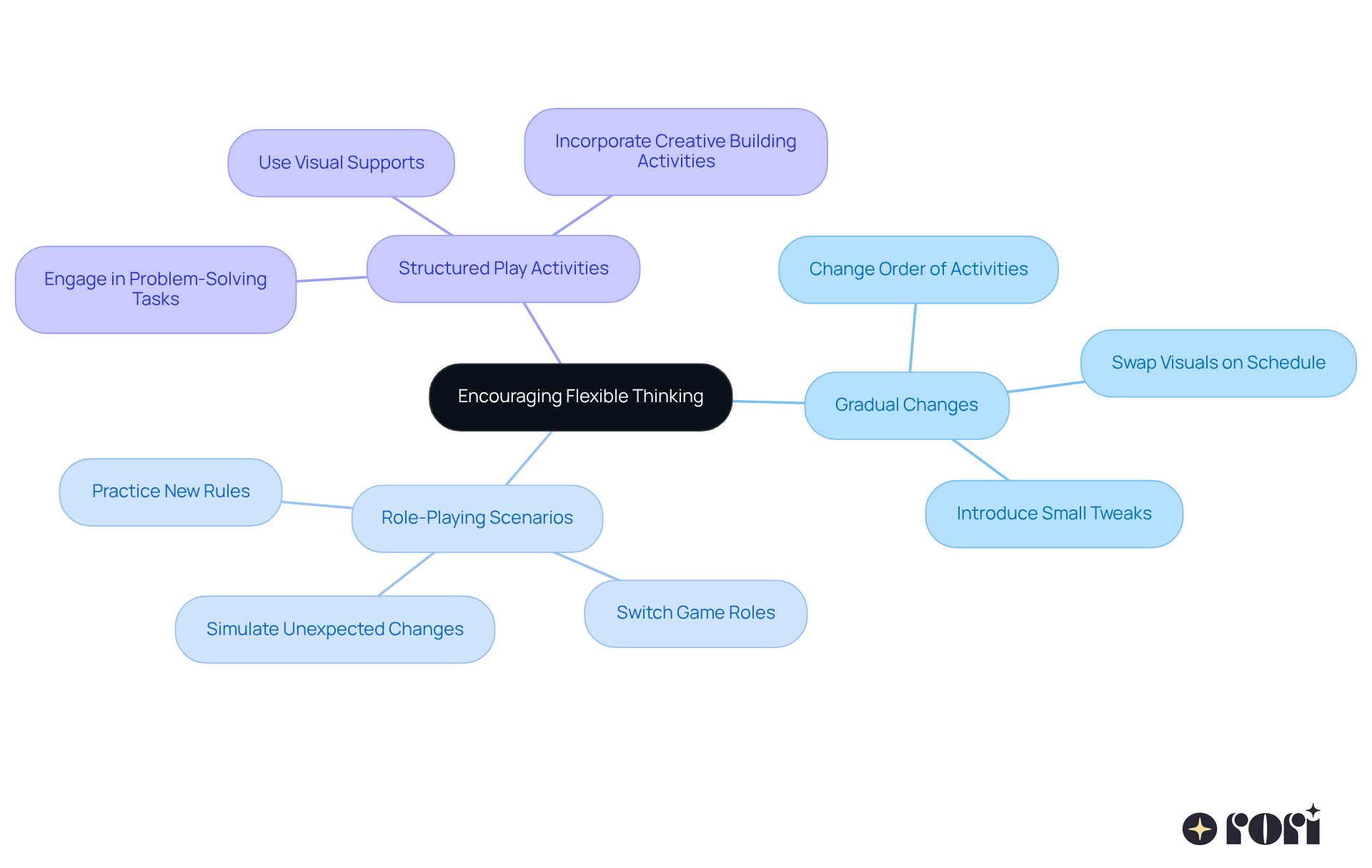
Encouraging is so important for helping them and unexpected situations. Parents can easily by gradually introducing small tweaks to daily schedules. For instance, try changing the order of activities or swapping visuals on a schedule. Talking about why being adaptable matters can really reinforce these lessons.
Imagine role-playing scenarios where changes happen, like switching game roles or adding new rules to familiar games. This gives kids a safe space to . It’s a hands-on way to boost their while also building . This means they can handle transitions more calmly and cope with uncertainties better.
Engaging in is one of the practical tips for parents to foster in children with ASD, as it can really help increase flexible responding. Let’s explore this together! We’re here to !
is such an important skill for individuals with autism, helping them keep track of their own progress and behaviors. As parents, you can really boost this skill by:
For example, using self-monitoring charts or apps can make it easier for them to see their progress, which can spark a sense of accomplishment and motivation.
Research shows that can really enhance how effective self-monitoring is, leading to better engagement in school and improved behavior. It’s all about setting realistic and achievable objectives to and self-regulation in your child. By creating a for self-monitoring, you can provide practical tips for parents to foster executive functioning in children with ASD, helping them tackle challenges and celebrate their unique strengths.
Plus, when you align your strategies with - like using specific self-monitoring tools and techniques - and actively participate in your child’s behavioral program, you can really enhance your support. This way, you’re making informed decisions that contribute to better . Let’s explore this together! We’re here to help you every step of the way!

Incorporating like deep breathing, mindfulness, and can really help individuals with autism manage stress and . Research shows that can lead to fewer mood disturbances and . For example, a pilot case-series study found that on the perceived stress scale and by 33% on the parental stress index after using these techniques.
Parents, it’s a great idea to introduce these techniques during calm moments. This way, your little ones can practice them regularly. , for instance, can be a fun activity that promotes mindfulness while also enhancing focus. By weaving these relaxation techniques into daily routines, young individuals can develop , leading to better and overall well-being.
As Temple Grandin points out, trying out different activities is key for young individuals to find their interests. This exploration can really boost their engagement and focus! Plus, can help them learn to tackle challenges without judgment, nurturing a more resilient mindset. Let’s explore this together!

Implementing a can really boost motivation and engagement in young individuals with autism. By using different rewards - like praise, stickers, or extra playtime - parents can effectively reinforce . Research shows that when kids receive after doing something good, they start to link their efforts with positive outcomes, which helps them feel accomplished.
For instance, when youngsters that can be traded for bigger rewards, they’re more likely to repeat those actions in the future. Behavioral analysts stress that being consistent with rewards is key; it not only builds a routine but also . This creates a predictable environment that supports learning.
Plus, strengthen trust in parent-child relationships, which is so important for emotional development. As kids grow, gradually shifting from tangible rewards to social recognition can really boost their intrinsic motivation. This transition encourages children to engage in positive behaviors naturally, reinforcing their development and independence over time.
By keeping track of progress visually with , caregivers can celebrate those small wins, which helps enhance self-esteem and keeps kids engaged in daily activities. And let’s not forget, is crucial in this journey. It equips parents with the knowledge and skills they need to make informed decisions that align with therapeutic strategies, ultimately leading to better and empowered caregivers.
Let’s explore this together! We’re here to help you every step of the way!

Creating consistent routines is so important for individuals with autism. They help create a reliable environment that can really ease anxiety and boost focus. Parents, it’s a great idea to set up that include specific times for meals, homework, and bedtime. can be a game-changer! They allow kids to see and anticipate their daily activities, giving them a .
Did you know that studies show by about 25% in autistic youth? That really highlights how vital routine is in their daily lives. Development specialists provide , emphasizing that predictability not only helps manage anxiety but also supports the growth of these crucial skills. This means young individuals can navigate their world more effectively.
Plus, when caregivers are educated, it leads to better decision-making and improved behavioral outcomes. Caregivers feel more prepared to . Real-world examples show that kids who stick to often have . It’s amazing to see how predictability can positively impact their overall well-being!
Let’s explore this together! If you’re looking for practical tips for parents to foster executive functioning in children with asd, we’re here to help you implement routines every step of the way!

Cooperation among guardians, educators, and therapists is so important for providing the best support to individuals with autism. At Rori Care, our clinical leadership team is made up of skilled and empathetic professionals who truly appreciate neurodiversity. Every day, they work tirelessly to help young individuals achieve their goals. When guardians actively engage with educators and therapists, they can , strategies, and updates about their child's progress. This teamwork creates a unified approach, ensuring everyone is on the same page with their interventions.
Research shows that can lead to better and emotional well-being for students with ASD. For example, studies reveal that when parents are actively involved, students see significant improvements. , making a real difference. By keeping communication open and regularly discussing shared goals, guardians can help create a that maximizes the effectiveness of interventions and promotes the young person's growth in various aspects of life.
Additionally, the that helps caregivers and educators set for autistic individuals. This really highlights the importance of structured communication methods. With 1 in 31 individuals aged 8 identified with autism spectrum disorder (ASD) in the U.S., the need for effective collaboration is more crucial than ever, especially since 19% of autistic students in the U.S. graduate with a certificate.
However, we know that caregivers often face challenges like time constraints and . Addressing these challenges through can offer practical tips for parents to foster in children with ASD, thereby significantly enhancing collaboration and support. If you’re interested in exploring our services, we encourage you to make an appointment with our team. Let’s discuss tailored strategies and support together!

Fostering executive functioning in children with autism is such an important journey that can truly enhance their daily lives and overall well-being. By setting up structured routines, using visual aids, breaking tasks into bite-sized steps, and encouraging flexible thinking, you can create a nurturing environment that supports your child's growth. Plus, integrating self-monitoring techniques, relaxation practices, and reward systems can empower your child to develop essential skills for independence and emotional regulation.
This article shares practical strategies that you can easily adopt to nurture these skills effectively. Think about establishing consistent schedules that help reduce anxiety or collaborating with educators and therapists for comprehensive support. Each tip is designed to boost your child's ability to navigate their world with confidence. And let’s not forget the importance of your involvement! It reinforces these strategies and builds a strong support network for your child.
Ultimately, supporting executive functioning in children with autism is a journey filled with patience, understanding, and commitment. By embracing these practical tips and engaging with available resources, you can play a crucial role in your child's development. Together, we can pave the way for a brighter and more independent future! Let’s explore this together!
What is Rori Care and what services do they offer?
Rori Care provides Applied Behavior Analysis (ABA) therapy tailored for children with developmental disorders, specifically focusing on enhancing executive functioning skills through personalized treatment plans.
Why is executive functioning important for children with ASD?
Executive functioning skills like planning, organization, and task initiation are crucial for success in school and social situations, helping children navigate their daily activities more effectively.
How can parents support their children's executive functioning at home?
Parents can utilize practical tips and resources from Rori Care to implement strategies that foster executive functioning, such as creating structured routines and using visual aids.
What role do structured routines play in supporting children with ASD?
Structured routines help children know what to expect during their day, which can reduce anxiety and improve concentration. Consistent schedules for waking up, meals, schoolwork, and bedtime provide a sense of security.
What impact does active caregiver involvement have on children undergoing ABA therapy?
Active caregiver involvement equips parents with the knowledge and skills to support their child's behavioral goals, maximizing the effectiveness of the intervention and leading to better outcomes.
How do visual aids improve organizational skills in children with autism?
Visual aids like charts, checklists, and picture schedules provide clear visual snapshots of activities, helping children understand and manage their responsibilities, which can significantly boost task completion rates.
What evidence supports the effectiveness of visual aids in educational settings?
Research indicates that using visual supports can increase on-task behaviors and task completion, with teachers reporting significant benefits in students' ability to manage daily activities independently.
How can parents incorporate visual aids into their child's daily routine?
Parents can implement picture schedules and checklists at home to help their children tackle tasks more effectively and reduce anxiety during transitions, thereby enhancing their executive functioning skills.
Why is understanding ABA principles important for caregivers?
Understanding ABA principles such as reinforcement and prompting allows caregivers to provide better support at home, complementing professional interventions and ensuring consistency in their child's development.