Feeling overwhelmed by how to encourage positive behaviors in children with Autism Spectrum Disorder (ASD)? You're not alone! We’ve gathered ten practical tips that can really help you out! They’ll shine a light on reinforcement strategies and empower you to create a supportive space for your child.
So, how can you make sure you’re using these techniques in a way that supports your child’s independence and growth? Let’s explore this together!
Navigating the world of behavior management can feel like a maze for many parents, especially when it comes to understanding reinforcement. Reinforcement is all about giving a little nudge after a good behavior, making it more likely that your child will do it again! There are two main types of support: positive and negative.
Understanding these concepts is key to implementing tips for using reinforcement to promote desired behaviors in children with ASD, which can help your child with autism thrive.
Here at Rori Care, we believe that every child is unique, so we tailor our programs to fit their individual needs and strengths! Recent research shows that giving praise right after a good action can really boost your child’s confidence and encourage them to keep it up. Ongoing support helps form new habits, while consistent encouragement keeps those habits alive. But be careful not to rely too much on external rewards; we want to help your child develop their own motivation, too.
Our behavior analysts use research-backed methods to ensure that our techniques are effective and aligned with your child’s therapeutic goals. We’ve seen great success with both positive and negative reinforcement strategies, which include tips for using reinforcement to promote desired behaviors in children with ASD, in various settings. By customizing our support to fit your child’s preferences and ensuring consistency across different environments, we can really enhance their progress. Plus, we’re here to empower you, the caregiver, by helping you understand ABA principles and approaches. This way, you can make informed decisions and actively participate in your child’s journey.
Continuous assessment and adjustment of support methods are essential to respond to your child’s changing needs. As B.F. Skinner wisely said, 'The outcomes of an act influence the likelihood of its recurrence.' By embracing these strategies, you’re not just helping your child; you’re also building a stronger bond and fostering their independence.

Finding the right strategies often requires tips for using reinforcement to promote desired behaviors in children with ASD, which can feel like a puzzle, right? Every young person is unique, and what works for one might not work for another. So, start by tuning into your child’s interests and preferences. Think about what makes your child light up! It could be a simple ‘great job!’ or fun rewards like stickers or playtime.
Regularly checking in on what excites your child can help you stay in tune with their changing interests. Engaging family members in these evaluations can make it even more meaningful. Plus, having caregivers involved is essential for successfully applying tips for using reinforcement to promote desired behaviors in children with ASD. Stay flexible! As your child’s interests change, so should your strategies to keep things fun and effective.
For toddlers, consider checking in every couple of weeks to keep up with their evolving motivators. This way, you’re not just helping your child grow; you’re also becoming a more confident caregiver, ready to make choices that really matter!

Ever feel like your child just doesn’t get it when it comes to good behavior? To effectively implement positive reinforcement at home, it is important to follow tips for using reinforcement to promote desired behaviors in children with ASD, such as:
Specific praise can really boost their motivation. For example, saying, 'Great job sharing your toys!' not only recognizes their efforts but also encourages them to keep it up.
You might also consider a token system where your child earns tokens for good behavior that they can trade for a bigger reward. This approach not only reinforces positive actions but also teaches valuable lessons about waiting for rewards. Studies show that well-organized token systems serve as valuable tips for using reinforcement to promote desired behaviors in children with ASD, leading to lasting changes in behavior and encouraging positive actions.
Here at Rori Care, we believe that when caregivers get involved, everyone benefits! Our behavior care engine updates intervention and skill plans after each session based on progress. By empowering caregivers with ABA principles and techniques, we help you support your child’s behavioral goals effectively.
To enhance your efforts, don’t forget to connect regularly with your child’s therapist. This way, you can coordinate approaches and ensure consistency in support at home. Remember, a little consistency can go a long way in shaping positive behaviors at home!

Have you ever felt like you’re juggling a million things while trying to support your child’s growth? Consistently keeping track of what works and what doesn’t can really help you make the right changes in ABA therapy. Kids who get regular updates to their rewards often show great improvements in their behavior, illustrating the tips for using reinforcement to promote desired behaviors in children with ASD and helping them feel better about themselves. If a reward stops working, don’t hesitate to switch it up or try something new; these are some tips for using reinforcement to promote desired behaviors in children with ASD!
You can keep an eye on behaviors by using simple methods like:
This way, you can spot patterns and triggers that might be affecting your child. By regularly checking in and adjusting your support, you can help your child stay engaged and excited about learning. Let’s explore this together!

Navigating ABA therapy can feel like a maze for many parents, but you’re not alone in this journey! Rori Care is here to help families find their way through the complexities of ABA therapy, ensuring that each child's unique needs are met.
By teaming up with Rori Care professionals, you’ll gain access to behavior analysts who provide personalized guidance. Together, we’ll explore workshops and resources that help you bring effective techniques right into your home! This way, you can create a supportive environment that fosters your child’s growth.
Rori Care offers a variety of services, including:
All designed to enhance the effectiveness of interventions. The focus on tailored guidance not only strengthens the partnership between families and clinicians but also leads to improved outcomes for children with autism. And here’s some good news: research shows that ABA therapy has a success rate of over 89% for kids with autism! With the right support, you can create a nurturing environment that truly helps your child thrive!

Let’s talk about how important it is for everyone involved in your child’s life to be on the same page! Consistency is key in reinforcement strategies. Let’s make sure everyone in your child’s life understands the tips for using reinforcement to promote desired behaviors in children with ASD and what rewards to offer! When everyone is consistent, it helps your child understand what’s expected and makes learning easier, as highlighted in the tips for using reinforcement to promote desired behaviors in children with ASD.
Picture your little one feeling confused when one person praises them for doing homework, but another doesn’t even mention it. This kind of inconsistency can really slow down their progress and make things tougher for them. When everyone is aligned, your child can thrive and feel more secure in their learning.

Navigating the world of reinforcement strategies can be tricky for parents, can't it? When you're trying to encourage good behavior, it's essential to think about the ethical implications of your approach. You want to choose reinforcers that truly support your child without unintentionally promoting behaviors you’d rather avoid.
It’s so important to respect your child’s dignity and independence. Let’s steer clear of rewards that might make them feel dependent or pressured. Instead, focus on creating a positive and supportive environment that nurtures their intrinsic motivation. You know, studies suggest that giving immediate rewards for good behavior can help kids build lasting habits, while harsh rewards might just lead to frustration.
By concentrating on ethical support methods, you can help your child develop essential skills and a healthy self-image. This not only enhances their emotional well-being but also fosters their independence. Remember, by focusing on ethical support, you’re not just helping your child; you’re empowering them to thrive on their own.

Navigating the world of autism care can feel daunting for many parents, especially when it comes to working with a team of specialists. Working together with behavior analysts, therapists, and educators can really make a difference in how we support our kids with autism! Here at Rori Care, our caring team truly believes in the power of neurodiversity and is dedicated to helping every child shine through personalized ABA treatment.
These professionals bring a wealth of experience that can significantly enhance the effectiveness of their tips for using reinforcement to promote desired behaviors in children with ASD. For instance, teams often set up regular meetings to share updates and tackle challenges together, ensuring everyone is on the same page. Research shows that kids who get support from a coordinated team tend to make more progress than those who go it alone! Plus, when kids receive integrated therapy, they often reach communication and social milestones faster than if they were getting each treatment separately.
This unified approach not only fosters better communication but also helps kids pick up skills more quickly in different settings. As one specialist put it, effective collaboration turns fragmented interventions into a supportive system that helps our youth thrive. Staying in touch with your child's ABA team can really help keep everyone motivated and aligned, leading to more successful outcomes in behavior modification.
And remember, involving your family in this collaborative process ensures that your child's needs and perspectives are at the heart of the care they receive. This way, you’re not just a bystander; you’re equipped with the knowledge and strategies to support your child's behavioral goals. Let’s explore this together!

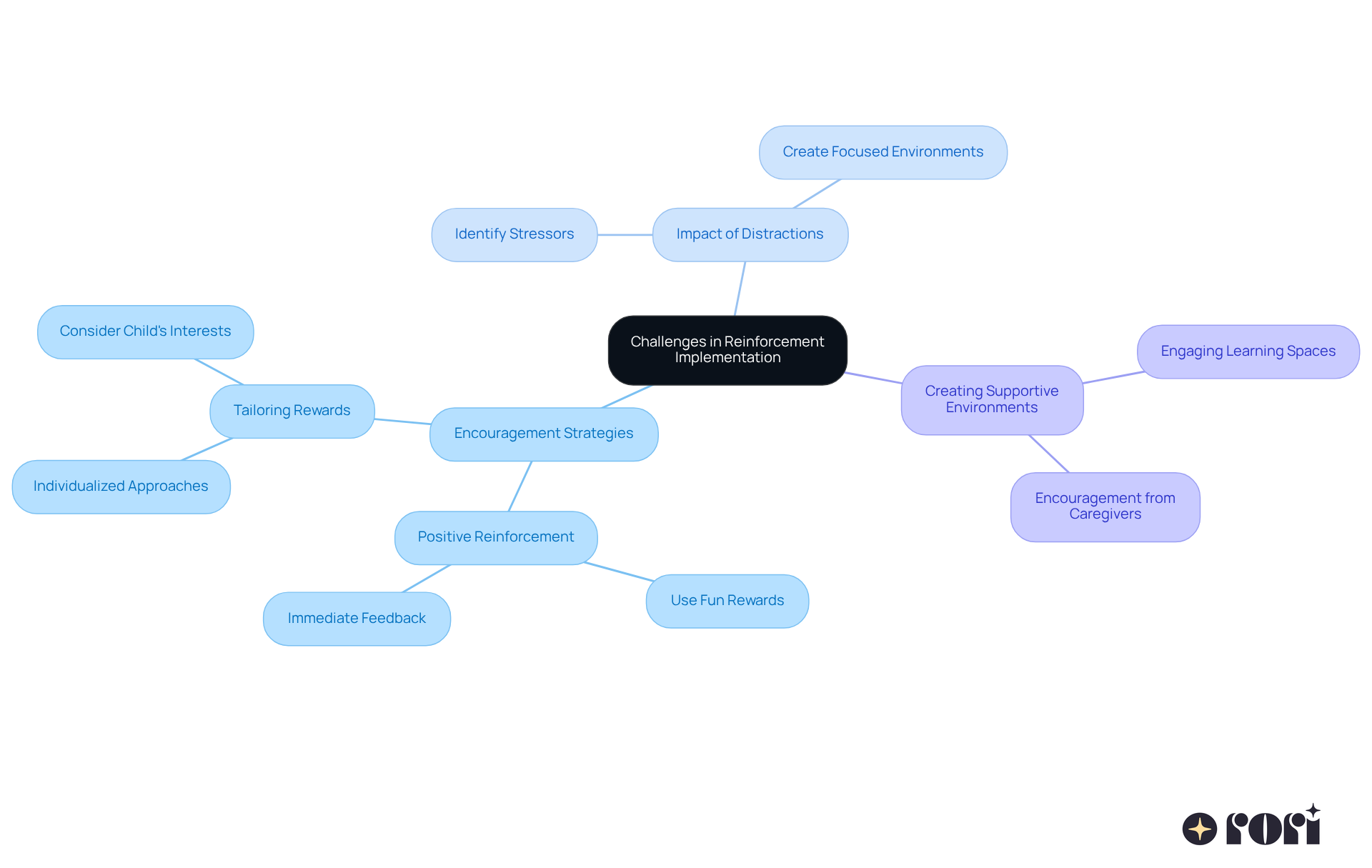
It can be tough when your little one seems to lose interest in rewards, right? Applying encouragement strategies can be a challenge, especially when kids don’t react as we hope. Take a moment to check in on what’s working and what’s not, and don’t hesitate to switch things up! You know, research shows that when we encourage kids positively, they really get involved and respond better!
Things like distractions or stress can really impact how your child behaves, so it’s good to adjust your approach to help them focus! Experts emphasize that one of the tips for using reinforcement to promote desired behaviors in children with asd is to tailor rewards to fit each child’s unique needs, making them fun and relevant. Creating a lively and supportive environment helps kids tackle challenges and stay engaged in their learning journey!
When caregivers utilize tips for using reinforcement to promote desired behaviors in children with asd, they can significantly help their kids reach their goals and thrive! With the right approach, you can help your child thrive and enjoy the learning process!
It can be tough to know how to celebrate even the smallest wins, but acknowledging your child's progress is so important! 🎉 Celebrating milestones can be as simple as:
Did you know that celebrating achievements can actually light up your child’s brain with joy? This boosts their motivation and keeps them engaged in positive behaviors, reflecting the tips for using reinforcement to promote desired behaviors in children with asd.
By getting to know ABA principles, you can enhance your support at home with tips for using reinforcement to promote desired behaviors in children with asd! This active involvement not only builds your child's confidence but also helps you make informed decisions that lead to better behavioral outcomes. So, let’s make it a habit to celebrate those little victories together! Every little step your child takes is a leap toward their independence and success!

Navigating the world of reinforcement for children with ASD can feel overwhelming, but it doesn’t have to be! Understanding both positive and negative reinforcement helps parents and caregivers create a space that encourages good behavior while helping their children grow in confidence and independence.
Throughout this article, we’ve explored key strategies, like choosing the right reinforcement methods and keeping things consistent across different environments. It’s also important to engage professionals, like behavior analysts, to ensure your child receives the best care possible. Remember, respecting your child’s dignity and autonomy is crucial in all reinforcement practices.
The journey of using reinforcement with your child can be tough at times, but it’s also incredibly rewarding! By embracing these strategies and collaborating with professionals, you can make a significant impact on your child's growth and development. Celebrate every little progress, as it reinforces positive behavior and motivates continued success. Taking these steps not only supports your child’s growth but also strengthens the bond you share, paving the way for a brighter future together.
What is reinforcement in ABA therapy?
Reinforcement in ABA therapy involves providing a response after a good behavior to increase the likelihood of that behavior being repeated. There are two main types: positive reinforcement, which adds something pleasant, and negative reinforcement, which removes something unpleasant.
What is positive reinforcement?
Positive reinforcement involves adding a pleasant stimulus, such as praise or a reward, immediately after a child exhibits a desirable behavior to encourage them to repeat that behavior.
What is negative reinforcement?
Negative reinforcement means removing an unpleasant stimulus to encourage a desired behavior, making it more likely that the child will engage in that behavior again.
How can reinforcement help children with Autism Spectrum Disorder (ASD)?
Understanding and implementing reinforcement strategies can promote desired behaviors in children with ASD, helping them thrive by building confidence and encouraging positive actions.
Why is it important to tailor reinforcement strategies to each child?
Every child is unique, and what works for one may not work for another. Tailoring strategies to fit individual interests and preferences enhances the effectiveness of reinforcement.
How can caregivers effectively implement positive reinforcement at home?
Caregivers can implement positive reinforcement by setting clear rules, rewarding adherence to those rules, providing specific praise, and possibly using a token system where children earn tokens for good behavior that can be exchanged for larger rewards.
What role do caregivers play in the reinforcement process?
Caregivers are essential in applying reinforcement strategies, as their involvement can lead to better outcomes for the child. They should regularly communicate with therapists to ensure consistency in support.
How often should caregivers check in on a child's interests for reinforcement?
For toddlers, it is recommended to check in every couple of weeks to stay aligned with their evolving motivators and interests.
What is the significance of consistency in reinforcement strategies?
Consistency in reinforcement strategies is crucial as it helps shape positive behaviors over time and reinforces the child's understanding of expectations.
How does Rori Care support caregivers in using reinforcement techniques?
Rori Care empowers caregivers by providing ABA principles and techniques, updating intervention plans based on progress, and encouraging regular communication with therapists to ensure effective support for their child's behavioral goals.