4 Autism Communication Strategies That Work for Parents

Discover effective autism communication strategies that work for parents to enhance interactions.

Introduction

Effective communication is truly the cornerstone of building meaningful relationships, especially when it comes to navigating the complexities of autism. Parents looking to enhance their interactions with children on the spectrum can find a treasure trove of strategies that not only help with understanding but also empower their kids to express themselves more freely. But here’s the question: how can caregivers effectively put these strategies into action to bridge that communication gap?

This article dives into practical techniques and tools that promise to change the way parents engage with their children. Think of it as a roadmap to deeper connections and improved communication skills. Let’s explore this together!

Implement Essential Communication Strategies

To foster effective communication with children on the autism spectrum, parents can try out some essential strategies that really make a difference:

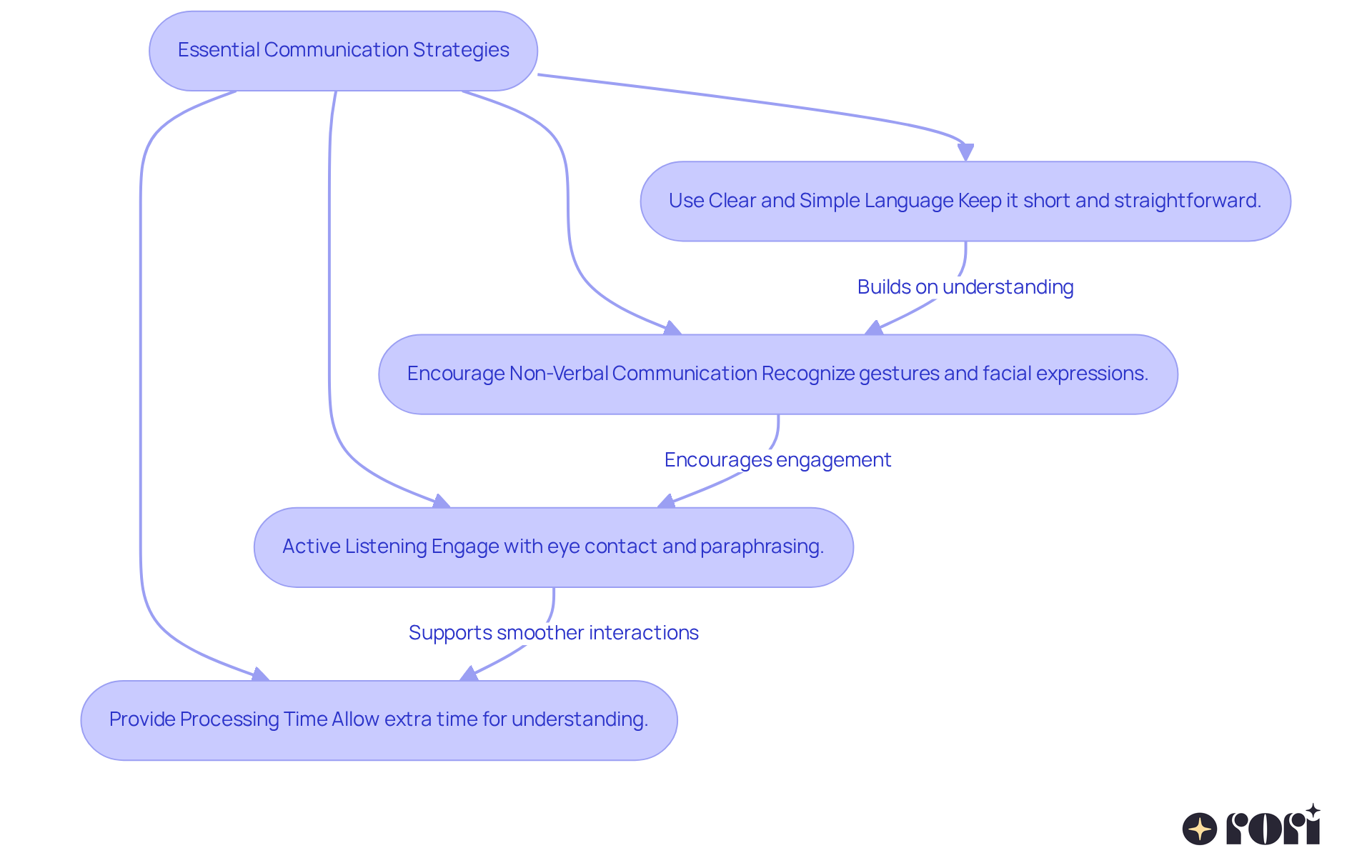
  1. Use Clear and Simple Language: Keep it short and sweet! Speaking in straightforward sentences helps avoid confusion. For instance, instead of saying, 'It's raining cats and dogs,' just say, 'It's raining.' This clarity really helps your little one understand better and reduces any mix-ups.

  2. Encourage Non-Verbal Communication: Pay attention to those non-verbal cues! Recognizing gestures or facial expressions is key. When you validate these forms of expression, it encourages your child to communicate in ways that feel comfortable and natural for them.

  3. Active Listening: Show you’re engaged! Maintain eye contact, nod, and paraphrase what your child says. This not only builds trust but also creates a welcoming atmosphere for open dialogue. Plus, participating in social skills group therapy can be a great way to practice these interaction strategies in a supportive environment with peers.

  4. Provide Processing Time: After asking a question or giving an instruction, give your child a little extra time to process the information. This patience can really help ease anxiety and frustration, making interactions smoother. Caregivers who understand autism communication strategies that work can make informed choices that positively impact their child's progress, enhancing the overall family dynamic.

Let’s explore this together! Remember, you’re not alone in this journey. We’re here to help you every step of the way!

Each box represents a strategy to improve communication with children on the autism spectrum. Follow the arrows to see how each strategy builds on the others for better interactions.

Utilize Visual Supports for Enhanced Communication

Visual aids can really make a difference in helping kids connect and communicate better by using autism communication strategies that work. Let’s dive into some effective methods that can help!

  1. Picture Cards: Picture cards are fantastic tools for showing common needs or feelings. For example, a card with a snack can help your child express hunger, making communication clearer. Studies have shown that using picture cards can significantly boost expressive communication skills, with many kids becoming more independent in asking for things or sharing their feelings. Keeping these cards updated to match your child’s changing likes can really enhance this approach.

  2. Visual Schedules: Creating a visual schedule that outlines daily activities can help kids know what to expect throughout the day. This kind of structure not only eases anxiety during transitions but also gives them a sense of security. Research indicates that kids who use visual schedules tend to stay on task and engage more in activities, making them better learners. Involving your child in making these schedules can promote a sense of ownership and understanding.

  3. Personal Narratives: Crafting personal stories tailored to your child’s experiences can illustrate social situations and appropriate responses. These narratives help kids navigate complex social interactions by providing clear examples of expected behaviors. Effective social stories include descriptive, perspective, directive, and affirmative sentences, which can greatly enhance social understanding and interaction. Collaborating with therapists can ensure these stories align with therapeutic goals.

  4. Choice Boards: Using choice boards allows kids to visually pick activities or preferences, empowering them to express their wants and make decisions. This method not only fosters independence but also reduces frustration from communication barriers. It’s important to use choice boards consistently and guide your child in using them to avoid confusion. Regularly updating the options keeps the boards fresh and engaging.

By weaving these visual aids into daily life, parents can implement autism communication strategies that work to create an environment that promotes effective communication and meets their child’s developmental needs. Plus, educating caregivers is key in this journey, providing them with the tools and strategies to support their child’s behavioral goals effectively.

Let’s explore this together! We’re here to help you every step of the way!
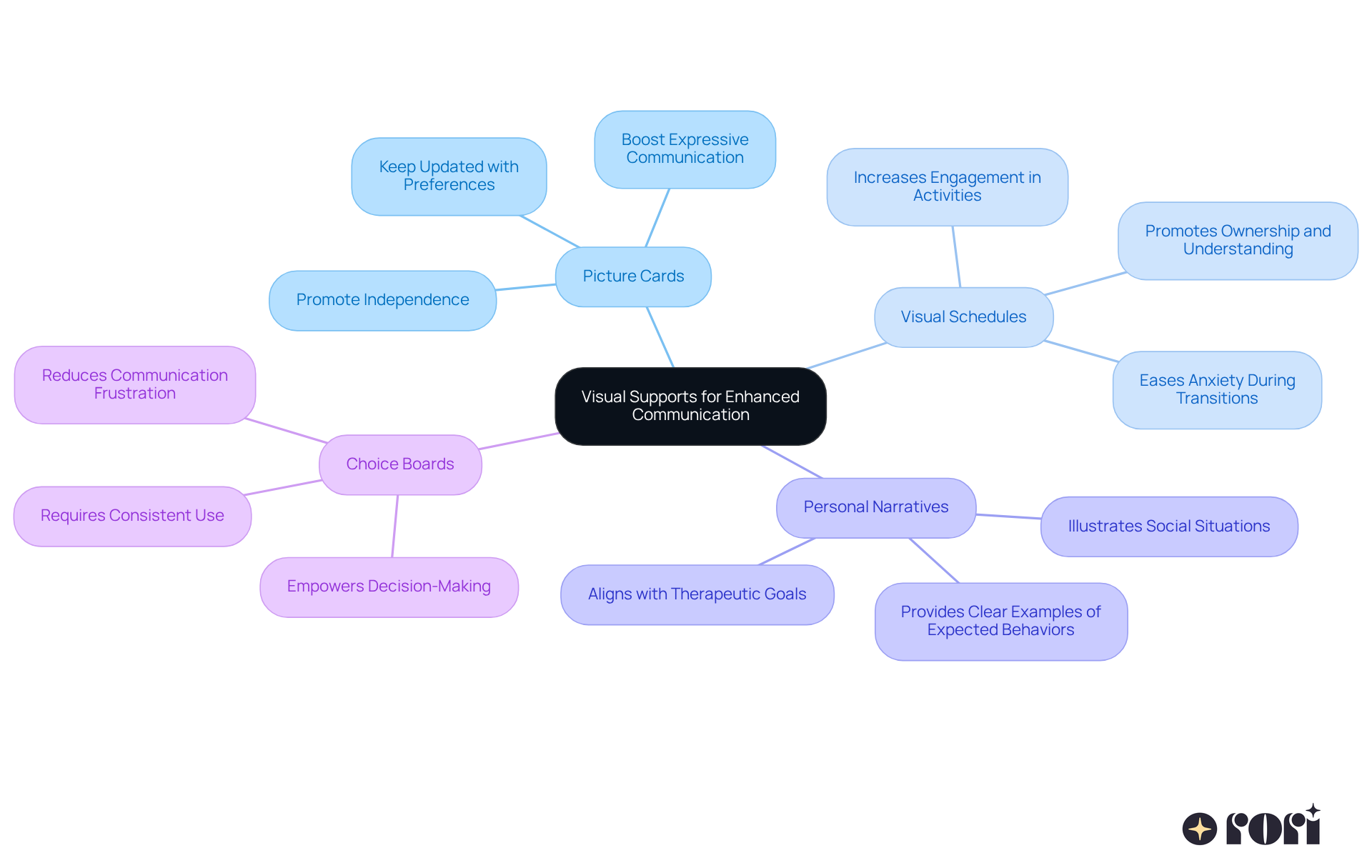
The center represents the main theme of using visual aids, while each branch shows a specific method. Follow the branches to learn about the benefits and details of each method.

Incorporate Technology to Support Communication Skills

Technology plays a vital role in enhancing autism communication strategies that work for individuals with autism. Let’s explore some effective tools that can make a real difference:

  1. Augmentative and Alternative Communication (AAC) Apps: Apps like Proloquo2Go empower non-verbal individuals to communicate using symbols and pictures. This helps them express their needs and desires more easily.

  2. Speech Generating Devices: These handy devices turn text into speech, allowing young individuals to share their thoughts and feelings more clearly. Research shows that kids using these devices often make significant strides in their ability to communicate.

  3. Interactive Learning Tools: Engaging apps that promote language development through fun games and activities can make learning enjoyable. These tools not only boost language skills but also encourage kids to actively participate in their learning journey.

  4. Video Modeling: This technique uses videos to demonstrate social interactions or dialogue scenarios. By watching peers or adults model appropriate behaviors, kids can learn effective communication strategies in a relatable way.

Integrating these technologies can lead to meaningful progress in autism communication strategies that work for children with autism, helping them connect with others and express themselves more effectively. Plus, Rori Care offers therapeutic services like group and individual therapy, which are essential for enhancing communication and relationship skills in kids with autism. Educating caregivers is also key, as it provides parents with autism communication strategies that work to support their child’s communication development.

Through Applied Behavior Analysis (ABA), Rori Care tailors therapy to meet each child’s unique needs, highlighting the importance of early intensive behavioral intervention (EIBI) for improving learning, verbal, and social skills. Additionally, Rori Care’s program development and supervision services ensure that each therapy plan is customized and monitored for the best possible outcomes.

Let’s explore this together! We're here to help you every step of the way!

The central node represents the overarching theme of technology in communication. Each branch highlights a specific tool or strategy, with further details on how they support communication skills for individuals with autism.

Collaborate with Professionals for Effective Communication

Collaborating with experts is essential for enhancing interaction methods by implementing autism communication strategies that work for children with autism. Let’s explore some effective ways to collaborate with these professionals:

  1. Engage Speech-Language Pathologists (SLPs): SLPs are fantastic at providing specialized interventions tailored to your child’s unique speaking challenges. They help develop focused autism communication strategies that work to significantly enhance both expressive and receptive language skills.

  2. Collaborate with ABA Practitioners at Rori Care: The ABA practitioners at Rori Care use behavior-focused techniques that boost communication skills in everyday settings. Their expertise in Applied Behavior Analysis means that the interventions are data-driven and aimed at achieving real, measurable outcomes.

  3. Participate in Parent-Professional Meetings: Regular meetings with your child’s therapy team at Rori Care are key to aligning goals and strategies. This collaborative approach fosters a unified plan that effectively utilizes autism communication strategies that work to meet your child’s needs.

  4. Seek Support Groups: Joining support groups is a great way to connect with other parents and professionals. These groups offer valuable resources and shared experiences, enhancing your understanding of communication and providing insights that can lead to better outcomes for your child.

Remember, you’re not alone in this journey! Engaging with experts and connecting with other parents can make a world of difference. We’re here to help you every step of the way!

Each box represents a way to collaborate with professionals. Follow the arrows to see how these methods connect and contribute to improving communication strategies for children with autism.

Conclusion

Effective communication is so important for building understanding and connection with children on the autism spectrum. By using tailored strategies, parents can really boost their child's ability to express themselves and engage with the world around them. Think about it: clear language, encouraging non-verbal communication, practicing active listening, and allowing some processing time are all foundational steps that can truly transform interactions.

And let’s not forget about visual supports! Picture cards, visual schedules, personal narratives, and choice boards can be essential tools that empower children to communicate their needs and preferences. Plus, technology plays a big role here too. AAC apps and speech-generating devices offer innovative ways for kids to express themselves. Collaborating with professionals, like speech-language pathologists and ABA practitioners, is just as important. They help ensure that communication strategies are tailored to meet each child's unique needs.

Ultimately, enhancing communication for children with autism is a journey we take together - parents, professionals, and supportive tools. By embracing these strategies and resources, caregivers can create a nurturing environment that not only helps with communication but also enriches the overall developmental experience for their children. Taking these proactive steps can lead to meaningful progress, fostering deeper connections and understanding between parents and their children on the autism spectrum. Let’s explore this together!

Frequently Asked Questions

What are some essential communication strategies for parents of children on the autism spectrum?

Essential strategies include using clear and simple language, encouraging non-verbal communication, practicing active listening, and providing processing time.

How can clear and simple language benefit communication with children on the autism spectrum?

Using straightforward sentences helps avoid confusion, making it easier for children to understand and reducing the likelihood of mix-ups.

Why is non-verbal communication important for children with autism?

Recognizing gestures and facial expressions is key, as it validates their forms of expression and encourages them to communicate in ways that feel comfortable and natural.

What is active listening and how does it help in communicating with children on the autism spectrum?

Active listening involves maintaining eye contact, nodding, and paraphrasing what the child says. This builds trust and creates a welcoming atmosphere for open dialogue.

How can providing processing time improve communication with children on the autism spectrum?

Giving extra time after asking a question or giving an instruction helps children process information, easing anxiety and frustration, and making interactions smoother.

What role does social skills group therapy play in communication for children on the autism spectrum?

Participating in social skills group therapy allows children to practice interaction strategies in a supportive environment with peers, enhancing their communication skills.