Have you ever felt like communicating with your child is like climbing a steep hill? Effective communication can be a challenge, especially for children with autism and their caregivers. Using tools like visual supports and clear instructions can really help create a space where understanding and connection thrive.
So, what are some simple strategies that can make a real difference in how we communicate? Let’s dive into these methods and see how they can really change our daily interactions, helping our kids express themselves with confidence!
Visual aids like picture schedules and communication boards can really help kids with autism communicate better! These tools turn abstract ideas into something tangible, making daily routines and expectations easier to understand. For instance, visual schedules help children see the order of their daily activities, which can really cut down on anxiety and create a sense of predictability. You know, studies show that these visual tools can boost engagement and make things clearer for kids!
To get started with visual supports, think about the key routines or concepts that might need a little extra clarity. You can create or find visuals that clearly illustrate these ideas, making sure they fit your child's understanding. Involving your child in making the schedule can really spark their interest and give them a sense of ownership. Using these visuals regularly helps strengthen their understanding and social skills. One case study even showed that kids who used picture schedules had clearer communication in their daily interactions.
Experts say that visual schedules can really help kids handle their routines on their own, which is so important for building confidence! By providing a clear, step-by-step guide, these tools help children navigate their daily lives with more ease. Plus, visual schedules can ease anxiety by preparing kids for changes or challenging tasks, giving them time to process and adjust. This proactive approach not only boosts interaction but also aids in emotional regulation, which is crucial for supporting positive communication behaviors in individuals with autism, making visual tools essential in autism care.
Incorporating ABA principles into the use of visual aids can make them even more effective. Caregivers who understand ABA strategies can tailor these tools to their child's behavioral goals, which is essential for supporting positive communication behaviors in individuals with autism and creating a more personalized approach to communication and support. This teamwork fosters a collaborative environment where caregivers and kids work together to achieve meaningful outcomes. And let’s not forget, when caregivers are educated, they feel more empowered and make better decisions, which is key to maximizing the benefits of visual supports!

Have you ever felt overwhelmed trying to communicate with your child? Clear guidelines and consistent practices are crucial for supporting positive communication behaviors in individuals with autism. When instructions are simple and straightforward, kids are much more likely to understand and follow them. For example, instead of saying, 'Get ready for school,' try saying, 'Put on your shoes and grab your backpack.' This clarity means less confusion and more cooperation!
When kids know what to expect, it really helps ease their worries. Engaging your child in creating these routines, like using visual schedules that outline daily tasks, not only supports their understanding but also gives them a sense of control and independence. This empowerment allows them to express their needs and preferences more effectively.
You might be surprised to learn that kids thrive when they have a routine they can count on! For instance, one child really blossomed when a steady morning schedule was put in place, leading to more involvement in daily activities and better social interactions. By focusing on clear instructions and predictable routines, you’re establishing a supportive space that is crucial for supporting positive communication behaviors in individuals with autism.

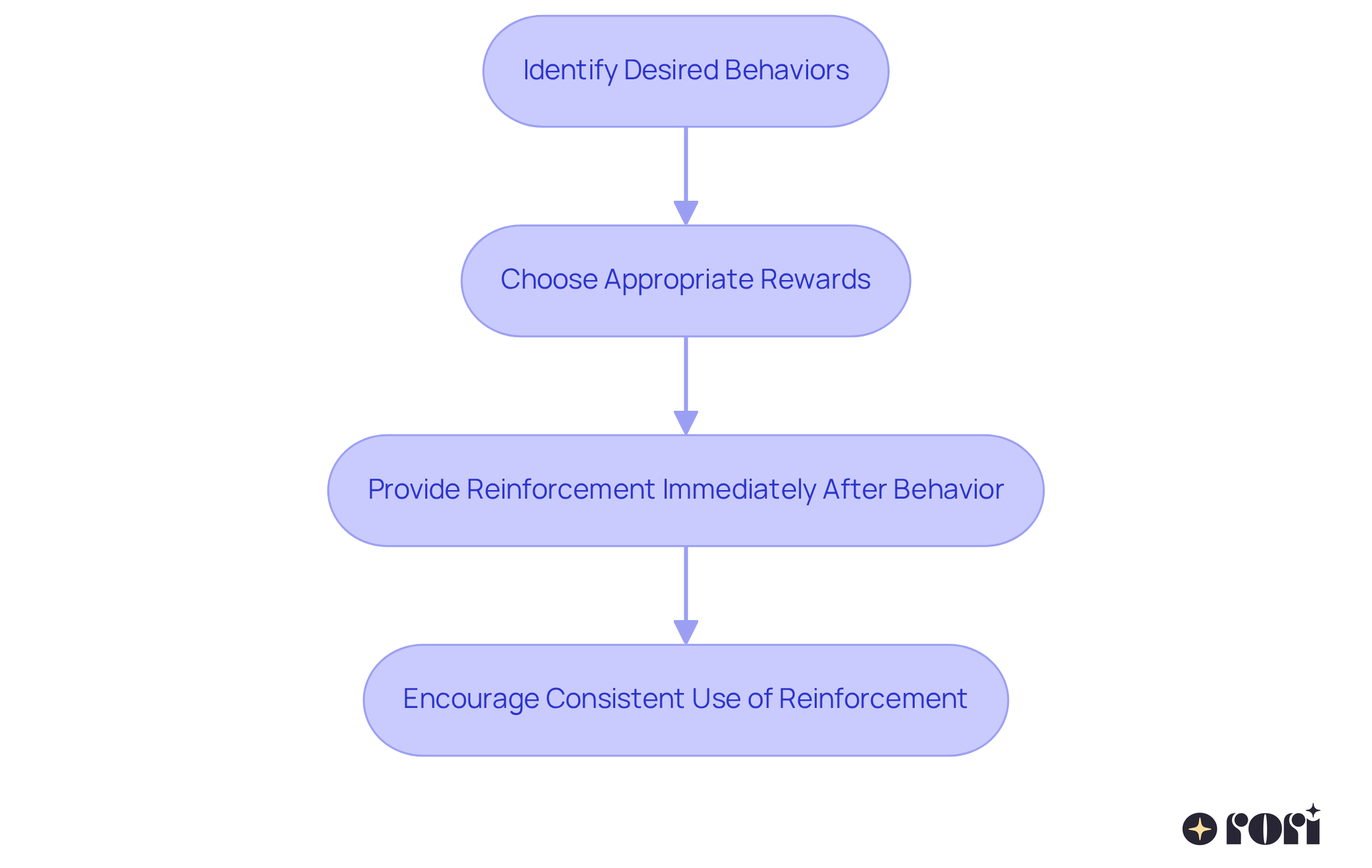
Have you ever felt overwhelmed trying to connect with your child with autism? Positive reinforcement can be a game-changer when it comes to helping kids with autism connect better! By rewarding specific behaviors - like when they start a conversation or express their needs - you can really boost how often these positive actions happen.
For example, when your little one uses a word or sign to ask for a toy, giving them a big smile or a small reward can strengthen that behavior. It creates a positive link with expressing themselves! You know, research backs this up - using the right reinforcement can really boost how kids with autism communicate!
To really make positive reinforcement work, it’s important to pinpoint the behaviors you want to encourage and choose rewards that your child loves! Consistency is key here; when you provide reinforcement right after the desired behavior, it helps them connect the action with the reward. This not only encourages your child but also creates a supportive atmosphere for supporting positive communication behaviors in individuals with autism.
Plus, when you equip yourself with ABA principles and strategies, you’re better prepared for supporting positive communication behaviors in individuals with autism. This leads to informed decision-making and better outcomes, ultimately creating a more harmonious family dynamic. When you embrace these strategies, you’re not just helping your child; you’re building a stronger bond that can transform your family life.
Have you ever felt the frustration of not being able to understand your child's needs? Augmentative and alternative communication (AAC) systems are here to help! These systems come in all shapes and sizes, from simple picture exchanges to high-tech speech devices that can really make a difference! By offering different ways to communicate, AAC plays a crucial role in supporting positive communication behaviors in individuals with autism, enabling kids to express their needs, thoughts, and feelings effectively.
Imagine a young child using a picture exchange system (PECS) to choose images that represent what they want. This not only enhances their interaction with peers and caregivers but also opens up a whole new world of communication! And guess what? Research shows that AAC systems not only help kids express themselves better but also boost their confidence!
As a parent, you might wonder how to get started with AAC. When it comes to choosing the right system, think about what your child enjoys and how they like to communicate! Consistent practice and incorporating AAC into daily activities can greatly improve their communication skills and confidence, which is essential for supporting positive communication behaviors in individuals with autism.
At Rori Care, we’re here to help you every step of the way! We offer free consultations with Board Certified Behavior Analysts to assist families after an autism diagnosis. Plus, Rori Care provides great programs to help you learn how to support your child's growth every step of the way!
It's also important to recognize that not all families have the same access to these vital tools. Did you know that only 32% of racial and ethnic minority families have access to AAC devices compared to 84% of white families? By ensuring access to AAC tools, we can help every child find their voice and thrive in their world.

Navigating communication with children on the autism spectrum can feel overwhelming at times, can’t it? Implementing effective communication strategies is key to supporting these amazing kids. By using visual supports, giving clear instructions, applying positive reinforcement, and incorporating AAC systems, caregivers can really boost communication skills. These practices not only help kids understand better but also empower them to express themselves and navigate their daily lives with more confidence.
Let’s recap some key practices that can really make a difference!
Together, these strategies create a solid foundation for nurturing positive communication behaviors in individuals with autism.
At the end of the day, these strategies do so much more than just improve communication. They contribute to the overall well-being and development of children with autism, fostering a more inclusive and understanding environment. By embracing these best practices, caregivers can help every child find their voice and thrive, ensuring they have the opportunity to engage fully in their world. By taking these steps, you’re not just helping your child communicate; you’re opening doors to a world of possibilities for them.
What are visual supports and how do they help children with autism?
Visual supports, such as picture schedules and communication boards, help children with autism by turning abstract ideas into tangible tools, making daily routines and expectations easier to understand.
How do visual schedules reduce anxiety for children with autism?
Visual schedules help children see the order of their daily activities, which reduces anxiety and creates a sense of predictability in their routines.
What is the benefit of involving children in creating visual schedules?
Involving children in making the schedule can spark their interest and give them a sense of ownership over their routines.
How do visual supports strengthen understanding and social skills in children?
Using visual supports regularly helps reinforce children's understanding of routines and enhances their social skills, as evidenced by case studies showing clearer communication in daily interactions.
How do visual schedules contribute to building confidence in children?
Visual schedules provide a clear, step-by-step guide that helps children navigate their daily lives independently, which is important for building their confidence.
In what ways can visual supports aid in emotional regulation?
Visual supports can ease anxiety by preparing children for changes or challenging tasks, allowing them time to process and adjust, which aids in emotional regulation.
How can incorporating ABA principles enhance the effectiveness of visual aids?
Incorporating Applied Behavior Analysis (ABA) principles allows caregivers to tailor visual aids to their child's behavioral goals, creating a more personalized approach to communication and support.
Why is caregiver education important in the use of visual supports?
Educated caregivers feel more empowered and make better decisions, which is crucial for maximizing the benefits of visual supports in supporting positive communication behaviors in children with autism.