Introduction
Caring for a child with autism can be a journey filled with unique challenges, especially when it comes to self-care. It’s easy to feel overwhelmed, right? But prioritizing your well-being is crucial - not just for you, but also for creating a nurturing environment for your child.
In this article, we’ll explore four essential strategies that can help you:
- Enhance your mental health
- Build a strong support network
- Set healthy boundaries
- Weave mindfulness into your daily routine
So, how can you balance your own needs while ensuring your child thrives in a loving atmosphere? Let’s dive in together!
Prioritize Your Well-Being
Self-care isn’t just a luxury for those caring for children with autism; it’s a must, and there are various tips for navigating self-care challenges in children with autism. Prioritizing your well-being can really boost your mental health and resilience, offering tips for navigating self-care challenges in children with autism and helping your child thrive. Let’s dive into some practical strategies:
- Establish a Routine: Creating a daily schedule that includes self-care activities-like exercise, hobbies, or just some relaxation time-can work wonders. A consistent routine not only gives you structure but also aligns with ABA principles, helping your child flourish in a predictable environment.
- Seek Professional Help: Don’t hesitate to reach out to mental health professionals who specialize in autism. They can provide insights and coping strategies tailored to your unique challenges, easing stress and enhancing your emotional well-being. Plus, engaging in caregiver education can empower you with ABA principles, making it easier to support your child effectively.
- Engage in Physical Activity: Regular exercise is a fantastic way to lift your mood and lower stress levels. By weaving physical activity into your daily routine, you’ll find it easier to tackle everyday challenges and boost your overall health-essential for effective caregiving.
- Practice Healthy Eating: Maintaining a balanced diet is key to keeping your energy levels up and your health in check. Good nutrition not only sharpens your mental clarity but also stabilizes your emotions, both of which are vital for effective caregiving and align with caregiver education goals.
By embracing these strategies and considering caregiver education, you can nurture a healthier mindset that ultimately supports both you and your child, including tips for navigating self-care challenges in children with autism. Let’s explore this together!

Build a Support Network
Building a strong support network provides valuable tips for navigating self-care challenges in children with autism. Here are some friendly strategies to help you enhance your connections, all backed by the caring approach of Rori Care:
- Connect with Local Organizations: Reach out to local autism support groups or organizations that offer valuable resources and community ties. Rori Care is here to help you find these resources, ensuring you have the right support at your fingertips.
- Utilize Online Communities: Dive into online forums and social media groups where you can share experiences and seek advice from others who understand your journey. Rori Care encourages you to get involved by providing tips for navigating self-care challenges in children with autism while helping you grasp ABA principles and connect with others.
- Attend workshops and events that offer tips for navigating self-care challenges in children with autism to gain insights and meet others in similar situations. Rori Care offers workshops designed to equip caregivers with the knowledge and skills needed to support their children's behavioral goals effectively, including tips for navigating self-care challenges in children with autism and techniques for data collection and alignment.
- Reach Out to Friends and Family: Don’t hesitate to lean on your personal connections for emotional support and practical help. Rori Care emphasizes the significance of a nurturing environment, which can be enhanced through your existing relationships and by offering tips for navigating self-care challenges in children with autism.
Let’s explore this together! Remember, you’re not alone on this journey.
Set Healthy Boundaries
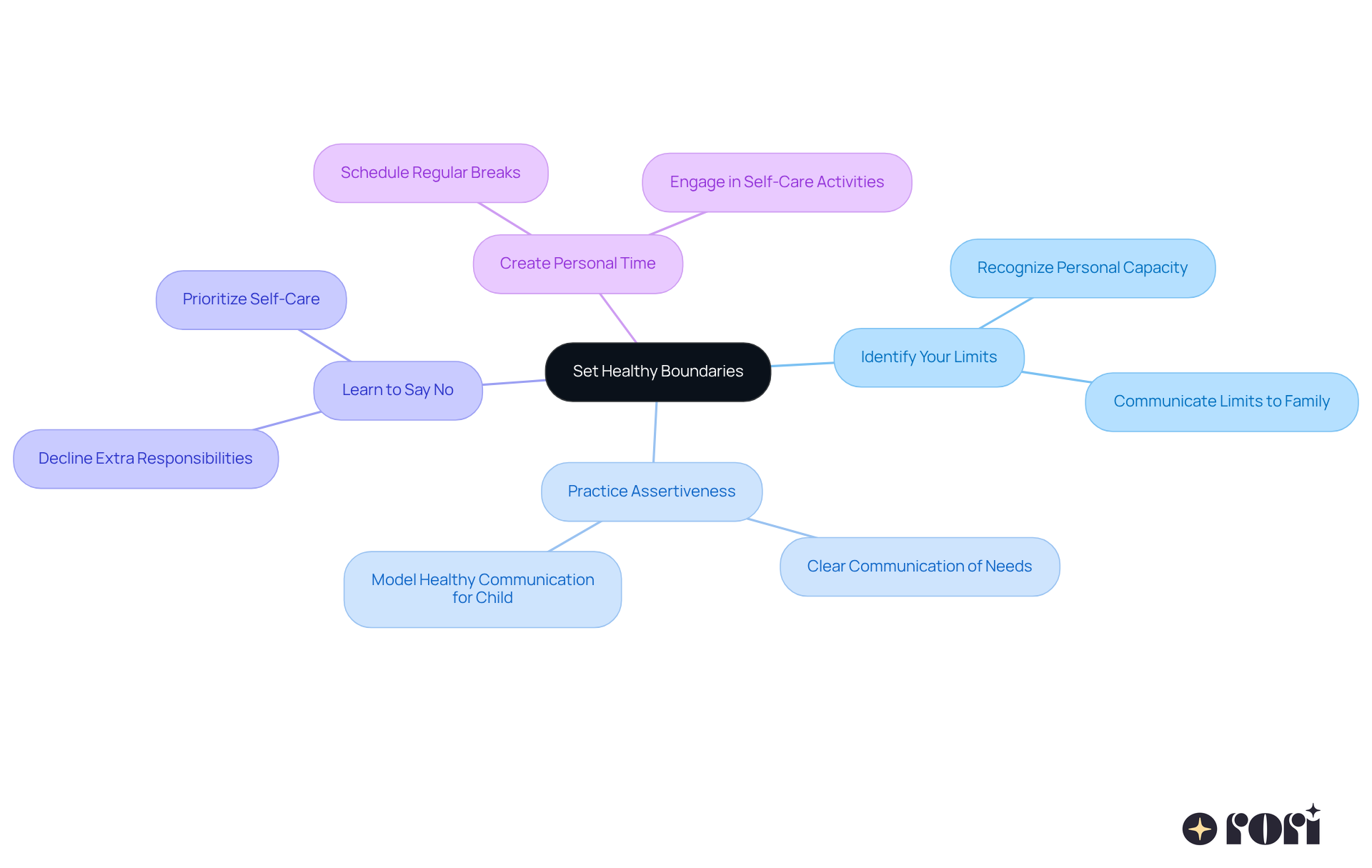
Establishing healthy boundaries is so important for your mental well-being, especially when you're caring for a child with autism. Let’s explore some effective strategies to help you navigate this journey together:
- Identify Your Limits: Take a moment to think about what you can realistically handle. It’s okay to recognize your limits! Share these with your family and caregivers so they can support you better.
- Practice Assertiveness: Clear and direct communication is key. By expressing your needs and boundaries, you not only advocate for yourself but also model healthy communication for your child.
- Learn to Say No: Remember, it’s perfectly fine to turn down extra responsibilities that might overwhelm you. Being an effective caregiver requires prioritizing your well-being and utilizing tips for navigating self-care challenges in children with autism.
- Create Personal Time: Make sure to carve out regular breaks for yourself. Taking time for self-care helps you recharge, allowing you to return to your caregiving role with fresh energy and patience. This ultimately benefits both you and your child.
You’re not alone in this journey! Sharing experiences and strategies can really help us all feel more connected. What strategies have you found helpful? Let’s keep the conversation going!
Practice Mindfulness Techniques
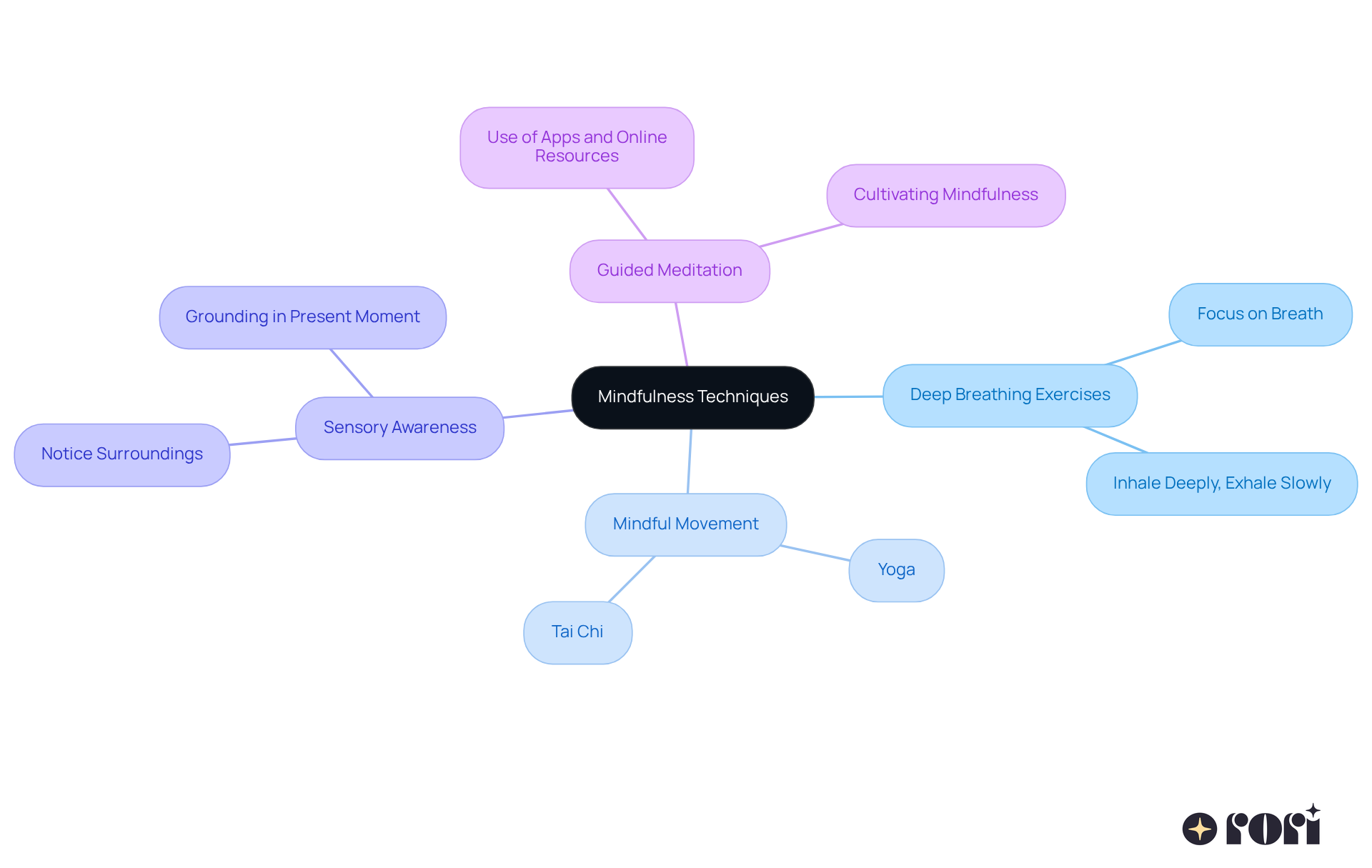
Incorporating mindfulness into your daily routine can really boost your well-being! Let’s explore some techniques that might resonate with you:
- [Deep Breathing Exercises](https://journals.lww.com/homehealthcarenurseonline/fulltext/2026/03000/effect_of_mindfulness_based_stress_reduction.6.aspx): Just take a few minutes each day to focus on your breath. Inhale deeply and exhale slowly-this simple practice can work wonders for reducing stress.
- [[Mindful Movement](https://rori.care/post/10-aba-therapy-techniques-to-boost-your-childs-academic-success)](https://rori.care/post/10-aba-therapy-techniques-to-boost-your-childs-academic-success): How about engaging in activities like yoga or tai chi? They blend physical movement with mindfulness, helping you relax and stay focused.
- Sensory Awareness: Try paying attention to your surroundings. Notice the sounds, sights, and smells around you. It’s a great way to ground yourself in the present moment.
- [Guided Meditation](https://pmc.ncbi.nlm.nih.gov/articles/PMC3709844): There are so many apps and online resources for guided meditation sessions. They can really help you cultivate mindfulness and ease anxiety.
Let’s take this journey together! Remember, every little step counts.
Conclusion
Prioritizing well-being is so important for caregivers of children with autism. It really lays the groundwork for effective support and nurturing. When caregivers focus on self-care, they can boost their mental health, resilience, and ability to provide the best care for their little ones. The strategies we’ll explore here are essential tools for navigating the unique challenges of this journey.
Let’s talk about some key insights! Establishing a routine that includes self-care activities is a game changer. Seeking professional guidance, getting active, and maintaining a balanced diet are all part of the picture. Plus, building a strong support network, setting healthy boundaries, and practicing mindfulness techniques are vital for a caregiver's overall well-being. Each of these strategies not only supports you but also creates a more stable and nurturing environment for your child.
Ultimately, we can’t overstate how significant these practices are. Embracing self-care and fostering connections within a supportive community empowers caregivers to truly thrive in their roles. By taking proactive steps toward self-care, you can cultivate a healthier mindset that benefits both you and your children. This makes the journey of caregiving not just manageable, but also fulfilling.
So, let’s explore this together! Remember, you’re not alone on this journey, and we’re here to help you every step of the way!
Frequently Asked Questions
Why is self-care important for caregivers of children with autism?
Self-care is essential for caregivers of children with autism as it boosts mental health and resilience, helping them navigate challenges and support their child's well-being.
What are some practical strategies for prioritizing self-care?
Practical strategies include establishing a routine, seeking professional help, engaging in physical activity, and practicing healthy eating.
How can establishing a routine benefit both caregivers and children with autism?
A consistent daily schedule that includes self-care activities provides structure for caregivers and creates a predictable environment for children, aligning with ABA principles to help them flourish.
When should caregivers seek professional help?
Caregivers should reach out to mental health professionals who specialize in autism when they need insights and coping strategies tailored to their unique challenges, which can ease stress and enhance emotional well-being.
What role does physical activity play in a caregiver's self-care?
Regular exercise helps lift mood and lower stress levels, making it easier for caregivers to tackle everyday challenges and maintain their overall health, which is crucial for effective caregiving.
Why is healthy eating important for caregivers?
Maintaining a balanced diet is vital for keeping energy levels up and stabilizing emotions, both of which are essential for effective caregiving and overall mental clarity.
List of Sources
- Prioritize Your Well-Being
- Effectiveness of parent-focused interventions for improving the mental health of parents and their children with autism spectrum disorder: A systematic review and meta-analysis (https://sciencedirect.com/science/article/abs/pii/S1750946724000643)
- Stress, anxiety and depression in parents of children with autism spectrum disorders in Kazakhstan: prevalence and associated factors - PMC (https://pmc.ncbi.nlm.nih.gov/articles/PMC9806964)
- Love Yourself for Family Health! Vital Self-Care for Autism Parents - Focus for Health (https://focusforhealth.org/love-yourself-family-health-vital-self-care-autism-parents)
- Mental Health Interventions for Parent Carers of Children with Autistic Spectrum Disorder: Practice Guidelines from a Critical Interpretive Synthesis (CIS) Systematic Review - PMC (https://pmc.ncbi.nlm.nih.gov/articles/PMC5858410)
- Caregiver Burnout: Why Self-Care Is Essential to Parenting - Child Mind Institute (https://childmind.org/article/fighting-caregiver-burnout-special-needs-kids)
- Build a Support Network
- The Benefits of Parent Support Groups for Families of Children with Autism | Advanced Autism Services (https://advancedautism.com/post/the-benefits-of-parent-support-groups-for-families-of-children-with-autism)
- Frontiers | Influence of Social Support Network and Perceived Social Support on the Subjective Wellbeing of Mothers of Children With Autism Spectrum Disorder (https://frontiersin.org/journals/psychology/articles/10.3389/fpsyg.2022.835110/full)
- The types and functions of social supports used by parents caring for a child with autism spectrum disorder | ARCH National Respite Network & Resource Center (https://archrespite.org/bibliography/the-types-and-functions-of-social-supports-used-by-parents-caring-for-a-child-with-autism-spectrum-disorder)
- Who joins support groups among parents of children with autism? - PMC (https://pmc.ncbi.nlm.nih.gov/articles/PMC2861432)
- Set Healthy Boundaries
- The Critical Role of Boundaries for Family Caregivers (https://psychologytoday.com/us/blog/gaining-and-sustaining/202508/the-critical-role-of-boundaries-for-family-caregivers)
- The Importance of Setting Boundaries as a Caregiver (https://jfscare.org/blog/setting-boundaries-as-a-caregiver)
- How to Set Boundaries as a Family Caregiver (https://aarp.org/caregiving/basics/caregiver-boundaries)
- The Importance of Setting Boundaries as Caregivers (https://verveseniorliving.com/news-events-blog/the-importance-of-setting-boundaries-as-caregivers)
- Practice Mindfulness Techniques
- Worldviews on Evidence-Based Nursing | Sigma Journal | Wiley Online Library (https://sigmapubs.onlinelibrary.wiley.com/doi/full/10.1111/wvn.12736)
- Mindfulness-Based Stress Reduction for Family Caregivers: A Randomized Controlled Trial - PMC (https://pmc.ncbi.nlm.nih.gov/articles/PMC3709844)
- The effectiveness of a hybrid mindfulness-based intervention in reducing stress among informal caregivers of people with dementia: a randomized controlled trial (https://academic.oup.com/gerontologist/article/65/12/gnaf281/8340582)
- Effect of Mindfulness-Based Stress Reduction Activities on... : Home Healthcare Now (https://journals.lww.com/homehealthcarenurseonline/fulltext/2026/03000/effect_of_mindfulness_based_stress_reduction.6.aspx)