Introduction
Play is such a powerful catalyst for growth and development, especially for children on the autism spectrum. 🌟 By tapping into the natural joys of play, caregivers and clinicians can use strategies that not only boost communication and social skills but also build emotional resilience.
But let’s be real-transitioning to play-based techniques can raise some questions:
- How effective are they?
- Can they adapt to different settings?
- What challenges might pop up when integrating these methods?
- And most importantly, how can we overcome these hurdles to make sure every child gets to enjoy the enriching world of play?
Let’s explore this together! We’re here to help you every step of the way!
Understand the Role of Play in Behavior Management
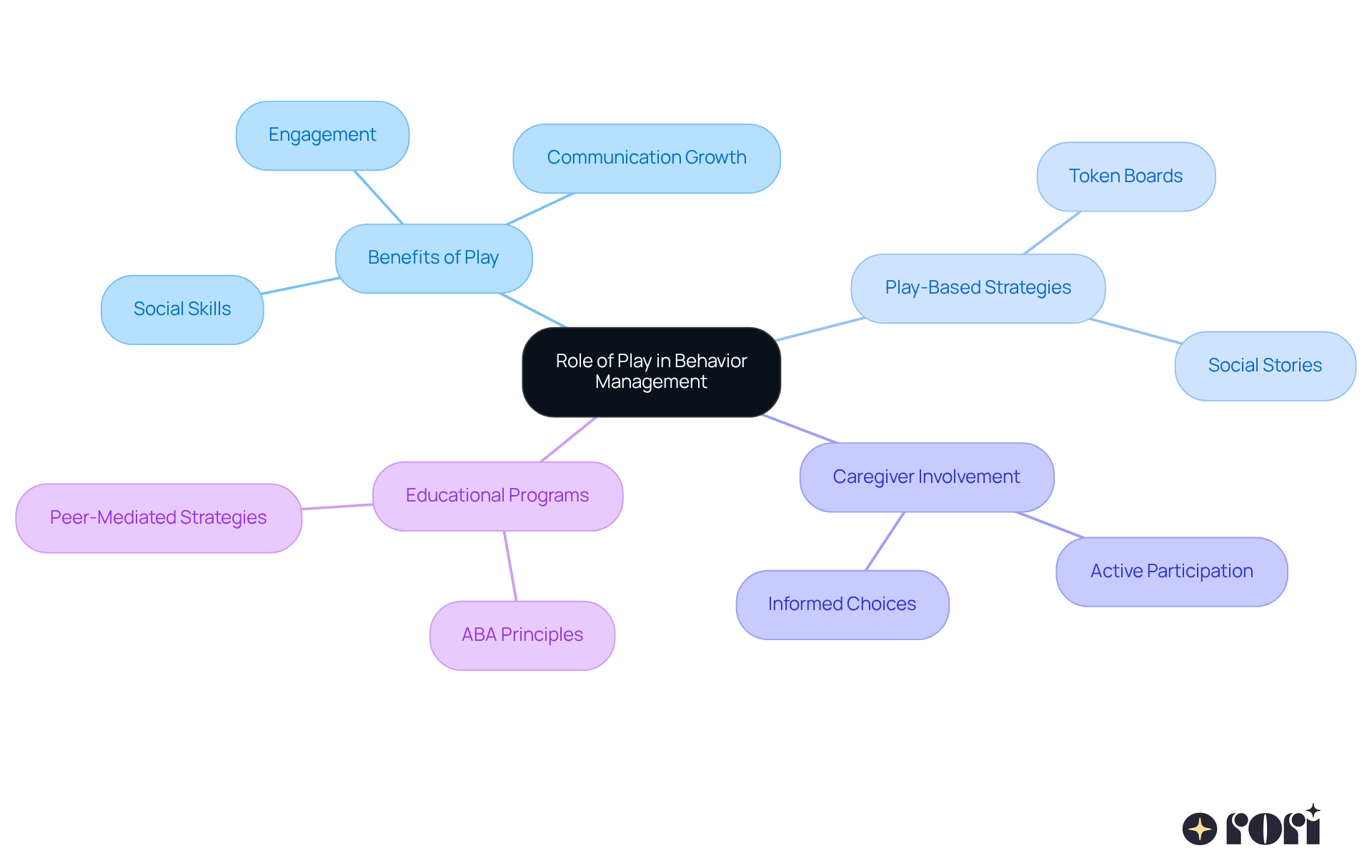
Play is such a vital part of growing up, especially for kids on the autism spectrum. It gives them a unique chance to explore their surroundings, interact with others, and build communication skills in a fun and natural way. Research shows that play-based strategies for behavior management in autism can lead to significant improvements in social skills and language development for these youngsters. For example, kids who participate in organized play activities often show better engagement and communication with their peers.
When we incorporate toys and games that align with a child's interests, it can really enhance their willingness to join in therapeutic activities. This not only makes learning enjoyable but also taps into the natural rewards that games provide, encouraging positive behaviors. By recognizing the power of play, caregivers and clinicians can implement play-based strategies for behavior management in autism that are tailored to the unique needs of children, ultimately fostering their social interaction and communication growth.
Equipping caregivers with ABA principles and techniques can boost their ability to support their child's behavioral goals through active involvement and informed choices. For instance, caregivers might use token boards to reinforce good behaviors during play or social stories to help with communication. As caregivers learn and grow through educational programs, they often feel more confident in applying these strategies at home, leading to better behavioral outcomes. As Stanley Greenspan wisely noted, 'Through affective interaction, individuals with autism will simultaneously undergo cognitive and emotional growth.' This really highlights how important play is for overall development.
Let’s explore this together! We’re here to help you every step of the way!
Implement Effective Play-Based Techniques
Using play-based strategies for behavior management in autism can be a fun and effective way for clinicians and caregivers to connect with young ones. Here are some friendly techniques to consider:
- Youth-Led Activities: Let kids take the lead in play! When they guide the activities, it empowers them and helps them feel independent. For example, if a child loves building blocks, allow them to decide how to create their masterpiece. It’s amazing to see their creativity shine!
- Structured Play Activities: Incorporate structured play that focuses on specific skills like turn-taking or sharing. Board games are a great way to teach kids about waiting for their turn and following rules. Plus, it’s a fun way to improve their interactions and communication skills with others.
- Role-Playing: Role-playing can be a fantastic tool for simulating social situations. It gives kids a chance to practice appropriate responses in a safe environment. For instance, acting out a scenario where they ask a friend to join in can really boost their social skills, which are so important for building friendships.
- Incorporate Interests: Tailor play activities to what your child loves! If they’re into dinosaurs, use dinosaur toys to create engaging learning experiences that also meet educational goals. It’s all about making learning fun and relatable!
By utilizing play-based strategies for behavior management in autism, caregivers can create a lively and engaging environment that not only promotes positive behavior but also supports skill development. Remember, we’re here to help you every step of the way!

Explore the Benefits of Play-Based Approaches
Play-based approaches offer so many wonderful benefits for children with autism! Let’s take a closer look at some of these advantages:
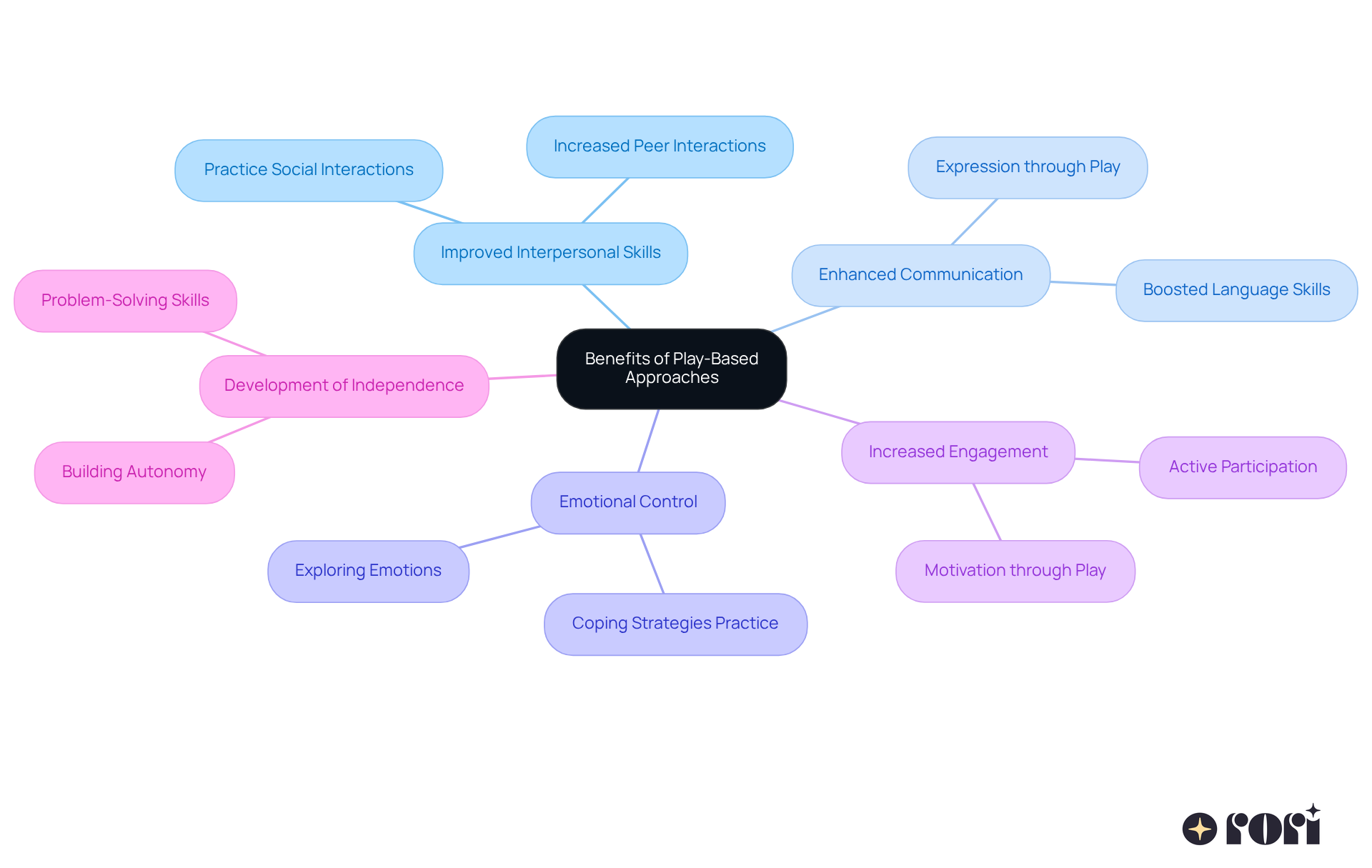
- Improved Interpersonal Skills: When kids engage in play, they get to practice social interactions in a relaxed setting. Research shows that children involved in play-based interventions often see big improvements in their social skills and enjoy more peer interactions. It’s amazing how these strategies can really help kids connect with others!
- Enhanced Communication: Play is a fantastic way for kids to express themselves, both with words and through actions. Activities like storytelling and role-playing can boost their language skills, making it easier for them to share their needs and feelings. Isn’t it great to see them open up?
- Emotional Control: Through play, children can explore and manage their emotions in a safe space. Pretend scenarios, for example, give them a chance to practice coping strategies for dealing with frustration or disappointment. This kind of practice can really help build their emotional resilience!
- Increased Engagement: Play-based strategies, like using token boards, often lead to kids being more engaged than with traditional teaching methods. When children earn tokens for completing tasks during play, they feel more motivated to participate actively in learning. This can really enhance their educational experience!
- Development of Independence: Letting kids take the lead in activities helps them build autonomy and confidence. By making choices and solving problems during play, they learn essential life skills that promote their overall independence.
In summary, incorporating play-based strategies for behavior management in autism, particularly with tools like token boards, not only boosts learning outcomes but also supports the overall development of children. It’s such an important part of effective intervention strategies! Let’s explore this together and see how we can make a difference!
Overcome Challenges in Implementing Play-Based Strategies
While play-based approaches can be super effective, they do come with their own set of challenges. Let’s take a look at some common obstacles and how we can tackle them together:
- Resistance to Change: It’s not uncommon for some caregivers or clinicians to feel a bit hesitant about switching to play-based methods, especially if they’re used to traditional approaches. To help ease this transition, sharing success stories from other practitioners can really highlight the benefits of play-based strategies.
- Limited Resources: Sometimes, finding the right materials for activities can be tricky. But here’s a fun idea: encourage caregivers to get creative with everyday items! Household objects or recycled materials can work wonders in facilitating play-based learning.
- Time Constraints: We all know how busy life can get, and integrating activities into therapy sessions might seem like a lot of work. However, it’s important to remember that play can fit right into existing routines, making it a natural part of the learning process.
- Individual Differences: Every child is unique, and what works for one might not work for another. It’s all about being flexible and willing to adapt activities based on each child’s responses and preferences.
- Monitoring Progress: Keeping track of how well play-based approaches are working can be a bit challenging. Implementing simple assessment tools can help evaluate progress and make any necessary adjustments along the way.
By proactively addressing these challenges, caregivers and clinicians can successfully implement play-based strategies, maximizing their effectiveness in behavior management. Let’s explore this together and make the most of these wonderful methods!

Conclusion
Play is such a vital part of behavior management for kids on the autism spectrum! It opens up amazing opportunities for exploration, social interaction, and communication development. When caregivers and clinicians weave play-based strategies into their therapeutic practices, they create fun and engaging environments that really promote positive behaviors and help kids learn new skills. Recognizing how important play is not only makes learning more enjoyable but also supports growth in social and emotional areas.
In this article, we’ve shared some effective play-based techniques, like youth-led activities, structured play, role-playing, and tapping into what kids are interested in. Each of these strategies is all about empowering children, boosting their interpersonal skills, enhancing communication, and helping them develop emotional control. We also touched on some challenges that might come up when implementing these strategies, highlighting the need for flexibility, creativity, and ongoing assessment to make sure everything goes smoothly.
Ultimately, integrating play-based approaches in autism therapy isn’t just beneficial - it’s essential for nurturing independence and resilience in our children. By embracing these methods, caregivers and clinicians can truly make a difference in the developmental journey of children with autism, turning challenges into wonderful opportunities for growth. Let’s embark on this journey together, paving the way for a brighter, more connected future for these kids and their families!
Frequently Asked Questions
Why is play important for children on the autism spectrum?
Play is vital for children on the autism spectrum as it allows them to explore their surroundings, interact with others, and build communication skills in a fun and natural way.
How can play-based strategies improve behavior management in autism?
Research shows that play-based strategies can lead to significant improvements in social skills and language development for children with autism, enhancing their engagement and communication with peers.
What types of activities can enhance a child's willingness to participate in therapeutic activities?
Incorporating toys and games that align with a child's interests can enhance their willingness to join in therapeutic activities, making learning enjoyable and encouraging positive behaviors.
How can caregivers support their child's behavioral goals through play?
Caregivers can support their child's behavioral goals by using ABA principles and techniques, such as token boards to reinforce good behaviors during play or social stories to aid communication.
What benefits do educational programs provide to caregivers of children with autism?
Educational programs equip caregivers with knowledge and strategies, boosting their confidence in applying behavior management techniques at home, which can lead to better behavioral outcomes.
What does Stanley Greenspan suggest about the role of play in development for individuals with autism?
Stanley Greenspan suggests that through affective interaction, individuals with autism will experience simultaneous cognitive and emotional growth, highlighting the importance of play for overall development.
List of Sources
- Understand the Role of Play in Behavior Management
- The Importance of Social Play for Children with Autism - Kids First (https://kidsfirstservices.com/first-insights/the-importance-of-social-play-for-children-with-autism)
- The Games They Play: Observations of Children with Autism Spectrum Disorder on the School Playground - PMC (https://pmc.ncbi.nlm.nih.gov/articles/PMC6509020)
- Play-based interventions to support social and communication development in autistic children aged 2–8 years: A scoping review - PMC (https://pmc.ncbi.nlm.nih.gov/articles/PMC9620698)
- Play Time: An Examination Of Play Intervention Strategies for Children with Autism Spectrum Disorders (https://iidc.indiana.edu/irca/articles/play-time-an-examination-of-play-intervention-strategies-for-children-with-autism-spectrum-disorders.html)
- 59 Inspirational Quotes About Autism - Hidden Talents ABA (https://hiddentalentsaba.com/autism-quotes)
- Implement Effective Play-Based Techniques
- Play Time: An Examination Of Play Intervention Strategies for Children with Autism Spectrum Disorders (https://iidc.indiana.edu/irca/articles/play-time-an-examination-of-play-intervention-strategies-for-children-with-autism-spectrum-disorders.html)
- The Numbers Don't Lie: Revealing Autism Therapy Statistics | Above and Beyond Therapy (https://abtaba.com/blog/autism-therapy-statistics)
- Play Quotes to Remind Us Why PLAY is so IMPORTANT - Your Therapy Source (https://yourtherapysource.com/blog1/2019/06/06/play-quotes)
- 72 Inspirational Learning Through Play Quotes — My Teaching Cupboard (https://myteachingcupboard.com/blog/inspirational-learning-through-play-quotes)
- 6 Benefits of Structured Play for Children with Autism | Shelton, Fairfield County (CT) | Solstice Behavioral Health & Consulting (https://solsticebhc.org/blog/6-benefits-of-structured-play-for-autism)
- Explore the Benefits of Play-Based Approaches
- Interventions to improve social and play skills for autistic children. (https://psycnet.apa.org/record/2025-86542-019)
- The Effectiveness of Play Therapy on Social Skills and Challenging Behaviors of Children with Autism Spectrum Disorder
| International Journal of New Findings in Health and Educational Sciences (IJHES) (https://ijhespub.org/index.php/pub/article/view/167)
- Communication Skills In Children with autism: Strategies And Tips (https://discoveryaba.com/aba-therapy/the-role-of-play-in-developing-communication-skills-in-aba-therapy?8936781b_page=22)
- The Effect of a Play-Based Training Program on Developing Verbal and Non-verbal Communication Skills among Autistic Children (https://clinicalschizophrenia.net/articles/the-effect-of-a-playbased-training-program-on-developing-verbal-and-nonverbal-communication-skills-among-autistic-children-94453.html)
- Play-based interventions to support social and communication development in autistic children aged 2–8 years: A scoping review - PMC (https://pmc.ncbi.nlm.nih.gov/articles/PMC9620698)