Introduction
Understanding the nuances of Applied Behavior Analysis (ABA) can be quite the journey for parents looking to support their children with autism. 🌟 By embracing core ABA principles, caregivers can create a nurturing environment that promotes growth and development, making daily life not just manageable but also rewarding. But here’s the question: how can we weave these principles into our everyday routines?
This article dives into practical applications of ABA, sharing insights and strategies that empower parents to navigate this complex landscape with confidence and clarity. Let’s explore this together!
Understand Core Principles of ABA
Applied Behavior Analysis (ABA) is built on some key principles that can really help individuals with autism thrive. By understanding these principles, parents can support their child's development in meaningful ways. Let’s explore this together!
- Reinforcement: This principle is all about giving a little reward after a desired action. It’s like giving a high-five for a job well done! For instance, when you compliment your child for finishing a task, it encourages them to do it again. Research shows that , social skills, and daily living tasks while reducing challenging behaviors.
- : This model helps parents see the sequence of events around a behavior. By figuring out what happens before (antecedent) and after (consequence) a behavior, you can identify triggers and outcomes. This understanding is super helpful for tailoring approaches that tackle specific challenges your child might face.
- : ABA relies on . Parents can keep an eye on their child’s behaviors and how they respond to different interventions. Using standardized assessments, like the Vineland Adaptive Behavior Scales, can give you valuable insights into your child’s growth and development.
- : Every child is unique, and ABA emphasizes the importance of . This ensures that the strategies you use are relevant and effective, leading to better engagement and results. Studies show that can significantly boost the effectiveness of interventions, especially in areas like communication and social interaction.
- : When caregivers learn about ABA principles, they become better equipped to support their child at home. With a deeper understanding of strategies, you can make informed decisions that positively impact your child’s progress. Being actively involved in the therapeutic process often leads to more effective and lasting behavioral improvements, empowering you and easing family stress.
By understanding these principles, parents can make the in daily life to effectively foster their child’s growth and development. Remember, you’re not alone in this journey! We’re here to help you every step of the way!

Implement Positive Reinforcement and Consistency
Positive reinforcement is such a powerful tool in ABA, and it really helps in our little ones! Let’s explore some practical ways to implement this strategy together:
- : First things first, figure out what truly motivates your child. Is it verbal praise, stickers, or maybe some extra playtime? Tailoring rewards to your child’s preferences can really boost their effectiveness. When reinforcement feels personal, it and motivation!
- Immediate Reinforcement: Timing is everything! Providing reinforcement right after your child does something great helps them connect the action with the reward. This makes it easier for them to understand what they did right and encourages them to repeat that behavior.
- : It’s super important to keep reinforcement consistent across different settings, like home and school. When your child knows what to expect, it strengthens their learning. Plus, when caregivers are on the same page, it creates a unified approach to managing behavior. is essential here, as it helps everyone apply consistent strategies that align with professional interventions.
- Use : Visual schedules or charts can be a game-changer! They help young learners see when they’ll receive reinforcement, making the whole process more predictable and engaging. Research shows that visual aids can really enhance learning outcomes by providing clear expectations.
- : As your child masters a behavior, it’s time to gradually raise those expectations for reinforcement. This encourages ongoing growth and fosters a supportive environment that promotes independence. Plus, when caregivers are equipped with ABA concepts and techniques, it boosts their confidence in helping their child achieve their behavioral goals.
By consistently using these approaches and focusing on , we can create a nurturing environment that promotes and supports our children’s development. Let’s work together to make this journey a little easier!

Create Supportive Environments for Learning
Creating a supportive learning environment is so important for the success of . Let’s explore some effective strategies to foster such an environment together:
- : Establishing consistent daily routines is key! Kids with autism often thrive in predictable settings. Research shows that can lead to a 47% increase in over time, which really helps with focus and productivity.
- Minimize Distractions: A calm and organized learning space can do wonders for a young person’s ability to concentrate. Studies indicate that reducing noise and visual distractions can significantly , making it easier for them to engage with tasks.
- : Setting up distinct zones in your home for different activities - like homework, play, and relaxation - helps kids connect specific spaces with certain tasks. This clear separation supports routine adherence and cuts down on confusion.
- Use : Visual aids like charts, schedules, and labels can really clarify expectations and make transitions between activities smoother. are especially helpful for kids who are visual learners or struggle with reading.
- : is crucial! Encourage your child to express their needs and feelings, and consider using visual aids or communication devices to support this. This not only boosts understanding but also builds their confidence in expressing themselves.
By actively involving caregivers in the learning process and sharing ABA concepts and techniques, parents can make informed choices that positively impact their child’s development. It’s encouraging to note that 90% of young individuals show significant progress when recommended hours are fully applied with active caregiver participation. As Temple Grandin wisely said, "Acceptance is the key to unlocking the potential of every person." By implementing these strategies, you can and enhances your child’s overall well-being, demonstrating the practical application of ABA principles in daily life, which leads to better outcomes in ABA therapy. We’re here to help you every step of the way!

Leverage Technology for Enhanced ABA Practices
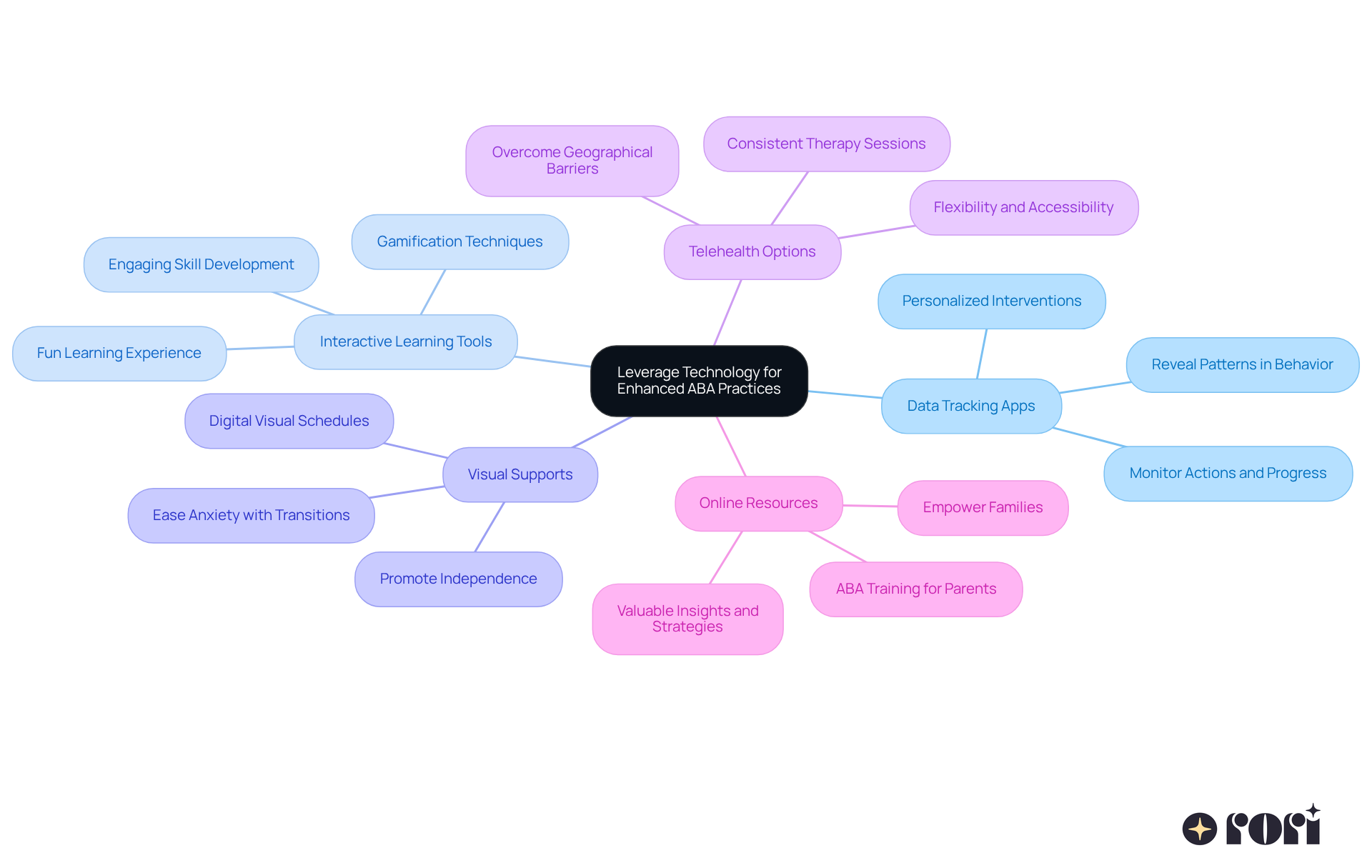
Technology plays a crucial role in making more effective for your child. Let’s explore some ways you can leverage technology in your child’s ABA practices:
- : Think about using apps designed to monitor actions and progress. These handy tools let you gather data on your child’s responses to interventions, helping you make timely adjustments to strategies. For example, a data tracking app can reveal patterns in behavior, allowing for more .
- : Why not incorporate educational apps and games that make skill development fun? Look for programs that align with your child’s learning goals. Gamification techniques can really boost engagement, turning learning into an enjoyable experience. Imagine a game that rewards your child for completing tasks - what a great way to motivate them to practice new skills!
- : and reminders can be a game changer for helping your child understand daily routines and expectations. These customizable tools cater to your child’s unique needs, promoting independence and clarity. A visual schedule app can help your child anticipate transitions throughout the day, which can really ease anxiety.
- : Have you considered telehealth services for ? They offer flexibility and accessibility, especially for families in remote areas. The shift to telehealth has opened up access to essential services, allowing for consistent therapy sessions without the hassle of travel.
- : Don’t forget about online platforms that provide ABA training and resources for parents! These can offer valuable insights and strategies to enhance your child’s therapy experience, empowering you to implement effective interventions at home. For instance, online workshops can introduce you to new techniques to support your child’s learning.
At Rori Care, we also harness advanced to automate progress report creation, freeing up 50% more time for your child’s treatment. This means our world-class clinicians can focus more on delivering personalized therapy while ensuring families receive comprehensive support throughout their journey. By integrating these technological tools, you can create a more dynamic and responsive environment that meets your child’s evolving needs. Let’s explore this together!
Conclusion
Understanding and applying the principles of Applied Behavior Analysis (ABA) can truly enhance the developmental journey of children, especially those with autism. By embracing these core concepts, parents can create a structured and nurturing environment that fosters growth and learning. This ultimately leads to improved outcomes for their children.
Throughout this article, we’ve explored key strategies like:
- Positive reinforcement
- The ABC model
- Data-driven decision-making
- Individualization of interventions
- Caregiver education
Each of these elements plays a vital role in supporting children’s behavioral development and enhancing their learning experiences. Implementing these strategies not only empowers parents but also promotes a collaborative approach to therapy, ensuring consistency and effectiveness across various settings.
As you navigate the complexities of raising a child with autism, leveraging technology can further enrich your ABA experience. From data tracking apps to interactive learning tools, these resources offer innovative ways to engage your child and streamline therapeutic practices. By actively applying these insights and staying committed to understanding ABA principles, you can transform daily challenges into opportunities for growth. Together, let’s unlock your child’s full potential!
So, what’s next? Let’s explore this journey together! Remember, you’re not alone in this. We’re here to help you every step of the way!
Frequently Asked Questions
What is Applied Behavior Analysis (ABA)?
Applied Behavior Analysis (ABA) is a therapeutic approach that uses key principles to help individuals with autism thrive by supporting their development in meaningful ways.
What is the principle of reinforcement in ABA?
Reinforcement involves giving a reward after a desired action to encourage that behavior. For example, complimenting a child for completing a task can motivate them to repeat it. Positive reinforcement is crucial for improving communication, social skills, and daily living tasks while reducing challenging behaviors.
What is the Antecedent-Behavior-Consequence (ABC) model?
The ABC model helps parents understand the sequence of events surrounding a behavior by identifying what happens before (antecedent) and after (consequence) the behavior. This understanding aids in recognizing triggers and outcomes, allowing for tailored approaches to address specific challenges.
How does data-driven decision-making work in ABA?
ABA relies on collecting data to track a child's progress and refine strategies. Parents can monitor behaviors and responses to different interventions using standardized assessments, such as the Vineland Adaptive Behavior Scales, to gain insights into their child's growth and development.
Why is individualization important in ABA?
Individualization is crucial because every child is unique. ABA emphasizes customizing interventions to meet each child's personal needs, ensuring that the strategies used are relevant and effective, which can lead to better engagement and results.
What are the benefits of caregiver education in ABA?
Caregiver education equips parents with a better understanding of ABA principles, enabling them to support their child more effectively at home. Informed caregivers can make decisions that positively impact their child's progress, leading to more effective and lasting behavioral improvements and reducing family stress.
How can parents apply ABA principles in daily life?
By understanding the core principles of ABA, parents can implement practical strategies in their daily routines to foster their child's growth and development effectively.
List of Sources
- Understand Core Principles of ABA
- The Numbers Don't Lie: Revealing Autism Therapy Statistics | Above and Beyond Therapy (https://abtaba.com/blog/autism-therapy-statistics)
- Success Rates of ABA Therapy | Advanced Autism Services (https://advancedautism.com/post/success-rates-of-aba-therapy)
- The Impact of ABA Therapy on Long-Term Outcomes for Autism | Advanced Autism Services (https://advancedautism.com/post/the-impact-of-aba-therapy-on-long-term-outcomes-for-autism)
- Applied Behavior Analysis (ABA) Statistics: Data, Effectiveness, and Evidence-Based Practices (https://nexoaba.com/applied-behavior-analysis-statistics)
- Implement Positive Reinforcement and Consistency
- Effectiveness of Different Behavior Management Techniques in Pediatric Dentistry - PMC (https://pmc.ncbi.nlm.nih.gov/articles/PMC11426829)
- The impact of positive reinforcement on long-term behavior change (https://mastermindbehavior.com/post/the-impact-of-positive-reinforcement-on-long-term-behavior-change)
- Effective Positive Reinforcement in Schools - Veracross (https://veracross.com/resources/positive-reinforcement-classroom)
- 30 Really Awesome Positive Parenting Quotes That Will Inspire You (https://mamainstincts.com/positive-parenting-quotes)
- The Impact of Positive Reinforcement on ABA Therapy Outcomes (https://crossrivertherapy.com/articles/the-impact-of-positive-reinforcement-on-aba-therapy-outcomes)
- Create Supportive Environments for Learning
- Attention Span Statistics: What They Mean for Learning and Productivity | Double Cara ABA Blog (https://doublecareaba.com/post/attention-span-statistics-what-they-mean-for-learning-and-productivity)
- Autism & Routines: The Benefits & Importance for Autistic Children (https://blossomchildrenscenter.com/the-benefits-of-routines-for-children-with-autism)
- The Numbers Don't Lie: Revealing Autism Therapy Statistics | Above and Beyond Therapy (https://abtaba.com/blog/autism-therapy-statistics)
- 80 Inspiring Quotes on Autism Awareness and Support - Empower ABA (https://empoweraba.com/80-inspiring-quotes-on-autism-awareness-and-support)
- 10 inspiring quotes from people with autism | Autism Speaks (https://autismspeaks.org/life-spectrum/autism-quotes)
- Leverage Technology for Enhanced ABA Practices
- The impact of technology on ABA therapy delivery (https://mastermindbehavior.com/post/the-impact-of-technology-on-aba-therapy-delivery)
- Technology in ABA Therapy: Tools, Trends & What's Next (https://appliedbehavioranalysisedu.org/2023/11/future-of-applied-behavior-analysis-aba-and-technological-advancements)
- Using Technology To Track Autism Therapy Outcomes (https://newpatternsaba.com/blog/using-technology-to-track-autism-therapy-outcomes)
- The Future of ABA Therapy: Trends and Innovations - GreenLight (https://greenlightaba.com/the-future-of-aba-therapy-trends-and-innovations)
- The Impact of AI in ABA Therapy Data Collection & Outcomes - Step It Up ABA (https://stepitupaba.com/ai-in-aba-therapy-data-collection)