Introduction
Many parents feel lost when trying to navigate autism therapy, and that’s completely understandable! The complexities can be overwhelming, but parental involvement is key to shaping successful outcomes. When parents get involved in therapy, it not only helps their child learn faster but also creates a warm, supportive space for growth.
So, what can you do to get more involved and work better with your child's therapist? Exploring some great strategies can really help both your child and your family on this journey! With the right strategies, you can truly make a difference in your child's journey.
Recognize the Importance of Parental Involvement in Therapy Success
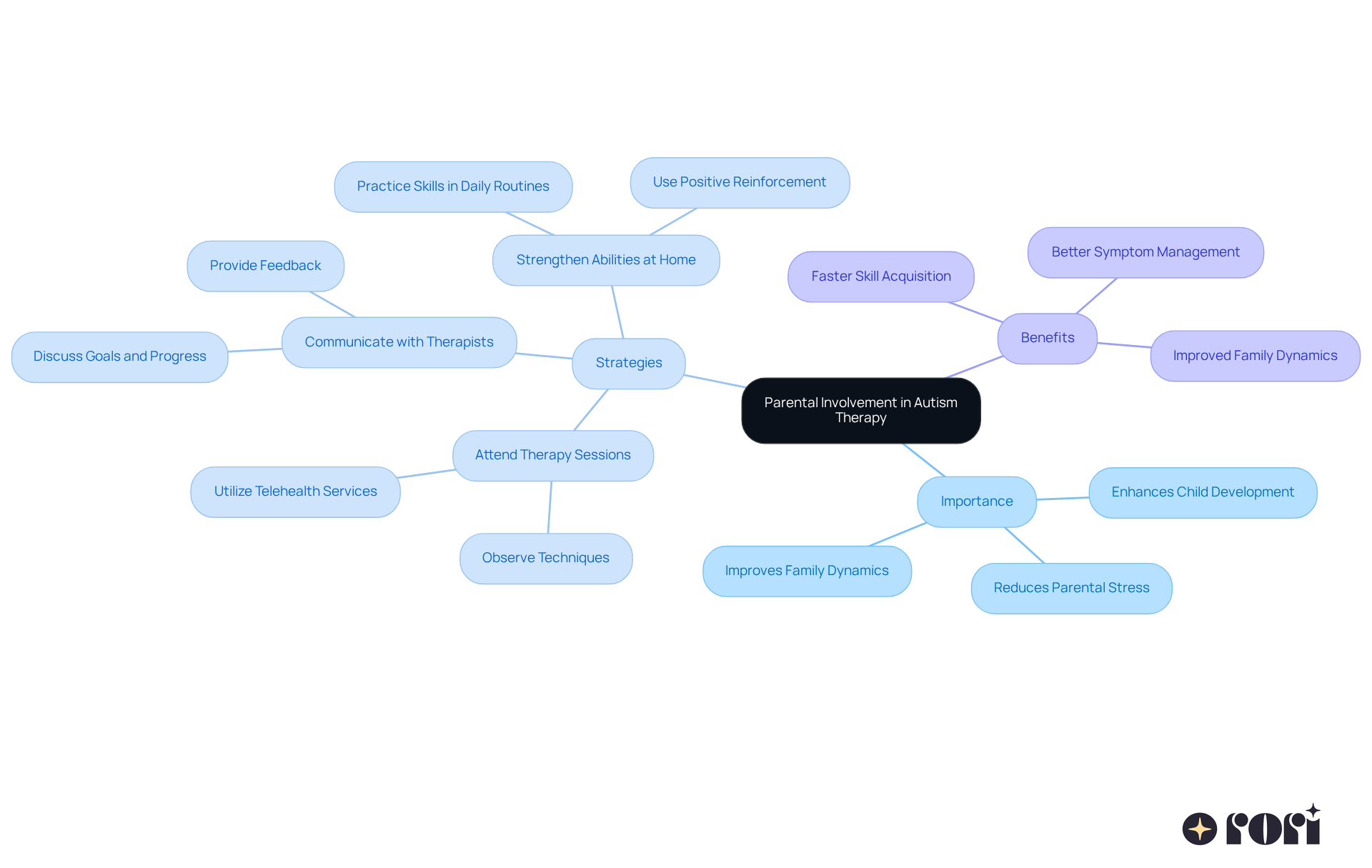
Navigating the world of autism treatment can feel daunting for parents, but your involvement can make all the difference! Supporting parents in autism therapy is a cornerstone of effective autism treatment. When parents are involved in supporting parents in autism therapy, amazing things can happen! Studies show that kids whose caregivers actively participate in their therapeutic process tend to learn skills faster and manage their symptoms better.
For instance, a meta-analysis revealed that data from 51 effect sizes obtained from randomized controlled trials (RCTs) involving 2,895 youngsters demonstrated moderately strong benefits of parent-implemented interventions (PIIs). This shows just how important early intervention is for helping kids learn and grow socially and verbally.
ABA therapy is a proven way to help kids with autism, and it focuses on what works best for each child. Remarkably, 90% of young individuals show notable progress when parents are actively involved in supporting parents in autism therapy and when the recommended hours are fully implemented. This highlights the significance of early intensive behavioral intervention (EIBI) for improving learning, verbal, and social skills in children with autism.
To foster this involvement, parents should:
- Attend Therapy Sessions: Being present during therapy allows parents to observe techniques and strategies used by therapists, enabling them to replicate these methods at home. Telehealth services also offer virtual access to therapists, making it easier for parents to participate without travel challenges.
- Communicate Regularly with Therapists: Establishing a dialogue with therapists about goals, progress, and challenges helps parents stay informed and engaged. Consistent communication is crucial when supporting parents in autism therapy, as the quality of family involvement often matters more than the quantity.
- Strengthen Abilities at Home: Parents can practice skills learned in sessions during daily routines, which helps kids generalize their learning across different environments. Programs aimed at supporting parents in autism therapy are linked to improvements in behavior and can also ease anxiety for parents, enhancing the therapeutic experience.
Moreover, caregiver education enhances support, informed decision-making, and improved behavioral outcomes for supporting parents in autism therapy. By gaining knowledge and skills through educational programs, caregivers become empowered partners in supporting parents in autism therapy, which leads to better outcomes and improved family dynamics. As Temple Grandin wisely said, 'If I could snap my fingers and be non-autistic, I would not. Autism is part of what I am.' This perspective reminds us of the importance of embracing the unique journey of each individual with autism. Embracing your role in this journey can transform not just your child's experience, but your family's as a whole.
Implement Effective Strategies to Enhance Therapeutic Engagement
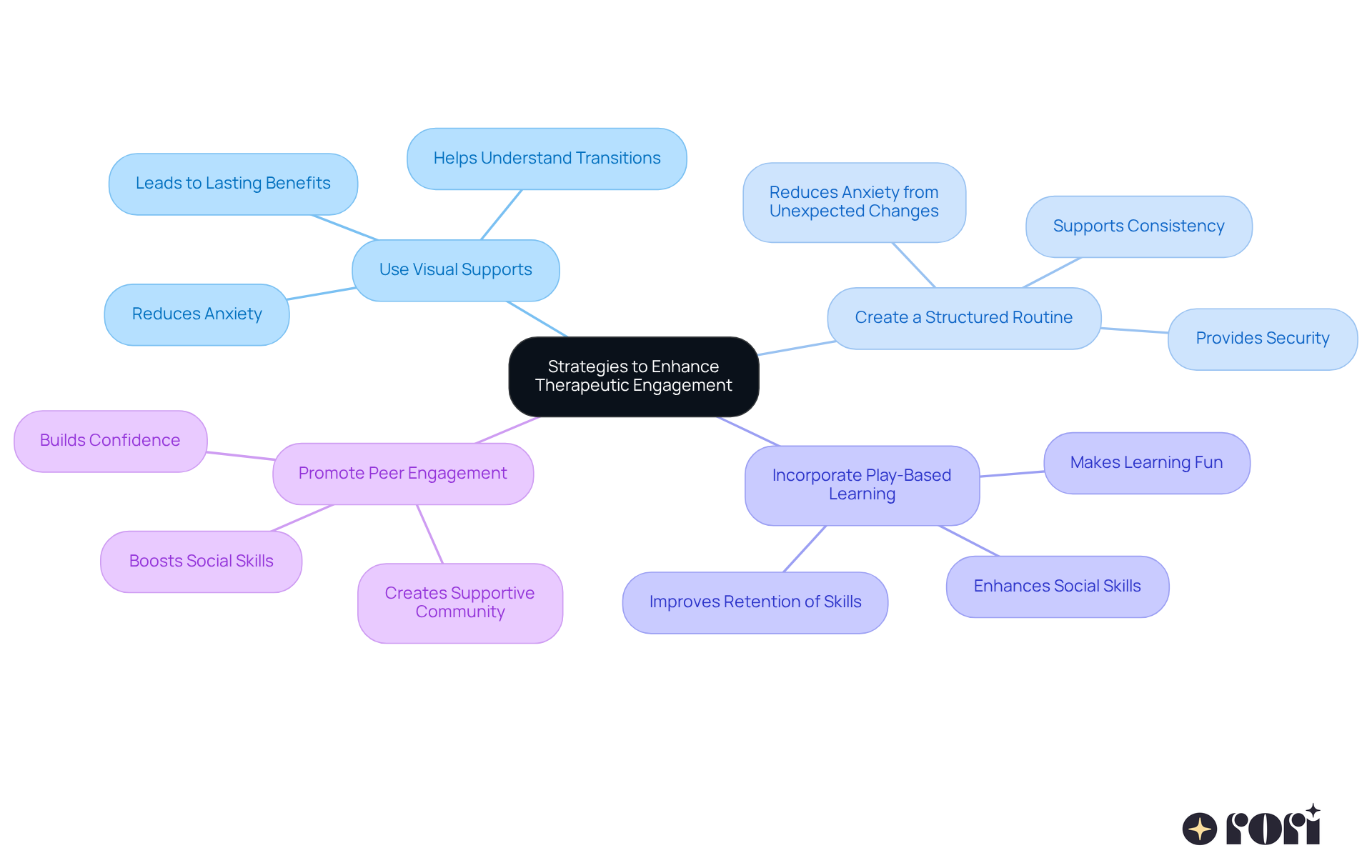
Let’s talk about some simple strategies that can make a big difference in your child’s therapy journey!
- Use Visual Supports: You might be surprised to learn that using visual supports can really help kids understand what’s coming next! Things like charts, schedules, and social stories can make a world of difference. They not only help kids anticipate transitions but also reduce anxiety. Plus, studies show that visual schedules can lead to lasting benefits in therapy settings.
- Create a Structured Routine: Having a daily routine can really help kids feel secure and know what to expect! Many children with autism thrive on consistency, and a structured environment can provide the comfort they need. When routines shift unexpectedly, it can leave kids feeling anxious and uncertain. This sense of stability can lead to happier, more confident kids.
- Incorporate Play-Based Learning: Playing games that help kids learn can make the whole process fun and less scary! For instance, using games to practice social skills not only makes learning enjoyable but also helps kids retain what they’ve learned. Case studies have shown that play-based interventions can significantly enhance social interactions and communication skills.
- Promote Peer Engagement: Giving kids chances to hang out with their friends can really boost their social skills! Social skills group therapy, led by trained therapists, can help kids build confidence and improve their interactions. Advocates emphasize that fostering these connections is key to creating a supportive community that embraces diversity.
By embracing these strategies, you’re not just helping your child; you’re also supporting parents in autism therapy while building a supportive community around them. We’re here to help you every step of the way!
Foster Strong Communication with Therapists for Collaborative Success
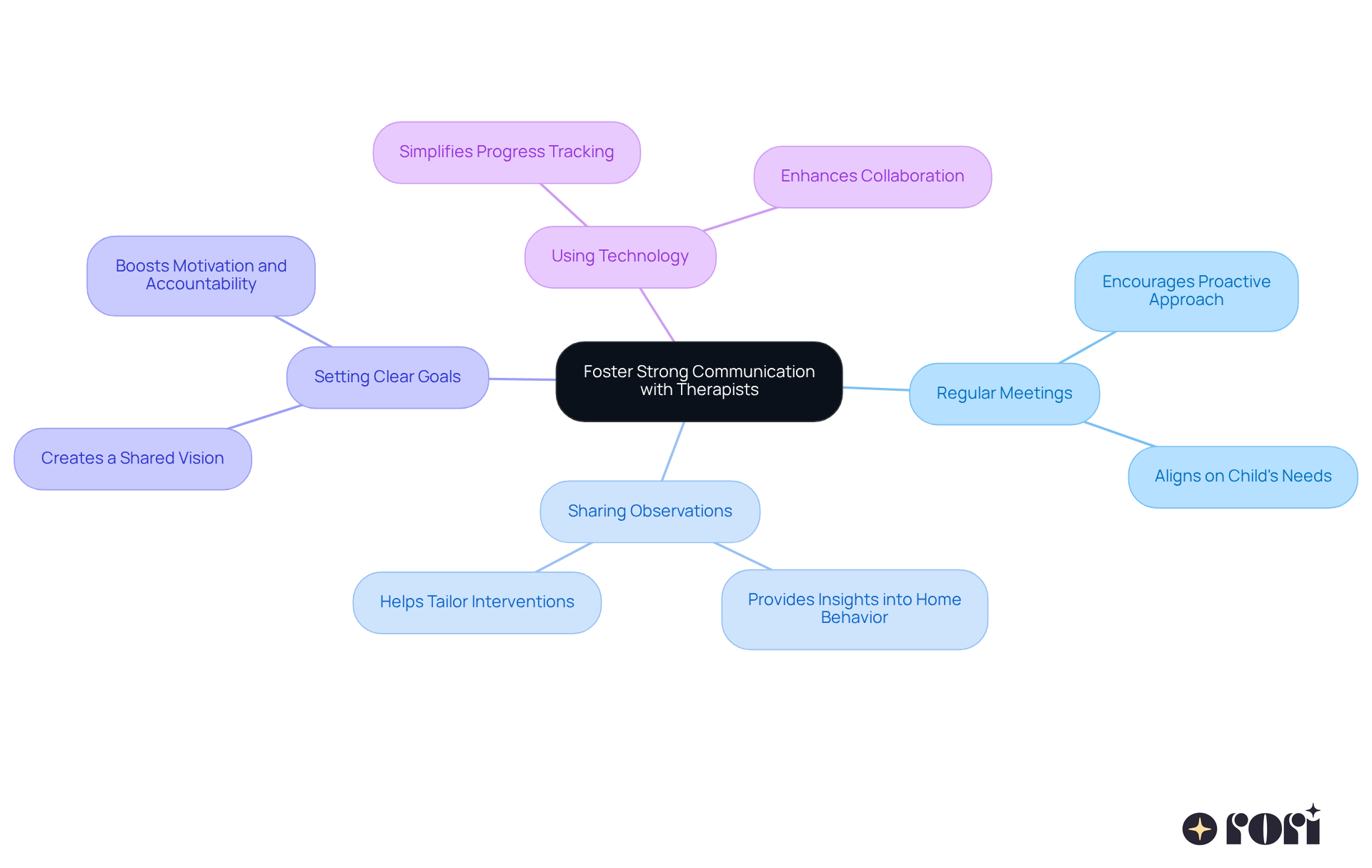
Navigating the world of autism treatment can feel overwhelming, especially when supporting parents in autism therapy is complicated by communication issues between caregivers and therapists. Here are some friendly practices to enhance this important dialogue:
- Let’s talk about scheduling regular meetings! These check-ins can be a game-changer, giving you and your therapist a chance to chat about your child’s progress and any concerns that pop up. Frequent meetings encourage a proactive approach, ensuring that everyone stays aligned on what your little one needs.
- Don’t forget to share your observations! If you notice any changes in your child’s behavior at home, let your therapist know. It’s like giving them a sneak peek into your child’s world, helping them tailor interventions more effectively.
- Let’s work together on setting clear goals! When you and your therapist team up to create treatment objectives, it helps everyone stay on the same page and keeps your child’s care consistent. This shared vision boosts motivation and accountability for all involved.
- Have you tried using technology? Many treatment providers have handy platforms that make it easy to track progress and stay in the loop! These tools can simplify updates and improve collaboration, which is essential for supporting parents in autism therapy, making it easier for you to stay informed and involved in your child’s healing journey.
When you foster open dialogue, you’re not just supporting your child; you’re also paving the way for a brighter future together.
Engage in Parent Training Programs to Build Effective Support Skills
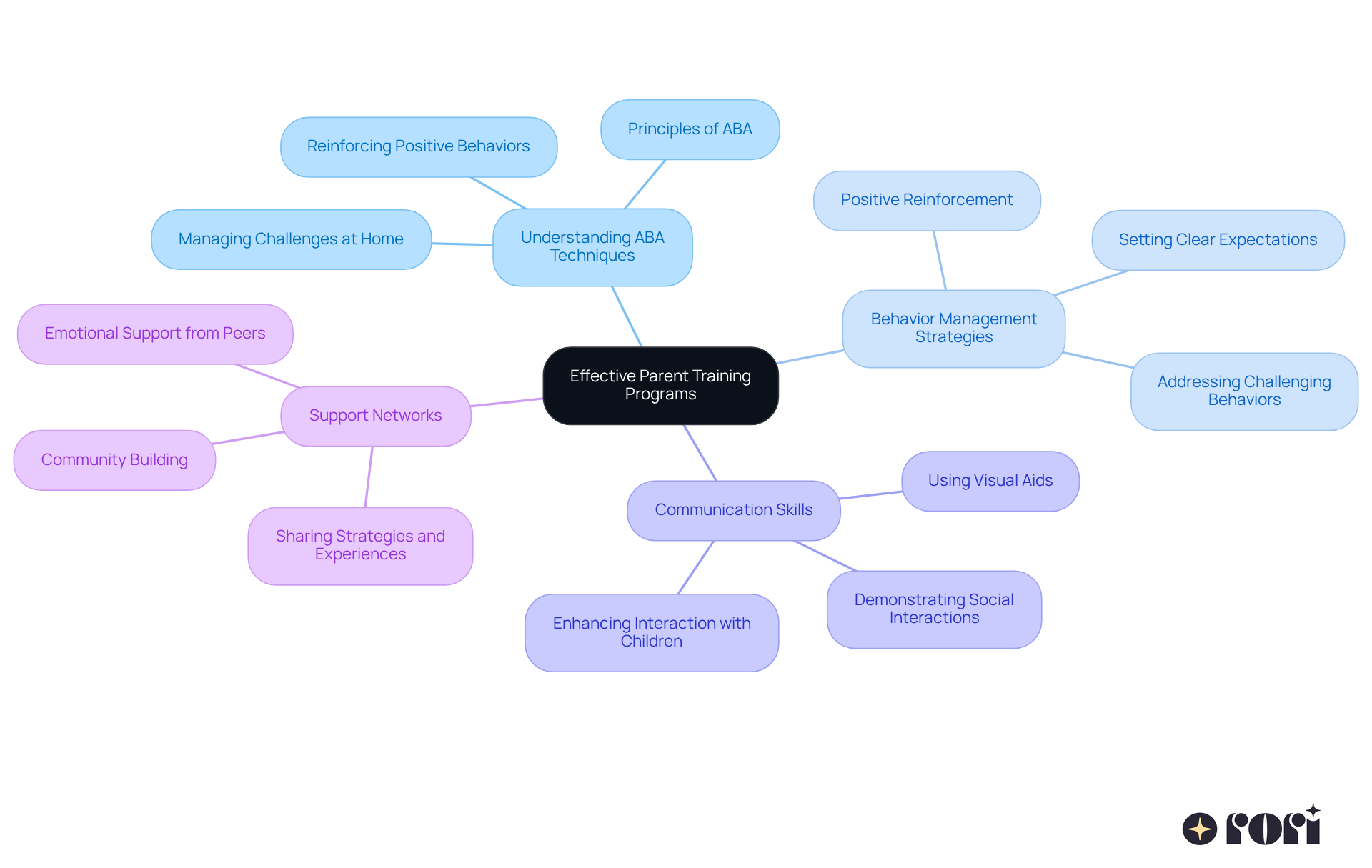
Many parents feel overwhelmed when trying to support their child's therapy at home, but supporting parents in autism therapy can provide a way to make it easier! Here at Rori Care, we’re all about helping your family navigate the journey of Applied Behavior Analysis (ABA) therapy, making sure you have the tools and support you need for your child's success! Let’s take a look at some important parts of effective parent training:
- Understanding ABA Techniques: Parents should familiarize themselves with the principles of Applied Behavior Analysis (ABA), which helps them reinforce positive behaviors and manage challenges at home. Research shows that when caregivers understand and apply ABA principles, individuals with autism attain improved results across different developmental areas.
- Behavior Management Strategies: Training should provide practical strategies for addressing challenging behaviors, emphasizing the use of positive reinforcement and setting clear expectations. Studies show that parent-led ABA approaches can lead to significant improvements in clinical outcomes, demonstrating the effectiveness of these strategies.
- Communication Skills: Improving interaction with their offspring is vital for caregivers. Training that emphasizes using visual aids and demonstrating suitable social interactions can significantly enhance the individual's ability to communicate effectively. Evidence indicates that children receiving a minimum of 20 hours each week of ABA therapy, backed by their guardians, achieve more significant progress than those obtaining less intensive assistance.
- Support Networks: Interacting with fellow caregivers in training programs nurtures emotional support and shared experiences, establishing a sense of community. This partnership not only improves the learning experience but also lessens the stress of guardians, as they can exchange strategies and celebrate small victories together.
By participating in these programs, parents not only gain skills but also see their children thrive in ways they never thought possible. Taking that first step toward training can truly transform your family's journey together. Furthermore, we urge guardians to utilize our Free Autism Consultation, which offers a chance to discuss their offspring's needs with our Board Certified Behavior Analyst. The commitment to understanding ABA techniques and engaging in supportive networks plays a vital role in supporting parents in autism therapy, empowering them to be proactive in their child's development.
Conclusion
Supporting your child with autism can feel like a big task, but you’re not alone in this journey! When caregivers jump in, it not only boosts therapy but also helps kids learn and grow. We’ve shared some great strategies to help you on this journey:
- Attend therapy sessions
- Keep the lines of communication open with therapists
- Engage in parent training programs
Every little bit counts. Plus, engaging in parent training programs can equip you with the skills you need to reinforce those therapeutic goals at home.
Supporting kids with autism is a journey we take together! By embracing these strategies, you can enhance your child's therapy experience and build a supportive community around you. Taking proactive steps toward involvement and education can truly transform the therapeutic landscape. By stepping up and getting involved, you’re not just helping your child; you’re also creating a brighter future for your whole family!
Frequently Asked Questions
Why is parental involvement important in autism therapy?
Parental involvement is crucial because studies show that children whose caregivers actively participate in their therapeutic process tend to learn skills faster and manage their symptoms better.
What evidence supports the effectiveness of parent-implemented interventions (PIIs)?
A meta-analysis of randomized controlled trials involving 2,895 children demonstrated moderately strong benefits of PIIs, highlighting the importance of early intervention for social and verbal growth.
What is the success rate of children with autism when parents are involved in therapy?
Remarkably, 90% of young individuals show notable progress when parents are actively involved in therapy and when the recommended hours of intervention are fully implemented.
How can parents participate in their child's therapy sessions?
Parents can attend therapy sessions to observe techniques used by therapists, which enables them to replicate these methods at home. Telehealth services also provide virtual access to therapists for easier participation.
What should parents do to maintain communication with therapists?
Parents should establish a regular dialogue with therapists about goals, progress, and challenges, as consistent communication is essential for effective involvement in autism therapy.
How can parents reinforce therapy skills at home?
Parents can practice skills learned in therapy sessions during daily routines, helping children generalize their learning across different environments.
What benefits do educational programs offer to caregivers of children with autism?
Caregiver education enhances support, informed decision-making, and improved behavioral outcomes, empowering caregivers to be active partners in their child's therapy.
How does embracing autism impact family dynamics?
Embracing the unique journey of each individual with autism can transform not only the child's experience but also improve the overall dynamics within the family.
List of Sources
- Recognize the Importance of Parental Involvement in Therapy Success
- The Power of Parental Engagement in ABA Therapy for Autism | Step Ahead ABA (https://stepaheadaba.com/blog/how-parent-and-caregiver-guidance-enhances-aba-therapy-outcomes-dcae6)
- 20 Inspiring Quotes About Autism Every Parent Must Read Today (https://circlecareservices.com/blog/20-quotes-about-autism-and-parenting)
- Effects of Parent-Implemented Interventions on Outcomes of Children with Autism: A Meta-Analysis - PMC (https://pmc.ncbi.nlm.nih.gov/articles/PMC10539413)
- Maximizing ABA Therapy Outcomes: The Importance of Parental Involvement - Cultivate BHE (https://cultivatebhe.com/maximizing-aba-therapy-outcomes-the-importance-of-parental-involvement)
- The Role of Parent Involvement in Autism Therapy Success | Advanced Autism Services (https://advancedautism.com/post/the-role-of-parent-involvement-in-autism-therapy-success)
- Implement Effective Strategies to Enhance Therapeutic Engagement
- Visual supports at home and in the community for individuals with autism spectrum disorders: A scoping review - PubMed (https://pubmed.ncbi.nlm.nih.gov/31451016)
- Inspiring Autism Quotes for Understanding and Acceptance - Kids First (https://kidsfirstservices.com/first-insights/autism-quotes)
- The use of visual schedules to increase academic-related on-task behaviors of individuals with autism: a literature review (https://tandfonline.com/doi/full/10.1080/20473869.2024.2402124)
- Quotes About Autism - Arms Wide Open ABA Therapy (https://armswideopenaba.com/blog/quotes-about-autism)
- Foster Strong Communication with Therapists for Collaborative Success
- Inspirational Autism Quotes (https://magnetaba.com/blog/inspirational-autism-quotes)
- Encouraging Autism Quotes for Positivity (https://besteveraba.com/blog/autism-quotes)
- Autism Quotes (https://kidsclubaba.com/autism-quotes)
- Quotes About Autism - Arms Wide Open ABA Therapy (https://armswideopenaba.com/blog/quotes-about-autism)
- The Numbers Don't Lie: Revealing Autism Therapy Statistics | Above and Beyond Therapy (https://abtaba.com/blog/autism-therapy-statistics)
- Engage in Parent Training Programs to Build Effective Support Skills
- Inspirational ABA and Autism Quotes - Mrs. Moe's Modifications (https://mrsmoesmodifications.com/inspirational-aba-and-autism-quotes)
- The Importance of Parent Training in ABA Therapy Programs: Evidence-Based Benefits for Children with Autism - RightWay ABA (https://rightwayaba.com/the-importance-of-parent-training-in-aba-therapy)
- The Benefits of Parent Guidance During ABA Therapy Programs: A Comprehensive Guide - True U ABA (https://trueuaba.com/the-benefits-of-parent-guidance-during-aba-therapy-programs)
- Autism Parenting Quotes (https://rainbowtherapy.org/autism-parenting-quotes)