Role-playing interventions have become a vital tool in helping children with autism spectrum disorder (ASD) develop their social skills. These fun and engaging exercises not only boost essential communication abilities but also help build confidence and ease anxiety in social situations. But here’s the question: how can parents effectively use these strategies to support their child's growth?
Let’s explore this together! This article dives into practical techniques and evidence-based outcomes of role-playing, providing caregivers with the tools they need to nurture their children's social development in meaningful ways. We’re here to help you every step of the way!
play a crucial role in Applied Behavior Analysis (ABA) therapy for children with autism spectrum disorder. It creates a safe space for them to . Imagine your child learning to read social cues, showing empathy, and through fun, for social skills in ASD! These often take place in led by trained therapists, which incorporate , allowing kids to learn important skills like taking turns and expressing themselves.
During these sessions, therapists give immediate feedback, pointing out what works well and where there’s room for growth. This kind of support really enhances the learning experience! Research shows that when kids engage in interactive activities early and regularly, their social skills can improve significantly. This leads to greater independence and a better quality of life for those with ASD.
Therapists believe that [role-playing interventions for social skills in ASD](https://rori.care/post/10-effective-functional-communication-training-aba-examples-you-can-use-today) are invaluable in therapy settings. It not only but also creates a that helps reduce anxiety. Plus, educating caregivers is crucial! By , caregivers can actively support their loved ones in reaching their behavioral goals.
So, let’s explore this together! With the , we can make a real difference in our children’s lives.
To help your child develop essential social skills, it’s important to start by recognizing the specific interpersonal abilities they need to work on - like greeting friends, sharing, or asking for help. Here are some practical strategies you can try:
By using in ASD, you can create a supportive environment that nurtures the growth of social skills in your child with autism. Let’s explore this together!

Customizing in ASD is crucial for helping youth with autism develop their social skills! Here are some friendly strategies to make these activities even better:
By using role-playing interventions for , caregivers and therapists can create a nurturing environment that enhances interpersonal skills through tailored interactive exercises. Plus, integrating during these activities can help track progress and adjust strategies as needed, keeping everything aligned with your child’s goals. At Rori Care, we believe in the power of a consistent and to maximize the impact of these interventions. Let’s explore this together!

Thorough studies show just how effective can be for . For example, kids who participate in organized pretend play can experience up to a 40% boost in their social interaction abilities! Isn’t that amazing? Plus, reports indicate that around 70% of young people see when they regularly engage in imaginative scenarios.
A systematic review highlights that not only enhance communication skills but also assist with . These findings really underscore the vital that pretend interactions play in therapeutic practices. They demonstrate clear benefits that can significantly improve a child's .
And let’s not forget about the power of role-playing! Case studies show how [role-playing interventions for social skills in ASD](https://rori.care/post/10-essential-autism-statistics-every-parent-should-know) , reinforcing their importance as a key intervention method in . At Rori Care, our clinical leadership team is made up of talented and compassionate professionals who are dedicated to neurodiversity. They empower caregivers with , ensuring that data collection during sessions is both automatic and secure. This way, support remains uninterrupted while keeping everything confidential.
Let’s explore this together! If you’re curious about how these strategies can help your child, we’re here to help you every step of the way!
Role-playing interventions can truly be a game-changer for kids with autism spectrum disorder (ASD). They create a safe space where children can build essential communication skills, empathy, and confidence. Plus, when caregivers get involved, it not only boosts the child’s growth but also strengthens the bond between them.
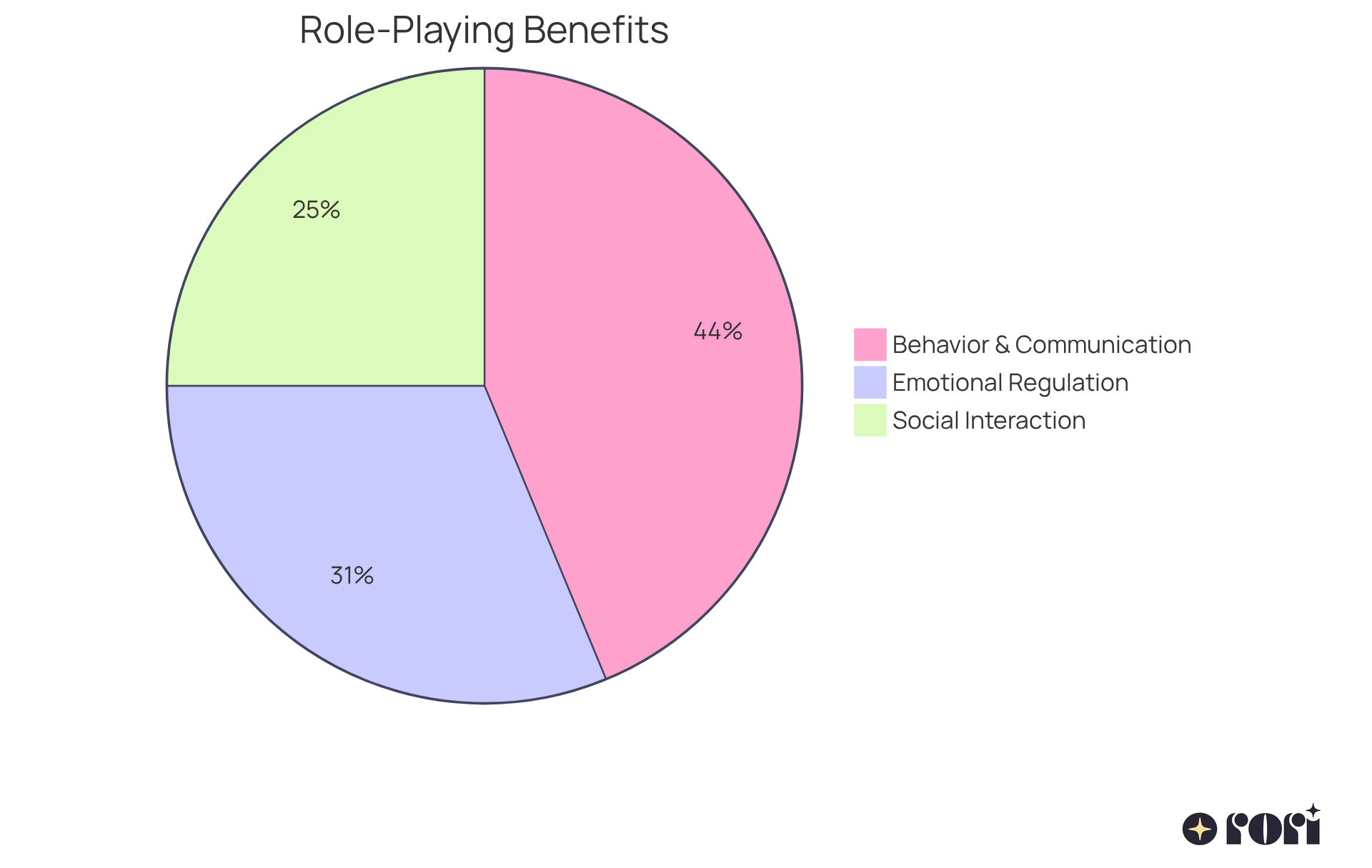
Imagine your child stepping into a relatable scenario, using visual aids, and actively participating in role-playing activities. These strategies make learning engaging and tailored to each child's unique needs. Research backs this up, showing that kids who regularly engage in role-playing see improvements in social interactions and emotional regulation. Isn’t that encouraging?
The role of role-playing in ABA therapy is incredibly important. It’s not just about developing social skills; it’s about enriching the overall quality of life for children with ASD. By embracing these techniques and creating a supportive environment, you can make a real difference in your child’s journey toward social competence. Engaging in role-playing activities is a wonderful step forward in nurturing the skills they need for successful interactions. Let’s explore this together and pave the way for brighter futures!
What is the role of role-playing in ABA therapy for children with autism spectrum disorder (ASD)?
Role-playing interventions play a crucial role in ABA therapy by creating a safe space for children with ASD to practice social interactions, learn to read social cues, show empathy, and improve communication skills.
How are role-playing interventions implemented in therapy sessions?
Role-playing interventions often take place in group therapy sessions led by trained therapists, where children learn important skills like taking turns and expressing themselves.
What kind of feedback do therapists provide during role-playing sessions?
Therapists provide immediate feedback during role-playing sessions, highlighting what works well and identifying areas for growth to enhance the learning experience.
What impact does early and regular engagement in role-playing activities have on children with ASD?
Research shows that early and regular engagement in interactive activities can significantly improve social skills, leading to greater independence and a better quality of life for children with ASD.
How do role-playing interventions affect children's confidence and anxiety?
Role-playing interventions boost children's confidence for real-life interactions and create a nurturing environment that helps reduce anxiety.
Why is caregiver education important in the context of ABA therapy?
Educating caregivers about ABA principles and strategies is crucial as it enables them to actively support their loved ones in reaching their behavioral goals.