Introduction
Understanding the ins and outs of Applied Behavior Analysis (ABA) therapy is super important for caregivers who want to help their kids develop new skills. This structured approach not only gives parents effective strategies but also makes learning more enjoyable for children by customizing interventions to fit their unique needs.
But let’s be real - navigating the various principles and techniques of ABA can feel overwhelming. How do you create a therapy plan that really makes a difference? It’s a challenge, but you’re not alone!
Let’s explore this together! With the right tools and support, you can ensure meaningful progress in your child’s development. Remember, every step you take is a step toward a brighter future for your little one!
Understand the Principles of ABA Therapy
To effectively implement a structured approach in ABA therapy, it’s important to understand its core principles:
- Reinforcement: This principle is all about rewarding desired behaviors, which can really boost the chances of those behaviors happening again. Think of it like this: when a child gets a high-five or a sticker for doing something great, they’re more likely to do it again! Positive reinforcement can come in many forms, like verbal praise or tokens, tailored to what the child loves. Research shows that reinforcement strategies work in about 85% of case studies, highlighting how crucial they are in encouraging positive changes.
- Task Analysis: Breaking down complex skills into smaller, manageable steps helps young learners pick up new skills bit by bit. For example, teaching a child to brush their teeth can be divided into simple actions like picking up the toothbrush, applying toothpaste, and brushing each part of their mouth. This approach not only makes learning easier but also helps kids gain independence as they master each step. Task analysis is super helpful for essential skills like dressing and personal hygiene, making it a go-to method in ABA practice.
- Data-Driven Decision Making: ABA therapy relies heavily on collecting data to track progress and effectiveness. By keeping an eye on actions, therapists can adjust their strategies to fit each child’s needs, ensuring that the interventions remain relevant and impactful. Studies show that consistent data-driven approaches lead to significant improvements in communication and adaptive responses. At Rori Care, our behavior care engine updates intervention and skill acquisition plans after each session based on progress, so treatment plans are always optimized.
- Personalized Treatment Plans: Every child is unique, and their treatment plans should reflect their individual strengths, challenges, and goals. Personalization is key for effective skill development, allowing for tailored interventions that match each child’s learning style and pace. Early intensive behavioral intervention (EIBI) is especially important, as research indicates that kids who start ABA therapy early often show the most remarkable improvements. Each support plan at Rori Care is customized to meet the specific needs of the client, ensuring individualized care and clear objectives for change. Qualified behavior analysts play a crucial role in crafting these personalized plans, making sure they’re effective and aligned with best practices.
By understanding these principles, caregivers can better appreciate the structured approach in ABA therapy for skill development that we will explore in the following sections. Let’s dive in together!

Assess Your Child's Needs and Set Goals
To effectively assess your child's needs and set meaningful goals, let’s walk through some simple steps together:
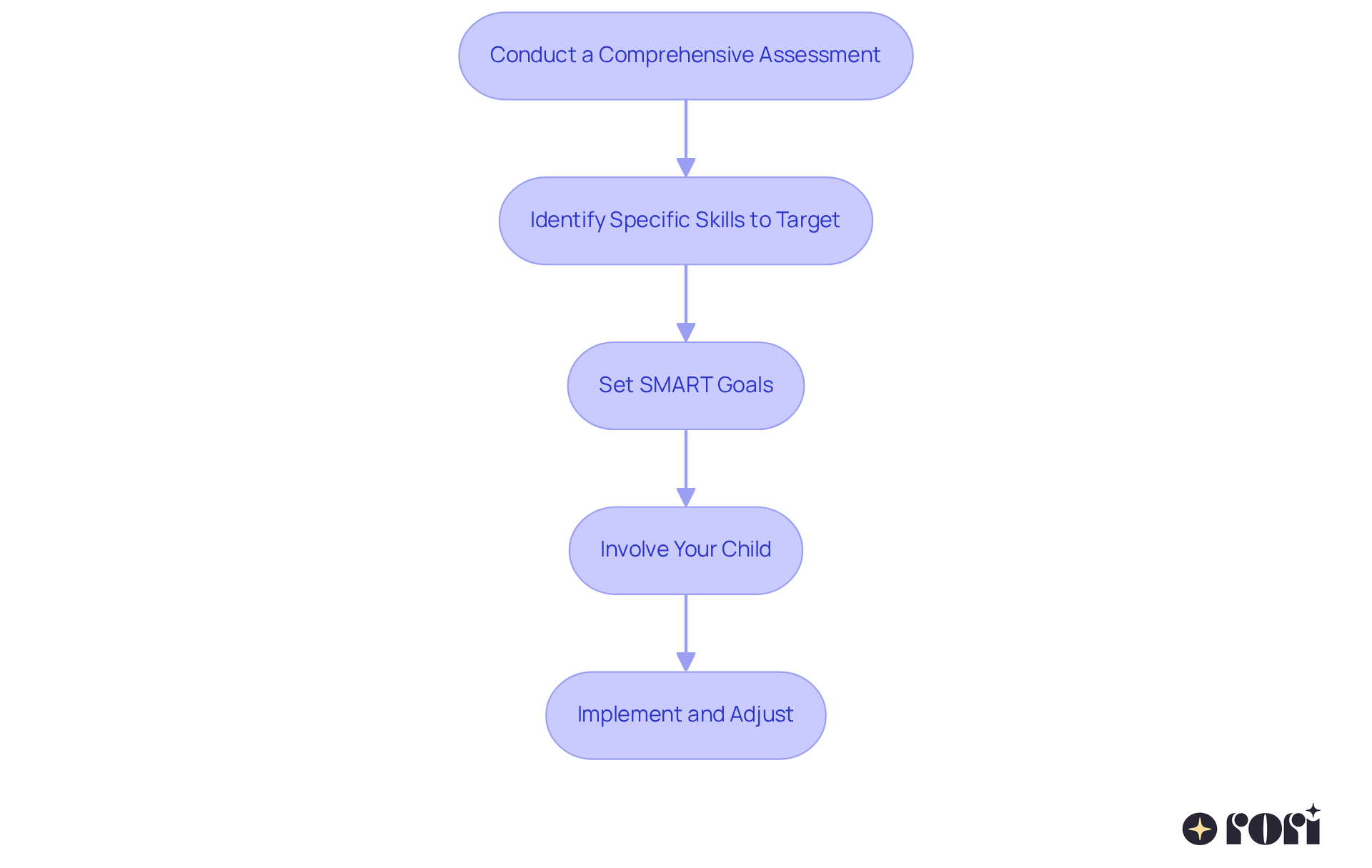
- Conduct a Comprehensive Assessment: Team up with a qualified professional to evaluate your child’s strengths, challenges, and behaviors. This might include standardized tests, direct observations, and chats with parents and teachers. It’s all about getting a full picture of what your child needs.
- Identify Specific Skills to Target: After the assessment, focus on key areas for growth. Think about essential skills like communication, social interactions, or daily living skills - these are crucial for your child’s overall development.
- Set SMART Goals: Goals should be Specific, Measurable, Achievable, Relevant, and Time-bound. Instead of saying something vague like 'improve communication,' try a SMART goal like 'increase the use of two-word phrases during playtime within three months.' Research shows that having clear, measurable objectives can really boost the chances of success - those who write down their goals are 42% more likely to achieve them! Plus, ABA interventions have effectiveness rates of 70-90% when clear goals are in place, highlighting how important this step is.
- Involve Your Child: Whenever you can, bring your child into the goal-setting process. This involvement helps them feel a sense of ownership over their progress and can really amp up their motivation. It’s essential to reinforce skills in different environments, so keep those goals realistic - aim for challenges that are achievable, not overwhelming.
By following these steps, you’re implementing a structured approach in ABA therapy for skill development, creating a clear roadmap for your child’s treatment journey. This not only enhances their development but also ensures that the sessions stay relevant to their changing needs. Remember, family involvement in counseling can make a big difference, so it’s vital to collaborate with caregivers and educators throughout this journey. Empowering caregivers with ABA principles and strategies not only supports behavioral goals but also strengthens family dynamics, leading to better outcomes. And don’t forget, using automatic data gathering during sessions helps keep track of your child’s progress, allowing for informed decisions and adjustments to the therapy plan as needed.
Let’s explore this together! We’re here to help you every step of the way!
Incorporate ABA Techniques into Daily Routines
To effectively incorporate ABA techniques into your child's daily routines, let’s explore some friendly strategies together:
- Use Visual Supports: Think about creating visual schedules that outline daily activities. This can really help your child understand what to expect and ease any anxiety. For example, a morning routine chart could include fun images for brushing teeth, getting dressed, and having breakfast. Visual aids empower kids, especially those who are nonverbal, to express their needs and emotions better, which boosts their communication and independence.
- Embed Learning Opportunities: Keep an eye out for natural chances to practice skills. For instance, while grocery shopping, you can practice counting items or identifying colors and shapes. Research shows that a [structured approach in ABA therapy for skill development](https://rori.care/post/10-effective-examples-of-naturalistic-teaching-in-aba-therapy), which involves embedding learning opportunities (ELOs) into everyday activities, can significantly enhance engagement and learning outcomes for children with autism and intellectual disabilities.
- Model Desired Behaviors: Show your child the behaviors you want to encourage. If you want them to learn about sharing, model that behavior during playtime with siblings or friends. This approach aligns with findings that kids are more likely to use learned skills independently when short lessons are woven into their play.
- Reinforce Positive Actions: Make it a habit to use positive reinforcement when your child demonstrates desired behaviors. This could be as simple as giving verbal praise, offering stickers, or providing extra playtime. Research has shown that positive reinforcement is key in nurturing desirable behaviors and can lead to significant improvements in engagement and skill development.
By incorporating a structured approach in ABA therapy for skill development into daily routines, you’re creating a supportive environment that encourages continuous learning. This ultimately enhances your child’s communication, social interaction, and independence. We’re here to help you every step of the way!

Monitor Progress and Adjust the Therapy Plan
To keep track of your child's progress and make necessary adjustments to their therapy plan, here are some friendly steps to follow:
- Regular Data Collection: Start by keeping an eye on your child's progress. Gather information on specific actions and skills regularly. You might find it helpful to use frequency counts to see how often a behavior happens, duration measures to check how long a behavior lasts, and qualitative observations to understand the context and engagement better.
- Review Objectives Periodically: Set aside some time each month to look over the goals you've set for your child. Are they consistently hitting those targets? If they achieve a goal, why not think about setting a new, more challenging one? It can really help them grow!
- Adjust Strategies as Needed: If you notice things slowing down, take a moment to analyze the data you've collected. What might be holding them back? You might need to tweak your strategies, whether that means changing up the reinforcement methods or adjusting the learning environment to better suit your little learner's needs.
- Communicate with Professionals: Keep those lines of communication open with your child's ABA therapist or BCBA. Share your observations and any concerns you have. Working together on necessary changes to the treatment plan can create a supportive environment that really boosts your child's progress.
By actively monitoring progress and being open to adjusting the therapy plan, you can help ensure that your child's ABA therapy stays effective and meets their developmental needs. Let’s explore this together!

Conclusion
A structured approach in ABA therapy is so important for helping kids develop their skills. By getting to know and using core principles like:
- reinforcement
- task analysis
- data-driven decision-making
- personalized treatment plans
caregivers can create a warm learning environment that fits each child's unique needs. This framework not only makes interventions more effective but also empowers children on their journey toward independence and success.
Throughout this article, we’ve highlighted some key strategies to implement this structured approach effectively. Think about:
- conducting thorough assessments
- setting SMART goals
- weaving ABA techniques into daily routines
- keeping an eye on progress
These steps are vital in making sure therapy stays relevant and impactful. Each of these components paints a holistic picture of the child's development, making it easier for caregivers and professionals to work together and adjust interventions as needed.
Ultimately, we can’t stress enough how significant a structured approach in ABA therapy is. By actively engaging in the process and using the strategies we’ve discussed, caregivers can really boost their child's learning outcomes and overall quality of life. Embracing these principles not only supports skill acquisition but also creates a nurturing environment where children can truly thrive. So, let’s take action today! Implementing these techniques can lead to amazing progress and positive changes in your child's development journey. We’re here to help you every step of the way!
Frequently Asked Questions
What is the principle of reinforcement in ABA therapy?
Reinforcement involves rewarding desired behaviors to increase the likelihood of those behaviors being repeated. This can include various forms of positive reinforcement, such as verbal praise or tokens, tailored to what the child enjoys.
How does task analysis work in ABA therapy?
Task analysis breaks down complex skills into smaller, manageable steps, making it easier for young learners to acquire new skills. For instance, teaching a child to brush their teeth can be divided into actions like picking up the toothbrush and applying toothpaste, which helps promote independence.
Why is data-driven decision making important in ABA therapy?
Data-driven decision making is crucial as it involves collecting data to track a child's progress and the effectiveness of interventions. This allows therapists to adjust strategies to meet each child's needs, leading to significant improvements in communication and adaptive responses.
What are personalized treatment plans in ABA therapy?
Personalized treatment plans are tailored to reflect each child's unique strengths, challenges, and goals. This customization is essential for effective skill development, ensuring that interventions match the child's learning style and pace.
What is early intensive behavioral intervention (EIBI)?
Early intensive behavioral intervention (EIBI) refers to the practice of starting ABA therapy early, which research indicates can lead to remarkable improvements in children. Personalization in treatment plans is especially important during this early stage.
How does Rori Care implement these principles in their ABA therapy?
At Rori Care, the behavior care engine updates intervention and skill acquisition plans based on progress after each session. This ensures that treatment plans are always optimized and tailored to meet the specific needs of each client. Qualified behavior analysts play a key role in creating these personalized plans.
List of Sources
- Understand the Principles of ABA Therapy
- Applied Behavior Analysis (ABA) Statistics: Data, Effectiveness, and Evidence-Based Practices (https://nexoaba.com/applied-behavior-analysis-statistics)
- The Benefits of Task Analysis in ABA Therapy (https://magnetaba.com/blog/the-benefits-of-task-analysis-in-aba-therapy)
- The Role Of Reinforcement In ABA Therapy Success: A Evidence-Based Approach - True U ABA (https://trueuaba.com/the-role-of-reinforcement-in-aba-therapy-success)
- How Successful Is ABA Therapy? Effectiveness and Outcomes (https://acceltherapies.com/resources/articles/how-successful-is-aba-therapy)
- The Science Behind ABA Therapy and Its Effectiveness (https://totalcareaba.com/autism/the-science-behind-aba-therapy-and-its-effectiveness)
- Assess Your Child's Needs and Set Goals
- Writing SMART Goals with ABA Principles | Links (https://linksaba.com/writing-smart-goals-with-aba-principles)
- Autism statistics and facts | Autism Speaks (https://autismspeaks.org/autism-statistics-asd)
- Data and Statistics on Autism Spectrum Disorder (https://cdc.gov/autism/data-research)
- The Numbers Don't Lie: Revealing Autism Therapy Statistics | Above and Beyond Therapy (https://abtaba.com/blog/autism-therapy-statistics)
- How to Set Goals and Measure Success in ABA Therapy Programs (https://magnetaba.com/blog/how-to-set-goals-and-measure-success-in-aba-therapy-programs)
- Incorporate ABA Techniques into Daily Routines
- Embedded Learning Support Practices for Primary Caregivers of Autistic Children (https://tandfonline.com/doi/full/10.1080/1034912X.2025.2543256)
- Investigating the Impact of Embedded Learning Opportunities on the Engagement of Children With Autism and Intellectual Disability - PMC (https://pmc.ncbi.nlm.nih.gov/articles/PMC12138739)
- The Role of Visual Supports in Therapy for Children with Autism | Carry on Therapy (https://carryontherapy.com/blog/the-role-of-visual-supports-in-therapy-for-children-with-autism)
- ABA Therapy Statistics for Autism (https://allaboutaba.com/blog/aba-therapy-statistics-for-autism)
- Investigating the Impact of Embedded Learning Opportunities on the Engagement of Children With Autism and Intellectual Disability | ABA Research | Behaviorist Book Club (https://behavioristbookclub.com/aba-research/autism-developmental/investigating-the-impact-of-embedded-learning-opportunities-on-the-eng)
- Monitor Progress and Adjust the Therapy Plan
- ABA Data Collection Methods: What They Are and Why They Matter (https://abamatrix.com/what-are-aba-data-collection-methods-why-they-matter)
- Measuring Progress In ABA Therapy: A Guide To Tracking Success (https://kidsclubaba.com/how-to-measure-progress-in-aba-therapy-tracking-success-guide)
- ABA Data Collection: Methods, Types, Tools, and Best Practices - Theralytics (https://theralytics.net/blogs/aba-data-collection-methods)
- Creating Behavioral Goals for Children with Autism (https://mastermindbehavior.com/post/importance-of-regular-goal-reviews-and-modifications-in-aba-therapy)
- Applied Behavior Analysis (ABA) Statistics: Data, Effectiveness, and Evidence-Based Practices (https://nexoaba.com/applied-behavior-analysis-statistics)