Navigating social interactions can be quite the journey for children with autism spectrum disorder (ASD). It often feels like an uphill battle when it comes to connecting with peers. By understanding the unique challenges they face - like communication barriers and sensory sensitivities - we can open the door to effective strategies that help foster meaningful relationships.
So, how can caregivers and educators empower these children to break through feelings of isolation and develop essential social skills? 🤔 This article dives into innovative approaches to enhance peer interaction for children with ASD, offering valuable insights that can truly transform their social experiences. Let’s explore this together!
Children with autism spectrum disorder (ASD) often face some tough challenges when it comes to making friends. You might notice they struggle with communication, interpreting social cues, and dealing with sensory sensitivities. This can lead to feelings of isolation and make it harder for them to develop those all-important social skills. For example, many kids with ASD find it tricky to start conversations, read non-verbal signals, or engage in reciprocal play - key ingredients for forming friendships. Did you know that about 1 in 36 youths are diagnosed with ASD? That really highlights how common these challenges are.
As kids with autism grow up, their ability to form friendships can sometimes fade, especially during those tricky teenage years. This can make feelings of loneliness and sadness even more intense. It’s so important for caregivers and educators to recognize these hurdles. By understanding what these kids are going through, they can use effective strategies to help them navigate social situations. At Rori Care, we’re all about empowering caregivers with knowledge and skills based on ABA principles. This way, they can provide the right support at home, working hand-in-hand with professional interventions to create a consistent environment.
Creating low-pressure opportunities for interaction, such as group therapy, can serve as strategies for fostering peer interaction in ASD, helping kids with developmental differences connect better with their peers. As Brady Watkins points out, when kids interact without pressure and show genuine interest in what their friends enjoy, communication can really blossom. Ultimately, fostering meaningful connections with peers is so crucial for the interpersonal development of children with autism. Let’s explore this together!

Organized social abilities training can really make a difference in helping kids navigate important social behaviors, like starting conversations, taking turns, and respecting personal space. Programs such as the Program for the Education and Enrichment of Relational Abilities (PEERS) offer a structured way to teach these skills. Through fun techniques like role-playing and direct instruction, young people can practice starting conversations with scripted dialogues in a safe environment. This practice helps them feel more confident when they’re out in the real world.
And here’s something cool: integrating strategies for fostering peer interaction in ASD can really enhance the effectiveness of these training programs. When typically developing peers are taught strategies for fostering peer interaction in ASD, it enhances social skills for those individuals and builds empathy and understanding among their friends. This creates a more inclusive atmosphere for everyone involved!
It’s also super important to equip caregivers with knowledge about ABA principles and data collection strategies. When caregivers are actively involved, it helps create a consistent and supportive environment that maximizes the impact of the intervention. So, let’s explore this together! We’re here to help you every step of the way!

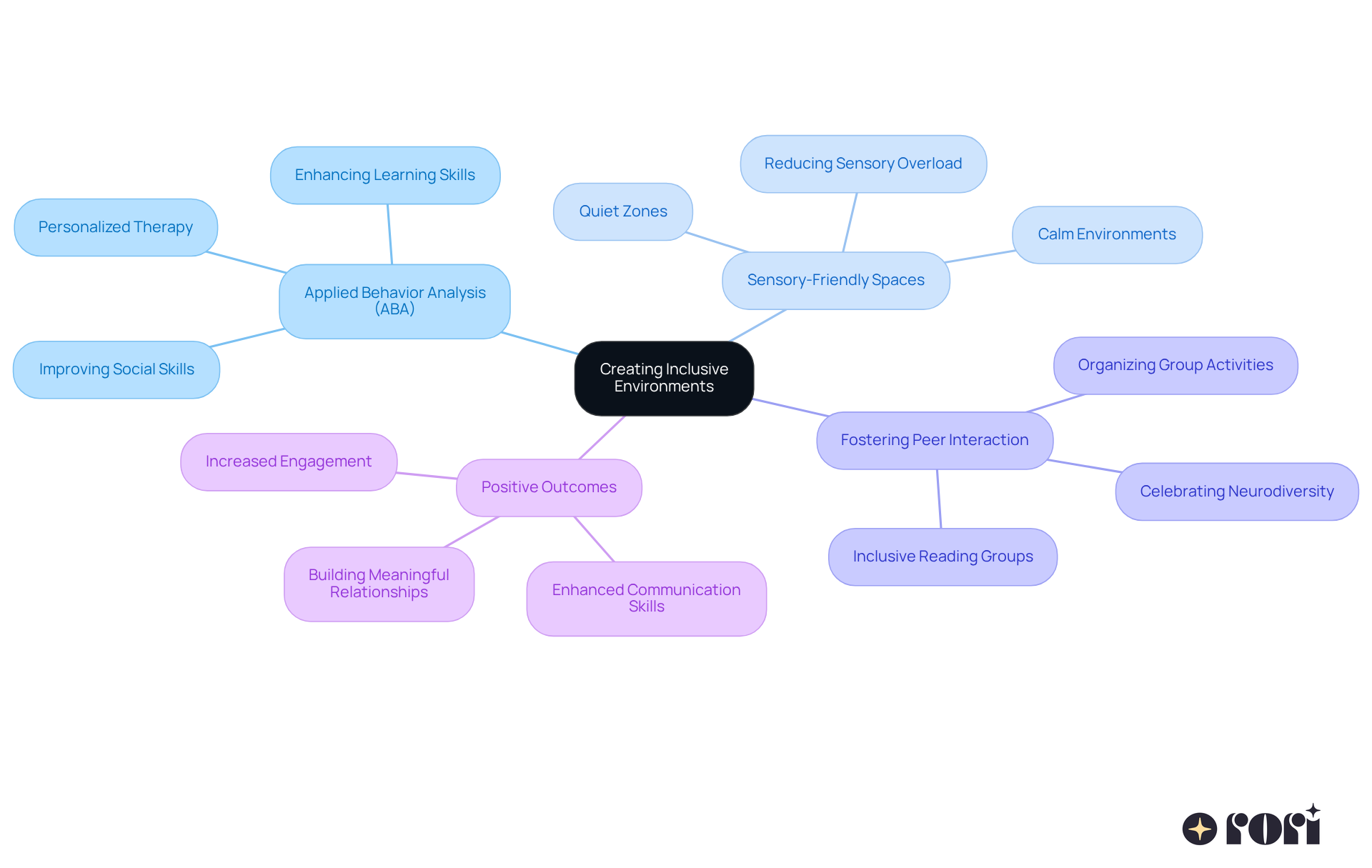
Creating inclusive environments is so important for meeting the diverse needs of all young people, especially those with autism. One great way to support these kids is through Applied Behavior Analysis (ABA), a personalized therapy that tailors to each child’s unique needs. It focuses on enhancing learning, verbal, and social skills, which can make a big difference in their daily lives.
Think about how altering physical spaces can help reduce sensory overload. For instance, having quiet zones allows kids to retreat when they’re feeling overwhelmed. Research shows that sensory-friendly environments can really boost engagement and lower anxiety for individuals with ASD. Plus, employing strategies for fostering peer interaction in ASD is key to cultivating a culture of acceptance and understanding among peers. Educators can introduce activities that celebrate neurodiversity, like reading books with autistic characters or discussing the importance of empathy and inclusion.
A recent study found that kids who participated in inclusive reading groups experienced strategies for fostering peer interaction in ASD, which led to better interactions with their peers. How cool is that? Organizing playdates and group activities that encourage teamwork can be considered strategies for fostering peer interaction in ASD, which help kids practice their social skills in a supportive environment. By implementing strategies for fostering peer interaction in ASD, creating welcoming and nurturing spaces allows children with autism to connect with their peers and build meaningful relationships, which ultimately enhances their communication and interaction skills.
At Rori Care, our dedicated clinical leadership team is here to support families and promote development. We believe every young person deserves the chance to thrive in inclusive settings. Let’s explore this together!
Parents play a crucial role in helping their kids develop social skills, and it all starts with reinforcing positive behaviors in everyday situations. It’s important for parents to be informed about the specific challenges their children face and to have the right tools to support their growth. That’s where Rori Care comes in! They equip caregivers with the knowledge and skills to effectively use ABA principles, boosting their ability to help their child reach their behavioral goals.
For instance, parents can foster social skills right at home through fun play activities that mimic real-life scenarios. Think about games that involve taking turns or role-playing conversations. This kind of active involvement not only creates consistency but also leads to better behavioral outcomes, as parents feel empowered through their learning.
And let’s not forget the importance of informed decision-making! When parents engage with educators and therapists, they can ensure a unified approach to skill-building across different environments. By nurturing a collaborative relationship among parents, teachers, and therapists, we can implement strategies for fostering peer interaction in ASD, allowing children with autism to receive the comprehensive support they need to enhance their social interactions and overall development.
So, let’s explore this together! We’re here to help you every step of the way!
Fostering peer interaction in children with autism spectrum disorder (ASD) is so important for their social development and overall well-being. By understanding the unique challenges these kids face - like communication difficulties and sensory sensitivities - caregivers and educators can implement effective strategies that help them form meaningful connections. It’s all about structured social skills training, inclusive environments, and active parental involvement to really boost a child's ability to engage with their peers.
One key strategy is using structured social skills training programs like PEERS. These programs give children the tools they need to navigate social situations with confidence. Plus, creating inclusive environments that cater to sensory needs and promote empathy among peers is crucial for fostering acceptance and understanding. And let’s not forget the role of parents! When they actively engage as advocates for their children's social skills development, it creates a supportive atmosphere that maximizes the effectiveness of these interventions.
Ultimately, fostering peer interaction in children with ASD is a team effort. Caregivers, educators, and the community all play a part. By embracing these strategies, we can build a more inclusive society where children with autism can thrive and develop meaningful relationships. So, let’s take action together! It’s time to ensure that every child has the opportunity to connect, grow, and succeed in their social endeavors. We’re here to help you every step of the way!
What challenges do children with autism spectrum disorder (ASD) face in making friends?
Children with ASD often struggle with communication, interpreting social cues, and dealing with sensory sensitivities, which can lead to feelings of isolation and difficulty in developing social skills.
How common is autism spectrum disorder among youths?
Approximately 1 in 36 youths are diagnosed with ASD, highlighting the prevalence of the challenges faced by these children.
How does the ability to form friendships change as children with autism grow up?
As children with autism grow up, particularly during the teenage years, their ability to form friendships can diminish, leading to increased feelings of loneliness and sadness.
What role do caregivers and educators play in supporting children with autism in social situations?
Caregivers and educators can help by recognizing the challenges faced by children with autism and using effective strategies to support them in navigating social situations.
What strategies can help foster peer interaction for children with autism?
Creating low-pressure opportunities for interaction, such as group therapy, can help children with ASD connect better with their peers. Encouraging genuine interest in friends' activities can also enhance communication.
Why is fostering peer connections important for children with autism?
Fostering meaningful connections with peers is crucial for the interpersonal development of children with autism, as it helps them build social skills and reduces feelings of isolation.