

In the world of Applied Behavior Analysis (ABA) therapy, effective communication is truly a game-changer for children with autism. 🌟 By using tailored strategies that align with core ABA principles, caregivers and therapists can really boost these communication skills, leading to more meaningful interactions. But here’s the thing: it’s not just about using these techniques; it’s about making sure they fit each child’s unique needs and circumstances.
So, how can practitioners and families team up to create an environment that nurtures effective communication and supports lasting progress? Let’s explore this together! We’re here to help you every step of the way!
Applied Behavior Analysis (ABA) is built on some key principles that can really help kids with autism improve their interaction skills. Let’s break these down together:
Reinforcement: Think of positive reinforcement as a way to encourage the behaviors we want to see. When a child uses language or gestures successfully, offering rewards like verbal praise, tokens, or even small treats can make a big difference. Research shows that about 90% of kids in intensive ABA therapy see significant improvements in their interaction and social skills. Isn’t that encouraging?
Prompting: This technique is all about giving kids cues or hints to help them start or finish tasks related to interaction. Prompts can be verbal, visual, or even physical, and the best part? They can be gradually faded as the child becomes more independent. Successful prompting techniques have shown to boost interaction skills, helping kids express themselves more effectively in various situations.
Shaping: Shaping is a neat way to reinforce small steps toward a desired behavior. For instance, if a child is learning to say a word, a therapist might first reward any sound that resembles that word, slowly requiring closer approximations before giving reinforcement. Studies back this method, showing significant improvements in language development through structured reinforcement techniques.
Generalization: It’s super important to teach kids to use their interaction skills in different settings and with various people. This principle ensures that what they learn in therapy translates into real-life situations, making their interaction skills practical. Research indicates that kids who undergo ABA therapy before age five show remarkable advancements in interaction, social skills, and adaptive behaviors, highlighting how crucial generalization is in therapy.
By understanding and applying these principles, the team at Rori Care can create strategies for improving communication skills in ABA therapy that are tailored to each child’s unique needs. Our personalized planning means that every behavioral plan is designed to fit the individual’s strengths and challenges, with measurable goals to track progress. We use evidence-based strategies and continuously assess and adjust our methods to get the best outcomes. Plus, empowering caregivers with ABA principles helps them support their child’s goals, leading to better family dynamics and developmental outcomes.
Let’s explore this together! We’re here to help you every step of the way!

Improving communication skills in children with autism can feel like a big challenge, but utilizing strategies for improving communication skills in ABA therapy can really help! Let’s explore these together:
Functional Communication Training (FCT): This technique teaches kids to use appropriate ways to express their needs and wants. It’s all about reducing those frustrating moments that can lead to challenging behaviors.
Picture Exchange Communication System (PECS): With PECS, children can communicate using pictures, which is especially helpful for those who are non-verbal. They learn to exchange images for things they want or actions they’d like to take.
Social Stories: These short stories describe social situations and the right responses. They’re a fantastic way for kids to understand social cues and improve their conversation skills.
Role-Playing: Engaging kids in role-playing can be a fun way for them to practice interactions in a safe space. It helps them learn how to start conversations, take turns, and respond to others.
Modeling: Therapists can show kids the right ways to interact, and then they can imitate those behaviors. This is a great way to teach new vocabulary and sentence structures.
Alongside these techniques, Rori Care emphasizes the value of social skills group therapy led by qualified therapists. This setting not only boosts social interactions but also helps caregivers learn ABA principles, align strategies, and gather data for effective support. By consistently applying strategies for improving communication skills in ABA therapy, therapists can really encourage significant growth in children’s expressive skills.
So, if you’re feeling overwhelmed, remember you’re not alone! Seeking help and resources can make a world of difference. We’re here to support you every step of the way!

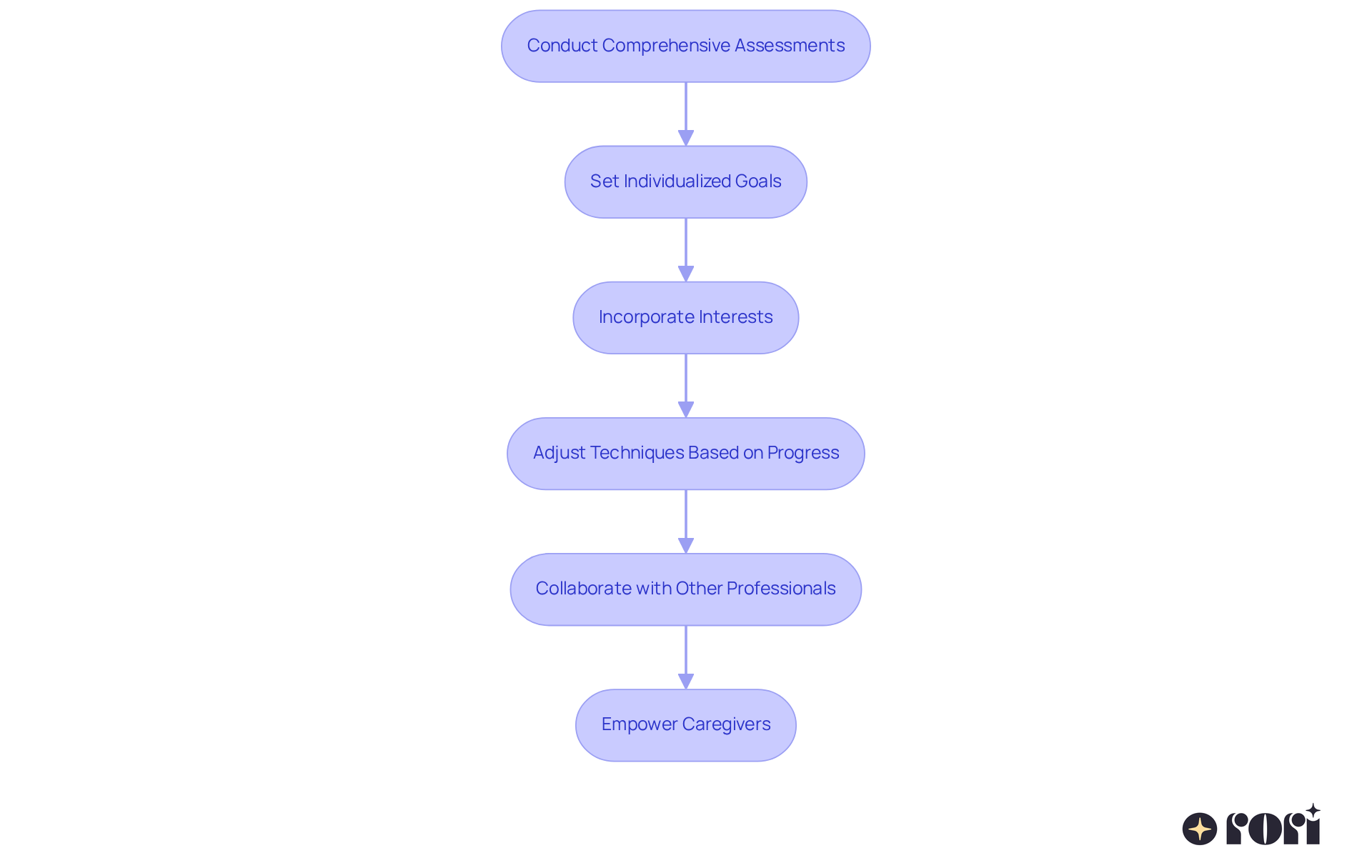
Every young person with autism has unique interaction needs, which is why personalizing ABA strategies is so important for effective intervention. Let’s dive into some key approaches to tailor these strategies:
Conduct Comprehensive Assessments: Start with a thorough evaluation of the young person's verbal abilities, preferences, and challenges. It’s super helpful to include feedback from parents and caregivers to get a full picture of what the young one needs. Research shows that successful evaluations in ABA therapy are crucial for customizing interaction strategies effectively.
Set Individualized Goals: After the evaluation, it’s time to set specific, measurable, achievable, relevant, and time-bound (SMART) objectives that reflect the young person's needs. For example, a goal could be for the young one to use three new words in conversation by the end of the month. ABA practitioners really stress the importance of establishing personalized objectives to boost interaction abilities.
Incorporate Interests: Use the young individual’s interests to spark motivation for communication. If they’re fascinated by dinosaurs, for instance, bringing in dinosaur-themed activities and vocabulary during therapy can make a huge difference in engagement and learning.
Adjust Techniques Based on Progress: Keep an eye on the young one's progress and be ready to tweak your approaches as needed. If something isn’t working, don’t hesitate to explore alternative methods or additional supports to keep the development going.
Collaborate with Other Professionals: Team up with speech therapists, occupational therapists, and educators to create a well-rounded approach that covers all aspects of the individual’s development. This collaboration is key to ensuring that outreach plans are thorough and impactful.
Empower Caregivers: Educating caregivers about ABA principles and tactics can really enhance their ability to support their child’s communication goals. This might include workshops, one-on-one training sessions, and providing materials that outline effective interaction techniques. When caregivers are engaged and informed, they can make better decisions that positively impact their child’s progress, leading to improved behavioral outcomes and less stress within the family.
By personalizing these approaches and supporting caregivers, therapists can ensure that interventions are relevant and effective, resulting in better interaction outcomes for children with autism. Let’s explore this together!
Parental participation is so important for boosting the interaction skills that kids gain through ABA therapy. Let’s explore some effective strategies to get parents involved in this journey:
Provide Training and Resources: How about organizing some workshops or info sessions? These can help parents learn about ABA principles and techniques they can use at home. You could even offer handouts, instructional videos, or online courses that fit their needs.
Encourage Daily Practice: Suggest simple, everyday activities where parents can enhance their interactions with their child. Think about mealtimes, playtime, or reading sessions - these are perfect opportunities for applying those skills in a natural way.
Establish Interaction Opportunities: Help parents create scenarios that encourage their kids to use expressive abilities. Organizing playdates or outings can give children chances to start conversations and engage with peers, which really strengthens their learning in social settings.
Utilize Positive Reinforcement: Encourage parents to use positive reinforcement techniques at home to reward their little ones for using their communication skills. This could be verbal praise, stickers, or extra playtime - whatever helps motivate them to keep practicing!
Maintain Open Communication with Therapists: It’s key to foster a collaborative relationship between parents and therapists. Regular check-ins can make sure parents feel supported and informed about their child’s progress, allowing for timely adjustments to strategies as needed.
By actively engaging parents in these ways, therapists can enhance the effectiveness of strategies for improving communication skills in ABA therapy, helping children generalize their skills across different settings. We’re here to help you every step of the way!

Improving communication skills in children with autism through ABA therapy is a journey that many parents embark on, and it can feel overwhelming at times. But don’t worry! By understanding and applying core principles, you can make a real difference in your child’s life. Techniques like reinforcement, prompting, shaping, and generalization can be tailored to meet your child’s unique communication needs. This personalized approach not only helps your child develop essential skills but also empowers you as a caregiver to play an active role in their progress.
Let’s talk about some key strategies! Functional Communication Training, Picture Exchange Communication System, and social stories are fantastic tools that enhance expressive abilities in everyday situations. Engaging you, the parents, through training and daily practice opportunities really solidifies these gains. It’s all about ensuring that the skills learned in therapy are effectively transferred to home and social environments. Remember, the collaboration between therapists and families is crucial for maximizing outcomes and supporting your child’s communication growth.
Ultimately, improving communication skills in ABA therapy is a shared journey that thrives on commitment and teamwork. By embracing these strategies and fostering a supportive environment, every child has the potential to enhance their interaction abilities and truly thrive in their social world. So, why not take action today? Whether it’s seeking professional guidance or engaging in daily practices, you can pave the way for meaningful progress and a brighter future for your child with autism. Let’s explore this together!
What is Applied Behavior Analysis (ABA)?
Applied Behavior Analysis (ABA) is a therapeutic approach that utilizes key principles to help children with autism improve their interaction skills.
What is reinforcement in ABA, and how does it help?
Reinforcement involves encouraging desired behaviors by offering rewards, such as verbal praise or tokens, when a child successfully uses language or gestures. This method has been shown to significantly improve interaction and social skills in about 90% of children undergoing intensive ABA therapy.
What is prompting, and how is it used in ABA?
Prompting involves providing cues or hints to assist children in starting or completing tasks related to interaction. Prompts can be verbal, visual, or physical and can be gradually faded as the child becomes more independent, enhancing their ability to express themselves effectively.
How does shaping work in ABA?
Shaping is a technique that reinforces small steps toward a desired behavior. For example, when teaching a child to say a word, a therapist may reward any sound resembling that word initially and then require closer approximations for reinforcement, leading to significant improvements in language development.
What is generalization in the context of ABA?
Generalization is the principle of teaching children to use their interaction skills across different settings and with various people. This ensures that what they learn in therapy is applicable in real-life situations, which is crucial for advancing their interaction and social skills.
How does Rori Care personalize ABA therapy for each child?
Rori Care creates tailored strategies for improving communication skills by designing individualized behavioral plans that consider each child's unique strengths and challenges, with measurable goals to track progress.
What role do caregivers play in ABA therapy at Rori Care?
Caregivers are empowered with ABA principles to support their child’s goals, which can lead to better family dynamics and improved developmental outcomes.


