Introduction
Applied Behavior Analysis (ABA) therapy has become a vital support for children with autism, offering incredible benefits when done right. As parents, you play a key role in this journey! Your involvement not only boosts therapy outcomes but also creates a loving environment for your child's growth.
You might be asking yourself: how can you actively contribute to the success of ABA therapy in your child's life? 🤔 This article is here to share practical strategies that empower you to:
- Build supportive home environments
- Work hand-in-hand with therapists
- Appreciate the long-term benefits of your engagement in ABA therapy
Let’s explore this together!
Understand ABA Therapy and Its Importance
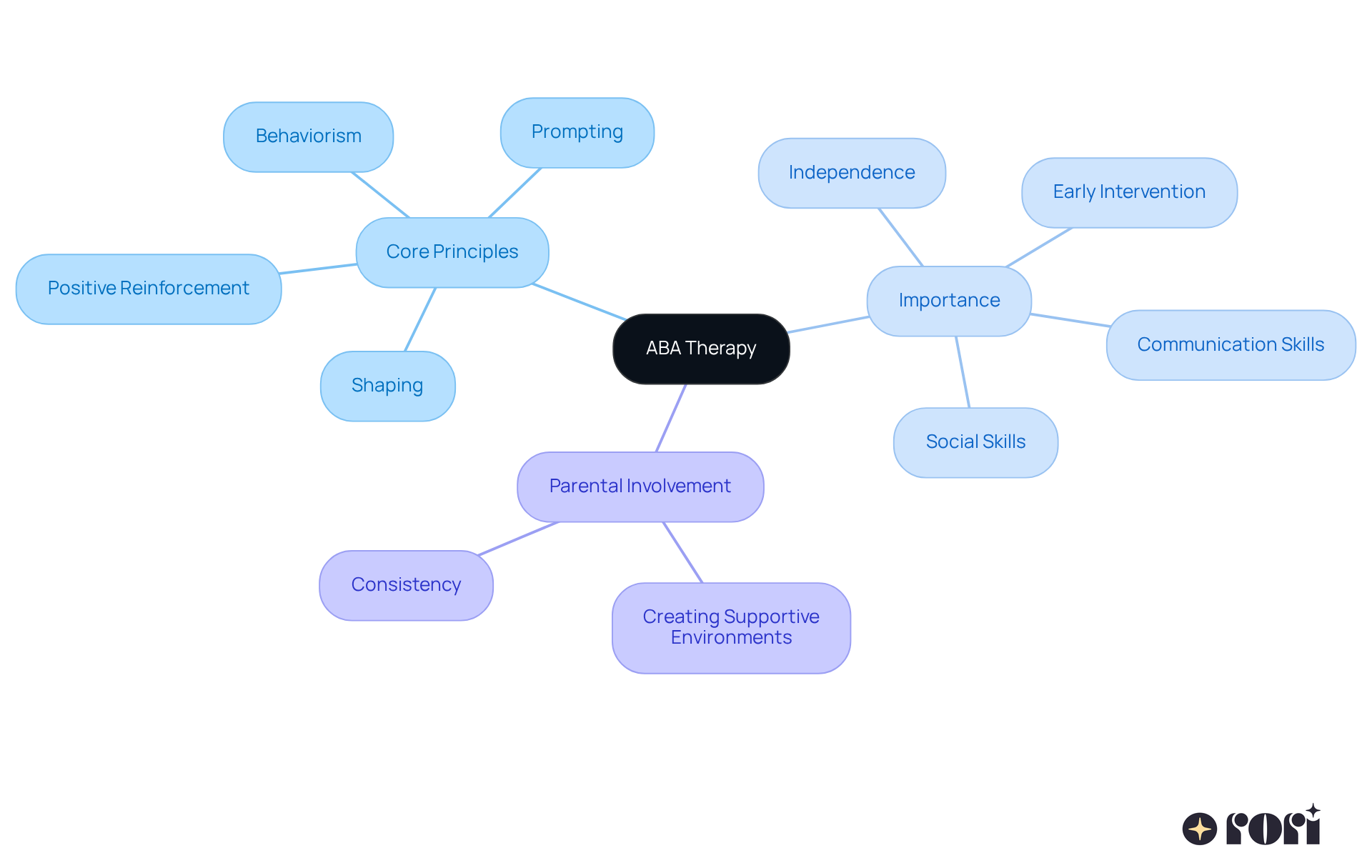
is a scientifically validated method that helps us understand and change behaviors through systematic interventions. It’s especially beneficial for children with autism, helping them develop essential skills, improve social interactions, and reduce challenging behaviors.
- : At its heart, ABA is rooted in behaviorism, which highlights how our actions connect with our environment. Techniques like positive reinforcement, prompting, and shaping are key to encouraging those desired behaviors. It’s all about creating a supportive atmosphere!
- : Research shows that starting ABA early and consistently can lead to . In fact, children who begin treatment before age four often see . This really underscores how vital this intervention is for their growth!
- As parents, you play a crucial role in understanding and the success of treatment. By understanding how parents contribute to ABA therapy, you can create , ensuring consistency between sessions and daily life. Your active involvement is crucial in understanding how parents contribute to ABA therapy, as it not only boosts learning but also enhances the overall effectiveness of the treatment, leading to better outcomes for your child.
Let’s explore this together! Your journey in can make a world of difference for your child.
Implement Practical Strategies at Home
To effectively support your child's at home, let’s explore some strategies together:
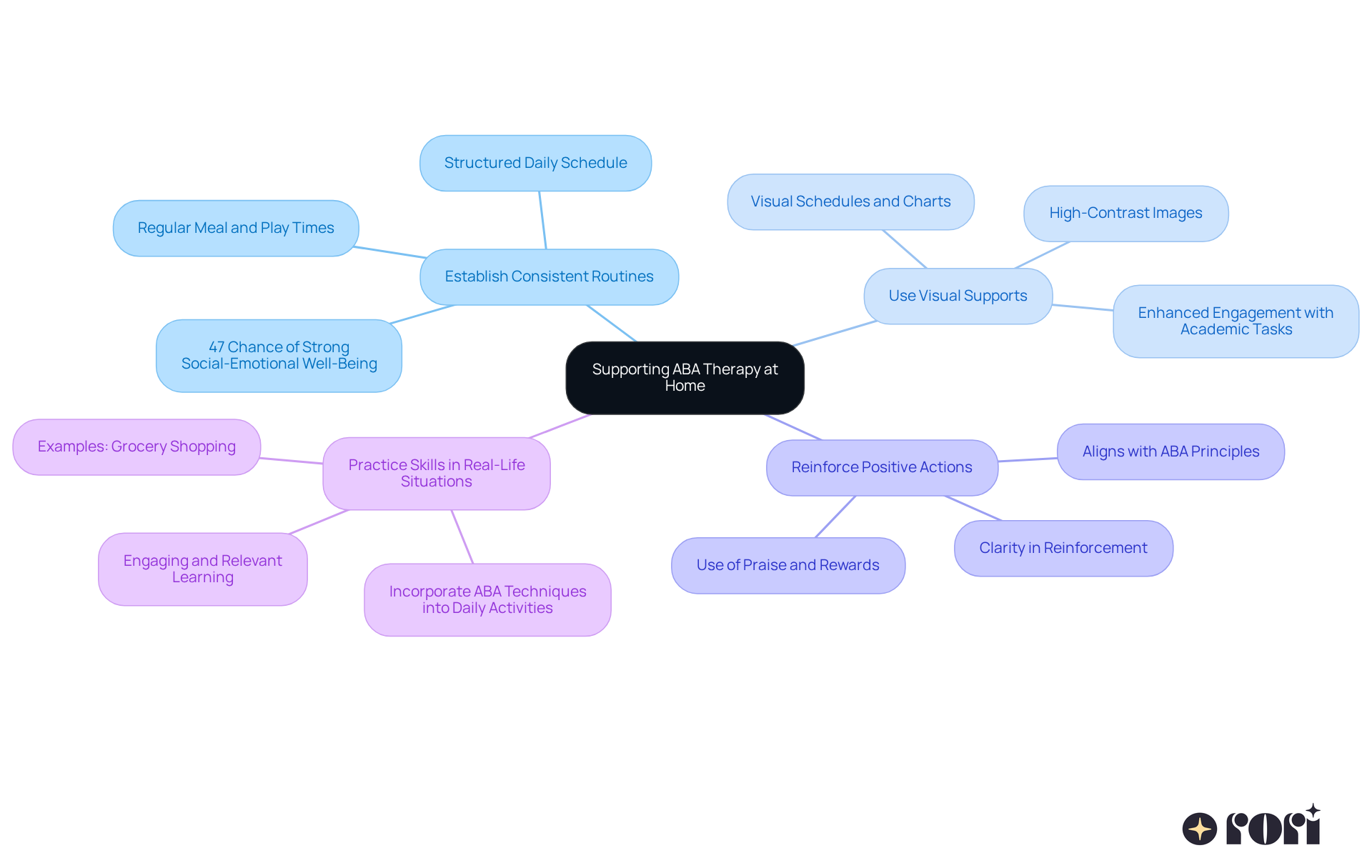
- Establish : Creating a structured daily schedule with regular times for meals, play, and supportive activities is key. Consistency helps kids feel secure and know what to expect, which can really cut down on anxiety and boost emotional regulation. Did you know that kids with have a 47% chance of maintaining strong social-emotional well-being as they grow? That’s especially important in ABA therapy, where a stable environment is so beneficial for learning.
- Use : or charts can be game-changers for your child’s understanding of daily activities. Think about using high-contrast images or digital schedules to help them anticipate transitions and manage their time better. Research shows that visual schedules not only enhance engagement with academic tasks but can also be maintained over time. The Autism Society of America puts it perfectly: "Visual supports help with learning, retaining information, communication, and expression." They’re truly invaluable in therapeutic settings!
- Reinforce : is a powerful tool! Use praise or rewards to . Be specific about what you’re reinforcing; this clarity helps your child connect their actions with the positive feedback they receive. This approach aligns perfectly with ABA principles, which highlight the importance of reinforcing positive behaviors to encourage them to happen more often.
- : Try to weave ABA techniques into everyday activities to reinforce learning in a natural way. For example, while grocery shopping, practice counting items or identifying colors. This real-world application not only solidifies skills but also makes learning more engaging and relevant for your child. By incorporating these strategies into daily life, you can significantly boost how and enhance your child's development. Remember, how parents contribute to ABA therapy is crucial! Rori Care’s behavior care engine updates treatment plans based on progress report data, ensuring that strategies stay adaptive and effective. This active participation enhances skill generalization and promotes safety during treatment.
Collaborate with Therapists and Educators
Collaborating with your child’s therapists and educators is crucial for understanding . Here are some friendly strategies to enhance that partnership:
- : Keep the lines of communication open with your child’s therapist. Share your observations about their behavior at home and ask for feedback on their progress in therapy. This two-way dialogue helps you understand [how parents contribute to ABA therapy](https://ambitionsaba.com/resources/the-impact-of-parent-training-in-aba-therapy), allowing for a better understanding of your child’s needs, which leads to informed decisions and consistent care.
- : Join parent training sessions offered by Rori Care - ABA Therapy. These sessions equip you with valuable tools and techniques to understand how parents contribute to ABA therapy while supporting your child’s learning effectively. You’ll feel more confident and capable in managing their needs, which can lead to .
- : Work together with therapists and educators to align therapy goals with school objectives. When everyone is on the same page, it highlights how parents contribute to ABA therapy by providing consistent messaging and support across different environments for your child. This reinforces their learning and development, ultimately leading to improved behavioral outcomes.
- : Don’t hesitate to share that have worked well at home with educators. This collaborative approach demonstrates how parents contribute to ABA therapy by helping create a unified strategy for your child’s development, ensuring that everyone involved is working toward common goals. It empowers you as a caregiver, too!
Let’s explore this together! Your involvement makes a world of difference!

Recognize the Long-Term Benefits of Involvement
Active parental involvement in brings about wonderful long-term benefits for both your child and your family:
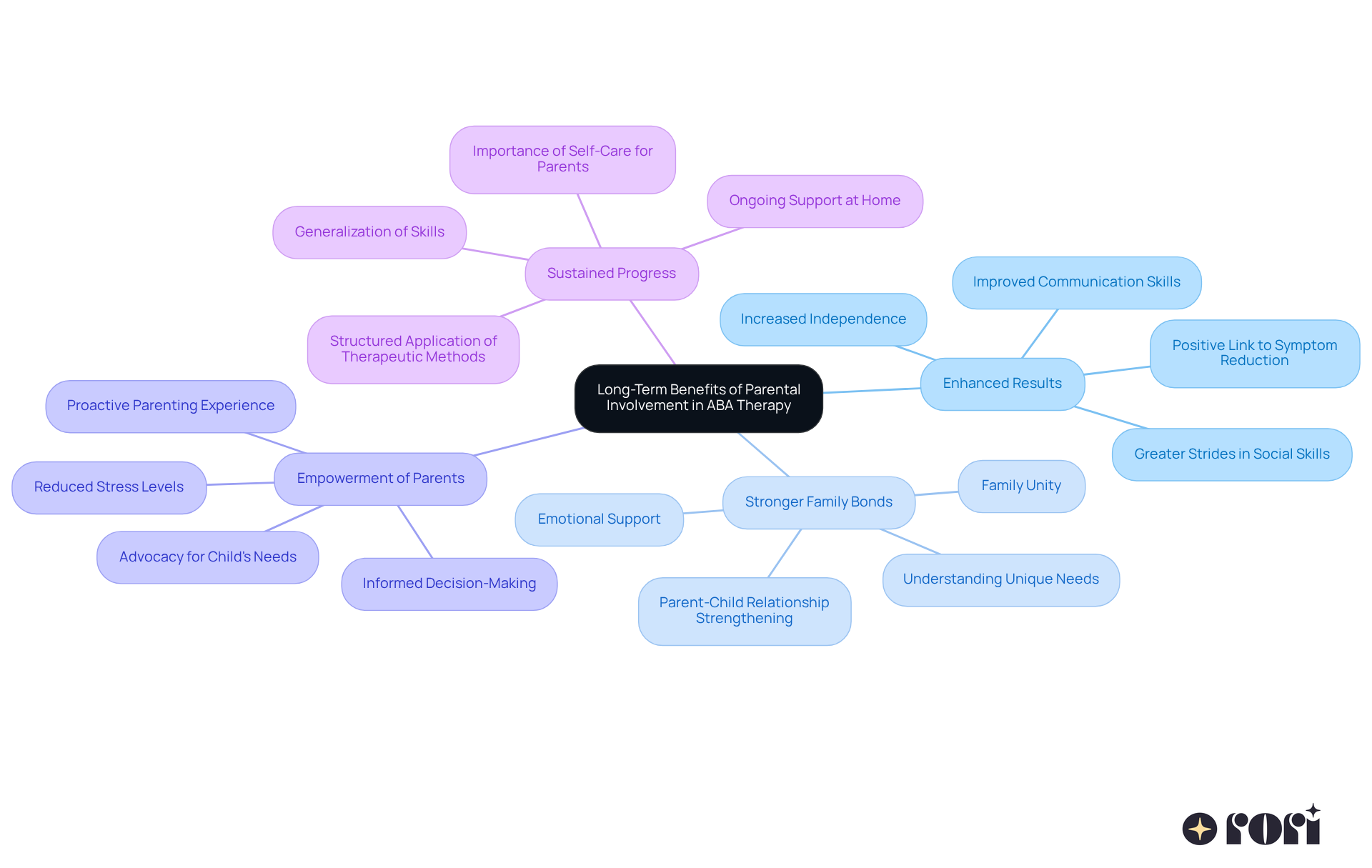
- : Research shows that kids whose parents are actively involved in their therapy tend to make greater strides in communication, social skills, and independence. A meta-analysis reveals that parental participation is positively linked to symptom reduction and skill acquisition, with effect sizes averaging around 0.55. Plus, parents need at least to learn how parents contribute to ABA therapy, ensuring they’re ready to support their child’s needs effectively. When caregivers are educated, they’re better equipped to make informed decisions that positively impact their child’s progress and lead to .
- : Getting involved in your child’s treatment helps you understand their unique needs and challenges. This connection not only strengthens the parent-child relationship but also fosters overall family unity, creating a nurturing environment for growth. The way in which parents provide essential emotional and motivational support, often referred to as ',' illustrates how parents contribute to ABA therapy and enhances the child’s therapy experience. The skills gained through empower you to understand how parents contribute to ABA therapy by providing consistent support at home, which complements professional interventions.
- Parents who actively engage in ABA treatment often feel more empowered to manage their child’s behaviors and advocate for their needs, illustrating how parents contribute to ABA therapy. This sense of empowerment leads to a more proactive parenting experience, boosting your ability to support your child’s development effectively. The knowledge and skills you gain through caregiver education can help reduce stress and improve family dynamics, contributing to your overall well-being.
- : Keeping up with the skills learned in therapy sessions at home is key to maintaining and generalizing those skills. Research indicates that kids who receive continue to thrive beyond therapy sessions, benefiting from the structured application of therapeutic methods in their daily lives. Don’t forget to carve out some time for self-care, too! It’s essential for your own well-being and helps you stay actively involved in your child’s therapy.
Conclusion
Active parental involvement is truly a cornerstone of successful ABA therapy, significantly enhancing outcomes for children with autism. When parents understand the principles of ABA and use practical strategies at home, they create an environment that not only supports therapeutic goals but also nurtures their child's growth and development. This engagement isn’t just beneficial; it’s essential for making sure that the skills learned in therapy are woven into daily life.
Let’s talk about some key strategies parents can easily implement! Establishing consistent routines, using visual supports, reinforcing positive behaviors, and collaborating with therapists and educators are all great ways to bridge the gap between therapy sessions and real-world applications. Each of these approaches plays a vital role in improving communication, social skills, and independence for children. Plus, the long-term benefits of parental involvement go beyond immediate gains; they strengthen family bonds and empower parents to advocate effectively for their child's needs.
In conclusion, we can’t overstate the impact of parental engagement on the success of ABA therapy. By actively participating in their child's treatment, parents not only enhance learning outcomes but also create a nurturing environment that supports ongoing development. Embracing this role can lead to sustained progress and a more fulfilling family dynamic. So, let’s recognize the importance of your involvement in the ABA therapy journey together!
Frequently Asked Questions
What is Applied Behavior Analysis (ABA)?
Applied Behavior Analysis (ABA) is a scientifically validated method that helps understand and change behaviors through systematic interventions, particularly benefiting children with autism by helping them develop essential skills, improve social interactions, and reduce challenging behaviors.
What are the core principles of ABA?
The core principles of ABA are rooted in behaviorism and include techniques such as positive reinforcement, prompting, and shaping, which are key to encouraging desired behaviors in a supportive atmosphere.
Why is ABA important for children with autism?
ABA is important because research shows that starting it early and consistently can lead to significant improvements in communication, social skills, and independence for children with autism, especially for those who begin treatment before age four.
How can parents contribute to the success of ABA therapy?
Parents can contribute to the success of ABA therapy by creating supportive environments that align with treatment goals, ensuring consistency between therapy sessions and daily life, and actively participating in the learning process, which enhances the overall effectiveness of the treatment.
What role do parents play in understanding ABA therapy?
Parents play a crucial role in understanding ABA therapy as their involvement boosts learning and leads to better outcomes for their child, making their journey in understanding ABA vital for the child's growth and development.
List of Sources
- Understand ABA Therapy and Its Importance
- Success Rates of ABA Therapy | Advanced Autism Services (https://advancedautism.com/post/success-rates-of-aba-therapy)
- Understanding Autism Therapy Success Rates (https://ambitionsaba.com/resources/understanding-autism-therapy-success-rates)
- connectncareaba.com (https://connectncareaba.com/blog/aba-therapy-effectiveness-for-autism)
- The Numbers Don't Lie: Revealing Autism Therapy Statistics | Above and Beyond Therapy (https://abtaba.com/blog/autism-therapy-statistics)
- ABA Therapy Evidence | Grateful Care ABA (https://gratefulcareaba.com/blog/aba-therapy-evidence)
- Implement Practical Strategies at Home
- Inspirational ABA and Autism Quotes - Mrs. Moe's Modifications (https://mrsmoesmodifications.com/inspirational-aba-and-autism-quotes)
- Autism Routine and Structure (https://goldenstepsaba.com/resources/autism-routine-and-structure)
- Visual Schedules for Children with Autism | Links (https://linksaba.com/visual-schedules-for-children-with-autism)
- The use of visual schedules to increase academic-related on-task behaviors of individuals with autism: a literature review (https://tandfonline.com/doi/full/10.1080/20473869.2024.2402124)
- Autism Quotes | Intellistars - ABA Therapy (https://intellistarsaba.com/blog/autism-quotes)
- Collaborate with Therapists and Educators
- ABA Therapy Impact (https://goldenstepsaba.com/resources/aba-therapy-impact)
- The Role of Parent Training in Supporting ABA Therapy Success | Discovery ABA (https://discoveryaba.com/aba-therapy/the-role-of-parent-training-in-supporting-aba-therapy-success)
- The Numbers Don't Lie: Revealing Autism Therapy Statistics | Above and Beyond Therapy (https://abtaba.com/blog/autism-therapy-statistics)
- The impact of parent training in ABA therapy (https://ambitionsaba.com/resources/the-impact-of-parent-training-in-aba-therapy)
- 54 Inspiring Counseling Quotes to Motivate Counselors (https://positivepsychology.com/counseling-quotes)
- Recognize the Long-Term Benefits of Involvement
- The Role of Parent Involvement in Autism Therapy Success | Advanced Autism Services (https://advancedautism.com/post/the-role-of-parent-involvement-in-autism-therapy-success)
- Effects of Parent-Implemented Interventions on Outcomes of Children with Autism: A Meta-Analysis - PMC (https://pmc.ncbi.nlm.nih.gov/articles/PMC10539413)
- How Parental Involvement Impacts Therapy Outcomes (https://yellowbusaba.com/post/how-parental-involvement-impacts-therapy-outcomes)
- Inspiring Quotes on Child Learning and Development (https://vincegowmon.com/inspiring-quotes-on-child-learning-and-development)
- The Impact of ABA Therapy on Long-Term Outcomes for Children with Autism (https://supportivecareaba.com/statistics/the-impact-of-aba-therapy-on-long-term-outcomes-for-children-with-autism)