Understanding how crucial sleep is for overall well-being - especially for our autistic kiddos - highlights a real need for effective solutions. Did you know that a staggering 50% to 80% of these children face sleep disruptions? That’s way more than their neurotypical peers! As parents, it can feel overwhelming to ensure our little ones get the restorative rest they need.
So, what can caregivers do to tackle these unique sleep challenges? Let’s explore some strategies together that can help create a more peaceful nighttime environment for our children. We’re in this together!
Rest is so important for the well-being and growth of all young people, but are especially crucial. Did you know that studies show rest disruptions are pretty common among kids and teens with autism spectrum disorder (ASD), which underscores the importance of ? Estimates suggest that 50% to 80% of them face , which is a lot more than the 20% to 30% seen in their typically developing peers. These sleep problems can really make things tougher, leading to , affecting cognitive function, and messing with emotional regulation, which underscores the importance of . For instance, not getting enough sleep can ramp up anxiety and irritability, making it harder for a young person to socialize and learn effectively.
That’s why focusing on effective sleep solutions for autistic children is so essential! By doing this, caregivers can really boost their kids’ daytime performance, social skills, and overall quality of life. Plus, tackling sleep disruptions not only helps the young ones but also eases the stress on caregivers, who often report feeling much more anxious and depressed than those whose kids don’t have .
Engaging in can be a game-changer. Parents can learn more about that can help improve their kids’ sleep patterns. This knowledge empowers caregivers to make informed choices and apply tailored to their kids’ needs. For example, , cutting down on screen time before bed, and can lead to significant improvements in both the child’s and the family’s well-being. Plus, caregivers can learn to spot signs of and use specific ABA techniques to address these issues, further enhancing their kids’ .
Let’s explore this together! We’re here to help you every step of the way!

Children with autism often face unique challenges that can be addressed by . Many struggle with falling asleep, waking up frequently, or rising early in the morning, which emphasizes the importance of . Sensory sensitivities play a big role here; for example, loud noises or bright lights can make it tough for them to settle down. Did you know that studies show 50-80% of autistic kids experience , which calls for ? That’s a significant difference compared to just 20-30% of neurotypical kids!
Anxiety and behavioral issues can make sleep disturbances even worse. When kids don’t get enough rest, it can be harder for them to manage their emotions and executive functioning, leading to increased irritability and . Understanding these challenges is crucial for developing effective sleep solutions for autistic children. One helpful tip for parents is to . This can help track your child’s and identify specific triggers that affect their .
Creating effective sleep solutions for autistic children that take into account your child’s unique needs and preferences can really make a difference. By equipping caregivers with , Rori Care empowers parents to implement effective , maximizing the impact of interventions.
You might also want to chat with healthcare providers about . These have shown effectiveness in helping kids with autism fall asleep and stay asleep. Plus, , like monitoring sleep duration and quality, can further assist you in evaluating how well your strategies are working and making any necessary adjustments.
Let’s explore this together! We’re here to help you every step of the way!
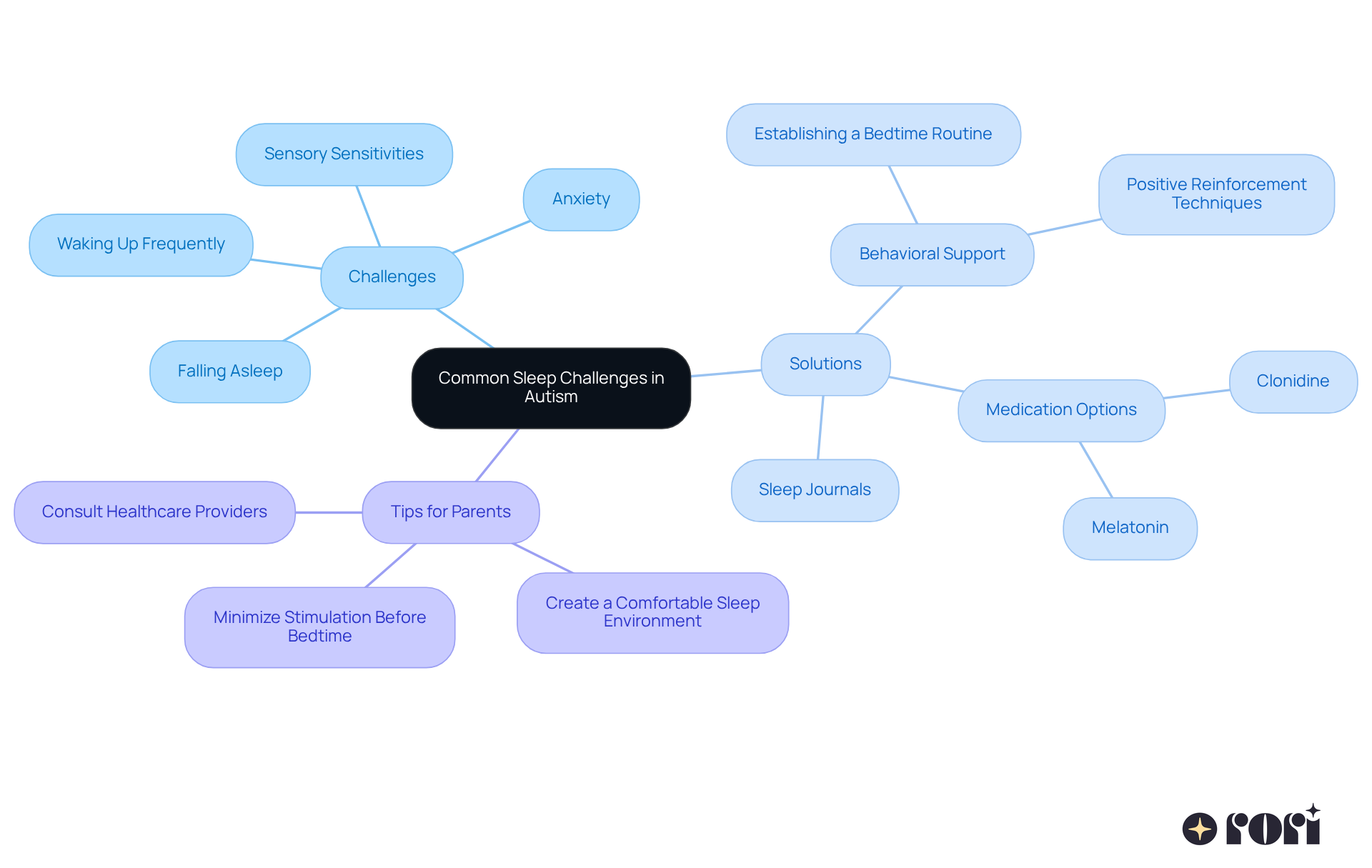
Enhancing rest for autistic kids can feel like a challenge, but caregivers can try . 🌙 Establishing a is key! Think about including or listening to soft music. It’s amazing how these little rituals can help set the mood for sleep.
Another tip? at least an hour before bed can make a big difference. The blue light from devices can really mess with melatonin production, which is crucial for a good night’s sleep. And let’s not forget about ! Make sure the bedroom is dark, quiet, and at a comfy temperature.
Some parents have discovered that , like or weighted blankets, can provide that extra bit of comfort and reduce anxiety, making it easier for their little ones to drift off. 💤 Remember, you’re not alone in this journey! Let’s explore these ideas together and find what works best for your family!

Creating a restful atmosphere is crucial for implementing to help them get the they need. Did you know that up to ? It’s a real challenge for many families.
Let’s talk about some key factors that can make a difference. First off, think about lighting and noise levels.
Keeping the room cool is another great tip! are known to promote better sleep quality. Plus, the choice of bedding matters too.
Also, consider using and limiting decorations. This can help reduce sensory overload and turn the bedroom into a serene haven for your little one. Addressing these elements can significantly ease the in autistic children by utilizing .
As Hannah Furfaro wisely points out, "There is a significant overlap between Autism and rest," which highlights just how crucial it is to prioritize rest in holistic care. Parents should also keep an eye out for common pitfalls, like over-decorating the room or using harsh lighting, as these can really hinder the creation of a restful environment.
By applying these simple approaches, families can create a nurturing space that encourages , leading to better rest and overall wellness. Let’s explore this together!

When rest challenges keep popping up despite your best home strategies, it’s time to think about getting some professional support. Consulting with pediatricians or sleep specialists who understand . These experts can perform to identify any underlying issues, like apnea or anxiety disorders, that might be affecting your child’s sleep.
Research shows that is among the and can really help improve sleep outcomes. By collaborating with specialists at Rori Care, you’ll discover and , which can enhance your child’s and lead to better overall well-being.
We offer a range of , including:
All designed to help families navigate their unique challenges. As psychologist Christina McCrae puts it, "In treating insomnia and other among adults and children in general, I’ve found that there’s no substitute for cognitive behavioral therapy."
Let’s explore this together! We’re here to help you every step of the way!
When it comes to helping autistic children sleep better, effective solutions are absolutely essential for their overall health and development. By understanding the unique challenges these kids face in getting restful sleep, parents and caregivers can implement strategies that truly enhance their quality of life. And let’s not forget, addressing sleep issues benefits not just the child but also eases the stress on caregivers, creating a healthier family dynamic.
Throughout this article, we’ve explored some key strategies, like:
By integrating techniques such as:
Caregivers can tackle the sleep challenges that often arise for autistic children. These tailored interventions are so important for fostering better sleep patterns and enhancing emotional regulation.
Ultimately, prioritizing sleep isn’t just about making sure kids get enough rest; it’s about nurturing their well-being and supporting their development. We encourage caregivers to take proactive steps in exploring effective sleep solutions for autistic children. Improved sleep can lead to better behavior, increased learning potential, and a more harmonious home environment. Embracing these strategies can truly make a profound difference in the lives of both children and their families. Let’s explore this together!
Why is sleep important for autistic children?
Sleep is crucial for the well-being and growth of all young people, but it is especially important for autistic children as they often face significant sleep disruptions, which can lead to behavioral challenges, cognitive function issues, and emotional regulation problems.
How common are sleep issues among autistic children?
Estimates suggest that 50% to 80% of children with autism spectrum disorder (ASD) experience sleep issues, compared to 20% to 30% of their typically developing peers.
What are the effects of sleep problems on autistic children?
Sleep problems can increase anxiety and irritability, making it more difficult for autistic children to socialize, learn effectively, and manage their emotions.
How can effective sleep solutions benefit autistic children and their caregivers?
Effective sleep solutions can enhance daytime performance, social skills, and overall quality of life for autistic children while also reducing stress and anxiety for caregivers.
What strategies can caregivers use to improve sleep for autistic children?
Caregivers can implement a regular bedtime routine, reduce screen time before bed, create a cozy sleep environment, and learn to identify signs of sleep disturbances.
How can caregiver training programs help in addressing sleep issues?
Caregiver training programs can teach parents about ABA principles and techniques to improve their children's sleep patterns, empowering them to make informed choices tailored to their children's needs.
What common sleep challenges do children with autism face?
Children with autism may struggle with falling asleep, waking up frequently, or rising early due to factors like sensory sensitivities, anxiety, and behavioral issues.
What is one helpful tip for parents to track their child's sleep?
Keeping a sleep journal can help parents track their child's sleep patterns and identify specific triggers that affect sleep quality.
Are there any medical options available to assist with sleep for autistic children?
Parents can discuss options like melatonin or clonidine with healthcare providers, as these have shown effectiveness in helping autistic children fall asleep and stay asleep.
How can data-gathering techniques assist in improving sleep strategies?
Monitoring sleep duration and quality can help caregivers evaluate the effectiveness of their sleep strategies and make necessary adjustments.