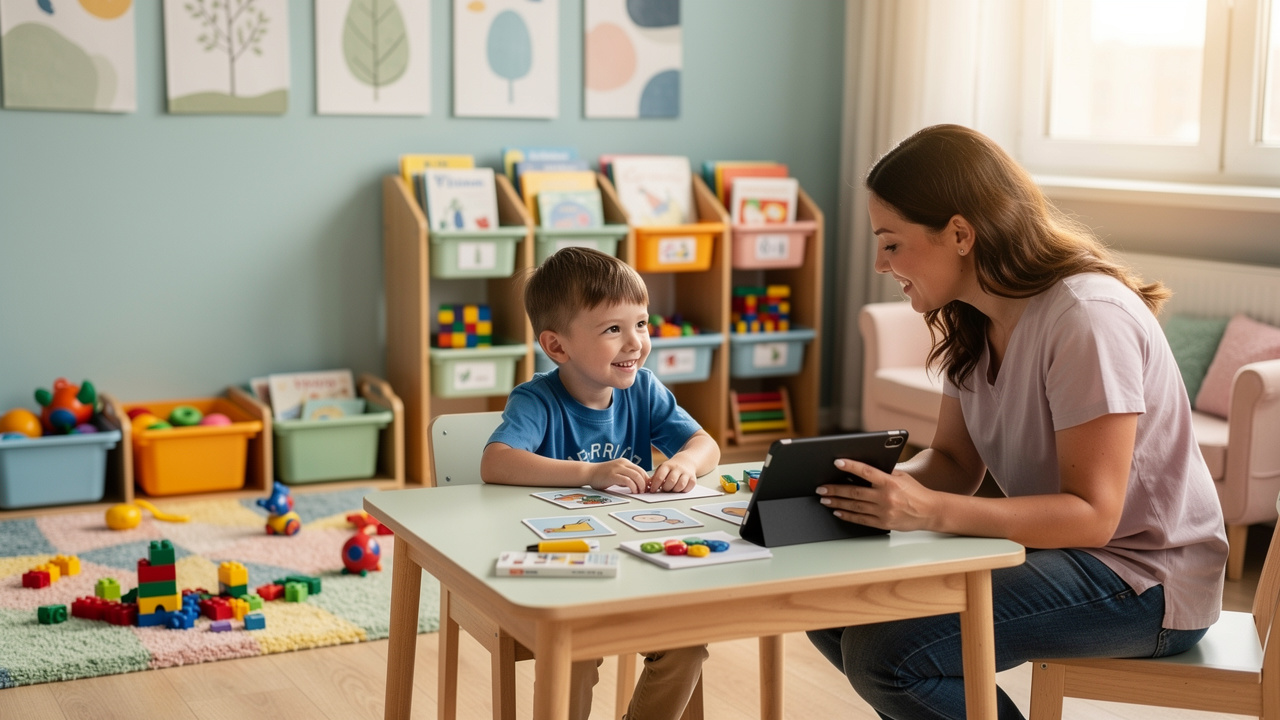
Effective communication with children is so important for their healthy development, but let’s be honest - many parents struggle to connect meaningfully with their kids. 😅 By using some targeted strategies, caregivers can not only improve their interactions but also help their children develop emotional intelligence and understanding. So, how can parents navigate the tricky waters of communication to make sure their kids feel heard and valued?
In this article, we’ll explore five effective strategies that promote positive communication. These tips will equip you with the tools you need to build stronger relationships and create a nurturing environment for your little ones. Let’s dive in together!
When it comes to communicating with young ones, especially those on the autism spectrum, is key. You want to steer clear of that might leave them puzzled. Instead, think about using straightforward statements that get your message across effectively. For example, rather than saying, 'Can you please put your toys away?' you could say, 'Please put your toys in the box.' This approach not only aids understanding but also . Plus, adding can really help, especially for children who thrive on visual cues.
Research shows that using in how well kids grasp what you’re saying. When instructions are clear and to the point, they’re much more likely to understand the message you intend to convey. And let’s not forget the emotional side of things! Studies suggest that successful interactions are shaped by feelings - it's about 20% what you know and 80% how you feel about what you understand. This emotional connection is crucial for , particularly with young ones who might struggle to express themselves. By creating a , parents can implement , thereby strengthening their bond with their children and leading to more .
Now, if you want to take it a step further, incorporating , including , can really enhance these interactions. Caregivers who understand ABA can make informed choices that positively impact their child’s progress, offering better support and consistency in their learning environment. By getting actively involved in their child’s learning and behavioral goals, caregivers can foster a nurturing atmosphere that boosts overall outcomes. Remember, communication is a two-way street, and being mindful of assumptions can help you dodge common pitfalls when sharing messages. Let’s explore this together!

Active listening is all about really tuning in to what your child is saying, not just hearing their words passively. You can do this by:
Reflecting back what they’ve shared shows you understand and encourages them to open up even more. For example, if your little one talks about a tough day, you might say, 'It sounds like you felt really upset when that happened.' This not only but also helps them express their thoughts more clearly.
By implementing effective strategies for promoting , you can align your interactions with the principles of . This creates a that helps your child reach their and enhances their social skills by using behaviors. Plus, being actively involved empowers you with the to make informed decisions, leading to better behavioral outcomes and a nurturing home atmosphere. Let’s explore this together!

Did you know that up to ? That really highlights how ! Research shows that kids who receive consistent tend to understand and engage better. For instance, children with autism often respond more positively when parents use clear, , which helps them interpret emotional signals more easily. By intentionally incorporating nonverbal techniques, parents can utilize for behaviors, thereby enhancing their interactions and making their kids feel more valued and understood.
Let’s explore this together! How do you use in your parenting?

Improving communication with young individuals really hinges on nurturing their . One great way to do this is by encouraging kids to identify and express their feelings. For instance, when a child shows signs of distress, you can gently prompt them to label their emotions with simple words like 'happy,' 'sad,' or 'angry.' This not only helps them recognize their emotions but also empowers them to express how they feel more effectively. Did you know that research suggests up to 80% of adult success comes from (EQ)? That really highlights how important it is to cultivate these skills early on!
can also boost this skill. By acting out various situations, kids can practice identifying feelings in themselves and others, which is key for developing empathy and . Imagine a child role-playing a scenario where a friend is upset; this gives them a chance to explore appropriate responses and emotional cues. Case studies have shown that youngsters who participate in organized role-playing activities often make significant strides in recognizing and reacting to social signals, leading to better social interactions and less anxiety in group settings.
Moreover, having during family conversations helps normalize emotional expression. This approach creates a safe space for kids to share their feelings, reinforcing that is not only okay but also important. Parents can also share positive experiences with their children to enhance their awareness of feelings, further supporting their emotional development.
Development experts emphasize that is vital for kids' overall well-being, as it lays the groundwork for healthy relationships and serves as effective strategies for . By implementing behaviors, parents can significantly impact their children's emotional and social growth. Let’s explore this together!

Creating a structured communication environment at home can really . Think about:
For example, during mealtime, why not encourage everyone to share a positive moment from their day? This not only opens up the conversation but also builds a within the family.
Plus, using tools like communication boards or apps can really empower young ones, especially those who might struggle with verbal expression, to . ! It helps kids develop confidence and manage their emotions. By implementing , families can create a trusting and understanding atmosphere, which is essential for .
Take a family that regularly shares positive experiences during dinner; they’ve noticed better communication and stronger emotional bonds among everyone. It’s a great example of how . Let’s explore this together!

Promoting positive communication with children is so important for building healthy relationships and supporting their emotional and social growth. By using clear and simple language, really listening, and being aware of nonverbal cues, parents can greatly improve their interactions with their kids. These strategies not only help in understanding but also build trust and emotional connections, which are key for effective communication.
Throughout this article, we’ve highlighted some key strategies. For instance, establishing clarity in communication makes it easier for children to grasp messages, while active listening encourages them to share their thoughts and feelings. Nonverbal communication backs up what’s being said, and developing emotional intelligence gives kids the tools to handle their emotions and social situations. Plus, having structured communication routines creates a supportive environment that encourages open dialogue and strengthens family bonds.
Incorporating these effective strategies can truly make a difference in a child's development and overall well-being. By prioritizing positive communication, parents can create a nurturing atmosphere that empowers children to express themselves confidently and build meaningful relationships. Embracing these practices not only benefits children but also enriches family dynamics, paving the way for a healthier, more connected future. Let’s explore this together! We’re here to help you every step of the way!
Why is clarity and conciseness important in communication with children on the autism spectrum?
Clarity and conciseness are important because using clear and simple language helps children understand messages better. Complex words or vague phrases can lead to confusion, so straightforward statements are more effective.
Can you provide an example of how to simplify communication?
Instead of saying, "Can you please put your toys away?" you could say, "Please put your toys in the box." This clear instruction aids understanding and encourages appropriate responses.
How can visual aids or gestures support communication?
Visual aids or gestures can enhance understanding, particularly for children who respond well to visual cues, making it easier for them to grasp the intended message.
What role do emotions play in communication with children?
Emotions significantly impact communication; successful interactions are influenced by feelings. It's about 20% what you know and 80% how you feel about what you understand, which is crucial for building healthy relationships.
How can caregivers promote positive communication behaviors?
Caregivers can promote positive communication by implementing effective strategies and principles of Applied Behavior Analysis (ABA), which can enhance interactions and support the child’s learning and behavioral goals.
What is active listening and why is it important?
Active listening involves fully engaging with what your child is saying, which includes maintaining eye contact, nodding, and providing verbal affirmations. It is important because it shows understanding, validates feelings, and encourages children to express their thoughts more clearly.
How can reflecting back what a child shares improve communication?
Reflecting back what a child shares validates their feelings and demonstrates understanding. For example, saying, "It sounds like you felt really upset when that happened," helps them articulate their emotions and thoughts.
What benefits come from being involved in a child's learning and behavioral goals?
Being involved empowers caregivers with knowledge and skills to make informed decisions, leading to better behavioral outcomes and fostering a nurturing home atmosphere that supports the child's development.