
Introduction
Encouraging skill generalization in children with autism is a vital yet often overlooked aspect of their development. 🌟 By fostering the ability to apply learned skills across various settings and situations, caregivers can significantly enhance their child’s independence and social engagement. But let’s be real – many parents face challenges in making sure these skills translate from therapy to real life.
How can caregivers bridge this gap? It’s all about creating a supportive environment that promotes lasting behavioral improvements. Imagine a scenario where your child confidently uses their communication skills at home, at school, and even at the playground. Sounds great, right?
We’re here to help you every step of the way! Let’s explore this together and find effective strategies that work for you and your child.
Define Skill Generalization in Autism
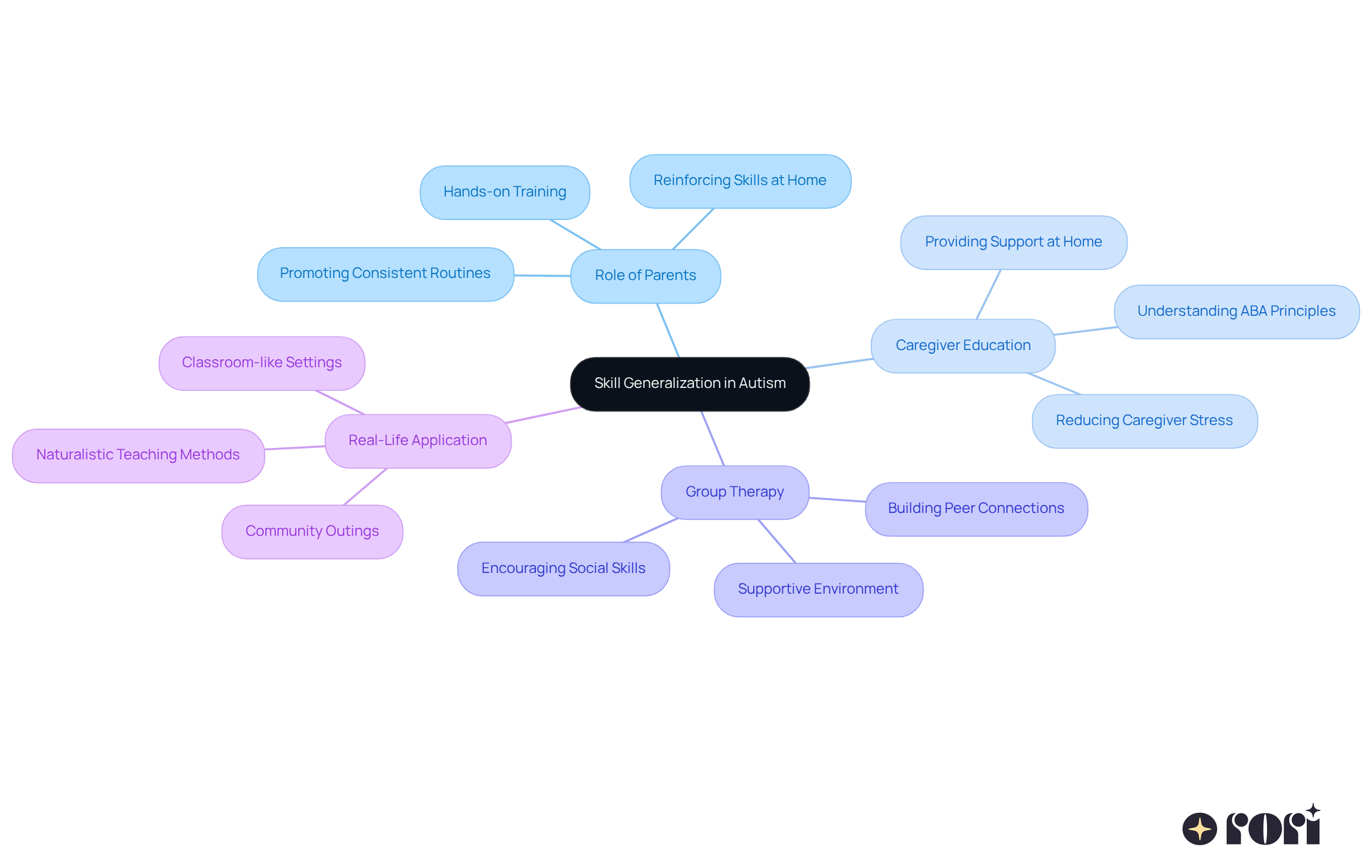
focuses on how a young person with autism can use their skills in different places, with different people, and in various situations. For example, if a child learns to greet their therapist during a session, they’re making great progress when they can also say hello to a teacher at school or a friend at the park. This ability is super important for , as it helps them become more independent and socially engaged by allowing them to practice their skills in real-life situations beyond therapy.
Now, let’s talk about the role of caregivers. is crucial for to . When caregivers are well-informed, they can provide , which complements professional help and promotes consistency, as outlined in the . This informed approach leads to , as active caregiver involvement aligns with therapeutic strategies, resulting in more effective and lasting improvements. Plus, when caregivers feel equipped with knowledge from the ”, it can reduce stress and improve family dynamics, giving them the confidence to help their kids thrive.
, led by qualified therapists, is another fantastic way to boost communication and connections among young people. In these group settings, kids can work on their social skills in a supportive environment, which not only helps them practice but also encourages meaningful interactions with their peers.
Let’s explore this together! By understanding these aspects, we can all contribute to for our children.
Understand the Importance of Skill Generalization
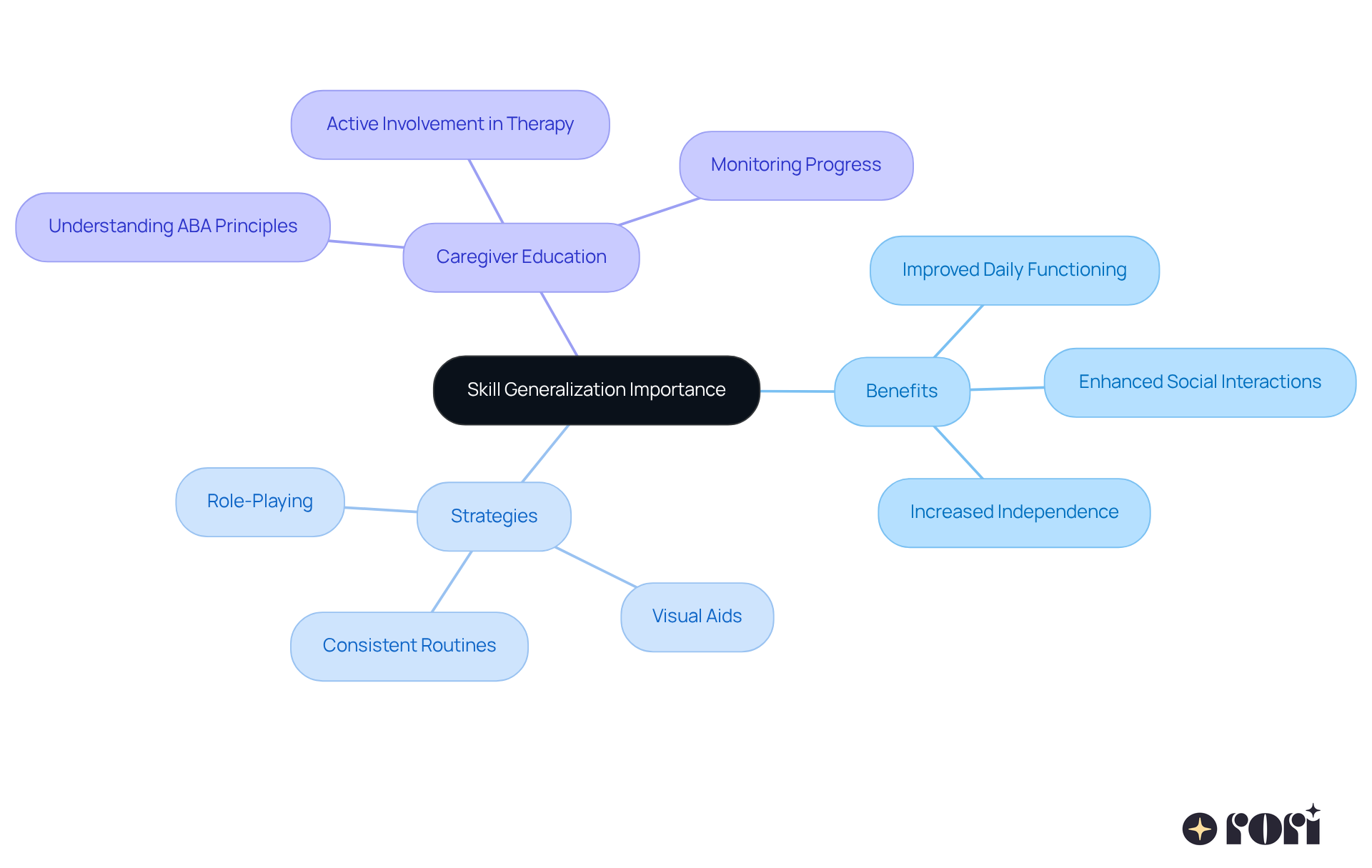
Transferring knowledge is so important! It helps our kids take what they learn in therapy and use it in their everyday lives. Imagine them navigating social situations, interacting with friends, and handling daily tasks all on their own. This not only boosts their quality of life but also gives them a .
When we broaden their learning experiences, we’re really giving them the chance to practice and grow their skills in different settings. Research shows that using can lead to big improvements in daily functioning, social interactions, and independence for kids with autism. For instance, caregivers can really make a difference by:
- Setting up
- Using
- Role-playing real-life situations
Experts agree that encouraging : parent’s guide is essential for ensuring that these abilities translate into meaningful, real-world uses. This ultimately supports our kids’ growth and well-being. Plus, tackling challenges like stimulus overselectivity is crucial for : parent’s guide, ensuring that what they learn can be applied in various contexts.
is super important in this journey! It equips us with the knowledge and skills we need to actively support our children’s goals. By , we can make informed choices that positively impact our kids’ progress, leading to better behavioral outcomes and a more empowered family dynamic. Let’s explore this together!
Implement Strategies for Promoting Skill Generalization
To effectively promote , let’s explore some friendly strategies together:
- Teach in Multiple Contexts: It’s super helpful to – think home, school, and community settings. This variety is beneficial for in children with autism, as it helps kids adjust their behaviors to different situations, making them more flexible and adaptable.
- Utilize : When your child successfully shows off a skill, celebrate it! Using can really highlight how important these abilities are in everyday life.
- : Getting friends involved in practice sessions can create great opportunities for to shine. can boost a child’s confidence in social situations, making them feel more at ease.
- Mixing things up with different materials, prompts, and teaching methods is a way of varying instruction that can be beneficial for encouraging . This helps kids see that they can use their abilities in various contexts, which promotes adaptability and problem-solving.
- Employ : Visual aids like checklists or social stories can be fantastic reminders for kids about the skills they’ve learned and how to use them. These tools can enhance understanding and memory, making it easier for them to recall and apply their abilities.
Remember, we’re here to help you every step of the way! If you have any thoughts or experiences to share, feel free to comment below!

Overcome Challenges in Skill Generalization
Encouraging : parent’s guide is crucial, although it may present its own set of challenges. Let’s take a look at some of these hurdles and how we can tackle them together:
- : Kids often don’t get enough chances to practice their skills in different places. To help with this, why not explore various settings like parks, community centers, or family gatherings? These real-life situations can be great for putting those skills to use!
- : When reinforcement isn’t consistent across different contexts, it can really hold back a child’s ability to generalize their skills. It’s crucial for caregivers and educators to team up and stick to the same reinforcement strategies. This way, kids get the same feedback no matter where they are.
- : New environments can feel pretty daunting for kids with autism. Did you know that can range from 22% to 84%? Taking it slow can really help! Start with short visits and offer supportive guidance to help them feel more at ease.
- : Some children might find it tough to see how a skill learned in one place applies to another. Using can help bridge that gap. For instance, you could explain how sharing toys at home is just like sharing during playdates. It’s all about highlighting the importance of those skills in different situations.
- : Having family members involved in therapy can make a world of difference! It not only boosts consistency but also creates a that reinforces what’s being taught. Educating caregivers is key here, as it empowers them with the tools and strategies needed to support their child’s growth.
By addressing these challenges and focusing on , parents and guardians can create an environment that is aligned with encouraging : parent’s guide. This ultimately helps kids navigate various social and educational situations more effectively. Let’s explore this together!

Explore Tools and Resources for Skill Generalization
To effectively support , let’s explore some helpful tools and resources together:
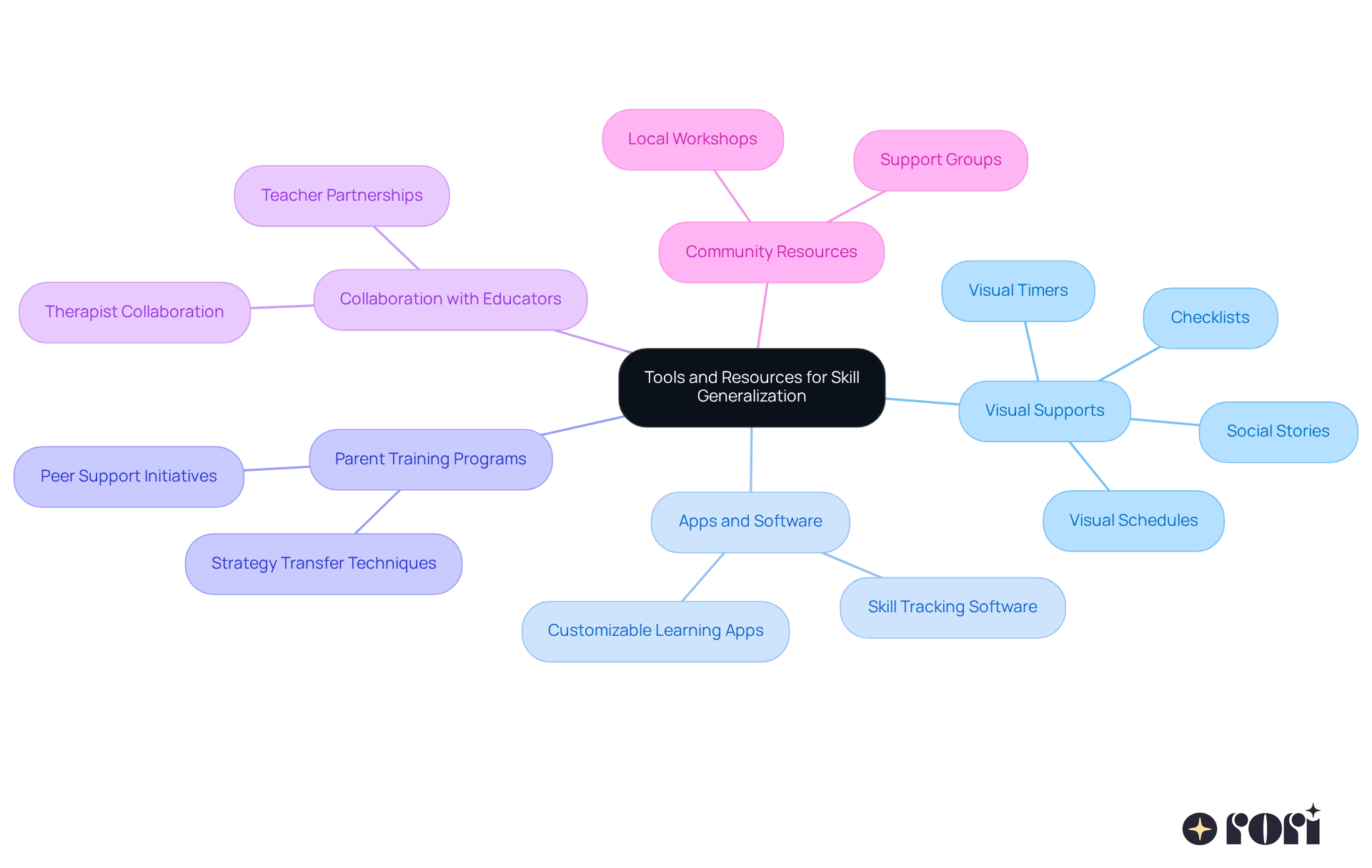
- : Think about using visual schedules, social stories, and checklists. These handy aids can simplify complex information, helping kids remember and use their skills in different settings. This way, we can reduce anxiety and confusion for our little ones.
- : There are so many great apps out there designed to track and reinforce skills! Look for customizable options that fit your child’s unique needs. This can really boost their engagement and make learning more fun.
- : Joining training programs that focus on can be a game-changer. These initiatives often share practical tips and foster peer support, serving as a valuable resource for in children with autism: parent’s guide, empowering you to implement effective strategies at home.
- : Building a strong partnership with your child’s teachers and therapists is key. When everyone is on the same page, it facilitates encouraging : parent’s guide, allowing your child to apply what they learn in one setting to another and making the transition smoother.
- : Don’t forget to check out local organizations that offer workshops or support groups focused on skill generalization and autism care. Engaging with these resources can provide valuable insights and create a supportive community for families facing similar challenges, as outlined in the in children with autism: parent’s guide.
We’re here to help you every step of the way! If you have any thoughts or experiences to share, feel free to comment below!
Conclusion
Encouraging skill generalization in children with autism is so important for helping them gain independence and improve their social interactions. By sharing effective strategies and insights with caregivers, we can create a supportive environment where children can apply their skills in different settings and with various people. This journey not only benefits the child but also strengthens family bonds and eases the stress for caregivers.
Key strategies for promoting skill generalization include:
- Teaching in diverse contexts
- Using natural reinforcers
- Incorporating peer interactions
- Employing visual supports
- Tackling common challenges like limited exposure and inconsistent reinforcement
When caregivers actively engage in these practices, they can really boost their child’s ability to transfer learned skills into real-life situations.
Ultimately, the journey toward skill generalization is a team effort that involves caregivers, educators, and therapists. By tapping into available tools and resources, families can create an environment that’s perfect for learning and growth. Encouraging skill generalization not only enhances the quality of life for children with autism but also empowers families to navigate the complexities of autism care with confidence and resilience. Let’s explore this together!
Frequently Asked Questions
What is skill generalization in autism?
Skill generalization in autism refers to the ability of a child with autism to use learned skills in different places, with different people, and in various situations. For example, if a child learns to greet their therapist, making progress means they can also greet a teacher or a friend in different settings.
Why is skill generalization important for children with autism?
Skill generalization is important because it helps children become more independent and socially engaged, allowing them to practice their skills in real-life situations beyond therapy, which enhances their overall quality of life.
What role do caregivers play in encouraging skill generalization?
Caregivers play a crucial role by being educated on ABA (Applied Behavior Analysis) principles and strategies. This knowledge enables them to provide better support at home, complementing professional help and promoting consistency, which leads to better behavioral outcomes.
How can caregivers support skill generalization at home?
Caregivers can support skill generalization by setting up consistent routines, using visual aids, and role-playing real-life situations. These strategies help children practice and grow their skills in various settings.
What are the benefits of group therapy for children with autism?
Group therapy focused on interpersonal skills provides a supportive environment where children can practice their social skills and encourage meaningful interactions with their peers, enhancing their communication and connection abilities.
What impact does caregiver education have on families of children with autism?
Caregiver education reduces stress, improves family dynamics, and equips caregivers with the confidence and knowledge needed to support their children’s growth and well-being effectively.
List of Sources
- Define Skill Generalization in Autism
- stepaheadaba.com (https://stepaheadaba.com/blog/the-benefits-of-generalization-in-aba-therapy)
- cstacademy.com (https://cstacademy.com/resources/articles/empowering-growth-generalization-of-skills-for-children-with-autism-at-cst-academy)
- How Does ABA Therapy Support Generalization of Skills? (https://magnetaba.com/blog/aba-therapy-and-generalization-skills)
- Understand the Importance of Skill Generalization
- Autism Quotes | Intellistars – ABA Therapy (https://intellistarsaba.com/blog/autism-quotes)
- crossrivertherapy.com (https://crossrivertherapy.com/articles/understanding-the-importance-of-generalization-in-aba)
- goldenstepsaba.com (https://goldenstepsaba.com/resources/aba-therapy-for-autism-skill-programs)
- The Importance of Generalization in ABA Therapy (https://magnetaba.com/blog/the-importance-of-generalization-in-aba-therapy)
- How ABA Therapy Helps with the Generalization of Skills Across Environments (https://supportivecareaba.com/statistics/how-aba-therapy-helps-with-the-generalization-of-skills-across-environments)
- Implement Strategies for Promoting Skill Generalization
- stepaheadaba.com (https://stepaheadaba.com/blog/the-benefits-of-generalization-in-aba-therapy)
- Autism Quotes | Intellistars – ABA Therapy (https://intellistarsaba.com/blog/autism-quotes)
- linksaba.com (https://linksaba.com/generalization-in-aba-why-it-matters)
- Voices of Strength and Understanding: Insights and Inspiration on Autism – apricott ABA (https://apricott.com/resources/autism-quotes)
- Overcome Challenges in Skill Generalization
- goldstarrehab.com (https://goldstarrehab.com/parent-resources/autism-therapy-statistics)
- An update on anxiety in youth with autism spectrum disorders – PMC (https://pmc.ncbi.nlm.nih.gov/articles/PMC5764108)
- 10 inspiring quotes from people with autism | Autism Speaks (https://autismspeaks.org/life-spectrum/autism-quotes)
- autism.org (https://autism.org/autism-and-anxiety)
- Explore Tools and Resources for Skill Generalization
- The Benefits of Visual Aids in Enhancing ABA Therapy Sessions | Intellistars – ABA Therapy (https://intellistarsaba.com/blog/the-benefits-of-visual-aids-in-enhancing-aba-therapy-sessions)
- The Role of Visual Supports in Enhancing Learning for Autism | Advanced Autism Services (https://advancedautism.com/post/the-role-of-visual-supports-in-enhancing-learning-for-autism)
- Quotes About Autism (https://usevisualstrategies.com/quotes-about-autism)
- Autism Quotes (https://kidsclubaba.com/autism-quotes)
- The Effectiveness of Visual Supports for Students with Autism Spectrum Disorder – (https://naset.com/publications/autism-spectrum-disorders-series/the-effectiveness-of-visual-supports-for-students-with-autism-spectrum-disorder)