Incorporating healthy foods into the care routine for children with autism can often feel like navigating a complex maze. But don’t worry, you’re not alone in this journey! Understanding the unique dietary needs and sensory sensitivities of these children is essential for fostering better eating habits and improving overall well-being.
This article presents a comprehensive guide, offering five actionable steps that empower caregivers to create a nutritious and enjoyable eating experience. How can families effectively balance the challenges of selective eating with the need for a balanced diet, while also making mealtimes a positive and engaging experience? Let’s explore this together!
It can feel like a challenge when incorporating into an for kids with , right? It’s so important to understand the unique of these children. Many kids on the spectrum might have dietary sensitivities, leading to selective eating habits. You might notice they often miss out on and minerals like calcium and vitamin D.
Research shows that a balanced diet can really impact behavior, learning, and emotional regulation. So, it’s crucial to connect with a or a registered dietitian who specializes in . They can help assess your child’s specific and work with you to create a . Let’s explore this together! We’re here to help you every step of the way!

Choosing for kids with can be a bit tricky when incorporating into an . It’s all about understanding their preferences. Foods that look fun, have different textures, and taste mild are usually more appealing. Think about:
These are fantastic choices!
Did you know that around 80% of individuals with autism face , often due to their ? It’s true! Slowly alongside their favorites can really help ease anxiety at mealtimes, which is beneficial when incorporating into an . Plus, incorporating healthy foods into an autism care routine by allowing your child to pick from a selection of can make them more excited to try new dishes. This not only gives them a sense of control but also helps build a .
Some great into an autism care routine include:
By tuning into these sensory preferences, you can create a more enjoyable and nutritious eating experience for your little ones. Let’s explore this together!

It is crucial for individuals with autism to have a that includes incorporating into an . It helps them anticipate meals and can really ease anxiety. Try setting specific times for three meals and two to three snacks each day, keeping mealtimes under 45 minutes to help maintain focus.
A is key! Minimize distractions by turning off screens and reducing noise. can be a great way to outline the , helping your little one understand what to expect. not only encourage social interaction but also model positive dietary behaviors, reinforcing the importance of consistency.
Did you know that about 80% of individuals with developmental challenges face ? That’s why these strategies are essential for promoting healthier eating habits, particularly by incorporating into an . And here’s something encouraging: when suggested hours of are fully utilized with active caregiver participation, around 90% of youngsters show significant improvement.
Plus, is the only scientifically validated treatment for developmental disorders that insurance covers, providing families with crucial support on their journey to nurture their child’s growth and well-being. Let’s explore this together!

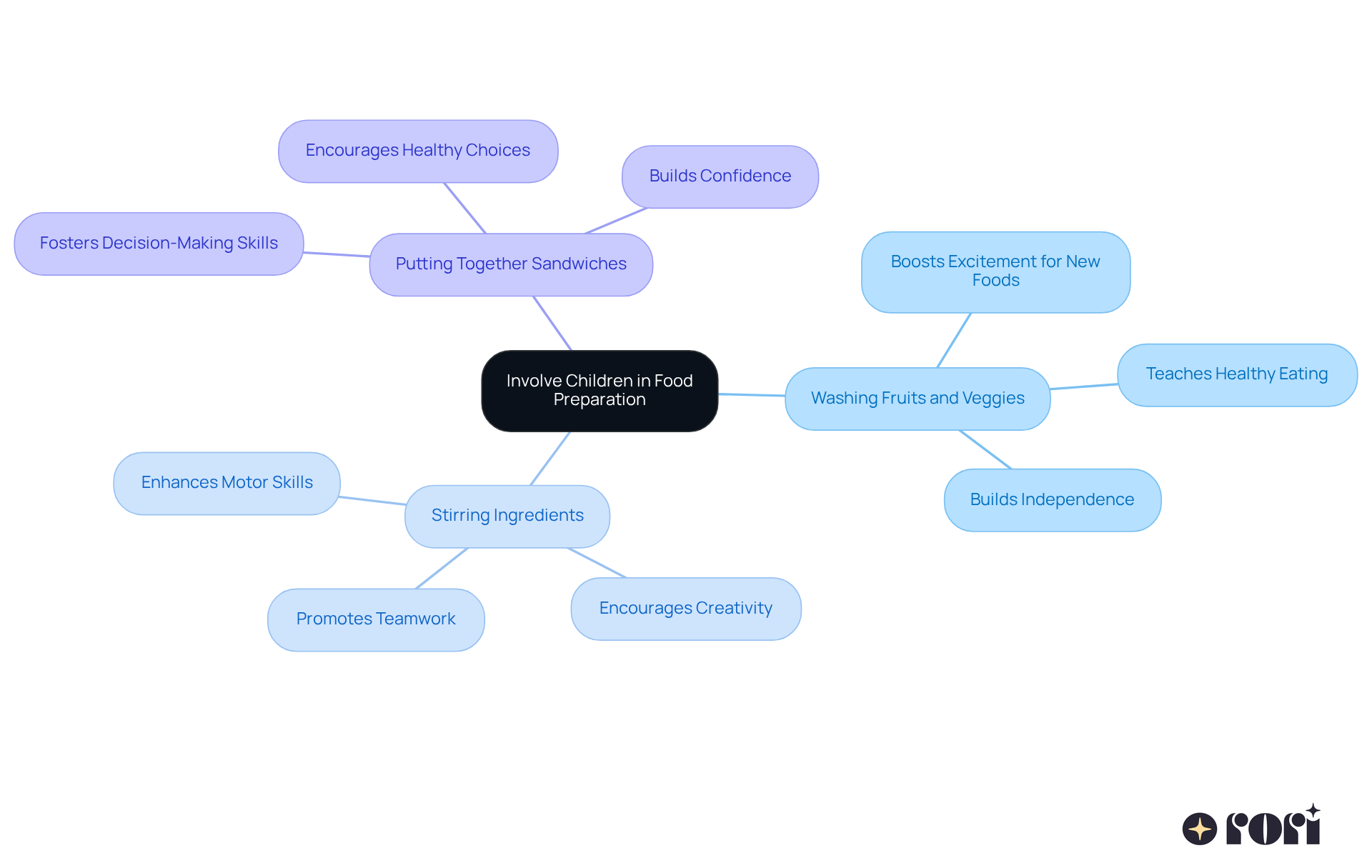
Getting your kids involved in can really boost their excitement to try new foods, which is important when incorporating into an . Start with simple tasks like:
Not only does this help them gain , but it’s also a great way to teach them about and why nutrition matters.
Research shows that kids who help out in the kitchen are more likely to develop a love for cooking and are less likely to be picky eaters. For instance, there are case studies that reveal kids who participate in are more willing to taste and enjoy their meals. This reinforces the idea that cooking can be a powerful tool in .
To make , why not add some games or challenges? A taste test of different fruits or veggies can be a hit! This hands-on approach not only builds essential skills like math through measuring and counting, but also , which is crucial for incorporating into an and making them more open to nutritious options.
As Christina S Lappa points out, cooking offers individuals with developmental disabilities . It’s an important activity that fosters and self-sufficiency. So, let’s explore this together and see how cooking can be a delightful journey for you and your little ones!
To help your kids make better , it’s a good idea to regularly check in on their eating habits and preferences. Keeping a food journal can be super helpful! It allows you to see how certain foods might affect their mood or behavior. Plus, this practice not only boosts your ability to make informed choices but also aligns with , giving you the tools to support your child’s .
Don’t hesitate to reach out to a healthcare provider or dietitian for advice on nutritional needs and any adjustments that might be necessary. And hey, be open to trying new foods and recipes! Encourage your kids to share what they like and dislike. This ongoing evaluation will help you create a flexible nutrition plan that supports your child’s health and well-being by incorporating healthy foods into an , leading to better behavioral outcomes. Let’s explore this together!

Incorporating healthy foods into an autism care routine is so important for promoting overall well-being and development in children on the spectrum. By understanding their unique dietary needs and preferences, caregivers can create a supportive environment that encourages healthier eating habits. This journey involves not just selecting sensory-friendly foods but also establishing structured mealtime routines, getting kids involved in food prep, and regularly checking in on dietary choices.
Key strategies include:
These steps help foster independence and a positive relationship with food, making it easier to introduce new, nutritious options. Plus, keeping track of dietary habits through tools like food journals allows for ongoing adjustments that fit individual needs, ultimately enhancing behavioral outcomes.
The significance of this approach is huge! By prioritizing healthy eating and involving children in the process, caregivers lay a strong foundation for lifelong nutritional habits. Embracing this journey not only benefits children with autism but also enriches family dynamics, turning mealtimes into joyful and collaborative experiences. Taking proactive steps today can lead to a brighter, healthier future for children on the autism spectrum. Let’s explore this together!
What are the dietary needs of children with autism?
Children with autism often have dietary sensitivities that can lead to selective eating habits, causing them to miss out on essential nutrients like fruits, vegetables, calcium, and vitamin D. A balanced diet is important for their behavior, learning, and emotional regulation.
How can I assess my child's specific dietary needs?
It is recommended to connect with a healthcare provider or a registered dietitian who specializes in developmental disorders. They can help assess your child's dietary needs and create a personalized nutrition plan.
What types of foods are sensory-friendly for children with autism?
Sensory-friendly foods that are usually more appealing include soft fruits like bananas and applesauce, crunchy vegetables like carrots, and creamy treats like yogurt.
What percentage of individuals with autism face feeding challenges?
Approximately 80% of individuals with autism experience feeding challenges, often due to sensory sensitivities.
How can I help my child try new foods?
Slowly introducing new foods alongside their favorites can ease anxiety at mealtimes. Allowing your child to pick from a selection of nutritious options can also encourage them to try new dishes.
What strategies can be used to incorporate healthy foods into an autism care routine?
Effective strategies include using visual aids to make food choices more appealing, incorporating familiar flavors to ease the transition to new items, and tuning into the child's sensory preferences to create a positive eating experience.