Introduction
Have you ever wondered how to help your child with autism use their skills in different places? Let’s explore some practical strategies you can use to help your child apply what they learn at home, whether it’s in school, during playdates, or even at the park!
But here’s the big question: how can we make sure our kids are using these skills everywhere they go? By diving into this question, we can discover ways to help our kids reach their full potential and grow in confidence!
Understand the Importance of Skill Transfer for Children with Autism
Have you ever noticed how kids sometimes struggle to use what they learn in different places? For children with autism, mastering this ability is crucial for several reasons:
Recent research, including the Paediatric Autism Communication Trial-Generalised (PACT-G), emphasizes the importance of transferring skills across different settings for children on the autism spectrum by involving both parents and educators. This comprehensive approach aims to improve communication abilities in individuals with autism, showing that successful skill exchange can lead to better outcomes in various areas of their lives.
Understanding these points helps us as parents see why it’s so important to encourage our kids to use their skills in everyday life. As advocates say, acceptance and support are key to unlocking every young person's potential, reinforcing that sharing knowledge is not just beneficial but essential for their growth and independence. When we support our kids in applying their skills everywhere, we’re not just helping them learn; we’re helping them thrive!

Assess Your Child's Current Skills and Identify Transferable Areas
Navigating your child's abilities can feel overwhelming, but you're not alone in this journey! Let’s dive into how you can better understand your child's unique skills!
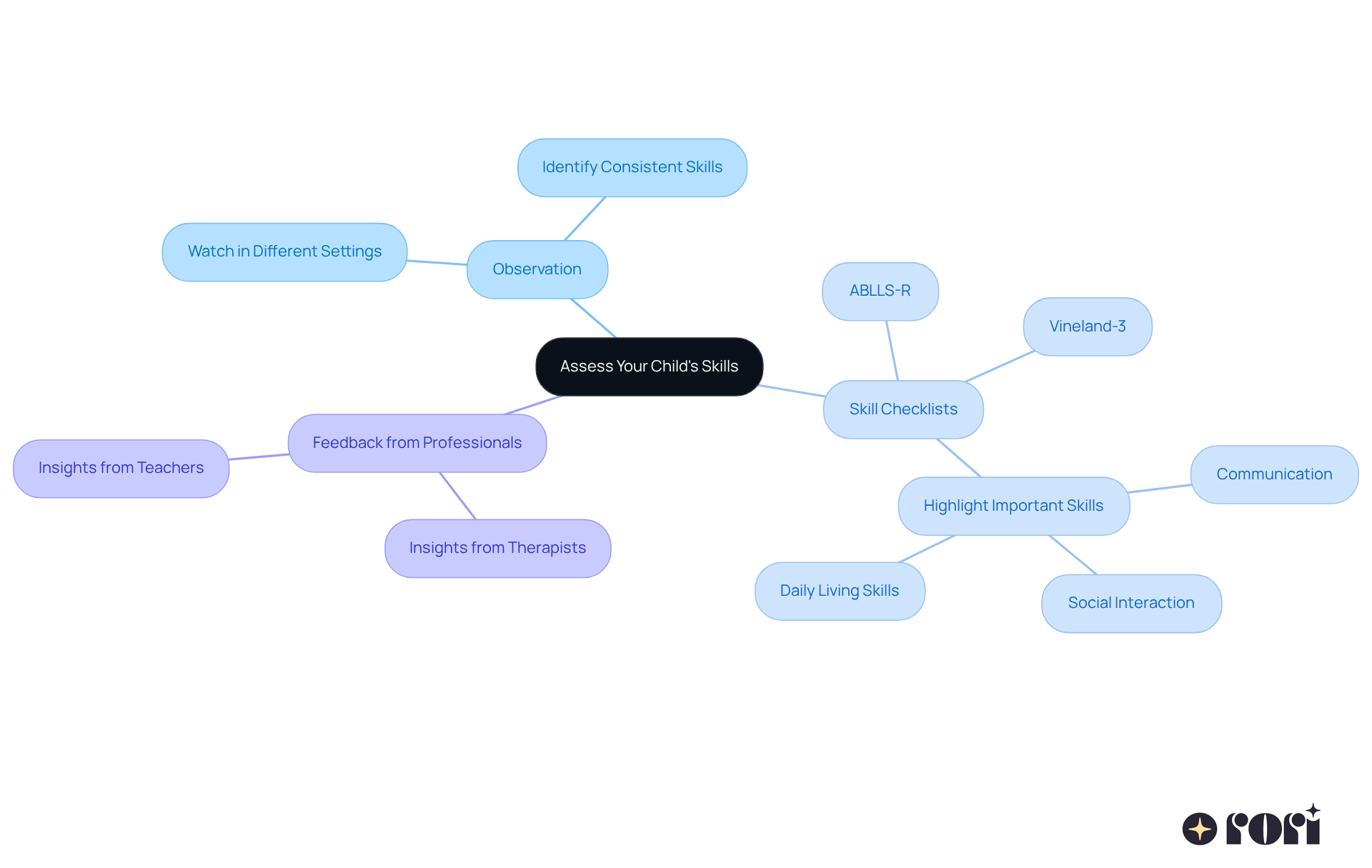
- Observation: Take a moment to watch your child in different places - at home, school, and in the community. This way, you can see the skills they consistently show in various settings.
- Skill Checklists: Try using checklists to highlight important skills your child should have, like communication, social interaction, and daily living skills. Tools like the Vineland-3 and ABLLS-R can help you evaluate their strengths and pinpoint areas for growth.
- Feedback from Professionals: Chat with therapists and teachers to get their insights into your child's strengths and areas needing improvement. Their expertise can provide valuable perspectives on your child's development.
Once you’ve got a good grasp of your child's skills, focus on which ones can be effectively transferred. For instance, if your child shares toys at home, encourage them to do the same in a playgroup. This approach helps ensure that the skills you’re working on are relevant and practical for transferring skills across different settings for children on the autism spectrum, thereby boosting your child's adaptability and independence.
Plus, regular check-ins are super important, as many insurance providers require competency reassessments every six months to keep track of progress and ensure ongoing treatment approval. Getting family members involved in therapy can really boost your child’s progress, reinforcing skills in a supportive environment. In fact, many kids see great progress when families are actively involved! By working together, you can help your child thrive in every environment they encounter.
Implement Strategies to Reinforce Skills Across Different Environments
As parents, we all know how challenging it can be to help our kids with autism by focusing on transferring skills across different settings for children on the autism spectrum. Here are some friendly strategies to consider:
- Consistent Routines: Establishing consistent routines is key! If your child is learning to ask for help, try weaving this practice into daily activities like cooking or cleaning. Studies show that sticking to routines can really help your child grow and learn better!
- Visual Supports: Visual aids, like charts or images, can be super helpful reminders for your child about the skills they need to use in different places. These tools can boost understanding and retention, making them a great addition to autism therapy.
- Role-Playing: Get your little one involved in role-playing activities that mimic real-life situations. For example, practicing how to order food at a restaurant or greet a friend can help them apply what they’ve learned in a fun and supportive way. This not only builds confidence but also prepares them for social interactions.
- Positive Reinforcement: Celebrate those little victories! Offering praise or rewards when your child successfully uses a skill in a new setting can motivate them to keep trying, particularly in the context of transferring skills across different settings for children on the autism spectrum. It nurtures a sense of accomplishment and drive.
When you use these strategies, you’re creating a warm space where your child can really shine! By embracing these strategies, you’re not just helping your child; you’re also building a brighter future for them.
Collaborate with Educators and Therapists to Support Skill Transfer
Navigating the world of parenting can feel overwhelming, especially when it comes to transferring skills across different settings for children on the autism spectrum to ensure your child’s abilities shine. Cooperation is key to making sure those abilities are reinforced consistently. Here are some friendly strategies to enhance that collaboration:
- Let’s talk about keeping those lines of communication open with your child’s teachers and therapists! Sharing insights about your child’s development and any challenges they face is essential for a unified approach. When you’re informed, you can make decisions that positively influence your child’s progress.
- How about teaming up with educators and therapists to set some clear goals for your child’s growth? This alignment ensures everyone understands the expectations and strategies involved. Plus, active parental involvement can significantly boost your child’s academic performance and emotional well-being.
- Sharing resources can be a game-changer! Let’s make sure teachers have what they need to support your child. Providing them with materials about the skills your child is developing, along with effective reinforcement techniques, promotes a unified approach to tackling common challenges.
- Creating a feedback loop is so important! It helps everyone stay on the same page about your child’s progress. This ongoing dialogue supports transferring skills across different settings for children on the autism spectrum, allowing for timely adjustments to strategies and enhancing the effectiveness of interventions. Recognizing communication barriers can help facilitate this process, ensuring that all parties are aligned in their efforts.
By encouraging teamwork, including services like Individual Therapy and Group Therapy provided by Rori Care, you’re not just helping your child; you’re building a community of support that benefits everyone involved.

Monitor Progress and Adjust Strategies for Continued Success
Keeping up with your child's progress can sometimes feel like a juggling act, can't it? Here are some friendly strategies to help you along the way:
- Data tracking is super helpful for transferring skills across different settings for children on the autism spectrum and understanding how they use their skills in various situations. Try jotting down moments when they shine or face challenges. You might be surprised to know that tracking data continuously gives a clearer picture than just checking in occasionally! Our behavior care engine updates plans based on what works best, making data tracking a breeze.
- Regular Check-Ins: Setting up regular chats with teachers and therapists can really make a difference. This teamwork helps you tweak strategies based on what you see and hear. With Rori Care, our clinical team is always there for your loved one during sessions, ensuring that data collection doesn’t interrupt their learning. Plus, all info is kept safe and private, so you can focus on what matters most.
- Adjust Goals: As your little one grows, be ready to shake things up! If they’re nailing a skill, why not introduce something new to keep the momentum going? You’ll find that 90% of kids show great progress when caregivers are actively involved.
- Celebrate Successes: Don’t forget to cheer for your child’s achievements, no matter how small! Celebrating their wins boosts their confidence and encourages them to keep using their new skills.
Visualizing progress with charts can also help you see how far they’ve come. By staying engaged and flexible, you can help your child excel in transferring skills across different settings for children on the autism spectrum.

Conclusion
Helping our kids with autism transfer their skills can feel like a puzzle sometimes, can’t it? It’s so important for their independence and confidence! By understanding how crucial this skill transfer is, we can better support our children in applying what they’ve learned in different environments, which helps them feel secure and grow.
Let’s break down some simple steps to make this easier:
- Check their skills
- Use practical strategies
- Team up with teachers and therapists
- Keep track of their progress
Each of these steps highlights the need for a consistent and supportive approach, which can really boost a child's ability to transfer skills effectively. By using tools like observation, checklists, and regular chats with professionals, we can make sure the skills being taught are relevant and useful in real-life situations.
Encouraging our kids to transfer their skills isn’t just about learning; it’s about helping them shine in their daily lives! When we actively engage in this process and create a supportive environment with families, educators, and therapists, we can significantly increase the chances of success for children with autism in various settings. This commitment to their development not only benefits the children but also enriches our communities, paving the way for a brighter, more inclusive future. Let’s explore this together!
Frequently Asked Questions
Why is skill transfer important for children with autism?
Skill transfer is crucial for children with autism because it promotes independence, enhances social interactions, and provides consistency across different environments, which helps them feel secure and boosts their confidence.
What recent research highlights the importance of skill transfer for children on the autism spectrum?
The Paediatric Autism Communication Trial-Generalised (PACT-G) emphasizes the need for transferring skills across different settings by involving both parents and educators to improve communication abilities in individuals with autism.
How can parents encourage their children to use learned skills in everyday life?
Parents can encourage skill use by supporting their children in applying what they learn at home in various settings, such as school or during playdates, which helps them become more independent and thrive.
What are some methods to assess a child's current skills?
Parents can assess their child's skills through observation in different environments, using skill checklists like the Vineland-3 and ABLLS-R, and obtaining feedback from professionals such as therapists and teachers.
How can parents identify transferable skills for their child?
Parents can identify transferable skills by observing their child in various settings and encouraging them to apply skills, such as sharing toys at home in a playgroup, to ensure relevance and practicality.
Why are regular check-ins important in tracking a child's progress?
Regular check-ins are important because many insurance providers require competency reassessments every six months to monitor progress and ensure ongoing treatment approval.
How can family involvement impact a child's progress in therapy?
Family involvement can significantly boost a child's progress by reinforcing skills in a supportive environment, leading to better outcomes and adaptability across different settings.
List of Sources
- Understand the Importance of Skill Transfer for Children with Autism
- 59 Inspirational Quotes About Autism - Hidden Talents ABA (https://hiddentalentsaba.com/autism-quotes)
- 80 Inspiring Quotes on Autism Awareness and Support - Empower ABA (https://empoweraba.com/80-inspiring-quotes-on-autism-awareness-and-support)
- Helping children with autism transfer new communication skills from home to school (https://manchester.ac.uk/about/news/helping-children-with-autism-transfer-new-communication-skills-from-home-to-school)
- Assess Your Child's Current Skills and Identify Transferable Areas
- The Numbers Don't Lie: Revealing Autism Therapy Statistics | Above and Beyond Therapy (https://abtaba.com/blog/autism-therapy-statistics)
- Prevalence and Early Identification of Autism Spectrum ... (https://cdc.gov/mmwr/volumes/74/ss/ss7402a1.htm)
- Skills Assessment in ABA: 5 Types + How to Use Them Right (https://passagehealth.com/blog/skills-assessment-aba)
- Facts About Autism: Comprehensive Overview for 2025 (https://abacustherapies.com/facts-about-autism-comprehensive-overview-for-2024)
- Autism statistics and facts | Autism Speaks (https://autismspeaks.org/autism-statistics-asd)
- Implement Strategies to Reinforce Skills Across Different Environments
- The Numbers Don't Lie: Revealing Autism Therapy Statistics | Above and Beyond Therapy (https://abtaba.com/blog/autism-therapy-statistics)
- Success Rate of Early Intervention for Autism | Connect n Care (https://connectncareaba.com/blog/early-intervention-autism-success-rate-statistics)
- 20 Inspiring Quotes About Autism Every Parent Must Read Today (https://circlecareservices.com/blog/20-quotes-about-autism-and-parenting)
- 80 Inspiring Quotes on Autism Awareness and Support - Empower ABA (https://empoweraba.com/80-inspiring-quotes-on-autism-awareness-and-support)
- Collaborate with Educators and Therapists to Support Skill Transfer
- Helping children with autism transfer new communication skills from home to school (https://manchester.ac.uk/about/news/helping-children-with-autism-transfer-new-communication-skills-from-home-to-school)
- 80 Inspiring Quotes on Autism Awareness and Support - Empower ABA (https://empoweraba.com/80-inspiring-quotes-on-autism-awareness-and-support)
- The Impact of Parental Involvement on the Educational Development of Students with Autism Spectrum Disorder (https://mdpi.com/2227-9067/11/9/1062)
- 8 Meaningful Autism Quotes for Parents' Support (https://graciousgrowthaba.com/8-meaningful-autism-quotes-for-parents-support)
- Research on Parent-Teacher Collaboration for Autism - Guiding Growth (https://guidinggrowth.app/research-on-parent-teacher-collaboration-for-autism)
- Monitor Progress and Adjust Strategies for Continued Success
- Autism Progress Monitoring: Tools & Techniques for Effective Tracking - Amaze ABA Therapy (https://amazeaba.com/autism-progress-monitoring-tools-techniques-for-effective-tracking)
- Effective ABA Data Collection: Tips, Methods & Tools (https://artemisaba.com/blog/aba-data-collection-methods-tips-tech)
- Autism Data Collection: Methods, Tips & Strategies | BrightBridge ABA (https://brightbridgeaba.com/blog/autism-data-collection-methods-tips-strategies)
- Autism Data: Skills® LogBook - Apps on Google Play (https://play.google.com/store/apps/details?id=com.centerforautism.logbook)