

Introduction
Navigating the complexities of transition planning for children with autism can feel overwhelming for families. But don’t worry! With the support of dedicated autism care specialists, this journey can become a collaborative and empowering experience.
Let’s dive into the essential steps to effectively work with these specialists. Their expertise not only helps in crafting personalized strategies but also creates a nurturing environment for both children and their families.
So, how can families make the most of these important partnerships while tackling the unique challenges that come with transition planning? We’re here to help you every step of the way!
Understand the Role of Autism Care Specialists
At Rori Care, our are not just experts; they’re passionate individuals dedicated to understanding and meeting the unique needs of children with autism. They use that help nurture , boost social skills, and encourage independence.
As an , their role goes beyond just treatment; they conduct thorough evaluations and create . Plus, they work hand-in-hand with families, ensuring that everyone is involved in the process. This teamwork is so important! It allows parents to actively participate in planning for their child’s future with the help of an to .
Our clinical leadership team is deeply committed to . This dedication enhances the support we provide to families. By recognizing the vital role these specialists play, families can navigate the challenges of autism care more effectively, leading to .
Let’s explore this journey together! We’re here to !

Conduct a Comprehensive Evaluation and Diagnosis
Starting the can feel overwhelming, but it doesn’t have to be! First things first, a is key. This means gathering important details about your child’s , , and any diagnoses they might have. It could involve:
- Standardized assessments
- Chats with parents
- Observations in different settings
Once the assessment wraps up, the for transition planning will provide a diagnosis if it’s relevant. This diagnosis serves as a stepping stone, aiding an for transition planning in developing a that truly addresses your child’s unique needs.
Let’s explore this together! Remember, you’re not alone in this journey, and we’re here to help you every step of the way!

Communicate Your Child’s Needs and Goals
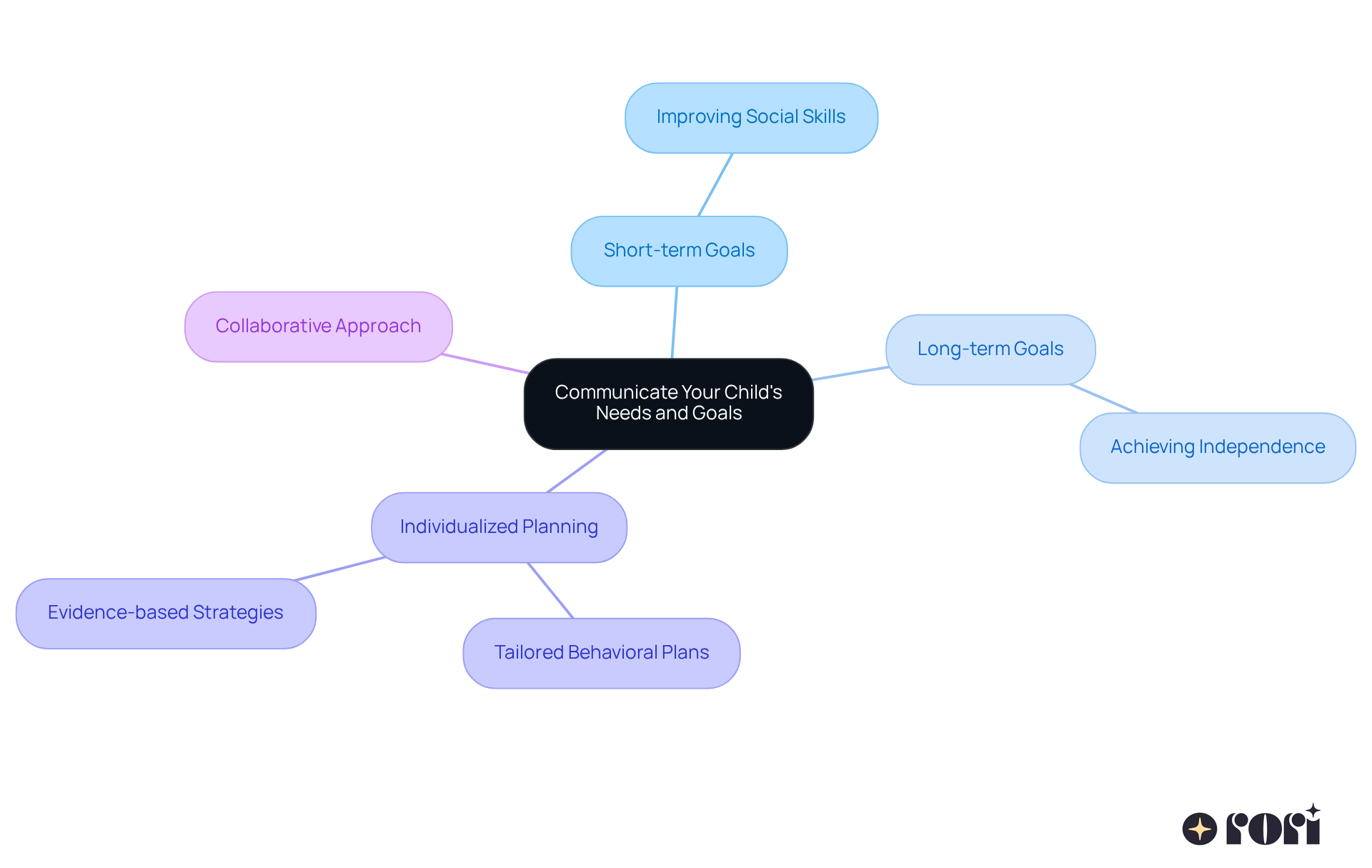
Once the evaluation is complete, it’s super important to share your specific needs and goals with the . A structured meeting can be a great way for parents to share insights about their child’s strengths, challenges, and dreams. When discussing goals, think about both short-term objectives, like , and , such as . This kind of helps the align their strategies with your family’s vision for your child’s future.
At Rori Care, we really focus on . We tailor behavioral plans to fit each young person’s unique needs. Our approach is all about using , which means the interventions are effective and adaptable. By actively involving caregivers in the process, we can see some amazing progress – 90% of youngsters show when the recommended hours are fully implemented! This not only supports the individual’s development but also empowers families .
Let’s explore this together! We’re here to help you every step of the way!
Create a Personalized Transition Plan
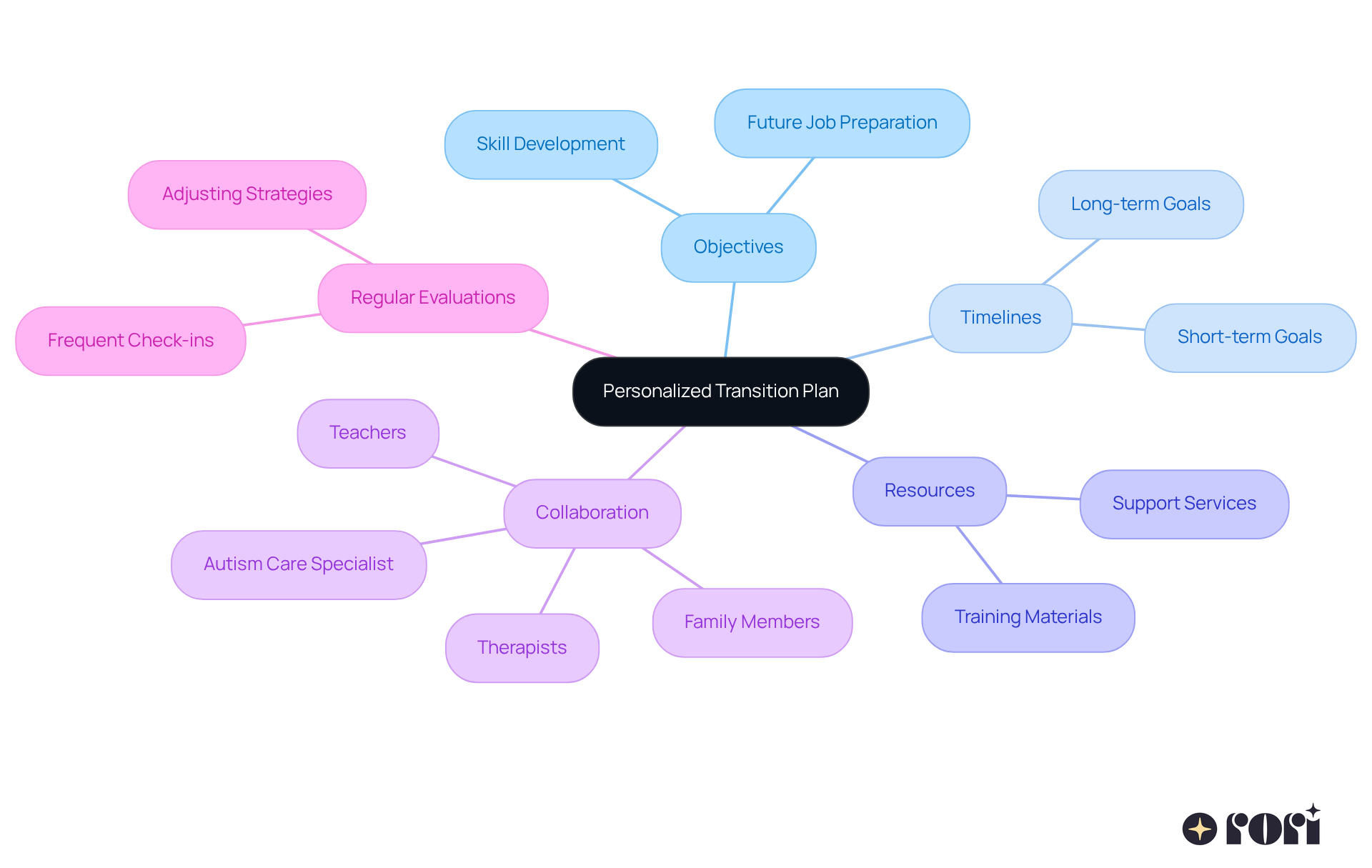
Creating a customized strategy with the help of an is so important for meeting your child’s unique needs and goals. This plan should lay out clear objectives, timelines, and the resources you’ll need to for transition planning to make the transition as smooth as possible. Consider including ways to boost skills, like and preparing for future jobs, with the guidance of an , ensuring that everything is tailored to your child’s situation.
Input from teachers, therapists, and family members is key for an . When everyone collaborates, it creates a by including an . Plus, the involvement of caregivers is essential in the work of an ! When caregivers understand ABA principles, they can make informed choices that really help their child’s progress.
Don’t forget to check in on the strategy regularly. Frequent evaluations conducted by an keep things relevant and effective, allowing you to tweak the plan based on what you learn during therapy sessions. Educating caregivers about the importance of an can lead to better and empower them, boosting their confidence in supporting their child.
Did you know that 92% of teens with have related ? This really shows how the involvement of an can help achieve educational and life goals. As Dr. O. Ivar Lovaas wisely said, ” This highlights just how crucial are in planning for change, particularly when involving an .
Let’s explore this together! We’re here to help you every step of the way!
Utilize Ongoing Support and Resources
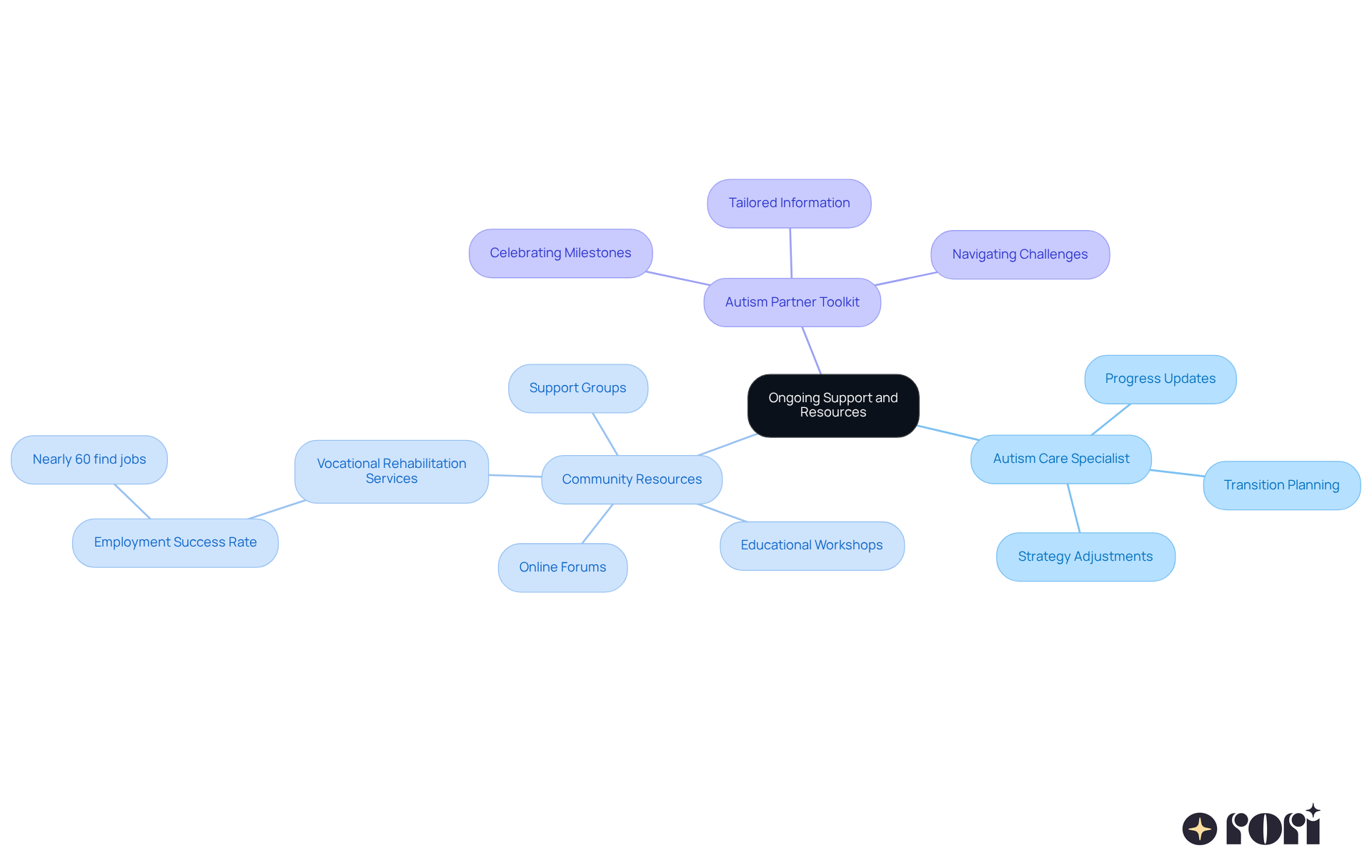
Transitioning can feel like quite the journey, can’t it? That’s why having ongoing support and resources is so important for success. Keeping in touch with your for is essential; they can provide updates on your child’s progress and assist you in adjusting strategies as needed.
Engaging with – like , , and – can really make a difference. For instance, did you know that ? That just shows how valuable these resources can be in making positive changes.
And don’t forget about the ! It’s packed with information tailored to meet your unique needs. By tapping into these resources, you can navigate challenges more effectively and celebrate those important milestones along the way. Let’s explore this together and and more positive!
Conclusion
Navigating the journey of transition planning for children with autism can feel overwhelming, but it’s also incredibly rewarding! Engaging with an autism care specialist is key. They offer tailored support, conduct thorough evaluations, and create personalized plans that truly align with each child’s unique needs. By working together with families, these specialists empower caregivers to take an active role in their child’s development, leading to better outcomes and greater independence.
In this article, we’ve highlighted some essential steps in this process:
- Understanding the role of autism care specialists
- Conducting thorough evaluations
- Communicating specific needs and goals
- Creating personalized transition plans
- Utilizing ongoing support and resources
Each of these plays a crucial role in ensuring that children receive the care and guidance they need for successful transitions into adulthood.
Ultimately, the importance of partnering with an autism care specialist cannot be overstated. By embracing this collaboration and tapping into available resources, families can navigate the challenges of autism care more effectively. This proactive approach not only enhances the child’s growth and development but also creates a supportive environment that celebrates their unique strengths and aspirations.
So, let’s explore this together! Remember, you’re not alone on this journey. We’re here to help you every step of the way!
Frequently Asked Questions
What is the role of autism care specialists at Rori Care?
Autism care specialists at Rori Care are dedicated professionals who understand and meet the unique needs of children with autism. They use evidence-based interventions to nurture positive behaviors, boost social skills, and encourage independence.
How do autism care specialists assist in transition planning?
They conduct thorough evaluations and create personalized plans tailored to each child. They also work closely with families to ensure active participation in planning for the child’s future.
What is involved in the evaluation process for transition planning?
The evaluation process includes gathering details about the child’s developmental history, current behaviors, and any diagnoses. This may involve standardized assessments, discussions with parents, and observations in various settings.
How does the evaluation contribute to the treatment plan?
After completing the assessment, the autism care specialist may provide a relevant diagnosis, which helps in developing a personalized treatment plan that addresses the child’s unique needs.
What commitment does the clinical leadership team at Rori Care have?
The clinical leadership team is deeply committed to neurodiversity and the success of young individuals, enhancing the support provided to families navigating autism care.
How can families benefit from working with autism care specialists?
By recognizing the vital role of these specialists, families can navigate the challenges of autism care more effectively, leading to better outcomes for their children.
List of Sources
- Understand the Role of Autism Care Specialists
- 2026 Autism Statistics – Insights for Families and Advocates (https://prosperahealthcare.com/autism-statistics)
- Data and Statistics on Autism Spectrum Disorder (https://cdc.gov/autism/data-research)
- goldstarrehab.com (https://goldstarrehab.com/parent-resources/autism-therapy-statistics)
- Autism acceptance: 15 stats on Autism Spectrum Disorder (https://newsroom.cigna.com/autism-spectrum-disorder-stats)
- Communicate Your Child’s Needs and Goals
- Autism Quotes (https://kidsclubaba.com/autism-quotes)
- goldstarrehab.com (https://goldstarrehab.com/parent-resources/autism-therapy-statistics)
- The Numbers Don’t Lie: Revealing Autism Therapy Statistics | Above and Beyond Therapy (https://abtaba.com/blog/autism-therapy-statistics)
- rori.care (https://rori.care/post/10-positive-proud-autism-quotes-to-inspire-and-empower-parents)
- Create a Personalized Transition Plan
- Inspiring and Insightful Autism Quotes | Advanced Autism Services (https://advancedautism.com/post/autism-quotes)
- cdc.gov (https://cdc.gov/autism/publications/addm-network-adolescents-transition-planning.html)
- publications.aap.org (https://publications.aap.org/pediatrics/article/152/1/e2022060199/191813/Individualized-Education-Programs-and-Transition)
- Best Autism Quotes to Raise Awareness and Understanding (https://yellowbusaba.com/post/autism-quotes)
- Utilize Ongoing Support and Resources
- Data and Statistics on Autism Spectrum Disorder (https://cdc.gov/autism/data-research)
- Autism statistics and facts | Autism Speaks (https://autismspeaks.org/autism-statistics-asd)
- Autism Therapy Statistics | Discovery ABA (https://discoveryaba.com/aba-therapy/autism-therapy-statistics)
- stepaheadaba.com (https://stepaheadaba.com/blog/autism-quotes)