Spotting the early signs of autism in your little one can feel like a daunting task for many parents. Getting to know these red flags can really help you take action and support your child’s growth. But with all the info out there, how do you know what to watch for and when to step in? In this article, we’ll explore nine key signs of autism in infants that could really change the game for your child’s development.
As parents, we often find ourselves anxious when our little ones aren’t hitting those speech milestones. One of the first signs that something might be off is when kids struggle with speech and communication skills. By 12 months, most infants should be babbling, but those exhibiting red flags for autism spectrum disorder in infants may not show this behavior. They might also skip gestures like pointing or waving, which can indicate red flags for autism spectrum disorder in infants.
By 16 months, kids usually can say a few words, and by 24 months, they should be able to combine words into simple phrases. If you notice these milestones aren’t being met, it might be time to chat with a professional. The good news? Early intervention can really help your child thrive! Research shows that getting support early can lead to brighter outcomes for children experiencing communication delays. So, let’s keep an eye on these developmental markers together!

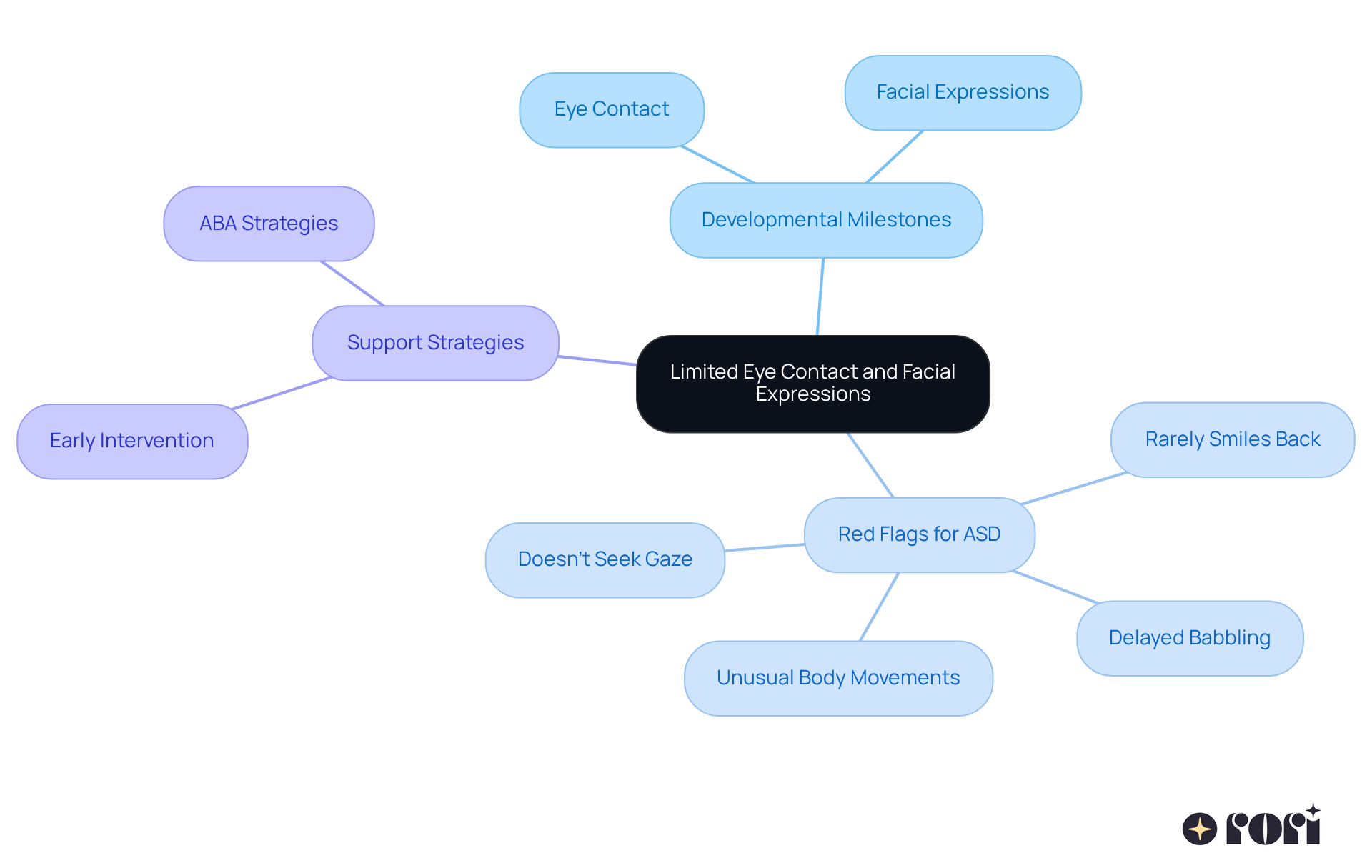
Have you ever noticed your baby gazing off into the distance instead of making eye contact? Infants typically start to establish eye contact and express emotions through their faces by around two months. If your baby isn’t making eye contact or showing many facial expressions, these could be considered red flags for autism spectrum disorder in infants. For example, if your little one rarely smiles back at you or doesn’t seem to seek your gaze, these behaviors could be red flags for autism spectrum disorder in infants. Keep an eye on these behaviors-they’re key to helping your little one build social skills and emotional bonds!
It’s natural to worry when you notice your little one isn’t making eye contact like other babies. Early indicators of developmental delay can appear before children turn one, and these may include red flags for autism spectrum disorder in infants, with some kids being diagnosed with ASD as young as 14 months. But don’t worry-early support can make a world of difference! The good news? Early intervention can really help toddlers who show signs of ASD!
Learning about ABA strategies can really empower you to support your child’s growth and help them thrive! This kind of support is so important for helping your child develop and tackle any challenges they might face. Remember, you’re not alone in this journey, and there’s help available to guide you and your child.
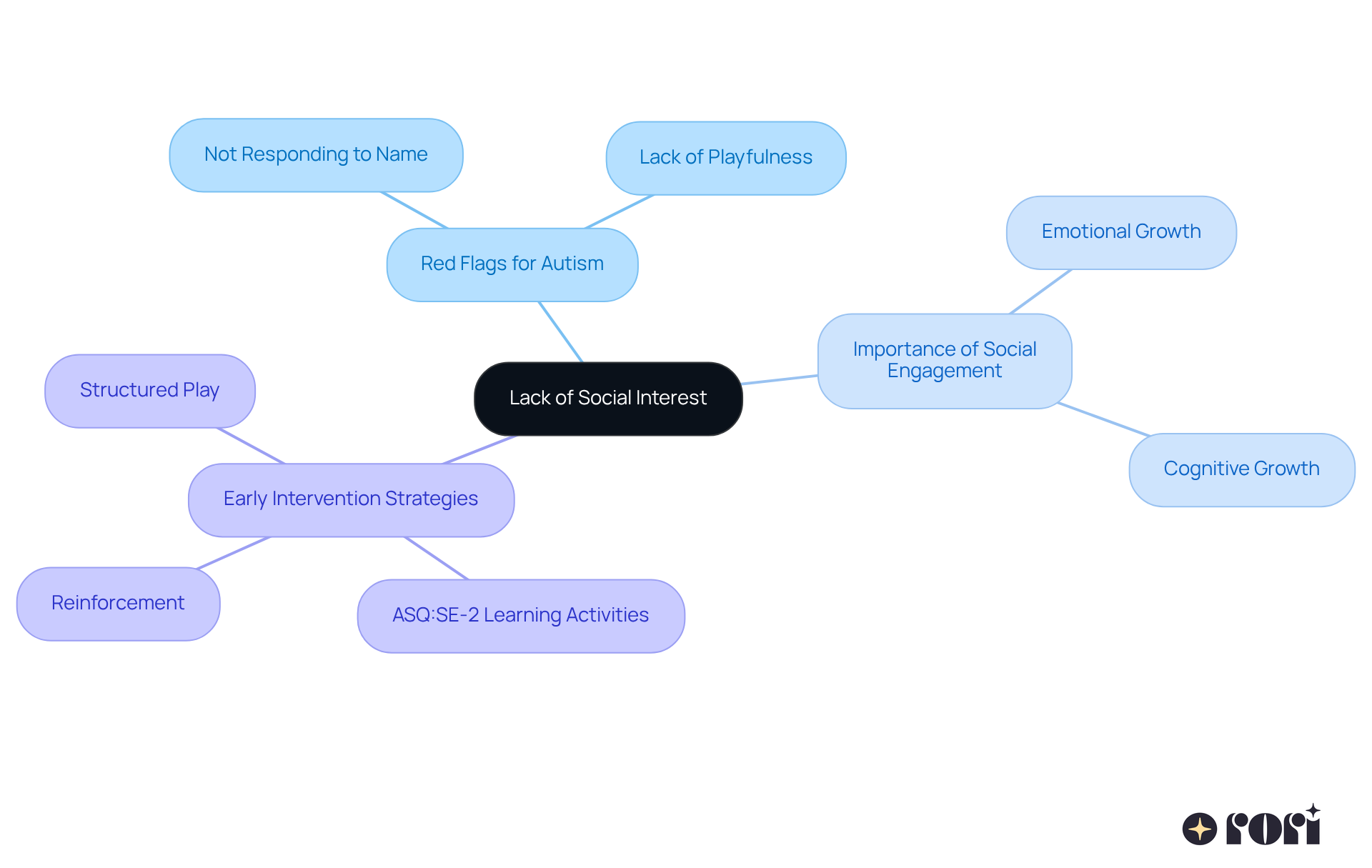
As parents, we all want our little ones to thrive socially, but sometimes things don’t go as smoothly as we hope. Infants typically show a natural interest in interacting with others, often smiling at caregivers or engaging in playful activities. However, if your little one isn’t responding to their name by 12 months or seems uninterested in playing with others, it could indicate red flags for autism spectrum disorder in infants. Did you know that about 20% of infants might not respond to their name by this age? That’s why it is so important to keep an eye on the red flags for autism spectrum disorder in infants!
Social engagement is super important for your child’s emotional and cognitive growth. Early intervention strategies, like the ASQ:SE-2 Learning Activities, can really help boost these skills by encouraging fun interactions between you and your child. Learning about these strategies can really empower you as a caregiver! Techniques like reinforcement and structured play can help you support your child’s growth.
Experts say that encouraging social interactions in infancy is key - it sets the stage for your child’s future social and emotional development. As Sara A. Whitcomb, Ph.D., beautifully puts it, 'Reading to youngsters does more than enhance their literacy skills. It helps them think about how others feel, and it reassures them that feelings - even big ones - are okay and normal.' When you stay informed and involved, you can make choices that really help your child grow and thrive! By staying engaged, you’re not just watching your child develop; you’re actively shaping their journey.
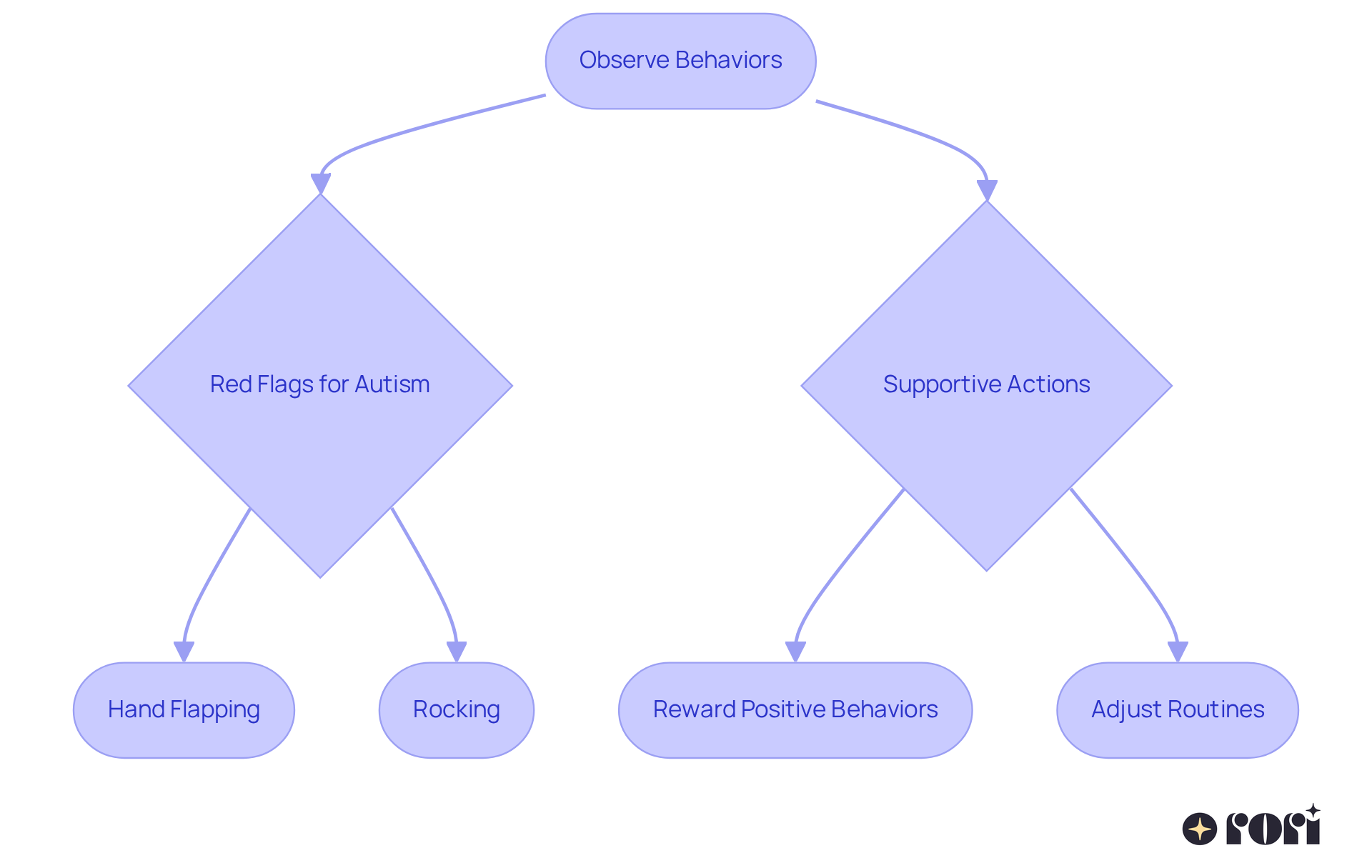
Have you noticed your little one flapping their hands or rocking back and forth? These movements can be their way of soothing themselves or showing excitement! You might see your toddler flapping their hands or rocking, which can be considered red flags for autism spectrum disorder in infants. It’s important to pay attention if your child does these things often, as it could indicate red flags for autism spectrum disorder in infants.
Spotting these patterns early can really help you find ways to support your child better. Therapists often suggest:
It’s also important to know that these behaviors can help kids manage their feelings and reduce anxiety. Getting involved with what your child loves can really help them learn and behave better!
When you notice red flags for autism spectrum disorder in infants early on, you’re taking an important step in supporting your child’s growth and happiness! By recognizing these signs, you’re not just observing; you’re actively supporting your child’s journey to thrive!
Imagine trying to connect with someone who doesn’t seem to notice your smile or your tears. Infants who show red flags for autism spectrum disorder in infants often face challenges in recognizing and responding to emotional cues from those around them. It can be tough when your little one struggles to connect emotionally, making it hard for them to form those important bonds. You know, recognizing those emotional signals is key to helping our kids connect with others. Parents should keep an eye out for red flags for autism spectrum disorder in infants, as early intervention can turn challenges into opportunities for growth and connection.
Trying out things like communication training or mindfulness can really help your child understand their feelings better. Plus, being a calm and steady presence during those turbulent emotions is so important. Working on emotional vocabulary can really boost your child’s growth and help them connect better with others. Joining a skills group with a good therapist can really help kids learn to interact and communicate better with their peers.
When parents learn about ABA strategies, it really boosts their ability to support their child’s emotional and social growth, making family life smoother and happier. With the right support and understanding, you can help your child thrive in their emotional journey.

Sensory sensitivities can be a real challenge for parents of infants with autism, often leading to distress over everyday experiences. For instance, your little one might get upset by something as simple as a fabric tag or a loud sound. Understanding these sensitivities is so important for you as a parent. It helps you create a cozy space that feels just right for your little one!
Did you know that sensory processing issues can affect anywhere from 45% to 96% of kids on the autism spectrum? It really depends on how we look at it! Early intervention, especially through Applied Behavior Analysis (ABA) therapy, can be a game-changer. It gives you effective strategies to help your child manage those sensory experiences. Plus, ABA therapy is all about being flexible and focused on your child, which can really enhance their learning and social skills.
Occupational therapists often suggest creating a sensory-friendly space by minimizing overwhelming stimuli and adding calming elements, like soft lighting and quiet areas. When you recognize and address these sensitivities and get involved in your child's ABA therapy, you’re making a huge difference in their growth and happiness! This involvement not only boosts behavioral outcomes but also empowers you as a caregiver, helping you make informed decisions and reducing stress. By embracing these strategies, you’re not just helping your child; you’re also nurturing a more harmonious family life.

Have you noticed your little one slipping back in skills they once had? Regression in abilities like language and social interaction in infants can be considered red flags for autism spectrum disorder in infants. For instance, a child who used to respond to their name might stop doing so, which can indicate red flags for autism spectrum disorder in infants.
Did you know that about 1 in 44 kids in the U.S. are diagnosed with Autism Spectrum Disorder (ASD) by age 8? Some of these kids might even lose skills they once had. It’s important to keep an eye on your child’s development. If you notice any skills slipping away, reaching out for a professional evaluation can really help.
Early intervention is key, as getting support quickly can make a huge difference for young ones facing these challenges. Let’s explore this together!

It can be tough to know when to seek help for your child’s development, but early identification of autism can truly change the game. You know, kids who get early support often pick up important skills faster and have better outcomes overall! For instance, research shows that children who start therapy before age three can gain an average of 17 IQ points compared to those who start later. Plus, early intervention programs can cut down on challenging behaviors by 60% within just six months, helping kids join in family and social activities more fully.
Here at Rori Care, we’re a team of caring professionals who truly believe in the power of neurodiversity and want to empower you with effective ABA strategies. As parents, it’s important to monitor your child’s development and be aware of red flags for autism spectrum disorder in infants, reaching out for help if you notice anything concerning. Tailored early intervention programs can meet each child’s unique needs, nurturing their growth and development. Did you know that 90% of kids who receive early help develop effective communication skills, whether through speech or other methods? That’s the amazing impact of timely support!
As Dr. Geraldine Dawson highlights, early acceptance and the right support can lead to a 63% improvement in quality of life for autistic individuals in accepting communities. By being proactive, you’re not just helping your child; you’re opening doors to a brighter future together. Let’s explore this journey together, and remember, we’re here to help you every step of the way!

Navigating autism care can feel overwhelming, especially when it comes to communication challenges. You know, technology is really shaking things up in autism care, bringing in some amazing tools that help kids communicate and connect better! Communication apps like Proloquo2Go and Expanding Language empower non-verbal kids by making it easier for them to express themselves through symbols and fun visuals. These apps not only help with language development but also encourage independence, allowing young learners to explore their world with more confidence.
Here at Rori Care, we totally get how important it is to blend technology with therapy to really make a difference for families. These apps do so much more than just help with communication; they also foster social interactions and emotional understanding. Research shows that kids using tech-driven interventions often make greater strides in social skills compared to traditional methods. For example, serious games and interactive platforms can boost empathy and emotion recognition, which are key for effective communication.
We’ve seen some fantastic success stories from using these apps in therapy settings. Kids who engage with communication tools tend to be more motivated and involved in social situations, leading to better outcomes overall. Plus, with AI-driven assessments, we can tailor interventions to meet each child’s unique needs, ensuring that therapy is both effective and relevant.
As technology continues to evolve, the impact of these communication apps on the growth of young individuals with developmental disorders is becoming clearer. We encourage parents to explore these resources as part of a comprehensive support system, complementing traditional therapies like those offered at Rori Care. By embracing these tools, you’re not just supporting your child; you’re also joining a community that understands and shares your journey.

Noticing changes in your child's behavior can be a bit unsettling, but it’s the first step toward getting them the help they need. When you see concerning behaviors, reaching out for a professional evaluation is key. These evaluations usually involve specialists who take a close look at your child's behavior and developmental milestones.
Did you know that getting a diagnosis early and starting the right support can lead to much better outcomes for your child? Research shows that early acceptance of a diagnosis can improve results by 63%! It can be tough to know what to do when you see your child struggling, but taking that first step can lead to a brighter future for them.
It’s also good to keep in mind that therapy can be a bit pricey, averaging around $175.44, so planning ahead can really help! If you have any concerns about your child's development, don’t hesitate to consult healthcare providers. Remember, reaching out for help can make all the difference in your child's journey.
At Rori Care, our clinical leadership team is dedicated to promoting neurodiversity and ensuring that every child feels understood throughout this process. Plus, educating caregivers is crucial in supporting youth development through ABA principles. It helps you make informed decisions and actively engage in your child's therapeutic journey. As Dr. Barry Prizant wisely says, the measure of success in working with children with autism is ensuring they feel understood. Let's explore this together!

It can be tough to navigate the signs of autism, especially when you're just trying to be the best parent you can be. By keeping an eye out for signs like:
you can take steps that really help your child grow. Understanding these indicators empowers you to seek professional evaluations and access necessary resources, creating a nurturing environment for your child's development.
The article highlights several key behaviors to watch for, including:
Each of these signs serves as a vital clue in identifying potential developmental challenges. By staying informed and engaged, you can utilize early intervention strategies that enhance communication skills and emotional understanding, setting the stage for a more fulfilling life for your child.
Parenting a child who shows signs of autism can feel overwhelming, but it’s also a chance for incredible growth and connection. Embracing early identification and intervention not only benefits your child but also strengthens your family unit as a whole. By tapping into resources like technology and professional support, you can help create a brighter future for your child, making sure they get the care and understanding they truly need.
What are the speech milestones for infants, and what should parents look for?
By 12 months, most infants should be babbling. By 16 months, they typically can say a few words, and by 24 months, they should be able to combine words into simple phrases. If these milestones are not being met, it may be time to consult a professional.
What are some red flags for autism spectrum disorder (ASD) in infants regarding speech and communication?
Red flags for ASD in infants include not babbling by 12 months, skipping gestures like pointing or waving, and not meeting speech milestones such as saying a few words by 16 months or combining words by 24 months.
When should parents be concerned about their child's eye contact and facial expressions?
Infants typically start to establish eye contact and express emotions through their faces by around two months. If a baby isn’t making eye contact or showing many facial expressions, such as rarely smiling back or not seeking gaze, these could be red flags for ASD.
What does limited eye contact in infants indicate?
Limited eye contact can indicate potential developmental delays or red flags for autism spectrum disorder. Early indicators may appear before one year of age, and some children may be diagnosed with ASD as young as 14 months.
How can parents support their child's social interest and interaction?
Parents can support their child's social interest by encouraging interactions, such as responding to their name and engaging in playful activities. Early intervention strategies, like the ASQ:SE-2 Learning Activities, can help boost these skills.
Why is social engagement important for infants?
Social engagement is crucial for a child's emotional and cognitive growth. It helps set the stage for future social and emotional development, making it essential for parents to encourage interactions from a young age.
What role does early intervention play in supporting children showing signs of ASD?
Early intervention can significantly help children who show signs of ASD by providing support that leads to brighter outcomes. Techniques like reinforcement and structured play can empower caregivers to support their child's growth effectively.