Leveraging the Premack Principle, a behavioral strategy also known as "grandma's rule," can be transformative in guiding children with Autism Spectrum Disorder (ASD) through the challenges of daily life. This principle suggests that by offering a preferred activity as a reward, less preferred behaviors can be encouraged and reinforced. In practice, this strategy aligns with the understanding that behavior is a form of communication, particularly in children with autism who may express their medical or emotional needs through behavior.
The efficacy of behavioral strategies such as the Premack Principle is supported by the broader movement towards personalized interventions in autism care. As the landscape of autism services evolves, with a notable increase in autism rates in the United States, the application of such tailored strategies becomes even more critical. The growth of the neurodiversity movement and a shift in autism research underscore the importance of interventions that respect and cater to the neurodiverse experiences of individuals with ASD.
Leveraging the Premack Principle, a behavioral strategy also known as "grandma's rule," can be transformative in guiding children with Autism Spectrum Disorder (ASD) through the challenges of daily life. This principle suggests that by offering a as a reward, less preferred behaviors can be encouraged and reinforced. For example, if a child enjoys a particular game, that game can become a reward for completing a less enjoyable task like homework.
In practice, this strategy aligns with the understanding that behavior is a form of communication, particularly in children with autism who may express their medical or emotional needs through behavior. It's essential to recognize the individuality of each child with autism, as their preferred and less preferred activities are unique to them.
The efficacy of behavioral strategies such as the Premack Principle is supported by the broader movement towards personalized interventions in autism care. This principle is part of a diverse toolkit that caregivers can adapt to fit the specific needs of their child, promoting engagement, reducing stress, and fostering a sense of accomplishment.
As the landscape of autism services evolves, with a notable increase in autism rates in the United States to 1 in 36 children, the application of such tailored strategies becomes even more critical. The growth of the neurodiversity movement and a shift in autism research underscore the importance of interventions that respect and cater to the neurodiverse experiences of individuals with ASD.
The concept of the Premack Principle, which leverages a high-interest activity to encourage a less desirable one, is particularly useful when working with children on the autism spectrum, who may exhibit rigid behavior patterns. For instance, if a child with ASD prefers the sensory experience of a particular toy but resists the routine of dental hygiene, using toy time as a contingent reward can effectively reinforce the desired behavior of teeth brushing. This method aligns with the understanding that intrinsic motivation—engaging in an activity for its inherent satisfaction—is more powerful than extrinsic rewards, such as tangible incentives.
Moreover, ensuring that children with disabilities are provided with equitable opportunities for participation in daily activities is vital for their mental health and overall well-being. The use of like the Premack Principle supports these children's engagement in essential self-care tasks, thereby fostering a fair and supportive environment for their development.

Applying the Premack Principle, which involves using a preferred activity as a reward for completing a less preferred one, can be a practical approach for parents managing meltdowns in children with Autism Spectrum Disorder (ASD). For instance, when a child is hesitant to engage in homework, offering the chance to watch their favorite TV show afterwards can serve as motivation. Similarly, for a child who delights in playing outdoors but struggles with activity transitions, the outdoor play can be the incentive for smooth transitions.
Likewise, the opportunity to play video games might encourage a child to follow instructions more closely.
These strategies are not only theoretical but have real-world applications. Consider the case of a 15-year-old who experienced behavioral changes due to obsessive calorie counting. Through tailored interventions, he showed remarkable improvement, highlighting the importance of individualized approaches in managing ASD-related challenges.
Autism's complexity means each child's needs and responses to interventions will differ. As the prevalence of autism diagnoses increases, with current statistics indicating 1 in 36 children in the U.S. are diagnosed, it's clear that personalized strategies like the Premack Principle can be essential tools for parents. The principle aligns with the understanding that finding solutions often requires creative problem-solving, anticipating stressful situations, and providing supportive environments to reduce stress, all critical for children with ASD.
Importantly, these behavioral strategies are supported by broader efforts to understand and address the challenges faced by those with ASD. Initiatives such as the Kevin and Avonte Program aim to prevent wandering, a severe behavior in ASD, by funding local programs that increase public awareness and develop emergency protocols. Furthermore, the reauthorization of the Autism CARES Act is a testament to the ongoing commitment to supporting individuals with autism, especially those with intense behaviors.
Ultimately, the objective is to ensure that children with ASD can engage peacefully and meaningfully in all aspects of life, as emphasized by the late Dr. David (Dan) R. Offord's perspective on mental health and equity. This involves recognizing the unique strengths and challenges each child brings, reducing stressors, and equipping caregivers with the necessary resources to foster healthy development. With the , children with ASD can navigate the complexities of their condition and thrive in their daily lives.
Leveraging the Premack Principle as an approach to managing meltdowns in children with Autism Spectrum Disorder (ASD) requires thoughtful adaptation to each child's unique situation. Dr. David (Dan) R. Offord's assertion that every child deserves to engage in life's 'race' fairly underscores the importance of equitable supports for children with disabilities. Tailoring the to each child's preferences is crucial, as the effectiveness of the intervention hinges on how compelling the preferred activity is to the child.
Immediate presentation of the preferred activity following the less preferred behavior reinforces the positive association, aiding in the development of new, desirable behaviors. Consistency in application cements this association, leading to a reliable and predictable outcome for the child. Additionally, a gradual progression of tasks can enhance the child's success, starting with simple tasks and building up to more complex ones.
Children with ASD, particularly those with co-occurring emotional and behavioral problems, may require extra support to participate meaningfully in daily life, and interventions such as the Premack Principle can play a significant role in fostering inclusion and mental health.
Harnessing the , parents and caregivers can empower children with Autism Spectrum Disorder (ASD) to better manage their emotions and reduce meltdowns. Here are some strategic approaches:
By implementing these steps, parents and caregivers can create a supportive environment that encourages positive behavior, thereby making 'the race' of growing up fair and accessible for children with ASD.

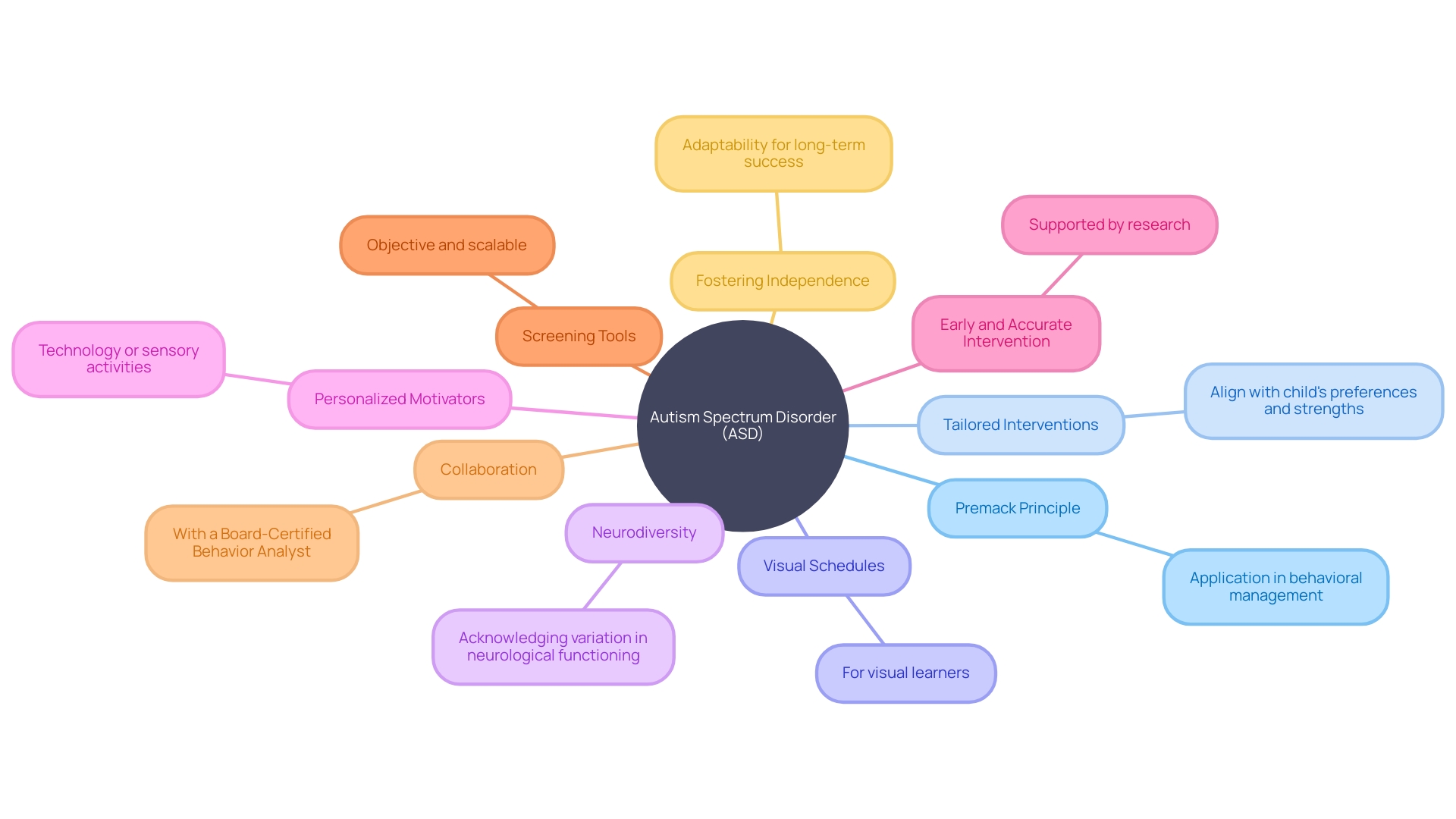
Understanding and addressing the individual needs of each child with Autism Spectrum Disorder (ASD) is a cornerstone of effective behavioral management. The application of the Premack Principle, which uses preferred activities as a reward for completing less desired tasks, must be carefully tailored to align with the child's unique preferences and strengths. For instance, a child more inclined towards visual learning might benefit from a visual schedule depicting the sequence of tasks leading to a desired activity.
This personalized approach resonates with the broader concept of neurodiversity, which acknowledges the variation in neurological functioning among individuals.
Incorporating the Premack Principle into a child's routine involves a nuanced understanding of their specific motivators. For a child fascinated by technology, earning time on a tablet could serve as a powerful incentive for completing homework or chores. On the other hand, a child who finds solace in sensory activities might be more motivated by the promise of playtime in a sandbox or with water beads.
The key is to identify what genuinely captivates the child's interest and use those activities to encourage positive behaviors and manage meltdowns effectively.
The effectiveness of such tailored interventions is supported by a growing body of research emphasizing the importance of early and accurate intervention strategies. Recent studies highlight the need for objective and scalable autism screening tools to facilitate early diagnosis and access to interventions that can significantly improve outcomes. With initiatives like working on pioneering diagnostic tools, there is hope for more timely interventions that cater to the unique profiles of children with ASD.
In practice, it's essential to maintain flexibility and adapt strategies as the child grows and their interests evolve. Collaborating with a Board-Certified Behavior Analyst who brings a wealth of clinical knowledge to the table, parents can ensure that the care and interventions provided are of the highest quality and tailored to the child's evolving needs. Such an approach not only supports the child in the short term but also lays a foundation for their long-term success by fostering independence and adaptability.
Dealing with meltdowns in children with Autism Spectrum Disorder (ASD) requires patience, understanding, and the right strategies. The Premack Principle, which uses preferred activities as a reward for completing less favored tasks, can be an effective approach, but it may also present some challenges. Let's explore these challenges and offer practical solutions to help parents and caregivers use this principle more effectively:
The Kevin and Avonte Program's approach to managing challenging behaviors, such as wandering, reinforces the value of proactive strategies. With over $10 million in grants awarded to initiatives that help locate individuals who wander and increase public awareness, their work acknowledges the importance of consistent and community-supported interventions.
Furthermore, as Dr. David (Dan) R. Offord highlighted, ensuring that children with disabilities have supported participation in all domains of life is crucial for their mental health and equitable treatment. This principle aligns with the need for consistency and generalization of for children with ASD.
In implementing these strategies, remember that behavior is a form of communication. Observing and understanding the messages children with ASD are conveying through their behavior can guide caregivers in choosing the most effective interventions to support their child's development and well-being.
In conclusion, the Premack Principle, also known as "grandma's rule," is a transformative behavioral strategy for guiding children with Autism Spectrum Disorder (ASD) through daily challenges. By using preferred activities as rewards, less preferred behaviors can be encouraged and reinforced. This approach recognizes behavior as a form of communication, particularly in children with autism who express their needs through behavior.
The efficacy of the Premack Principle is supported by the movement towards personalized interventions in autism care. As autism rates continue to rise, tailored strategies become increasingly critical. The growth of the neurodiversity movement and evolving autism research emphasize the importance of interventions that respect and cater to the unique experiences of individuals with ASD.
Implementing the Premack Principle requires adapting the strategy to each child's preferences. Immediate presentation of preferred activities after less preferred behaviors reinforces positive associations and helps develop desirable behaviors. Consistency and gradual progression of tasks enhance success.
Parents and caregivers can empower children with ASD by using the Premack Principle to manage emotions and reduce meltdowns. This involves identifying preferred activities, setting clear expectations, creating a reward system, reinforcing positive behavior, and monitoring progress. By creating a supportive environment, positive behavior can be encouraged.
Understanding and addressing the individual needs of each child with ASD is crucial for effective behavioral management. Tailoring the Premack Principle to align with the child's preferences and strengths is essential. Collaborating with Board-Certified Behavior Analysts ensures high-quality, tailored interventions.
Dealing with meltdowns in children with ASD can present challenges when using the Premack Principle. Breaking down tasks, exploring new interests, maintaining consistency, and generalizing behaviors can help overcome these challenges. It is important to remember that behavior is a form of communication, and understanding the messages children with ASD convey through behavior guides effective interventions.
In conclusion, the Premack Principle offers valuable insights and expert advice for parents and caregivers of children with Autism Spectrum Disorder. By leveraging preferred activities as rewards, less preferred behaviors can be encouraged and reinforced. Tailoring interventions to each child's unique needs and preferences is essential for success.
With the right strategies and support, children with ASD can navigate their condition and thrive in daily life.
Learn how to implement the Premack Principle and empower your child with ASD today!
What is the Premack Principle?
The Premack Principle is a behavioral strategy that suggests using a preferred activity as a reward to encourage and reinforce less preferred behaviors. For example, allowing a child to play a favorite game after completing homework.
How can the Premack Principle help children with Autism Spectrum Disorder (ASD)?
It can guide children with ASD through daily challenges by leveraging their preferred activities to motivate engagement in necessary tasks like self-care and transitions. This approach respects individual preferences and supports personalized interventions in autism care.
Why is it important to personalize the Premack Principle for children with ASD?
Each child with ASD has unique preferences, strengths, and challenges. Tailoring the Premack Principle to individual needs ensures that the intervention is compelling and effective for the child.
What are some examples of the Premack Principle in action?
Examples include offering a child the chance to watch their favorite TV show after doing homework or using outdoor play as an incentive for smooth transitions between activities.
Can the Premack Principle be used for managing meltdowns in children with ASD?
Yes, by offering a desirable activity after a less preferred one, children can be motivated to manage their emotions better and reduce the occurrence of meltdowns.
How do you implement the Premack Principle with a child who has ASD?
To implement the Premack Principle, identify activities the child enjoys, set clear expectations, create a reward system, offer consistent positive reinforcement, and monitor the child's progress, making adjustments as necessary.
What factors influence the effectiveness of the Premack Principle?
The effectiveness can be influenced by how compelling the preferred activity is to the child, the immediacy of the reward, consistency in application, and a gradual progression of tasks.
Are there any challenges when using the Premack Principle?
Challenges may include resistance to performing less preferred tasks, maintaining interest in reward activities, ensuring consistency in implementation, and generalizing behaviors to different environments.
What solutions exist for common challenges in using the Premack Principle?
Solutions include breaking tasks into smaller steps, exploring and introducing new interests, using schedules or visual aids for consistency, and connecting rewards to natural consequences to generalize behaviors.
How does the current autism research and neurodiversity movement affect the use of the Premack Principle?
The growth of the neurodiversity movement and a shift in autism research underscore the importance of interventions that respect the neurodiverse experiences of individuals with ASD. The Premack Principle aligns with these perspectives by offering personalized, respectful strategies.