Creating a positive mealtime experience for children with autism is so important, yet it often gets overlooked. Did you know that research shows 60% to 90% of kids with Autism Spectrum Disorders struggle with feeding issues? That’s why it’s crucial for caregivers and educators to really understand the unique challenges these children face during meals.
In this article, we’ll explore effective strategies that not only make mealtime interactions better but also create a supportive environment for healthy eating. But here’s the big question: how can caregivers navigate the complexities of sensory sensitivities and behavioral patterns to ensure every meal is a step toward comfort and acceptance? Let’s dive in together!
Mealtime can be a bit tricky for children with autism, can't it? Many kids display that can make meals a challenge. You might notice food refusal, sensory sensitivities, or even ritualistic eating patterns. It’s not uncommon for young ones to react negatively to certain textures or smells, which can lead to anxiety during meals. Did you know that research shows ? That’s a lot more than the 25% to 35% seen in typically developing children! This really highlights how important it is for caregivers and educators to understand these behaviors to create a .
Disruptive behaviors at the table, like leaving mid-meal or refusing to eat, are often reported. For example, sensory sensitivities might lead kids to prefer certain food textures, like grainy or paste-like, while turning their noses up at others. Educators have found that keeping a can really help. Simple strategies, like using visual schedules to prepare kids for changes and the 'first-then' approach to encourage trying new foods, have shown great results.
Plus, ! Kids often mimic their classmates' eating habits, which can improve their dining discipline. By recognizing and addressing these unique dining challenges, parents can use and reduce anxiety for everyone involved. Understanding the nuances of is key to creating a supportive dining experience that fosters a positive mealtime experience while promoting healthy eating habits.
And here’s a thought: empowering caregivers with knowledge of , like reinforcement and , can really boost their ability to provide the right support at home. This not only complements professional interventions but also helps maintain consistency. Let’s explore this together!

Creating a can be a game-changer for both kids and caregivers. Here are some friendly strategies that can really help, especially when caregivers are educated in ABA principles:
Let’s explore these strategies together! Remember, you’re not alone in this journey, and we’re here to help you every step of the way!

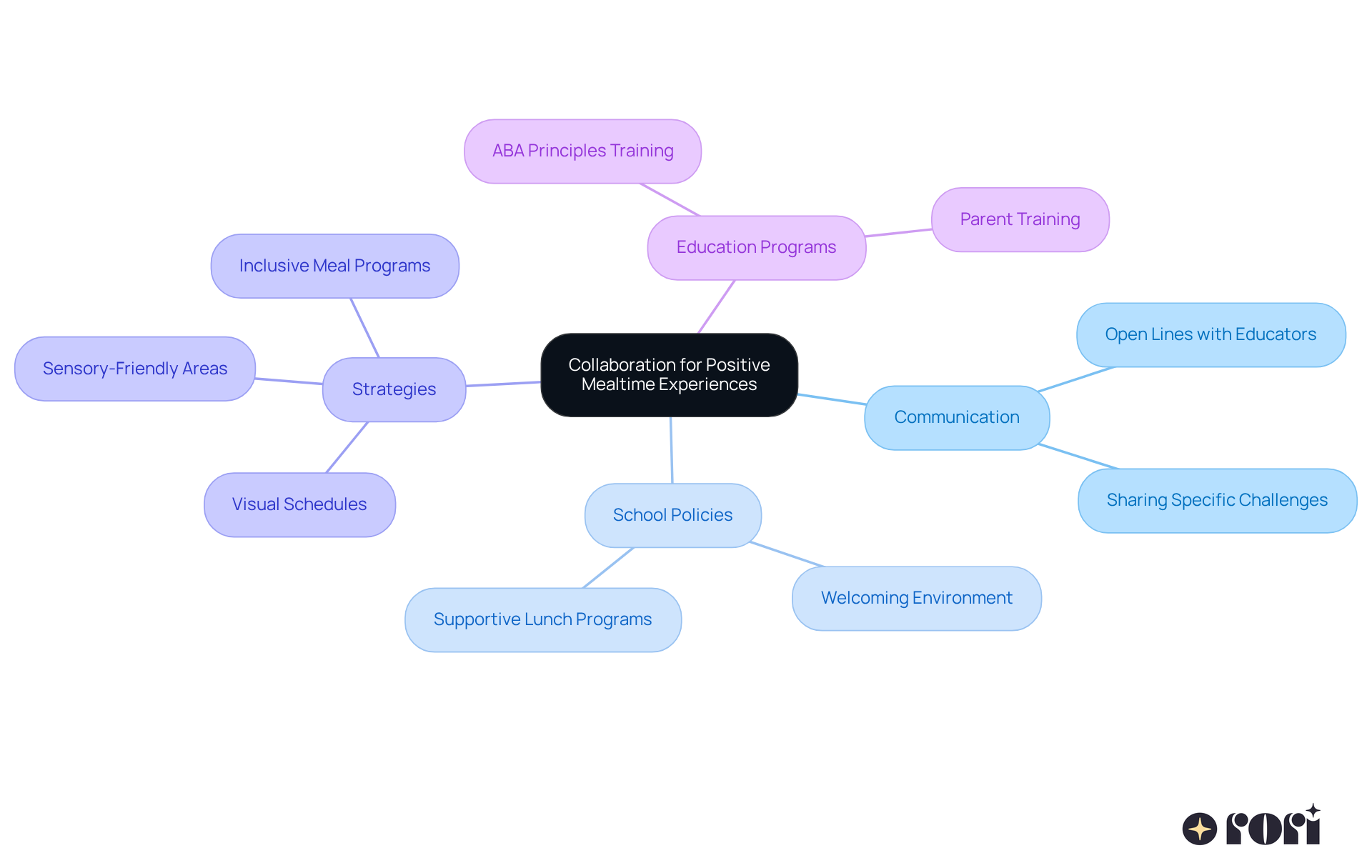
Cooperation between caregivers and educators is essential for fostering a positive . Schools often have policies that can help create a more welcoming environment. Caregivers should keep the with educators about the specific dining challenges their kids face. By working together, they can come up with .
For instance, schools can introduce to clarify what’s expected and set up to help reduce anxiety. Plus, promoting that cater to dietary restrictions ensures that kids with autism have access to the right food choices. By building a , parents can create a consistent approach that supports a positive both at home and in school.
This teamwork not only meets the nutritional needs of young individuals but also helps them and independence during meals. And let’s not forget about the ! They give providers a deeper understanding of ABA principles and techniques, empowering them to make informed choices that positively impact their child’s progress, improve behavioral outcomes, and enhance overall family dynamics.
Let’s explore this together! We're here to help you every step of the way!
To make dining more enjoyable for your little one, it’s important to regularly check in on their preferences and behaviors. You know how kids can be-one day they love broccoli, and the next, it’s a no-go! If your child often turns down a certain food, why not try serving it in a different way or pairing it with something they already love? This little tweak can make a big difference in how they accept new foods.
Have you ever asked your child about their ? It can be eye-opening! Getting their input can help you understand what works and what doesn’t, allowing you to to fit their tastes better. Plus, can empower you as a caregiver. When you feel confident in your methods, it not only reduces stress but also creates a more harmonious family atmosphere.
Staying as your child grows is key. It fosters an environment of continuous improvement, making mealtime a more pleasant experience and while . So, let’s explore this together! Your journey toward for your family starts here!

Creating a nurturing and positive mealtime experience for children with autism is so important for their overall development and well-being. By understanding the unique challenges these kids face during meals, caregivers can implement tailored strategies that foster a supportive environment. This approach not only helps reduce anxiety but also encourages healthier eating habits, making mealtimes more enjoyable for everyone involved.
Let’s dive into some effective strategies!
These can make a world of difference. Plus, collaboration between caregivers and educators is key. It creates a consistent and inclusive dining experience that truly meets the needs of children with autism. And remember, continuously evaluating and adapting these strategies ensures they stay effective as children grow and their preferences change.
Ultimately, we can’t overstate how significant it is to create a positive mealtime experience. By applying the insights and strategies discussed, caregivers can empower their children to develop better eating habits, enhance social skills, and foster independence during meals. Engaging in this journey together, with the support of educators and the community, paves the way for a brighter and more enjoyable dining experience for children with autism. Let’s explore this together!
What are common mealtime behaviors in children with autism?
Common mealtime behaviors in children with autism include food refusal, sensory sensitivities, and ritualistic eating patterns. They may react negatively to certain textures or smells, leading to anxiety during meals.
How prevalent are feeding issues in children with Autism Spectrum Disorders (ASD)?
Research indicates that feeding issues affect 60% to 90% of children with Autism Spectrum Disorders, which is significantly higher than the 25% to 35% seen in typically developing children.
What strategies can help children with autism during mealtime?
Strategies that can help include maintaining a calm and steady atmosphere, using visual schedules to prepare for changes, and employing the 'first-then' approach to encourage trying new foods.
How can peer modeling benefit children with autism during meals?
Positive peer modeling can benefit children with autism by encouraging them to mimic their classmates' eating habits, which can improve their dining discipline.
What role do caregivers play in addressing mealtime challenges for children with autism?
Caregivers can use targeted techniques to enhance interactions and reduce anxiety during meals. Understanding autism-related eating behaviors is crucial for creating a supportive dining experience.
How can knowledge of ABA principles assist caregivers of children with autism?
Knowledge of Applied Behavior Analysis (ABA) principles, such as reinforcement and structured routines, can empower caregivers to provide effective support at home, complementing professional interventions and maintaining consistency.