Creating spaces that cater to the diverse needs of children isn’t just a design challenge; it’s a vital step toward fostering inclusivity and understanding. 🌈 By recognizing the unique sensory sensitivities that many children experience, caregivers and educators can turn environments into safe havens that promote comfort and engagement. But what happens when traditional design approaches fall short in addressing these specific needs?
Let’s explore this together! This article dives into practical strategies for designing inclusive spaces that not only accommodate sensory sensitivities but also empower children to thrive. We’re here to help you every step of the way!
Sensory sensitivities in kids can show up in different ways, like hypersensitivity or hyposensitivity to various stimuli. For instance, some children might feel overwhelmed by loud sounds, bright lights, or certain textures, leading to anxiety or even meltdowns. On the flip side, others might crave sensory experiences, like spinning or jumping, just to feel more grounded. Understanding these sensitivities is super important for designing inclusive spaces for children with sensory sensitivities that help kids feel safe and comfortable.
At Rori Care, we’re all about embracing neurodiversity! Our clinical leadership team is dedicated to supporting caregivers with the principles of Applied Behavior Analysis (ABA). This includes early intensive behavioral intervention (EIBI), which plays a crucial role in boosting learning, verbal, and social skills for children with autism. To really get to the heart of each child’s needs, it’s helpful to observe or assess what triggers them and what they enjoy. This insight will guide the design process, particularly in designing inclusive spaces for children with sensory sensitivities, ensuring that the environment is truly inclusive.
Let’s explore this together! By understanding these unique sensory needs, we can focus on designing inclusive spaces for children with sensory sensitivities that minimize discomfort and promote a sense of belonging. We’re here to help you every step of the way!

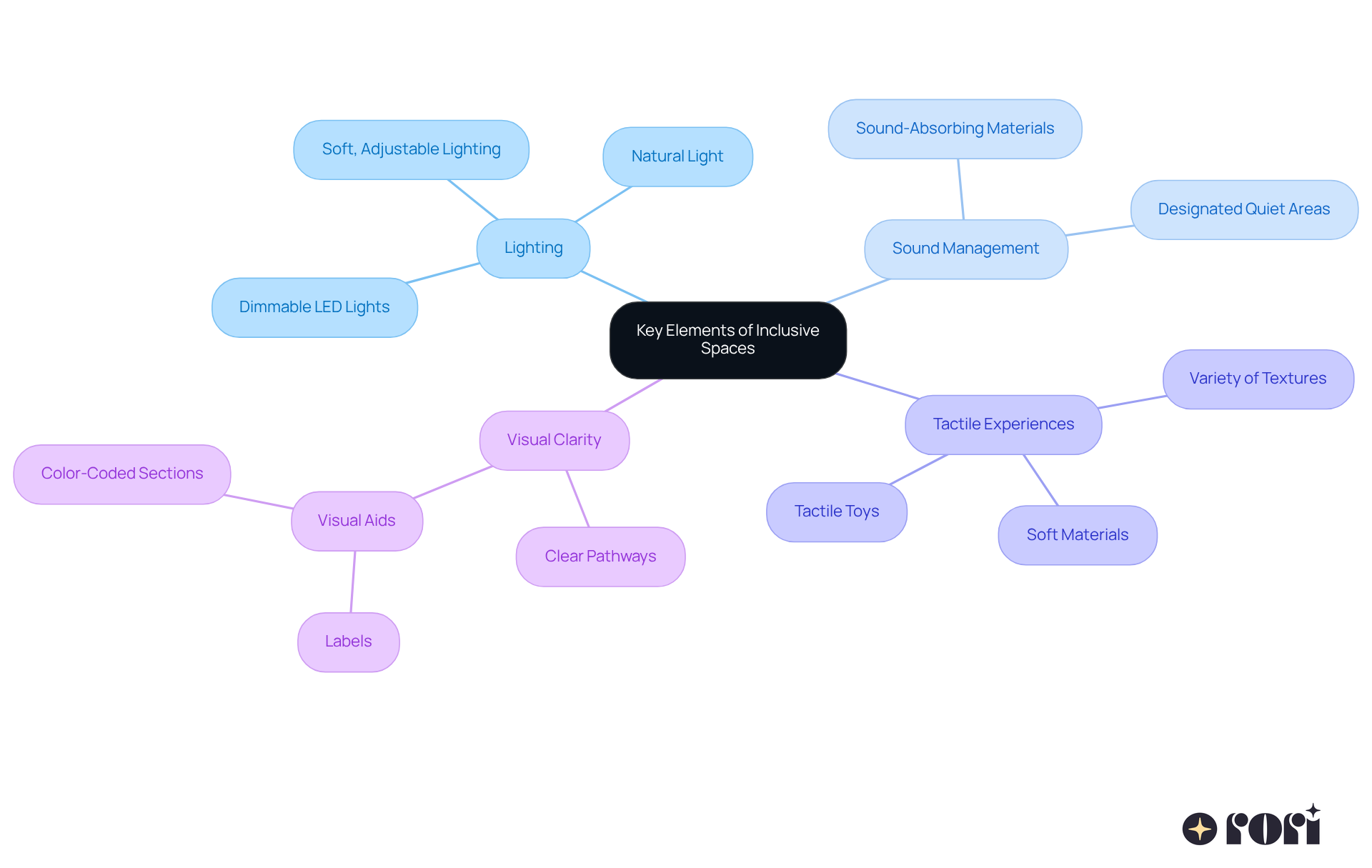
Creating inclusive spaces for our kids is all about the little things that make a big difference. Let’s dive into some key elements that can really help!
Lighting: Think about soft, adjustable lighting that minimizes glare. Natural light is fantastic, but dimmable LED lights can also create a cozy atmosphere. Experts agree that effective lighting is super important in sensory-friendly design.
Sound Management: It’s all about keeping noise levels in check! Using sound-absorbing materials can really help, and having designated quiet areas gives kids a place to retreat when they feel overwhelmed.
Tactile Experiences: Kids love to touch and explore! Offering a variety of textures through furnishings and decor-like soft materials and tactile toys-can make them feel more comfortable and engaged.
Visual Clarity: An organized space is key! Clear pathways and visual aids, like labels or color-coded sections, can help kids navigate their environment with ease.
By focusing on these elements, we can create spaces that are not just accommodating but truly empowering through designing inclusive spaces for children with sensory sensitivities. Of course, we should also recognize the challenges, like budget constraints and the need for staff training, as highlighted in various case studies. But by tackling these challenges together, we can work towards more inclusive environments. Let’s explore this journey together!
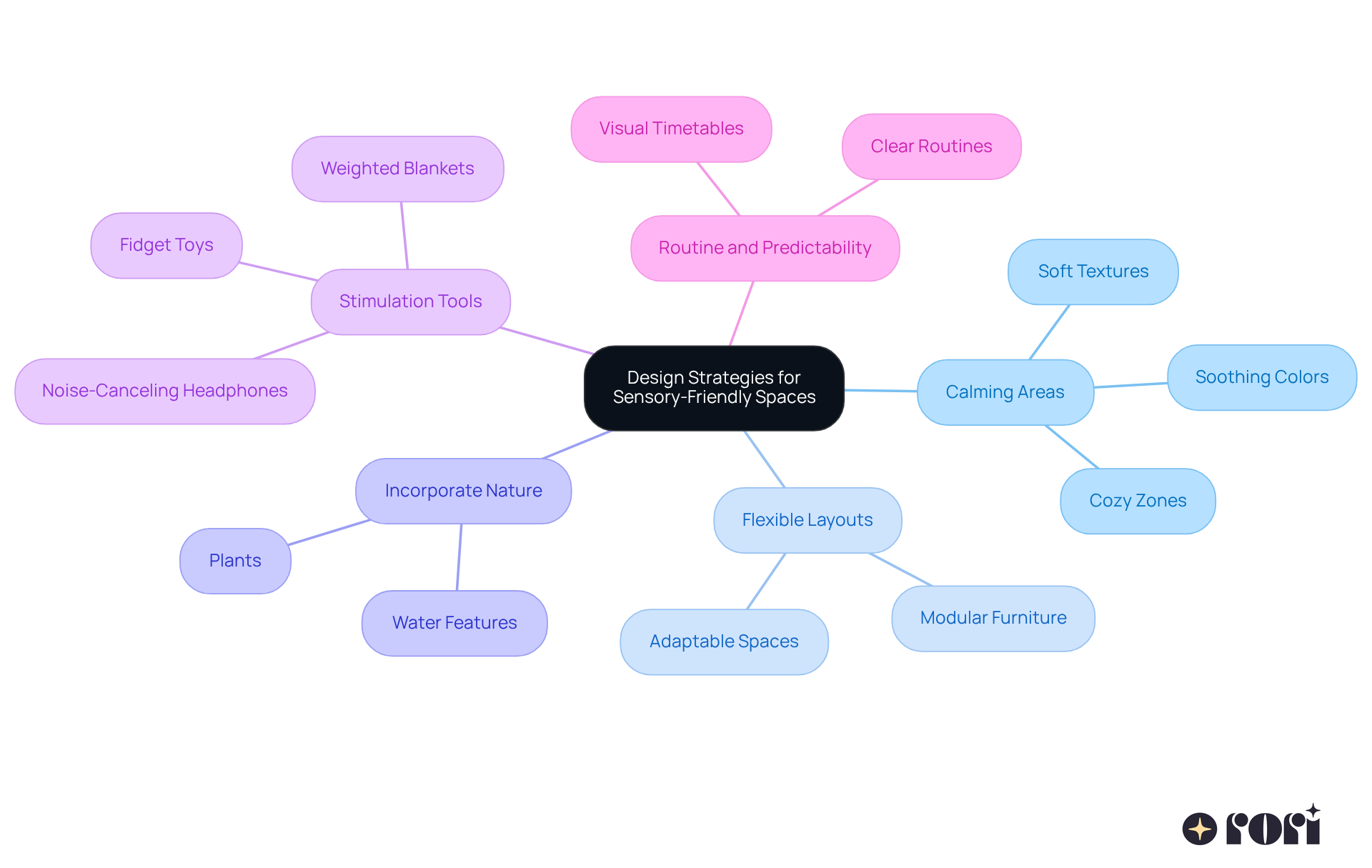
Designing inclusive spaces for children with sensory sensitivities can be a game-changer for our little ones, and it all starts with a few thoughtful design strategies. Let’s dive into some key steps that can make a big difference!
Create Calming Areas: Think about setting up cozy zones with comfy seating, soft textures, and soothing colors. These little havens are perfect for kids to unwind and recharge, especially for those who might feel overwhelmed by their surroundings.
Flexible Layouts: How about using modular furniture that can be easily rearranged? This flexibility allows for a space that can adapt to different activities and individual needs, giving kids a sense of control and comfort as they explore.
Incorporate Nature: Bringing in natural elements like plants or water features not only beautifies the space but also creates a calming atmosphere. Plus, nature has this amazing ability to reduce stress and boost emotional well-being.
Stimulation Tools: Consider equipping calming areas with tools like fidget toys, weighted blankets, and noise-canceling headphones. These resources can help kids self-regulate their experiences, making it easier for them to manage overwhelming emotions and stay focused.
Routine and Predictability: Establishing clear routines and visual timetables is crucial for kids with heightened sensitivities. Predictability can ease anxiety and foster a sense of safety, allowing them to explore their environment with confidence.
By thoughtfully planning these spaces, caregivers can engage in designing inclusive spaces for children with sensory sensitivities that cater to the emotional and sensory needs of every child. This not only enhances their overall well-being but also enriches their learning experiences. And remember, educating caregivers on ABA principles and strategies can empower them to provide the right support at home, make informed decisions, and actively contribute to their child’s progress. Together, we can improve behavioral outcomes and support each other on this journey! Let’s explore this together!
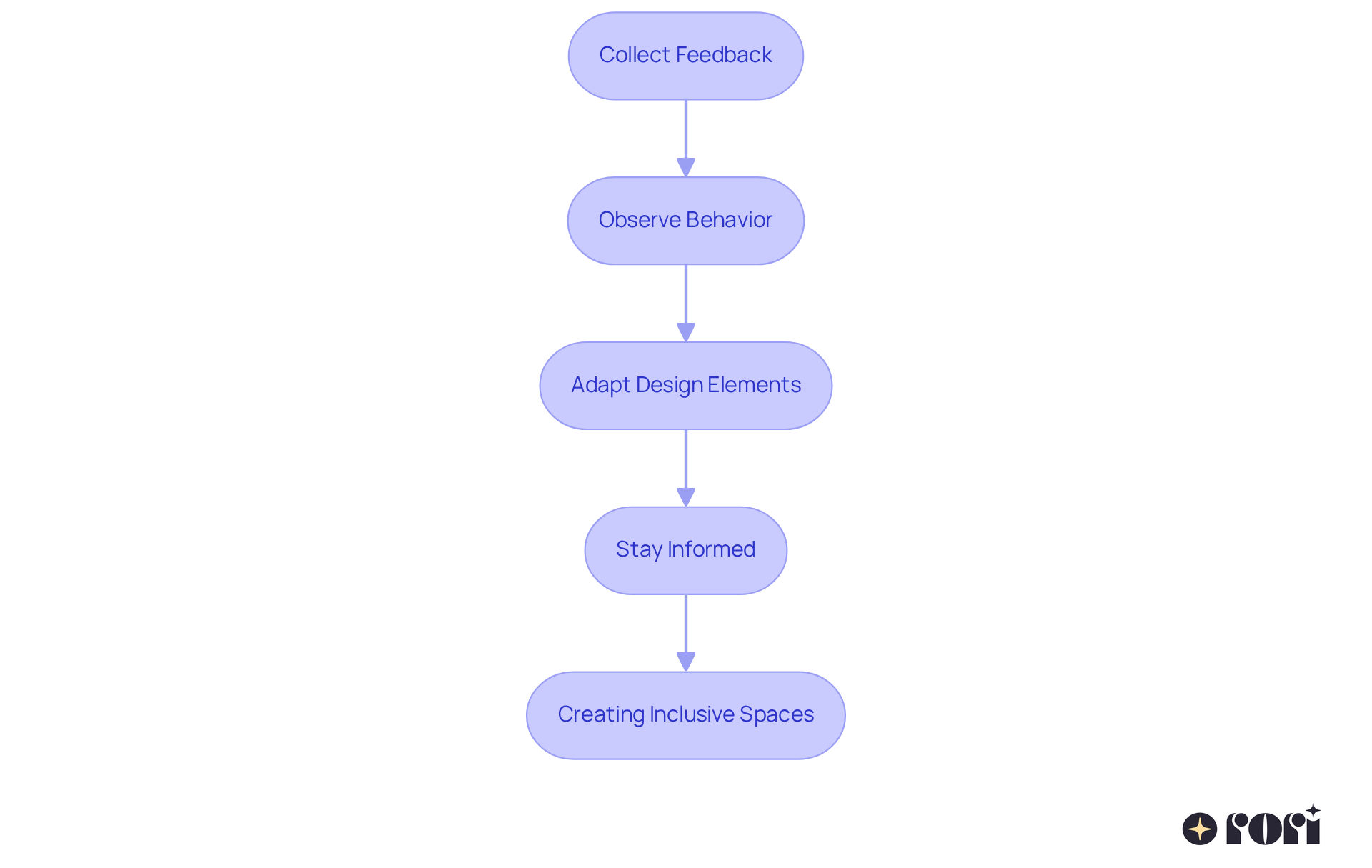
To create sensory-friendly environments that truly meet the needs of our youth, let’s explore strategies for designing inclusive spaces for children with sensory sensitivities together!
Collect Feedback: Regularly ask for thoughts from youths, parents, and caregivers about their experiences in the space. You can use surveys or even casual chats to gather those valuable insights. It’s all about understanding what works and what doesn’t!
Observe Behavior: Keep an eye on how children interact with their surroundings. Notice any signs of comfort or discomfort. These observations can really guide you in making the necessary adjustments to the space.
Adapt Design Elements: Be open to tweaking the environment based on the feedback and observations you gather. This might mean adjusting lighting, rearranging furniture, or even introducing new sensory tools to boost comfort and engagement.
Stay Informed: Make it a point to continuously update your knowledge on the latest research and best practices in sensory-friendly design. Attend workshops and read up on relevant literature to ensure your space evolves with effective strategies.
By taking these steps, you’re not just creating a space; you’re focused on designing inclusive spaces for children with sensory sensitivities, fostering an environment where everyone feels comfortable and engaged. Let’s make this journey together!
Creating inclusive spaces for children with sensory sensitivities is so important for helping all kids thrive! By understanding their unique sensory needs and using thoughtful design strategies, caregivers and educators can make sure every child feels safe, comfortable, and engaged in their surroundings.
This article highlights some key elements that are essential for designing these inclusive spaces. Think about:
Plus, consider:
These strategies can really boost emotional well-being. It’s also crucial to keep evaluating and adapting these spaces based on feedback and observations to meet the changing needs of children.
Ultimately, creating sensory-friendly environments is a journey we take together. It requires commitment and creativity from all of us! By prioritizing inclusivity and embracing neurodiversity, we can empower children with sensory sensitivities to explore, learn, and grow in spaces designed just for them. Taking these steps not only enriches their lives but also helps build a more compassionate and understanding society. Let’s explore this together!
What are sensory sensitivities in children?
Sensory sensitivities in children can manifest as hypersensitivity or hyposensitivity to various stimuli, such as loud sounds, bright lights, or certain textures, which may lead to anxiety or meltdowns. Conversely, some children may crave sensory experiences like spinning or jumping to feel more grounded.
Why is it important to understand sensory sensitivities?
Understanding sensory sensitivities is crucial for designing inclusive spaces that help children feel safe and comfortable, allowing them to thrive in their environments.
How does Rori Care support children with sensory sensitivities?
Rori Care embraces neurodiversity and supports caregivers through the principles of Applied Behavior Analysis (ABA), including early intensive behavioral intervention (EIBI), which enhances learning, verbal, and social skills for children with autism.
What is the role of observation in addressing sensory sensitivities?
Observing or assessing what triggers a child and what they enjoy is essential to understanding their unique needs, which guides the design of inclusive spaces for children with sensory sensitivities.
How can inclusive spaces be designed for children with sensory sensitivities?
Inclusive spaces can be designed by minimizing discomfort and promoting a sense of belonging, based on an understanding of each child's unique sensory needs.