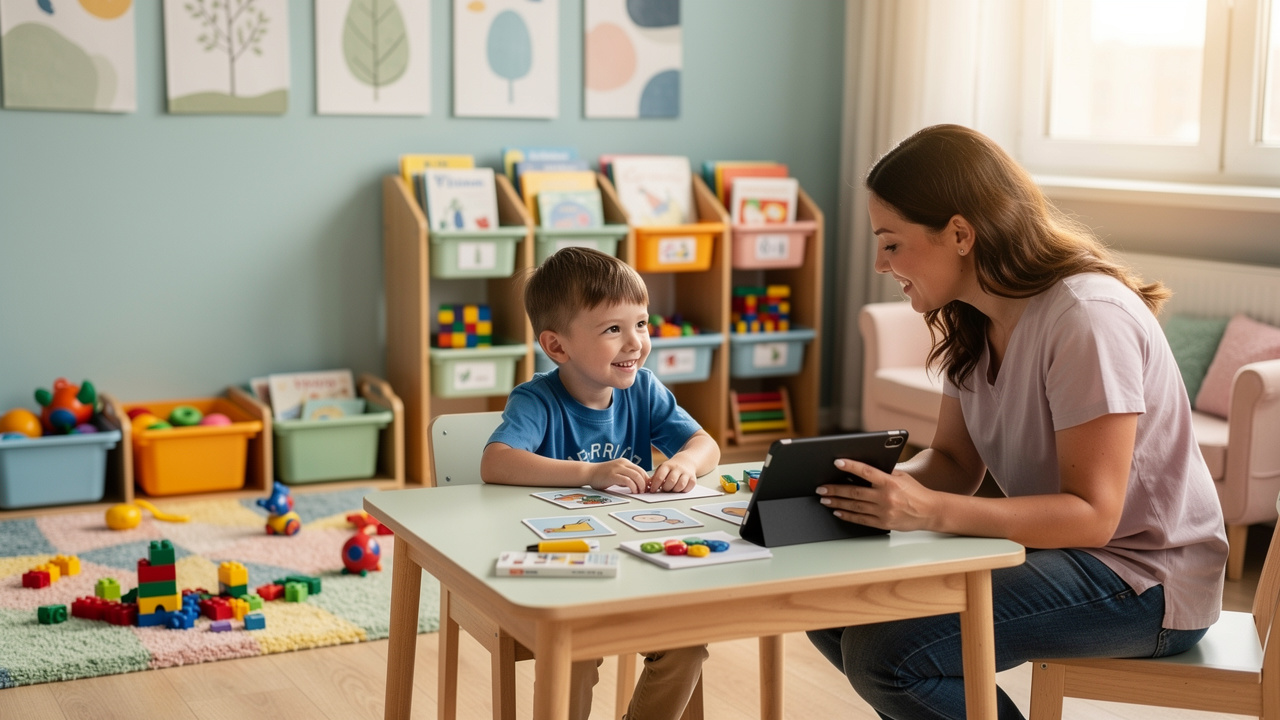
Navigating the social world can be a profound challenge for children and teens with autism. They may struggle to pick up on social cues, engage in conversations, or interpret body language. This struggle not only affects their ability to socialize but also their capacity to form meaningful relationships and fully participate in their communities.
Recent research highlights the importance of tailored approaches to enhancing social attention in children with autism. Additionally, studies reveal that individuals with autism may find it challenging to interpret changes in speech patterns, a crucial aspect of effective communication. With the prevalence of co-occurring intellectual disabilities in individuals on the autism spectrum, supporting their social skill development becomes not just beneficial but necessary for equitable mental health and well-being.
It's crucial to remember that the journey of social skills development doesn't end with adolescence. Autistic adults also face unique challenges that require ongoing exploration and support. In light of these perspectives and findings, it becomes evident that the development of social skills in children and teens with autism is a multifaceted issue requiring a concerted effort from families, educators, and healthcare professionals to create a supportive and understanding environment where every individual has the opportunity to thrive.
Navigating the interpersonal realm can be a profound challenge for youngsters and adolescents with , who may find it difficult to pick up on social cues, engage in conversations, or interpret non-verbal communication. This struggle is not just about learning to socialize; it directly affects their ability to create and participate fully in their communities. As emphasized by recent research from the University of Geneva, individuals diagnosed with develop distinctive attentional preferences, highlighting the significance of to improve social attention. This aligns with insights from the University of Rochester, where studies on speech prosody in adolescents reveal that individuals with the condition may find it challenging to interpret changes in speech patterns, a crucial aspect of effective communication.
The profound words of Dr. David (Dan) R. Offord, a renowned psychiatrist specializing in children, resonate deeply in the context of individuals with autism: 'I do not mind if my children are in a race as long as the race is fair.' Ensuring a just competition for children with developmental disorders involves recognizing their unaddressed requirements, valuing their distinct contributions, and lessening factors that may impede their integration in society. With 31-55% of individuals on the spectrum of autism experiencing co-occurring intellectual disabilities, it's evident that facilitating their is not only advantageous but essential for fair mental health and well-being.
It is essential to bear in mind that while much of the current research focuses on youngsters and teenagers on the autism spectrum, there is a significant knowledge gap concerning adults with autism. Gregory Wallace, PhD, emphasizes this by noting the scant research on autistic individuals as they age. Recognizing that the process doesn't conclude with adolescence, we should persist in investigating and promoting the of in individuals with ASD.
Considering these viewpoints and discoveries, it becomes clear that the development of in youngsters and adolescents with is a multifaceted matter necessitating a collaborative endeavor from parents, teachers, and medical practitioners to establish a nurturing and empathetic setting where each individual has the chance to flourish.

It has been determined that is a crucial step for children and teens with autism in developing important interpersonal abilities. Synthesized research highlights that interventions initiated at a young age can significantly enhance . Identifying promptly allows for , which are instrumental in fostering . According to Dr. David (Dan) R. Offord, fair involvement in education, home life, and leisure is crucial for the mental health of all individuals, particularly those with disabilities. This engagement is not only a marker of mental health but also a measure of , aiming to ensure that no individual, including those with autism who might have additional emotional and behavioral challenges, falls behind.
Aligned with the discoveries of the OECD, educational systems around the world are currently recognizing the significance of for the achievement of students and society. Additionally, interventions that enhance the abilities of grown-ups, like the ones administered by authorized experts in baby and early childhood mental health consultation (IECMHC), have been demonstrated to enhance interpersonal abilities and emotional well-being in youngsters. These professionals, equipped with specialized knowledge in childhood development and the impacts of stress and trauma on families, adopt a strengths-based approach and work collaboratively with teachers, families, and others in the child’s environment. The efficacy of such interventions is evident, leading to better social skills, healthier relationships, and a reduction in challenging behaviors.
Recent changes in research on the condition ensure that clinicians base their choice of interventions on the most current and robust evidence. For example, AutMedAI, a machine-learning model, has effectively identified approximately 80% of individuals diagnosed with autism before the age of two. Such progress in research methodologies improves our comprehension of the range and efficacy of interventions, guaranteeing that youngsters with ASD receive the most effective assistance early in their development.
Enhancing interpersonal abilities in young individuals and adolescents with is a procedure that gains from a methodical, element-centered strategy. By identifying and isolating specific areas where they face challenges, caregivers can offer that gradually builds upon each success. This organized approach corresponds to the recognition that individuals with a may have distinctive developmental paths in domains like focus and interaction, as supported by recent research from the University of Geneva and the University of Rochester. These studies demonstrate that despite differences in their focus and understanding patterns compared to their neurotypical peers, through timely and , children with ASD can cultivate their own successful engagement strategies. Considering this, directing attention to a specific ability at a given moment enables customization in the educational journey, providing these individuals with a fair chance for development and involvement in their societies, as highlighted by the esteemed pediatric specialist, Dr. David (Dan) R. Offord. With 31-55% of youngsters on the autism spectrum also experiencing co-occurring intellectual disabilities, it becomes even more crucial to ensure that of their individual needs and strengths.

Structured activities, such as social stories, visual aids, and role-play, are vital tools in supporting the development of for youngsters and adolescents with autism. These activities not only provide a consistent framework that enhances learning, but also foster an environment where becomes more predictable and less stressful. Dr. David (Dan) R. Offord highlighted the significance of equitable and encouraging involvement in the lives of children with disabilities, which is directly relevant to the practice of nurturing interpersonal abilities in a . This approach aligns with the that emphasize the importance of in educational systems around the globe. By reducing biases and focusing on validation, we ensure that interventions effectively support autistic individuals in developing essential competencies. As research evolves, interventions are increasingly scrutinized through rigorous study designs, like randomized controlled trials, to establish their efficacy, underscoring the importance of in enhancing the of young individuals and teenagers on the spectrum of neurodevelopmental disorders.

Utilizing offers a dynamic and interactive way to enhance in children and teens with autism spectrum disorder. These exercises allow them to explore and practice various scenarios in a structured yet imaginative format. While going through various roles and situations, individuals with autism spectrum disorder are given the chance to rehearse , adjust to interpersonal cues, and cultivate an awareness of cooperative dynamics in a controlled environment. The advantages of such activities have been backed by studies that indicate role-playing not only fosters engagement but also enhances the overall mental health and well-being of participants by providing them a platform to express creativity and establish meaningful connections.
Role-playing extends beyond just a therapeutic technique; it has found its place as a core component in educational and recreational settings. The success of tabletop role-playing games (TRPGs) like Dungeons & Dragons in fostering is a testament to the power of role-play. These games create a framework where players can engage in , and narrative exploration within a safe and structured fantasy universe. The distinct guidelines and organized communication that TRPGs provide can be particularly advantageous for individuals with autism spectrum disorder, offering a distinctive opportunity for them to establish connections and enhance .
Crafting narratives is a cornerstone of supporting children and teens with autism as they learn to navigate complexities. These meticulously organized stories offer a framework for comprehending cues and expectations, directing individuals through the intricacies of . Each story unfolds in a series of thoughtful steps, beginning with a general statement about the environment, such as a school setting, and progressively focusing on specific behaviors and skills. They illustrate both the desired and undesired behaviors, clarifying the reasons behind them, and the outcomes they lead to.
Incorporating offers additional assistance, serving as tangible reminders that can simplify the process of interaction with others. These visual prompts are more than mere aids; they're a bridge to a world of interaction that may otherwise seem daunting. With the , and fulfill the expectations that shape their daily lives.
The significance of addressing these needs cannot be overstated, as are crucial for personal and societal well-being. According to Dr. David (Dan) R. Offord, active, peaceful and well-supported involvement of young individuals with disabilities in the main school, home, and leisure aspects of their lives is a fundamental determinant of mental health
Recent studies highlight the importance of . Studies from the University of Geneva have revealed unique attentional preferences in autistic individuals, suggesting the potential of tailored support to guide them toward developmental trajectories aligned with those of their peers. By cultivating these abilities from an early stage, we can establish a basis for and subsequent linguistic proficiency, essential for wholesome growth and fairness in society.
is a fundamental element in the field of aiding children and teens in acquiring who have autism. This evidence-based treatment harnesses the power of to bolster desirable behaviors, guiding individuals through a process of learning that is both structured and measurable. ABA therapy's strategic interventions are crafted to resonate at a personal level, providing a pathway for those with autism to navigate interpersonal nuances and build meaningful connections.
Case studies, such as the story of 17-year-old Lil's anticipated transition from a special school to a community-based program, underline the significance of preparing autistic youth for real-world experiences. The and associated activities at Friends of St James Park introduce autistic individuals to a supportive environment where they can develop practical skills in a context involving interactions with others.
The findings of Dr. David (Dan) R. Offord, a well-known psychiatrist specializing in children, highlight the significance of fairness in the involvement of children with disabilities. His insights affirm the necessity of an that recognizes the unique strengths and needs of autistic individuals, reducing stressors and providing caregivers with the tools to nurture their development.
Ongoing research, like the investigation conducted by the University of Geneva, sheds light on the distinctive developmental paths in children with autism, supporting the need for timely, that can enhance attention towards interpersonal interactions. This aligns with the increased prevalence of autism, now estimated at 1 in 36 children, pointing to the urgency for specialized support systems that accommodate the growing number of diagnosed individuals.
The Autism Community in Action (TACA) further reinforces the critical role of informed interventions, urging parents and educators to remain vigilant about the quality and impact of the therapies they choose. The organization's guidance is a testament to the diversity of autistic experiences and the need for personalized therapeutic approaches.
In a wider perspective, the growth of interpersonal and emotional abilities is acknowledged as crucial for all learners, with educational systems recognizing their influence on life results. ABA therapy, with its customized and research-supported approach, is one such intervention that holds promise in fostering these abilities in individuals with autism, ensuring they are equipped to flourish in a world that values interpersonal connection and emotional understanding.
For children and teens with autism, promoting interpersonal abilities is a crucial aspect of their growth. Embracing such as (SST), (PMI), and is critical because they are grounded in rigorous research and proven to be effective. These interventions stand on a solid scientific foundation, offering a systematic way to enhance interpersonal competencies.
Critically, recent research syntheses have highlighted the significance of in autistic individuals, noting that while some studies show promise, there is a prevalence of design flaws that obscure the true efficacy and potential risks. This requires a that are not only intended to enhance interpersonal abilities but are also devoid of causing unintended damage.
The significance of (SES) in education is receiving recognition worldwide. Proven by numerous studies, these skills are not just beneficial but essential for the well-being and life outcomes of students. Accordingly, interventions aimed at improving SES among individuals with the condition must be selected with discernment and a critical eye.
Recognizing the intricacy of interactions, recent discoveries in communication research, such as the distinction between authentic and simulated smiles, offer deeper understanding of the nuances of cues. Such understanding can be integrated into interventions to assist individuals with ASD perceive and react to interpersonal cues more efficiently.
Furthermore, a comprehension of intergroup prejudice has consequences for interpersonal abilities education, indicating that interventions should be sensitive to these biases and created to promote inclusiveness and a more extensive societal comprehension.
Given these insights, parents and caregivers are encouraged to seek out and advocate for interventions that are evidence-based and critically evaluated, aligning with the latest research and tailored to support the complex needs of children and teens with autism.
Children with autism display a unique constellation of strengths, challenges, and needs, making it imperative that their intervention strategies are as personalized as they are. A comprehensive evaluation to identify the abilities and areas of improvement in is the foundation of a successful intervention strategy. Drawing from this , a set of distinct objectives can be formulated, along with approaches and treatments that are most suitable to promote the individual's social growth. , like Kara from Florida, highlight the significance of in individuals with autism, emphasizing the role of experiences that encourage self-reliance and development. This aligns with the philosophy of psychiatrist Dr. David R. Offord, who advocated for providing equitable opportunities for young individuals with disabilities, ensuring their active and supported participation in key aspects of life. The Autism Community in Action (TACA) and the Interagency Autism Coordinating Committee (IACC) echo this sentiment, underscoring the impact of , and tailored interventions. Moreover, the implementation of programs like the Kevin and Avonte Program demonstrates a societal commitment to addressing specific challenges, such as wandering, through and education. Neurofeedback therapy, an intervention that fine-tunes brainwave patterns, exemplifies the type of that can alleviate a range of autism-related difficulties, from cognitive impairments to issues with mood and attention regulation. By embracing these customized approaches, parents and caregivers can improve the effectiveness of training in interpersonal abilities, providing every individual an equal opportunity to prosper and engage meaningfully in their communities.
Integrating into the natural surroundings of home, school, and community settings is crucial for youngsters and adolescents with autism. These everyday interactions present authentic challenges and opportunities for practice, fostering a vital transfer of to various real-life contexts. Participating in the school, home, and leisure areas greatly contributes to the of individuals with disabilities. It's important to acknowledge both the unmet needs of these young individuals and the strengths they offer to their communities. By alleviating ongoing stress and offering the essential support to caregivers, we promote an equitable and nurturing journey for every individual's growth.
Recent studies highlight the significance of to improve attention to in individuals with autism. Early, may help these individuals develop alongside their peers, guiding them through their unique . Additionally, research indicates that interpersonal and affective abilities are crucial for students, influencing life results significantly. So, in real-life environments, children and teenagers with autism spectrum disorder have the opportunity to develop these abilities in a manner that is both significant and supportive of their general welfare and integration into society.

Extending interpersonal abilities is crucial for youngsters and teenagers with autism, as it allows them to utilize acquired behaviors in different settings and human connections. Research emphasizes the significance of at an early stage, considering that attentional development in individuals with autism follows a distinct trajectory compared to their typically developing peers. This distinctive advancement indicates a customized method to can be advantageous. For example, a study from the University of Geneva showed that their own attentional preferences over time, emphasizing the need for .
To promote generalization, it is crucial to offer diverse opportunities for practice, ensuring to vary the scenarios and complexity. This method not only helps in transferring abilities to real-life scenarios but also contributes to the in interpersonal contexts. Furthermore, taking into account that individuals with autism may bring distinctive viewpoints to interpersonal encounters, like being less affected by others in specific circumstances, these abilities can be viewed as strengths in different contexts, including educational and administrative environments.
It is reported that approximately 1 in 100 students in American public schools has a neurodevelopmental disorder, with a subset exhibiting twice-exceptionality, excelling academically in areas like math, science, and the arts. Understanding and leveraging the strengths of these individuals is crucial, as evidenced by research that identified strategies aiding in their transition to higher education.
In light of these insights, it is clear that generalization in autism is not just about addressing challenges but also about recognizing and building upon each individual's unique strengths and developmental trajectory.
In conclusion, supporting the social skill development of children and teens with autism is a multifaceted challenge that requires collaboration from families, educators, and healthcare professionals. By implementing tailored interventions and early intervention strategies, we can enhance social attention and interpret changes in speech patterns.
Structured activities such as social stories, visual aids, and role-playing exercises provide a framework for learning and reduce stressors. Evidence-based approaches like Social Skills Training (SST), Peer-Mediated Interventions (PMI), and Video Modeling have proven to be effective in improving social skills.
Creating individualized treatment plans based on thorough assessments is essential. By incorporating social skills into natural settings and providing opportunities for practice, children and teens with autism can generalize their learned behaviors across various contexts.
In conclusion, it is crucial to provide a supportive and understanding environment where every individual with autism has the opportunity to thrive. By fostering their social skills, we can help them build meaningful relationships and participate fully in their communities.
Why is developing interpersonal abilities important for individuals with autism?
Developing interpersonal abilities is crucial for individuals with autism as it directly affects their capacity to form meaningful relationships, engage in conversations, and participate fully in their communities. These skills contribute significantly to their mental health and overall well-being.
What challenges do individuals with autism face in social interactions?
Individuals with autism often struggle with picking up social cues, interpreting non-verbal communication, and understanding speech patterns. These challenges can hinder their ability to engage effectively in social situations.
How can early intervention help individuals with autism?
Early intervention is vital as it can significantly enhance communication and social skills. Identifying social skill deficits early allows for timely support and interventions, fostering social development and ensuring equitable participation in various life domains.
What types of interventions are effective for developing social skills in individuals with autism?
Effective interventions include Social Skills Training (SST), Peer-Mediated Interventions (PMI), Video Modeling, and Applied Behavior Analysis (ABA) therapy. These approaches are grounded in research and have proven effective in enhancing interpersonal competencies.
What role do structured activities play in developing social abilities?
Structured activities such as social stories, visual aids, and role-playing provide a consistent framework that enhances learning and reduces stress in social participation. They help individuals practice and understand social interactions in a controlled environment.
How does the educational system recognize the importance of emotional and interpersonal skills?
Educational systems across the globe are increasingly acknowledging the significance of emotional and interpersonal skills, recognizing their impact on the well-being and success of students.
What is the significance of customizing interventions for individuals with autism?
Customized interventions cater to the unique needs and strengths of each individual, recognizing that they may have distinct developmental paths. Tailored support enhances the effectiveness of training in interpersonal abilities.
What are some promising research findings regarding autism interventions?
Recent studies, including one from the University of Geneva, highlight the unique attentional preferences of individuals with autism, suggesting the need for personalized strategies. Innovations like the AutMedAI model have also improved early diagnosis, paving the way for timely interventions.
How can parents and caregivers support the development of social skills in children with autism?
Parents and caregivers can support this development by advocating for evidence-based interventions, providing a nurturing environment, and integrating social skills practice into everyday interactions at home, school, and in the community.
What are the long-term implications of enhancing interpersonal skills in individuals with autism?
Enhancing interpersonal skills can lead to improved mental health outcomes, greater social integration, and a more equitable participation in society, allowing individuals with autism to thrive and contribute meaningfully to their communities.