Introduction
Understanding how children with Autism Spectrum Disorder (ASD) can effectively transfer learned skills from therapy into everyday life is so important for their growth and independence. 🌱 This article dives into some effective generalization strategies within Applied Behavior Analysis (ABA) therapy. These techniques can truly make a difference in a child's ability to thrive in various settings.
But what happens when the skills they learn in a controlled environment don’t quite translate into real-world situations? 🤔 Exploring this challenge not only highlights the significance of generalization in autism therapy but also uncovers actionable strategies that can empower children. With the right support, they can navigate the complexities of daily interactions with confidence and success. Let’s explore this together!
Define Generalization in ABA Therapy
is all about helping young people take what they've learned and use it in different places and situations. Imagine a child who shines during a treatment session-wouldn't it be wonderful if they could use that same skill at home, in school, or out in the community? This ability to is so important because it means the benefits of treatment can reach far beyond the therapy room, .
Research shows that kids who start with fewer skills often make the biggest strides in treatment. It’s fascinating, right? When children participate in around 40 hours of each week, they can see in various settings. Plus, studies reveal that when parents receive , their children retain skills 58% better. This really highlights how crucial is in making sure those skills stick!
Think about the success stories: kids who can in different environments. They’re not just learning; they’re thriving! This ability to use learned behaviors in real-life situations boosts their independence and enriches their quality of life, allowing them to join in community activities and school events more fully. So, let’s emphasize the importance of broad application in ABA practice, which includes , as it's key to helping kids with autism truly flourish in their everyday lives.
Let’s explore this together! If you have any thoughts or experiences to share, we’d love to hear from you!

Explore Types of Generalization in ABA
In ABA therapy, generalization comes in three main flavors:
- : This is when a young one reacts similarly to different but related stimuli. For example, if a child learns to say 'thank you' when given a toy, they might also express gratitude when receiving a snack or a compliment. It’s all about applying those learned responses in various situations!
- : Here, a child uses different responses to the same stimulus. So, if they greet a therapist with 'hello,' they might also say 'hi' or 'hey' when chatting with friends or family. This shows how they can be in social settings.
- : This is about . Imagine a child who learns to tie their shoes; they should still be able to do it weeks or even months later without a reminder. That’s a sign that the skill has really stuck!
Professionals find it super important to understand . It helps them create , including , that and enhance the quality of life for individuals with autism. A skilled behavior analyst plays a vital role here, crafting and . This ensures that therapy is tailored to meet each person's unique needs.
Let’s explore this together! If you have any thoughts or experiences to share, we’d love to hear from you!

Implement Effective Strategies for Skill Generalization
To promote , let’s explore some friendly strategies together:
- Instruct in Diverse Environments: Practicing skills in different places - like home, school, and the community - helps kids adapt their abilities to various situations. This way, they can better generalize what they’ve learned!
- Use Varied Materials and Instructions: Mixing things up during practice is key! For instance, when teaching color identification, try using a variety of colorful objects instead of just specific toys. This approach encourages kids to recognize colors in all sorts of contexts.
- : It’s super helpful to engage different caregivers, teachers, and friends in the learning process. This exposure helps kids learn to , making it easier for them to use what they’ve learned in real life.
- : Start with more support and slowly reduce it as your child gets the hang of things. This method builds their confidence and independence, making it easier for them to transition to real-life situations.
- and : Incorporating role-playing that mimics real-life scenarios can be a game changer! For example, practicing how to order food at a restaurant prepares kids for actual dining experiences, boosting their and confidence.
Research shows that weaving skills into daily routines makes them more relevant and easier to remember, . By using , caregivers and educators can create a solid foundation for skill transfer, ultimately enhancing the quality of life for youth with autism. We’re here to help you every step of the way!

Utilize Ongoing Assessment for Continuous Improvement
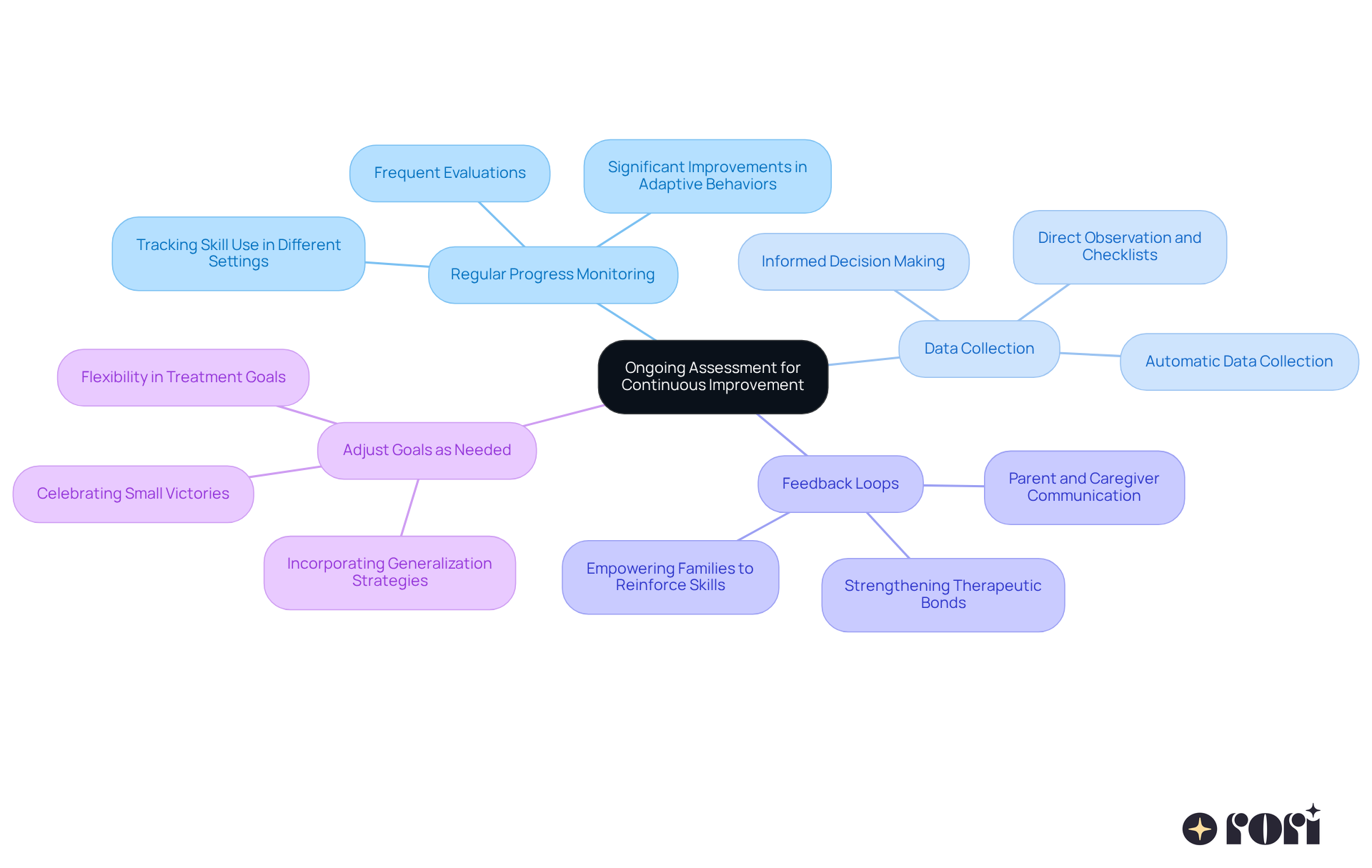
Continuous evaluation is essential in ABA practice, especially in developing to help them generalize their skills. Let’s dive into some :
- : Keeping an eye on progress is essential! Frequent evaluations help track how well a young person can use their skills in different settings. Did you know that kids who regularly check their progress often show significant improvements in their adaptive behaviors? In fact, 66% of those referred for ABA therapy stay in services for a whole year! And when caregivers actively participate, a whopping 90% of young individuals see . At Rori Care, we’re all about , making sure interventions fit each child’s unique needs.
- : Gathering data doesn’t have to be a hassle. Using methods like direct observation and checklists can provide valuable insights into how a child performs in various situations. Our clinical team documents sessions, allowing for automatic without interrupting the flow of therapy. This way, therapists can make informed decisions and tweak strategies as needed. For example, case studies show that that lead to personalized interventions, boosting overall therapy success. Plus, we ensure all data is securely stored and anonymized, keeping privacy a top priority.
- Feedback Loops: Setting up is key! It opens up conversations about a child’s development and helps tackle challenges in applying . When families communicate collaboratively, it not only but also empowers them to reinforce skills at home. As Ralph Moller points out, family involvement is crucial for achieving effective outcomes.
- : Flexibility is vital! Therapists should be ready to adjust treatment goals and incorporate based on assessment data to match a child’s changing needs and abilities. This adaptability keeps therapy relevant and impactful, maximizing the chances for positive behavioral changes. Regular evaluations allow therapists to celebrate those small victories, which can lead to significant progress over time.
Let’s explore this together! We’re here to help you every step of the way!
Conclusion
When it comes to ABA therapy, effective generalization strategies are key for helping children with Autism Spectrum Disorder (ASD) apply what they’ve learned in different settings. Imagine your child confidently using their skills not just in therapy, but in everyday life! This not only fosters independence but also enriches their experiences, allowing them to engage more fully in their communities and daily activities.
Throughout this article, we’ve highlighted some important points, like the different types of generalization:
- Stimulus generalization
- Response generalization
- Ability maintenance
Each plays a significant role in helping kids retain and apply their skills. We discussed strategies such as:
- Teaching in various environments
- Using different materials
- Involving multiple people
- Conducting ongoing assessments
These methods really emphasize how crucial it is for therapists, caregivers, and educators to work together in creating a supportive learning environment.
In summary, the journey of generalization in ABA therapy isn’t just about teaching skills; it’s about nurturing a child’s ability to thrive in real-world situations. By embracing these strategies and focusing on continuous assessment, we can ensure that children with ASD not only learn but also successfully apply their skills in everyday life. This proactive approach paves the way for lasting change and a better quality of life. So, let’s prioritize generalization in all aspects of autism therapy-together, we can make a difference!
Frequently Asked Questions
What is generalization in ABA therapy?
Generalization in Applied Behavior Analysis (ABA) therapy refers to the ability of young people to take skills they've learned in therapy and apply them in different places and situations, such as at home, in school, or in the community.
Why is generalization important in ABA therapy?
Generalization is important because it allows the benefits of treatment to extend beyond the therapy room, promoting independence and enhancing everyday life for individuals.
How does the amount of ABA therapy impact skill generalization?
Research shows that children who participate in around 40 hours of ABA therapy each week can make significant improvements in applying their skills in various settings.
What role do parents play in the generalization of skills learned in ABA therapy?
When parents receive structured training in ABA techniques, their children retain skills 58% better, highlighting the importance of family involvement in ensuring skills are effectively generalized.
What are some outcomes of successful generalization in children receiving ABA therapy?
Successful generalization allows children to communicate effectively and engage socially in different environments, boosting their independence and enriching their quality of life.
How can generalization strategies benefit children with autism?
Generalization strategies are key to helping children with autism thrive in their everyday lives, enabling them to participate more fully in community activities and school events.
List of Sources
- Define Generalization in ABA Therapy
- Generalization in ABA: Why It Matters | Links (https://linksaba.com/generalization-in-aba-why-it-matters)
- Success Rates of ABA Therapy | Advanced Autism Services (https://advancedautism.com/post/success-rates-of-aba-therapy)
- Autism Quotes | Intellistars - ABA Therapy (https://intellistarsaba.com/blog/autism-quotes)
- Explore Types of Generalization in ABA
- Generalization in ABA: Why It Matters | Links (https://linksaba.com/generalization-in-aba-why-it-matters)
- The Role of Generalization in ABA Therapy Outcomes (https://goldenstepsaba.com/resources/the-role-of-generalization-in-aba-therapy-outcomes-8a9c8)
- ABA Skill Generalization: Strategies That Work (https://thetreetop.com/aba-therapy/aba-generalization-strategies)
- Implement Effective Strategies for Skill Generalization
- The Role of Generalization in ABA Therapy Outcomes (https://goldenstepsaba.com/resources/the-role-of-generalization-in-aba-therapy-outcomes-8a9c8)
- The Role of Generalization in ABA Therapy Outcomes | Discovery ABA (https://discoveryaba.com/aba-therapy/the-role-of-generalization-in-aba-therapy-outcomes)
- mastermindbehavior.com (https://mastermindbehavior.com/post/how-to-promote-generalization-of-skills-across-settings-with-aba-therapy)
- advancedautism.com (https://advancedautism.com/post/aba-generalization-strategies)
- Utilize Ongoing Assessment for Continuous Improvement
- Ongoing Assessment in ABA Therapy: A Data-Driven Approach (https://brightpathwaysaba.com/ongoing-assessment-in-aba-therapy-a-data-driven-approach)
- The Numbers Don't Lie: Revealing Autism Therapy Statistics | Above and Beyond Therapy (https://abtaba.com/blog/autism-therapy-statistics)
- Tracking and Measuring Outcomes in ABA Therapy Programs (https://mastermindbehavior.com/post/tracking-and-measuring-outcomes-in-aba-therapy-programs)
- Autism Therapy Statistics (https://supportivecareaba.com/statistics/autism-therapy-statistics)
- The Significance of Statistics in ABA Therapy | All Star ABA (https://allstaraba.org/statistics-in-aba-therapy)