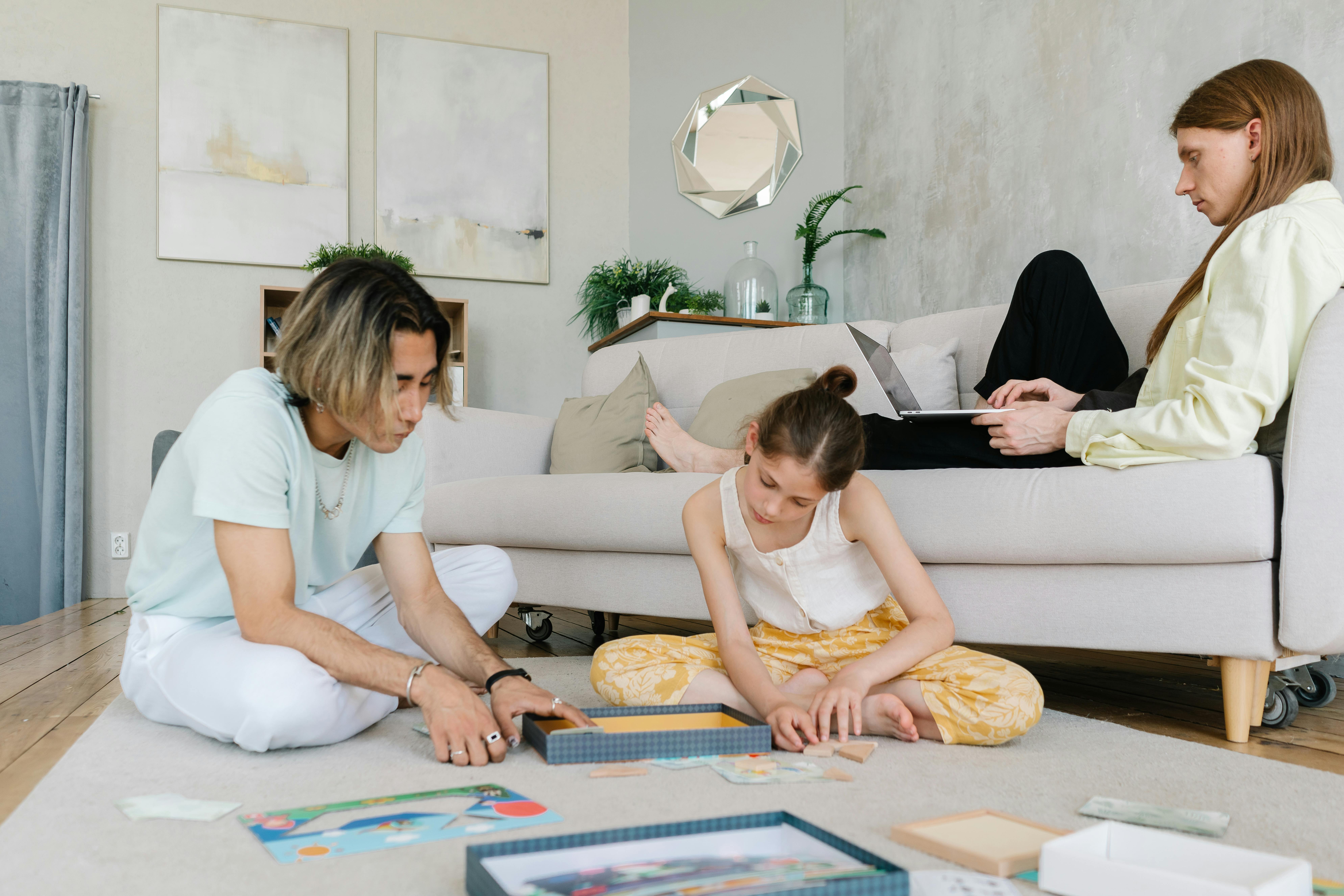
Understanding Nonverbal Autism: Unlocking the Inner World Introducing a comprehensive exploration of understanding and supporting nonverbal children with autism. This article delves into the multifaceted approach required to navigate the challenges faced by these children in expressing themselves. Through the stories of individuals like Gregory Tino and Joshie, we gain valuable insights that challenge misconceptions and shed light on the rich inner world of nonverbal autistic individuals.
With a focus on innovative technological solutions, the importance of literacy, and the power of sensitive and appropriate behavioral interventions, this article aims to empower parents with expert advice and valuable perspectives. Join us as we explore the transformative potential of visual aids, alternative communication methods, tailored learning environments, and evidence-based strategies that foster engagement, independence, and personal growth for nonverbal children with autism. Let's embark on a journey of understanding and celebration, ensuring that every child has the opportunity to express themselves and engage with the world around them.
Understanding and supporting nonverbal children with autism requires a multifaceted approach, particularly when it comes to . These children often encounter obstacles in expressing themselves, which can mislead others to underestimate their cognitive abilities and internal experiences. For instance, Gregory Tino's journey highlights the profound misconception that possess a child-like intellect.
His struggles with apraxia, a motor disorder affecting speech, obscured his intellectual prowess until he found . Tino's published works now illuminate the rich inner world of a nonverbal autistic person, challenging stereotypes and providing valuable insight into their experiences.
Innovative technological solutions, such as the picture boards championed by Mr. Harris, have proven transformative for nonverbal individuals. The installation of these boards in Peterborough, along with similar advancements in communication technology, underscores the potential of of children with nonverbal autism. Mr. Harris's advocacy, driven by his son Joshie's breakthrough in using an electronic tablet to communicate, demonstrates the significant impact that such interventions can have, not only on individual lives but also on educational inclusivity.
Research further supports the importance of . A University of Virginia study led by Professor Vikram Jaswal employed a novel technique akin to the game Whac-a-Mole, revealing that nonspeaking autistic participants could anticipate letters in sentences, much like their literate, non-autistic counterparts. This finding suggests that nonverbal individuals may comprehend and process written language in ways that conventional assessments might overlook.
The poignant account of a non-speaking autistic teenager, who, when in distress, used a preschool alphabet toy to communicate his pain, emphasizes the urgency of recognizing the communicative intent and capabilities of . Such instances are not isolated, as they echo the broader need for sensitive and appropriate that honor the complexity and depth of nonverbal autistic children's experiences.
As we continue to evolve our understanding of autism, it's evident that nonverbal individuals possess a wealth of potential. Researchers and practitioners alike are called to refine their methods and challenge preconceived notions, ensuring that every child has the opportunity to express themselves and engage with the world around them.
Creating an optimal learning environment is essential for , as it capitalizes on their unique learning styles and sensory needs. For instance, in a study highlighted in 'Molecular Autism,' it was noted that autistic individuals might experience difficulty in processing social signals. This underscores the importance of a tailored educational setting where can facilitate better engagement and understanding, providing a sense of security and predictability.
Innovative technology, such as the augmented reality (AR) applications developed for dental patients with autism, demonstrates the benefits of converting tactile sensations into visual and auditory stimuli. This approach can be adapted for educational purposes, offering nonverbal autistic children an alternative way to process information that aligns with their heightened visual and auditory processing capabilities.
Moreover, recent news stories, like the one about Mr. Harris's son Joshie, who uses , show the life-changing impact of visual aids on nonverbal children's abilities to express themselves and engage with their education. This success story serves as an inspiration to incorporate technology and to unlock the potential of .
Furthermore, insights from Dr. Temple Grandin emphasize the significance of , such as ensuring the use of non-flickering LED lights to avoid visual discomfort. These considerations are not just about comfort; they are about respecting the individual's sensory experiences and fostering an environment where learning can thrive.
It's not just about the physical setup of the space but also about the methodologies employed. For instance, the use of robots like AV1 in Sweden illustrates how even the presence of a can provide a sense of security for the child, whether it is actively used or not. This reflects the value of having resources readily available, tailored to the child's needs and preferences.
Such interventions are vital, given that research has indicated potential design flaws in many non pharmacological intervention studies for autistic children. This calls for a critical evaluation of intervention research to ensure the effectiveness and safety of the methods used. Parents and educators must be discerning when selecting strategies to support their children, looking for that respect the unique needs of nonverbal autistic learners.
Incorporating into the learning environment is a transformative strategy for engaging . These , such as visual schedules, social narratives, countdown timers, and pictorial prompts, serve as a bridge to understanding for individuals who may struggle with traditional verbal instruction. By providing a clear visual representation of tasks and expectations, these tools foster a sense of independence and aid in the development of .
The effectiveness of is deeply rooted in the , an educational philosophy that focuses on leveraging the unique abilities and interests of students with autism rather than concentrating on perceived deficits. This approach, which aligns with the recommended for diverse learning environments, emphasizes the importance of observing each child to identify their specialized interests and inherent talents. By doing so, educators can tailor activities and projects that resonate with the student's preferences, thereby optimizing their learning experience and setting the stage for future professional development.
Research underscores the necessity of critical evaluation in designing non pharmacological interventions for autistic children. Studies indicate that many interventions are implemented with design flaws, making it challenging to assess their effectiveness or potential risks. This concern about intervention research quality is echoed by individuals with autism, both researchers and non-researchers, who advocate for research practices that respect the autistic community.
Moreover, statistics on emotion recognition and regulation suggest that might also play a role in assisting with the understanding and expression of emotions. Emotions are complex, with models like the Wheel of Emotions categorizing them into primary and secondary states. For , who may experience challenges in mimicking or producing emotional expressions, could provide cues to help decipher others' feelings or articulate their own.
In the context of a , visual supports are not just tools but essential elements that empower nonverbal students with autism to connect with their environment and communicate more effectively. With careful implementation, these visual strategies can pave the way for enriched learning and personal growth.

stand out as an indispensable resource for nonverbal children on the autism spectrum. They offer a of expected daily sequences and tasks, fostering a sense of predictability and security. These children, like Alex Schlueter, a young artist with autism, can showcase their potential when given the right tools to express themselves and navigate their world.
empower them with the autonomy to understand their environment and engage with it meaningfully, reducing anxiety levels and championing independence. In the words of Dr. Dan R. Offord, achieving equity through engaged and well-supported participation in life's domains is crucial. are a step towards this, helping to mitigate the risks of exclusion and promoting by addressing the of these children.
These tools are not only transformative on an individual level but have far-reaching implications for enhancing communication and education, as evidenced by Mr. Harris's campaign for in Peterborough. His son Joshie's ability to communicate through pictures was not just a personal victory but an inspiring example of how can be life-changing. Similarly, the AT-Newswire Press Release News Distribution Service highlights the importance of accessible technology in enhancing lives.
Moreover, medical professionals like Dr. Kristin Sohl acknowledge the disparities in diagnosis and treatment for minority and underserved children with autism. can play a part in bridging this gap, providing a universally understandable and implementable means of support, as underscored by the global recognition of the information boards campaign.

Innovative communication strategies are transforming the way interact with the world. , , and other are more than just tools; they are gateways to self-expression and social engagement for these children.
The use of AAC devices is bolstered by the dedication of organizations like Communication 4 ALL, which advocates for the . This organization is a testament to the potential of typing as a means of communication for those with autism, emphasizing the crucial role of advocacy, empowerment, and community in facilitating these connections.
Real-world impact is evident in stories such as that of Mr. Harris, whose efforts led to the installation of picture boards in Peterborough. This initiative, inspired by his son's breakthrough in using an electronic tablet for communication, has been hailed as "life-changing" and underscores the .
Furthermore, academic research, including significant projects like the NCSER grant, highlights the importance of teaching support staff to effectively implement AAC interventions. The outcomes of such research are two-fold: enhancing communication for children with complex needs and empowering educators to foster these vital skills.
Statistics and peer-reviewed studies have identified various design flaws in intervention research for autistic children, indicating a necessity for rigorous evaluation and improved practice. This reflects a growing recognition within the autistic community of the importance of , which is intrinsically linked to respect for individuals with autism.
Quotes from experts in the field reinforce the role of families as primary communication partners, acknowledging that children spend a significant portion of their lives at home. This perspective emphasizes the need for constant modeling of AAC device usage, not only in educational settings but also in the home, ensuring that the device is an integral part of the child's daily life.
These advancements and insights collectively contribute to a more nuanced understanding of nonverbal communication in children with autism, advocating for a world where every individual has the opportunity to communicate and be heard.
Educators and caregivers must adopt specialized strategies to effectively teach nonverbal children with autism, focusing on direct instruction paired with active engagement. This approach includes simplifying tasks into manageable steps and utilizing visual or tactile stimuli as teaching aids. Immediate are also crucial components, as they reinforce successful learning and encourage further participation.
For instance, a study involving nonverbal autistic individuals' responses to demonstrated that when an AR application transformed tactile sensations into visual and auditory signals, it significantly improved the patients' comfort levels with various sensory experiences. This finding underscores the importance of tailoring learning materials to the autistic community's strengths, such as their often superior visual and auditory processing abilities.
Moreover, a research project led by Vikram Jaswal, a psychology professor, further solidified the necessity of . The study utilized a dynamic task where participants tapped on letters, with the expectation that literate individuals can anticipate the next letter in a familiar sentence. This research suggests that nonverbal autistic individuals could benefit from instructional techniques that leverage their literacy and prediction skills.
, such as starting lessons with a recap of previous learning, breaking down new information into small steps, and frequently questioning students to ensure understanding, can significantly bolster the learning experience. This approach aligns with Big "D" Direct Instruction, a highly structured method that has consistently shown positive outcomes across various educational settings and content areas through extensive research.
Furthermore, ongoing studies aim to empower educators and family members in supporting the communication needs of children using . This involves specialized training to implement communication strategies effectively, demonstrating a commitment to improving the educational outcomes for children with complex communication needs.
By embracing these , educators and caregivers can create a more inclusive and supportive learning environment for nonverbal children with autism, fostering their intellectual growth and participation.

Effective educational strategies like are not just beneficial, they're essential in teaching to acquire new skills. Modeling showcases the target behavior or skill in a clear and understandable way, which allows children to learn by observation. Prompting, on the other hand, provides the necessary scaffolding, offering hints or assistance to guide the child toward .
These techniques align with recent research emphasizing the significance of , which are designed to meet the unique sensory and communicative needs of each child.
For instance, technological advancements such as , like the POWR system, have been game-changers in supporting children with complex communication needs. This is backed by stories of success where, through the use of , children find new ways to express themselves, enhancing their educational experience and overall quality of life. The combination of , alongside these modern tools, equips with a robust framework for facilitating meaningful progress in .
For caregivers and educators, engaging nonverbal children with autism through tailored is a critical step towards nurturing their independence and learning. is a pivotal strategy in this process. By acknowledging and rewarding desired behaviors, children feel motivated and affirmed in their actions.
This method resonates with the experiences of Kara, a pediatric occupational therapist from Florida, who applies in her practice. Kara emphasizes the impact of in cultivating among the children she works with.
Additionally, the establishment of is invaluable. These frameworks provide nonverbal children with a sense of security and predictability, enabling them to thrive in an environment that is both supportive and consistent. Gregory Tino's story underlines this point; despite challenges with apraxia and nonverbal communication, he found a voice through writing, thanks to the structure provided by .
The significance of these methods is further highlighted by Dr. David Offord's perspective on equity and mental health. He believed in the importance of engaged, peaceful, and well-supported participation of children, especially those with disabilities. Such an environment can be fostered through and well-defined routines.
Lastly, it's essential for caregivers to stay informed about the , as pointed out in various quotes emphasizing the importance of current knowledge. This ongoing education is vital to ensure that nonverbal children with autism receive the most effective support, tailored to their unique needs and capabilities.
To support nonverbal children with autism effectively, it is essential to understand the significant role play in their development and comfort. , such as those that engage the tactile, proprioceptive, and vestibular systems, are not just about fun; they provide a framework for these children to process information and regulate their sensory experiences. A range of can be beneficial, as some children might be hypersensitive to , while others may seek it.
Creating a for nonverbal children with autism goes beyond basic classroom setup. It involves meticulous attention to environmental factors like lighting, which should be flicker-free to avoid distress, and noise levels that can be managed to prevent . Seating arrangements and the texture of materials used in the classroom must also be considered, as some children might find certain tactile sensations distressing.
The advancements in technology, such as the prototyping of an AR application that translates tactile feedback into visual and auditory signals, show promise in offering alternative ways to support sensory processing needs. This technology reflects an understanding that while touch may be overwhelming, visual and sound stimuli can often be more easily processed by individuals with autism.
Furthermore, research reveals that autistic individuals can experience sensory differences that deeply affect their behavior, development, and learning. It underscores the importance of to each child's unique sensitivities, thereby promoting their well-being and engagement with the world around them.
In essence, the approach to supporting nonverbal children with autism must be multifaceted, incorporating sensory-friendly activities and environments, alongside innovative solutions tailored to their individual needs. By doing so, we can create learning spaces that not only accommodate but also celebrate the diverse sensory profiles of these children, allowing them to thrive in both educational settings and beyond.

Creating engaging and educational activities tailored to the unique needs of nonverbal children with is not just beneficial, but crucial for their development. Understanding the child's individual interests, abilities, and sensory preferences is key to that are both enjoyable and impactful. For instance, consider the innovative approach involving an AR application designed to help children with cope with the of a dental visit.
This application translates tactile sensations into visual and auditory cues, aligning with the community's preferences for these types of stimuli.
Moreover, in Southampton, UK, opportunities like those provided by Friends of St James Park demonstrate the positive outcomes of integrating , such as working at a cafe or participating in gardening, which cater to the individual's . This is particularly important as transitions can be stressful for autistic children due to the uncertainty of new settings and routines.
These examples underscore the significance of continuous research and staying informed about new therapies and approaches. It's a dynamic field, and caregivers must be well-versed in the latest findings to support their child's journey effectively. Recognizing the assets that children with disabilities bring to their communities and reducing stressors is a cornerstone of equity and mental health, as emphasized by the late Dr. David (Dan) R. Offord.
Research has highlighted that many intervention studies for autistic children have design flaws, which make it challenging to evaluate their effectiveness fully. Therefore, caregivers and educators must be critical in assessing the quality of interventions and their potential impact. It's about respecting the individual needs of children with and ensuring they are given a fair chance to thrive in society, much like making the 'race' fair for all children, as Dr. Offord advocated.
, along with other forms of , offer dynamic and engaging ways to support the learning and communication of . Such technology serves as a bridge, helping to translate their understanding and thoughts into forms that others can comprehend and engage with. For instance, an AR application designed to convert tactile sensations into visual and auditory cues has proven successful for children with heightened sensitivities—allowing them to process information in a way that aligns with their strengths.
One remarkable example of technology's impact comes from Mr. Harris, whose son Joshie used an electronic tablet to communicate through images. This breakthrough not only provided Joshie with a voice but also inspired the installation of to aid communication for many more children. Mr. Harris's story reflects the in unlocking the potential of non-speaking children and has garnered international recognition.
Similarly, educators like Danielle McCoy are harnessing the power of robotics and on iPads to align technology with for special needs students. This approach allows students to engage with educational content on their terms, fostering independence and self-expression.
Organizations such as the Council for Exceptional Children recognize the importance of such initiatives and advocate for the integration of in classrooms. These tools are not about providing an advantage but rather about removing barriers to learning for students with diverse needs, as Sarah Johnson points out. From early text-to-speech devices to modern apps and augmented reality, the array of tools available continues to evolve, offering personalized solutions for each student's unique challenges.
The emergence of programs like iPad Labs, which offer different learning pathways, caters to the varying levels of support required by autistic students. As Sarah Howorth of the University of Maine emphasizes, while no single tool can meet the needs of all, these technologies are game-changers in providing a voice to students who might otherwise remain unheard. By incorporating such innovative solutions into educational strategies, caregivers and educators can significantly enhance the learning experiences of .

Understanding and honoring each nonverbal child's distinct personality and achievements is essential in the context of autism. These children bring their own set of strengths to the table, and acknowledging their individuality is a cornerstone of effective teaching and caregiving. In the heartwarming case of 10-year-old Josie, who communicated through pictures on a tablet, we see the profound impact of embracing and leveraging a child's unique way of interacting with the world.
His father's dedication to advocating for highlights how small investments in can lead to significant breakthroughs in a child's ability to express themselves.
The use of technology, specifically apps like Proloquo2Go, is not just beneficial but can be of . These innovations provide them with an avenue to share their thoughts and feelings, thereby enhancing their educational experiences and social interactions. As Mr. Harris's experience shows, setting high expectations and providing the right support can lead to inspiring outcomes, transcending geographical boundaries and changing perceptions internationally.
The story of a non-speaking autistic teenager who was initially misunderstood illustrates the urgency and importance of recognizing the capabilities and pains of . When he typed using a preschool alphabet toy, it was a stark reminder that nonverbal does not mean non-communicative. Celebrating each milestone, like the teenager's breakthrough in communication, instills hope and serves as a powerful motivator for continued growth and learning.
These narratives emphasize the need for a to education and support for with autism. Just as a college thrives on the concerted efforts of all stakeholders, the progress of with autism depends on a collective commitment to recognize and nurture their potential. It is through this unified dedication that we can foster an environment where every child's progress is celebrated, leading to a more inclusive and understanding world.
Understanding and supporting nonverbal children with autism requires a multifaceted approach. Innovative technological solutions, such as picture boards and electronic tablets, have proven transformative in unlocking their expressive abilities. Creating structured learning environments and incorporating visual supports and cues are essential strategies.
Alternative communication methods, like AAC devices and PECS, provide gateways to self-expression and social engagement. Direct instruction, modeling, and prompting techniques are crucial for teaching nonverbal children. Sensory considerations and comfortable learning environments promote their development and well-being.
Celebrating individuality and progress is vital in supporting nonverbal children. By implementing these strategies, we can empower them to express themselves, engage with the world, and thrive in inclusive environments.
What is nonverbal autism?
Nonverbal autism refers to a subset of autism where an individual does not develop spoken language or has very limited ability to use spoken words to communicate.
Why might nonverbal autistic individuals be misunderstood?
Nonverbal autistic individuals might be misunderstood because their inability to express themselves verbally can lead others to underestimate their cognitive abilities and internal experiences.
What is apraxia, and how does it relate to nonverbal autism?
Apraxia is a motor disorder that affects a person's ability to speak. In the context of nonverbal autism, apraxia can be a contributing factor to the challenges an individual faces in verbal communication.
Can nonverbal autistic individuals understand written language?
Yes, research suggests that nonverbal individuals may comprehend and process written language in ways that conventional assessments might not capture. For instance, a study revealed that nonspeaking autistic participants could anticipate letters in sentences, indicating literacy skills.
How can technological solutions aid nonverbal autistic individuals?
Technological solutions like picture boards and electronic tablets can provide alternative means of communication, helping nonverbal individuals to express themselves and engage with the world around them.
What is the importance of structured learning environments for nonverbal autistic children?
Structured learning environments are important because they cater to the unique learning styles and sensory needs of nonverbal autistic children, providing visual supports, structured routines, and a sense of security.
What are visual supports, and why are they important?
Visual supports are tools like visual schedules, social narratives, and pictorial prompts that provide a clear representation of tasks and expectations, aiding nonverbal individuals in communication and fostering independence.
What are visual schedules, and how do they benefit nonverbal autistic children?
Visual schedules offer a structured outline of expected daily activities, promoting predictability, security, and independence, which can reduce anxiety and support mental health for nonverbal autistic children.
What are some alternative communication methods for nonverbal autistic children?
Alternative communication methods include Augmentative and Alternative Communication (AAC) devices, Picture Exchange Communication Systems (PECS), and other assistive technologies that enable self-expression and social engagement.
How can educators effectively teach nonverbal autistic children?
Educators can use direct instruction, engagement strategies, visual or tactile stimuli, and positive reinforcement to simplify tasks into manageable steps and encourage learning and participation.
What are modeling and prompting techniques?
Modeling involves demonstrating a target behavior or skill for children to learn by observation. Prompting provides hints or assistance to guide the child toward the successful performance of a behavior or skill.
Why is positive reinforcement important when working with nonverbal autistic children?
Positive reinforcement encourages desired behaviors by rewarding them, which motivates and affirms the actions of nonverbal autistic children, promoting self-reliance and developmental growth.
How do sensory input and comfortable learning environments affect nonverbal autistic children?
Sensory input and comfortable environments are critical as they support the child's sensory processing needs, behavior, development, and learning. Factors like lighting, noise, and tactile experiences should be tailored to each child's sensitivities.
Why is it important to tailor activities to individual needs and preferences?
Tailoring activities to each child's interests, abilities, and sensory preferences ensures that the experiences are engaging and conducive to learning, helping to reduce stress during transitions to new environments.
How can technology and interactive activities support nonverbal autistic children?
Technology and interactive activities like educational apps and assistive devices can translate a child's understanding into forms others can comprehend, removing barriers to learning and enabling self-expression.
What does celebrating individuality and progress entail for nonverbal autistic children?
Celebrating individuality involves recognizing and valuing each child's unique strengths, achievements, and ways of interacting with the world, which is crucial for their development and self-esteem.