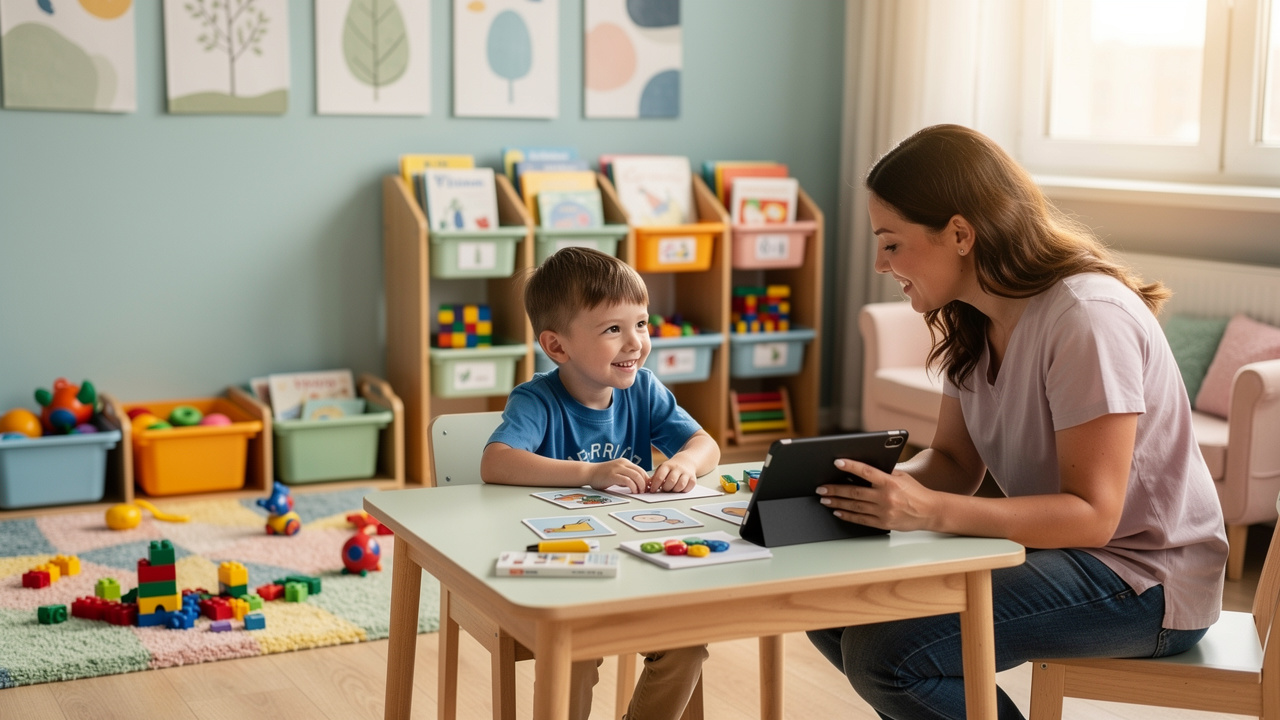
An empathetic parent blogger who understands the challenges and emotions of being a parent. They provide support, guidance, and relatable stories to help parents navigate the complexities of raising a child with autism.
Understanding and effectively communicating with a child on the autism spectrum can be a daunting task. Autism Spectrum Disorder (ASD) significantly impacts communication abilities, making it essential for parents and caregivers to find effective strategies to support their child's development. This article explores various techniques, therapies, and technologies that can enhance communication skills in children with autism. From Applied Behavior Analysis (ABA) therapy to visual aids, social stories, and technology-enhanced strategies, we will delve into the tools and resources available to empower parents in guiding their child's communication journey. Through real-life case studies and success stories, we will gain insights into the transformative potential of these approaches and the positive impact they can have on a child's ability to express themselves and connect with others.
Autism Spectrum Disorder (ASD) is a neurodevelopmental disorder that affects , communication, interests, and behavior. are a significant part of the autism spectrum. These can range from complete nonverbalism to difficulties in . Children with autism might struggle with understanding and , , or using language in a socially appropriate manner. Recognizing these challenges is the first step towards addressing them and in children with autism.
is a scientifically validated approach to understanding behavior and how it is affected by the environment. In , are developed by breaking down complex skills into smaller, teachable units, reinforcing positive behavior, and reducing unwanted behavior. can help children with autism improve their verbal, nonverbal, and . It can also help them .
Accurate perception is crucial for . Children with autism often struggle with interpreting both verbal and non-verbal cues. can help improve these skills by teaching children to focus on and ignore irrelevant distractions. Strategies may include using , practicing , and teaching children to recognize and interpret .
can be a significant challenge for children with autism. can help overcome these barriers by teaching children how to use words to express their thoughts, feelings, and needs. Techniques may include , , and the use of . The goal is to help children with autism and independently.
is a key component of . It involves fully focusing, understanding, responding, and then remembering what is being said. Children with autism may struggle with due to difficulties in attention, understanding, and processing information. can help through techniques such as role-play, , and games that encourage listening and responding.
Parents play a crucial role in their child's communication development. As a parent, you can support your child's by reinforcing the strategies used in at home. This can include creating opportunities for your child to communicate, using , and reinforcing . Remember, consistency is key in their communication skills.
Technology has a significant impact on ABA therapy and . , like those used by Rori Behavioral Innovations Inc., can personalize and optimize each child's . These technologies can provide , track progress, and adjust treatment plans as needed. This can lead to more and .
There are many success stories of children with autism improving their through . For example, a child who was nonverbal began to use words to express their needs after several months of . Another child improved their , allowing them to . These success stories highlight the in children with autism.
The main points discussed in this article include the challenges faced by children with autism in developing communication skills, the role of Applied Behavior Analysis (ABA) therapy in enhancing communication abilities, the use of technology-enhanced strategies for behavior modification, and the importance of personalized and adaptive interventions. Real-life case studies and success stories have demonstrated the transformative potential of ABA therapy in improving communication skills in children with autism.
In conclusion, ABA therapy offers valuable tools and techniques for parents and caregivers to support their child's communication journey. By utilizing strategies such as visual aids, social stories, and personalized interventions, children with autism can develop effective communication skills that allow them to express themselves and connect with others. The integration of technology in ABA therapy further enhances its effectiveness and provides real-time feedback and data tracking. It is crucial for parents, caregivers, and professionals to collaborate closely to create a supportive environment that empowers children with autism to thrive in their communication development.
To start ABA therapy now, visit Rori Behavioral Innovations Inc..