Introduction
Navigating the emotional landscape of Applied Behavior Analysis (ABA) therapy can feel like quite the journey for parents. It’s a transformative experience, but it often comes with its own set of emotional challenges. Many caregivers find themselves feeling overwhelmed and uncertain at times. How can we turn these challenges into opportunities for growth, both for ourselves and our children?
In this article, we’ll dive into the fundamental principles of ABA, offering you valuable insights and strategies to actively engage in your child’s treatment. We’re here to help you every step of the way! Let’s explore this together and find ways to make this journey a little easier.
Understand the Fundamentals of ABA Therapy
Applied Behavior Analysis (ABA) is a scientific approach to understanding behavior and how it can be modified through various techniques. Let’s dive into some key fundamentals that can really make a difference:
- : Think of this as a little reward system! When a is followed by a reward, it increases the chances that the behavior will happen again. Who doesn’t love a good pat on the back?
- Prompting: This is all about giving cues or hints to help a young person perform a . It’s like giving them a gentle nudge in the right direction!
- : ABA relies heavily on data to track progress and make informed decisions about treatment plans. At Rori Care, we gather data automatically during clinical sessions. This means our clinical team is always available for your loved one, without interrupting the flow of therapy. Plus, all data is securely stored, anonymized, and deleted after analysis, so you can rest easy knowing confidentiality is a top priority.
- : Every student is unique, and so is their treatment plan! Qualified customize plans to fit each child’s needs, setting measurable goals and using to promote and skill acquisition. This ongoing evaluation ensures that we’re always responsive to what your child needs.
- Generalization: Teaching skills in different environments helps kids apply what they learn in therapy to real-life situations. It’s all about making those connections!
Understanding these basics is essential for empowering parents through the emotional journey of to get involved in their child’s treatment process. With ABA principles and strategies in hand, you can more effectively. Let’s explore this together!

Explore the Role of Parents in ABA Therapy
The success of ABA treatment relies heavily on parents, as empowering parents through the can significantly shape their child's development. Here are some key ways you can make a difference:
- : By joining therapy sessions, you can learn techniques to reinforce at home. This collaboration not only helps your child develop skills but also deepens your understanding of ABA principles, which is essential for to make informed choices that positively impact their progress.
- : Keeping the lines of communication open with therapists is essential. Regular chats about your child's progress and any challenges they face allow for quick adjustments to treatment plans, ensuring that strategies are tailored to their evolving needs. This is crucial for achieving better behavioral outcomes.
- : Applying what you learn during treatment consistently at home helps reinforce learning and allows your child to generalize skills in different settings. This consistency, backed by caregiver education, is key to .
- Emotional Support: Your encouragement and understanding can help your child navigate their therapy journey. Positive interactions, supported by good communication, lead to lasting behavioral changes. Empowering parents through the emotional journey of helps caregivers feel empowered, reducing stress and enhancing family dynamics, which makes the therapeutic experience even better.
- : Don’t hesitate to advocate for your child's needs in educational and therapeutic settings. Your involvement not only secures necessary resources but also builds a that fosters your child's development.
By embracing these roles, you can significantly enhance your child's progress and overall experience in , which is essential for empowering parents through the . Together, we can work towards improved outcomes and a more fulfilling journey! Let’s explore this together!

Implement ABA Strategies Effectively at Home
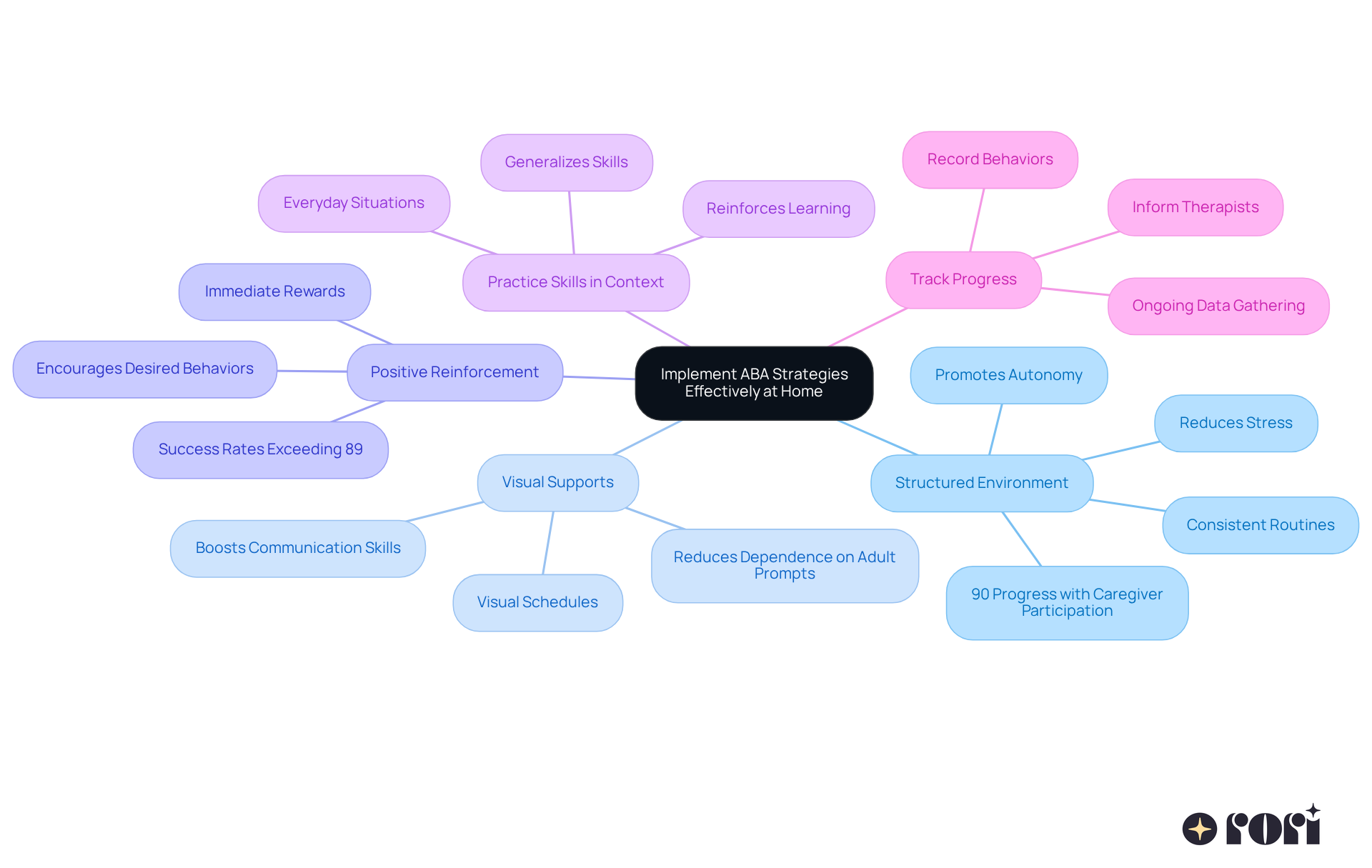
To effectively implement ABA strategies at home, let’s explore some helpful techniques together:
- Create a : Establishing consistent routines for daily activities can really help your child feel more secure. When things are organized, it not only promotes autonomy but also reduces stress during changes. Did you know that studies show 90% of young individuals make progress when suggested hours of are actively carried out with caregiver participation? That’s pretty encouraging!
- Use : for helping kids understand what’s expected of them. By incorporating visual aids, you can boost their communication and comprehension skills, allowing them to rely less on adult prompts and become more independent. It’s amazing to see how these simple tools can make a big difference!
- : Rewarding desired behaviors right away is key to encouraging them to happen again. This approach is at the heart of ABA principles, where plays a crucial role in promoting desired behaviors and enhancing skill acquisition. With , it’s clear that these methods work!
- : Everyday situations are perfect for practicing skills learned in sessions. For instance, social interactions during playdates can reinforce learning and help generalize skills across different settings. It’s all about making those connections in real life!
- : Keeping a record of your child’s behaviors and improvements is super helpful. Sharing this information with therapists can inform future strategies. Ongoing data gathering is essential in ABA practice, allowing for immediate adjustments based on your child’s specific needs. This personalized support ensures that the treatment remains effective and adaptable as your child grows.
By implementing these approaches, you can that enhances treatment sessions, ultimately empowering parents through the emotional journey of and supporting your child’s growth and emotional health. Remember, you’re not alone in this journey - we’re here to help you every step of the way!
Navigate the Emotional Challenges of ABA Therapy
Navigating the emotional journey of can be quite a ride for parents, which emphasizes the importance of empowering parents through the , can’t it? Here are some :
- Acknowledge Your Feelings: It’s totally normal to feel a mix of emotions-from hope to frustration. Recognizing and validating these feelings is the first step toward managing them effectively.
- Seek Support: who share similar experiences can be a game changer. not only provide emotional comfort but also offer insights and approaches that can really improve your journey. Research shows that joining can significantly boost your self-efficacy as a parent, which is linked to lower stress levels. For example, just a one-point rise in self-efficacy can predict a 2.82-point decrease in parenting stress! Plus, Rori Care offers that empower you with ABA principles and strategies, enhancing your ability to support your child’s development.
- Practice Self-Care: Don’t forget to prioritize your well-being! Engaging in activities that help you relax and recharge is crucial. When you , you’ll be more present and supportive for your child.
- Communicate Openly: Sharing your feelings with your partner or therapist can really foster understanding and strengthen your support network. Open communication helps alleviate feelings of isolation and boosts emotional resilience. is key for effective therapy, and Rori Care emphasizes this partnership to ensure you get the comprehensive support you need.
- Focus on Progress: along the way! Acknowledging the positive changes you’re making in your child’s life can be a huge motivator and strengthen your dedication to their development. Being actively involved in your child’s ABA journey, as encouraged by Rori Care, can lead to significant progress. In fact, studies show that 90% of kids benefit from such engagement!
By using these strategies, you can effectively navigate the emotional aspects of your child’s journey, which is essential for . Together, let’s foster a supportive environment that embraces neurodiversity!

Conclusion
Empowering parents throughout the emotional journey of ABA therapy is so important for fostering positive outcomes in children. When parents understand the fundamental principles of Applied Behavior Analysis, they can actively engage in their child's treatment. This way, they’re not just informed but also equipped to support behavioral goals effectively. This partnership between parents and therapists really lays the groundwork for a more successful therapeutic experience.
Let’s talk about some key strategies for parents!
- Active participation in therapy sessions
- Keeping open lines of communication with therapists
- Implementing consistent practices at home
Each of these elements plays a significant role in a child's progress, reinforcing the idea that parental involvement is vital in ABA therapy. Plus, navigating the emotional challenges that come with this journey is essential. Acknowledging feelings, seeking support, and practicing self-care can empower parents to stay resilient and engaged.
Ultimately, the emotional journey of ABA therapy is a shared experience that can strengthen family dynamics and enhance a child's development. By embracing the role of an active participant, parents can create a nurturing environment that promotes learning and growth. Encouraging collaboration, celebrating progress, and fostering open communication will not only support children in their ABA journey but also cultivate a sense of community among families navigating similar paths.
So, let’s explore this together! Remember, you’re not alone in this journey, and we’re here to help you every step of the way!
Frequently Asked Questions
What is Applied Behavior Analysis (ABA) therapy?
Applied Behavior Analysis (ABA) is a scientific approach to understanding behavior and modifying it through various techniques.
What is reinforcement in ABA therapy?
Reinforcement is a reward system where a desired behavior is followed by a reward, increasing the likelihood that the behavior will occur again.
How does prompting work in ABA therapy?
Prompting involves giving cues or hints to help an individual perform a desired behavior, acting as a gentle nudge in the right direction.
Why is data collection important in ABA therapy?
Data collection is crucial in ABA as it tracks progress and informs treatment plans. At Rori Care, data is gathered automatically during sessions, ensuring continuous support without disrupting therapy.
How is confidentiality maintained in ABA therapy data collection?
All data collected is securely stored, anonymized, and deleted after analysis, prioritizing confidentiality for clients.
How are treatment plans individualized in ABA therapy?
Qualified behavior analysts customize treatment plans for each child based on their unique needs, setting measurable goals and using evidence-based strategies for positive behavior changes.
What is generalization in the context of ABA therapy?
Generalization refers to teaching skills in various environments to help children apply what they learn in therapy to real-life situations.
How can parents get involved in their child's ABA therapy?
Understanding the fundamentals of ABA therapy empowers parents to support their child's behavioral goals effectively and get involved in the treatment process.
List of Sources
- Understand the Fundamentals of ABA Therapy
- Success Rates of ABA Therapy | Advanced Autism Services (https://advancedautism.com/post/success-rates-of-aba-therapy)
- ABA Therapist Statistics & Demographics (https://totalcareaba.com/statistics/aba-therapist-demographics)
- 81 ABA Therapy Statistics You Need to Know - apricott ABA (https://apricott.com/resources/aba-therapy-statistics)
- The Numbers Don't Lie: Revealing Autism Therapy Statistics | Above and Beyond Therapy (https://abtaba.com/blog/autism-therapy-statistics)
- Explore the Role of Parents in ABA Therapy
- supportivecareaba.com (https://supportivecareaba.com/statistics/the-role-of-parent-education-in-aba-therapy-success)
- The Power of Parent Involvement in ABA Therapy Outcomes: Maximizing Success Through Family Engagement - RightWay ABA (https://rightwayaba.com/parent-involvement-in-aba-therapy-outcomes)
- The Role of Parent Training in Supporting ABA Therapy Success | Discovery ABA (https://discoveryaba.com/aba-therapy/the-role-of-parent-training-in-supporting-aba-therapy-success)
- Maximizing ABA Therapy Outcomes: The Importance of Parental Involvement - Cultivate BHE (https://cultivatebhe.com/maximizing-aba-therapy-outcomes-the-importance-of-parental-involvement)
- The Numbers Don't Lie: Revealing Autism Therapy Statistics | Above and Beyond Therapy (https://abtaba.com/blog/autism-therapy-statistics)
- Implement ABA Strategies Effectively at Home
- Success Rates of ABA Therapy | Advanced Autism Services (https://advancedautism.com/post/success-rates-of-aba-therapy)
- totalcareaba.com (https://totalcareaba.com/autism/aba-therapy-and-visual-schedules)
- Resources | Golden Steps ABA (https://goldenstepsaba.com/resources/success-rates-of-aba-therapy)
- Inspirational ABA and Autism Quotes - Mrs. Moe's Modifications (https://mrsmoesmodifications.com/inspirational-aba-and-autism-quotes)
- Navigate the Emotional Challenges of ABA Therapy
- Best Autism Quotes to Raise Awareness and Understanding (https://yellowbusaba.com/post/autism-quotes)
- Inspiring and Insightful Autism Quotes | Advanced Autism Services (https://advancedautism.com/post/autism-quotes)
- The Benefits of Parent Support Groups for Families of Children with Autism | Advanced Autism Services (https://advancedautism.com/post/the-benefits-of-parent-support-groups-for-families-of-children-with-autism)
- 20 Inspiring Quotes About Autism Every Parent Must Read Today (https://circlecareservices.com/20-quotes-about-autism-and-parenting)