Enhance Autism Communication with Visual Supports: Best Practices

Explore visual supports for improving communication in autism and their impactful benefits for children.

Introduction

Have you ever felt like your child is trying to say something important, but the words just aren’t coming out? Visual supports can really help bridge those communication gaps! By using images, symbols, and structured aids, these tools not only enhance understanding but also foster independence and reduce anxiety.

But here’s the thing: how can we, as caregivers, make sure we’re using these tools in a way that truly fits our child’s needs? In this article, let’s explore some best practices for using visual supports, the benefits they bring, and how we can customize them to really boost our kids’ communication skills!

Define Visual Supports and Their Role in Autism Communication

Have you ever felt like you’re speaking a different language when trying to connect with your child? Visual aids can be game-changers! They utilize visual supports for improving communication in autism, including images, symbols, or even simple words to help kids communicate better. These aids come in various forms, like picture schedules, choice boards, and social stories. By providing tangible illustrations of abstract ideas, they make it easier for kids to express themselves and understand what’s expected of them.

Studies show that visual supports for improving communication in autism can significantly enhance communication skills for kids on the spectrum! They not only help with understanding but also reduce anxiety and promote independence. For example, research on scheduling tools has shown that they can increase on-task behaviors in academic settings, making learning more engaging for everyone involved.

It’s important for teachers to adapt their methods and incorporate visual supports for improving communication in autism, as they can make a big difference for autistic students! Case studies reveal that using imagery techniques in classrooms not only supports autistic learners but also enhances the overall learning environment for all students. This demonstrates how versatile visual supports for improving communication in autism can be in addressing various communication and behavioral challenges.

Many parents struggle to find effective ways to connect with their children, often feeling overwhelmed by the communication barriers that arise. By incorporating visual aids, parents can not only ease their child's anxiety but also foster a sense of independence and confidence in their communication abilities. Plus, these aids can also benefit kids with ADHD and other behavioral challenges, providing clear and organized information that helps them focus and understand better.

At Rori Care, we believe in empowering caregivers with the knowledge and skills they need to support their children’s growth. By actively participating and gathering data, families can tackle challenges together and promote their child’s development effectively. Imagine the joy of seeing your child express themselves more freely and confidently with the right tools in hand!
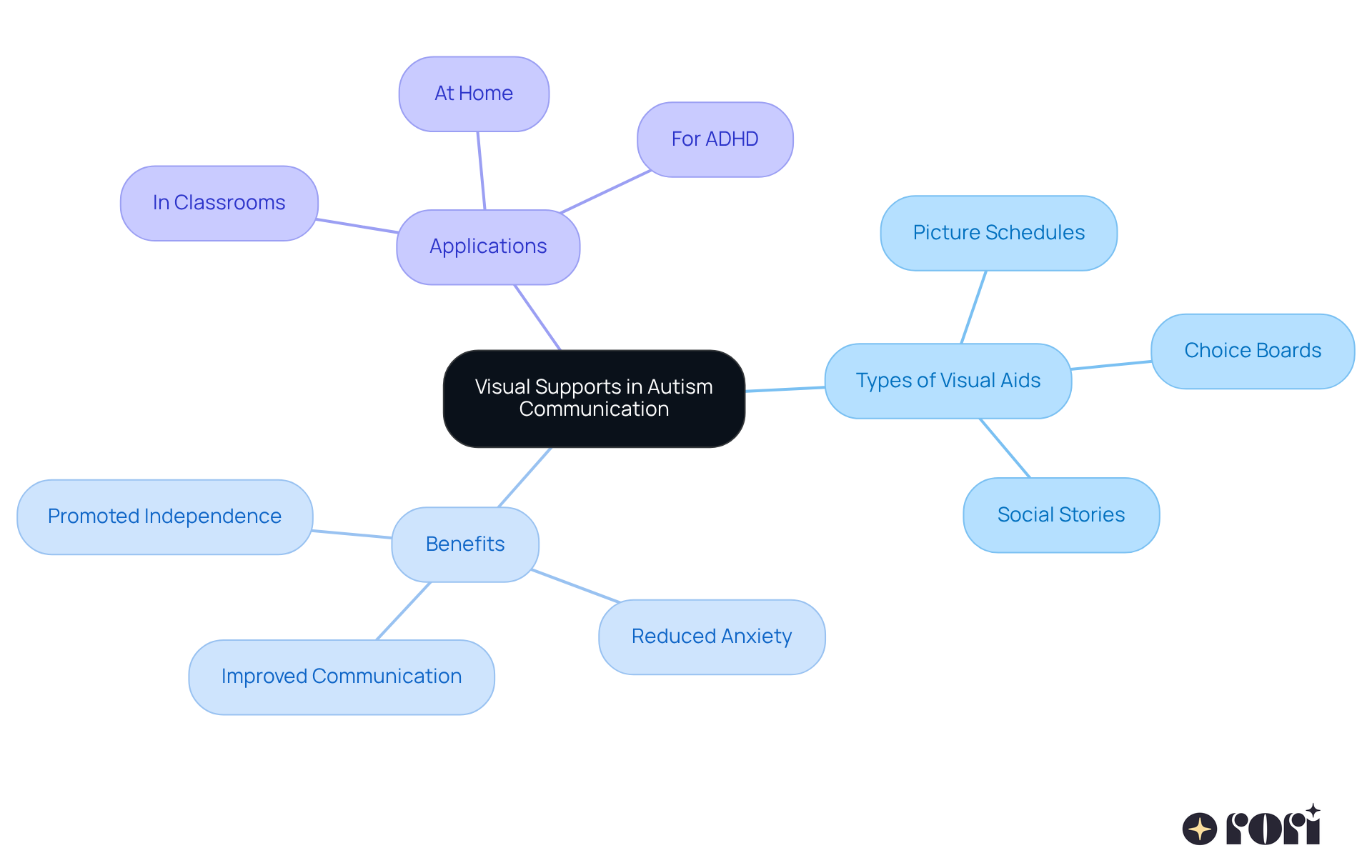
This mindmap illustrates how different visual supports can help children with autism communicate better. Each branch shows a type of aid, its benefits, and where it can be applied, helping you see the big picture of how these tools can make a difference.

Implement Effective Strategies for Using Visual Supports

Have you ever felt lost trying to help your child communicate better? Implementing visual supports for improving communication in autism in Applied Behavior Analysis (ABA) therapy can be a game-changer for many families. Here are some friendly strategies to consider:

  1. Use Consistent Visuals: Stick with the same images or symbols at home, school, and therapy. This helps kids feel more familiar and comfortable. Did you know that using pictorial schedules can lead to a whopping 89% decrease in challenging behaviors during transitions? That’s a big win for everyone!
  2. Pair Visuals with Verbal Cues: When you use visual aids, try explaining them verbally too. This combo not only boosts understanding but also helps little ones connect visuals with words. Plus, when caregivers are educated on this, it makes a world of difference in supporting their child’s learning.
  3. Create Visual Schedules: Think about making daily or weekly schedules with pictures. These can really help kids anticipate changes, which can lower anxiety. Families often find that using visual supports for improving communication in autism, like visual schedules at home, enhances their quality of life and helps them tackle autism-specific challenges together.
  4. Incorporate Choice Boards: Let your child make choices about activities using choice boards. This not only encourages independence but also helps them express their needs better. When caregivers get involved, it can lead to even better outcomes!
  5. Utilize Social Stories: Craft social stories that illustrate specific situations or expectations. These stories can help kids navigate social interactions and feel more comfortable in different settings. Caregiver education plays a key role here, too, as it enhances their ability to support their child’s understanding.
  6. Monitor and Adjust: Don’t forget to regularly check how well the visual aids are working. Adjust them based on your child’s responses and needs. Research shows that visual supports for improving communication in autism benefit not just autistic students but also many learners with diverse needs, enriching their learning experience.

By taking these steps, you’re not just helping your child; you’re also creating a more harmonious home environment. Let’s explore this together! We're here to help you every step of the way!
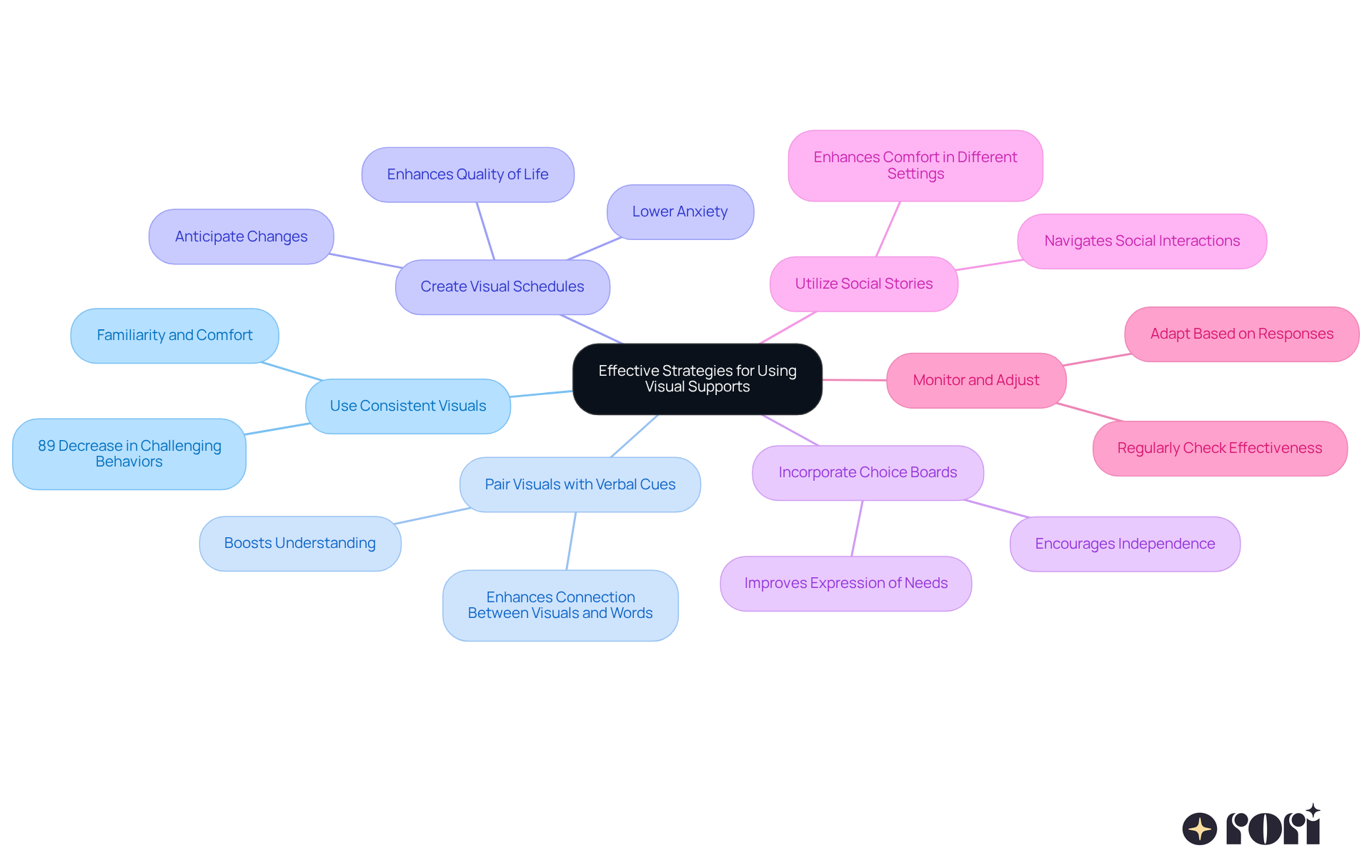
This mindmap starts with the main idea in the center and branches out to show different strategies. Each branch represents a strategy, and the sub-branches highlight important points or benefits. This layout helps you see how each strategy connects to the overall goal of improving communication.

Explore the Benefits of Visual Supports for Children with Autism

Navigating the world of autism can be challenging for parents, especially when it comes to communication and engagement in educational settings. Visual supports for improving communication in autism provide a multitude of benefits for children, significantly enhancing their engagement and overall communication skills.

  1. Improved Communication: Visual aids enable clearer articulation of needs and emotions, which can greatly lessen frustration and misconceptions among youngsters with autism.
  2. Enhanced Comprehension: By turning abstract concepts into tangible representations, graphical aids help kids understand instructions and expectations better. This makes grasping intricate ideas a lot easier!
  3. Reduced Anxiety: Using imagery schedules and prompts creates predictability, which is essential for youngsters with autism. This predictability helps them feel more secure and less anxious, especially during transitions. When visual aids are used, kids often feel less anxious because they know what to expect next.
  4. Enhanced Autonomy: Visual aids empower young individuals to explore their surroundings and make decisions on their own. This sense of autonomy fosters self-efficacy, allowing children to take ownership of their learning and daily activities.
  5. Enhanced Involvement: Kids often engage more when graphical aids are used. These tools make learning and communication interactive and enjoyable, leading to improved participation in classroom activities. Studies show that on-task engagement can rise from 55% to 90% with the introduction of visual aids!
  6. Support for Social Skills Development: Visual supports are effective in teaching and reinforcing social skills. They help young individuals grasp social cues and appropriate behaviors in different situations, which is essential for building meaningful relationships.

At Rori Care, we’re all about supporting neurodiversity and helping every child succeed. Our clinical leadership team emphasizes the importance of imagery strategies in fostering inclusive educational settings. We implement practices like individualized pictorial schedules and social stories tailored to each child's needs. Case studies show that using graphical aids can lead to notable improvements in task completion and transition success, with task completion rates increasing from 50% to 85% and transition success from 40% to 80%.

These findings highlight how imagery techniques can improve educational outcomes for all learners. Experts agree that graphic strategies are not just beneficial for youngsters with autism; they can also assist a wide range of students with special needs. As Danita M. Luzadder notes, 'Visuals are especially helpful for students who are dealing with communication or behavior difficulties.' This really shows how adaptable and effective graphical aids can be in enhancing educational results for every student.

By embracing visual supports, you’re not just helping your child; you’re paving the way for a brighter, more connected future together!
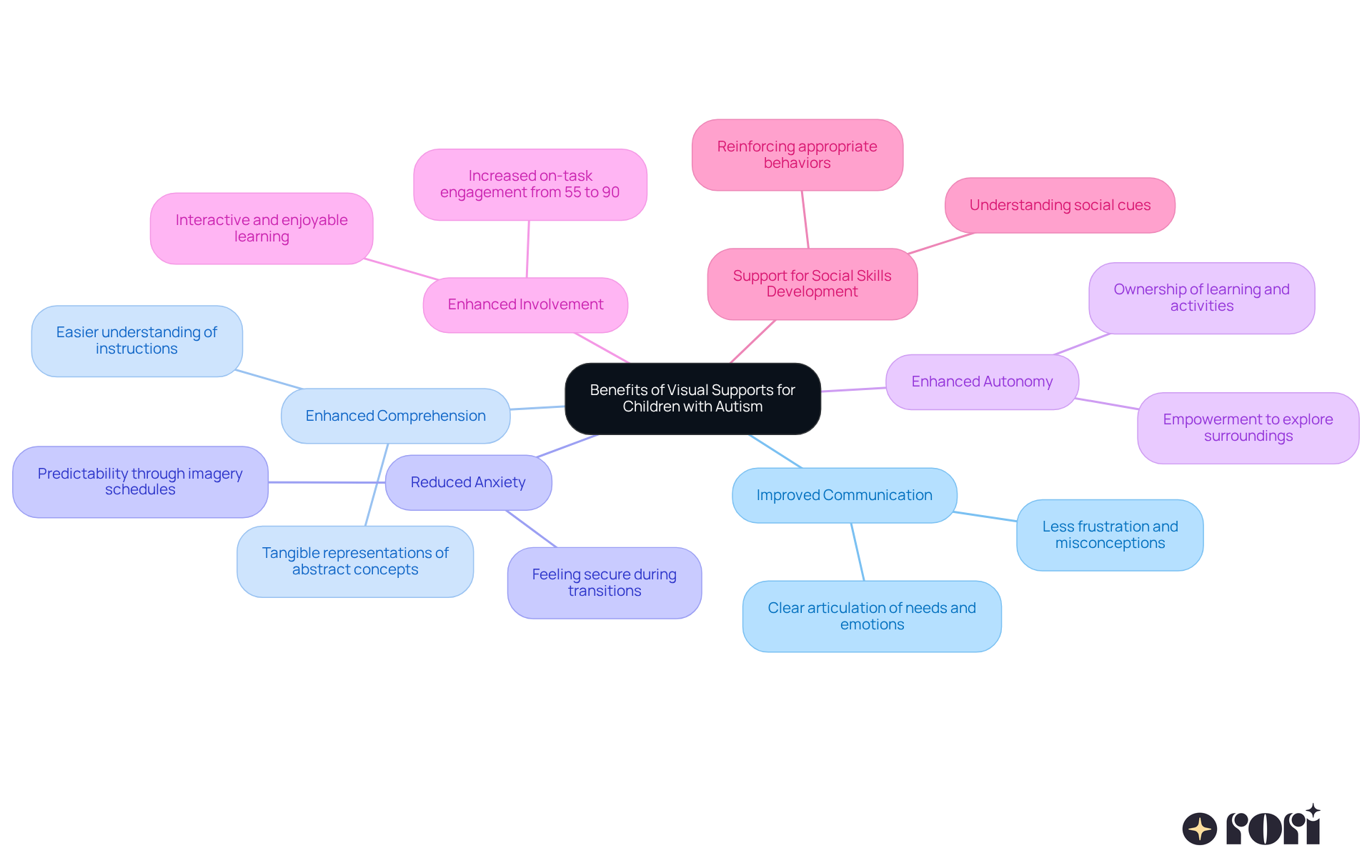
This mindmap illustrates how visual supports can help children with autism in various ways. Each branch represents a specific benefit, showing how these supports can improve communication, reduce anxiety, and enhance learning experiences. Follow the branches to see how each benefit connects to the central theme!

Customize Visual Supports to Meet Individual Needs

Have you ever wondered why some visuals just click with your child while others fall flat? Tailoring visual supports for improving communication in autism to meet each child's unique needs can make a world of difference.

  1. Assess Individual Preferences: Start by figuring out what types of visuals your child responds to best. Some kids might light up at a colorful photo, while others prefer simple drawings or symbols. When you personalize visuals, it really helps your child engage! Plus, when caregivers know what to look for, they can make a big difference!
  2. Adapt to Developmental Levels: It’s important to match the complexity of visuals with your child’s developmental stage. For younger kids, simpler images work wonders, while older ones might need more detailed representations. Did you know that studies show that visual supports for improving communication in autism can enhance understanding by 65% for many autistic students? That’s why customizing visual supports for improving communication in autism is so crucial!
  3. Incorporate Input: Whenever possible, involve your child in creating these graphical aids. This not only gives them a sense of ownership but also boosts their motivation and engagement. Empowered caregivers who understand ABA strategies can facilitate this collaboration effectively.
  4. Consistently Assess and Revise: As your child grows, their needs will change. Regularly checking in on the effectiveness of the aids ensures they remain relevant and useful. This adaptability is key to keeping your child’s learning on track!
  5. Collaborate with Caregivers and Educators: Teaming up with parents, teachers, and therapists is essential. When everyone is on the same page, it reinforces the effectiveness of visual supports for improving communication in autism and creates a unified approach to learning. Working together makes everything work better for your child!

By tailoring these aids, you’re not just helping your child learn; you’re also building their confidence and motivation. Let’s explore this together!
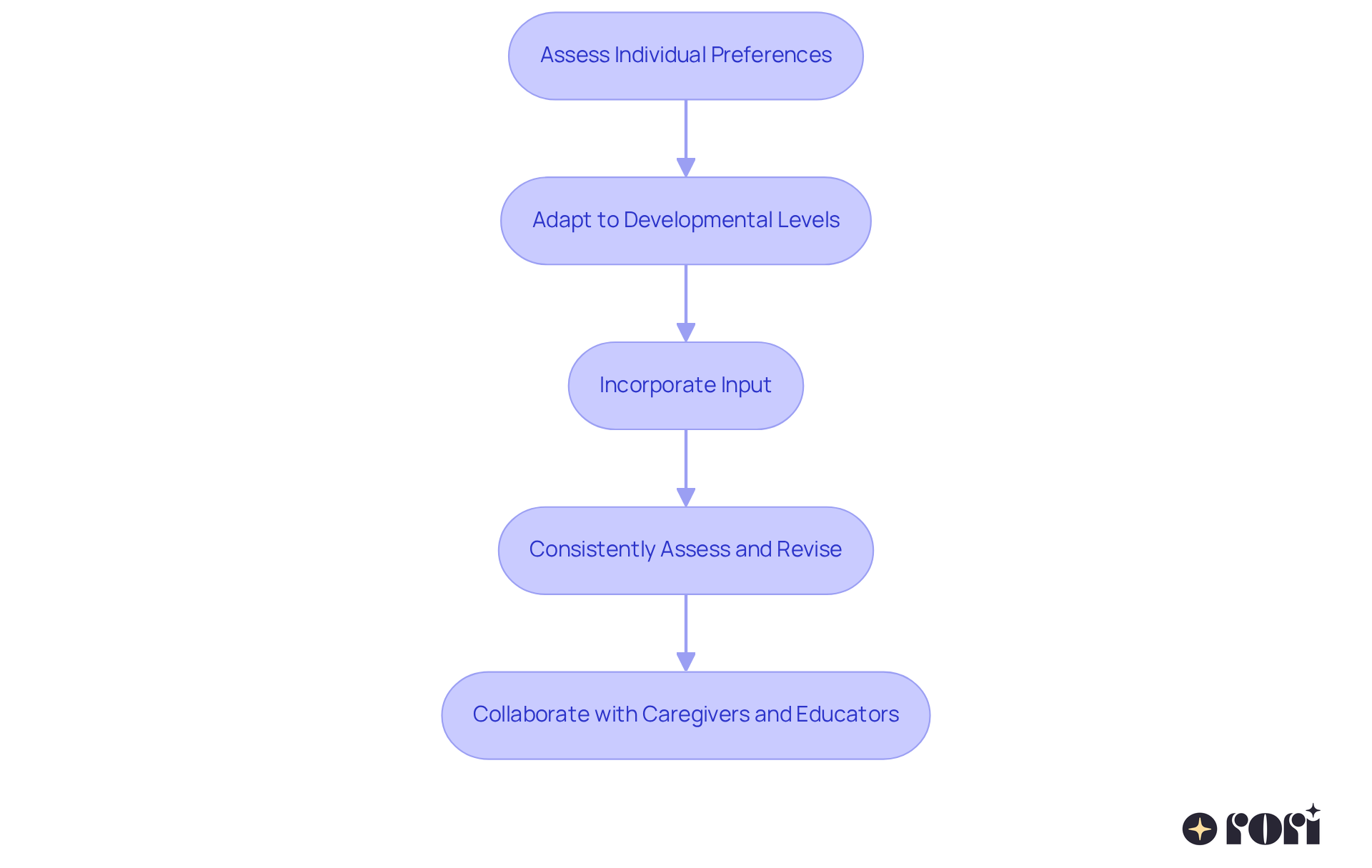
Each box represents a step in the process of customizing visual supports. Follow the arrows to see how each step leads to the next, helping you create effective visual aids for your child.

Conclusion

Visual supports can truly change the game for children with autism, making communication easier and more effective. By using tools like picture schedules, choice boards, and social stories, caregivers and educators can help bridge communication gaps and create a better understanding of what’s expected. When kids use these tools, they often feel less anxious and more confident, helping them explore their world with a smile!

Throughout this article, we’ve shared some key insights about using visual supports. Keeping visuals consistent, pairing them with verbal cues, and customizing them to fit each child’s needs are all important strategies that can really boost communication. And guess what? The benefits of these supports go beyond just autism; they can help all kids with different learning needs and make classrooms more engaging for everyone.

Using visual supports isn’t just about teaching; it’s about believing in every child’s potential and helping them shine! By getting kids involved in creating and adapting these aids, caregivers and educators can spark a sense of ownership and motivation. Remember, the journey toward effective communication is a team effort. Let’s take this journey together, ensuring every child has the tools they need to thrive and connect with the world around them.

Frequently Asked Questions

What are visual supports in the context of autism communication?

Visual supports are aids that utilize images, symbols, or simple words to improve communication for children with autism. They help kids express themselves and understand expectations better.

What forms do visual supports take?

Visual supports come in various forms, including picture schedules, choice boards, and social stories.

How do visual supports enhance communication skills for children with autism?

Studies show that visual supports can significantly enhance communication skills by improving understanding, reducing anxiety, and promoting independence.

What impact do visual supports have in academic settings?

Research indicates that scheduling tools as visual supports can increase on-task behaviors in academic settings, making learning more engaging for all students.

Why is it important for teachers to use visual supports?

Incorporating visual supports can make a significant difference for autistic students, enhancing their learning environment and addressing various communication and behavioral challenges.

How can parents benefit from using visual aids with their children?

Visual aids can help parents connect with their children by easing anxiety and fostering a sense of independence and confidence in their communication abilities.

Can visual supports be beneficial for children with conditions other than autism?

Yes, visual supports can also benefit kids with ADHD and other behavioral challenges by providing clear and organized information that helps them focus and understand better.

What is the role of Rori Care in supporting caregivers?

Rori Care empowers caregivers with knowledge and skills to support their children's growth, encouraging active participation and data gathering to tackle challenges together effectively.


List of Sources

  1. Define Visual Supports and Their Role in Autism Communication
    • Quotes About Autism (https://usevisualstrategies.com/quotes-about-autism)
    • The use of visual schedules to increase academic-related on-task behaviors of individuals with autism: a literature review (https://tandfonline.com/doi/full/10.1080/20473869.2024.2402124)
  2. Implement Effective Strategies for Using Visual Supports
    • Quotes About Autism (https://usevisualstrategies.com/quotes-about-autism)
    • Visual Schedules for Children with Autism | Links (https://linksaba.com/visual-schedules-for-children-with-autism)
    • SEPARATE AND COMBINED EFFECTS OF VISUAL SCHEDULES AND EXTINCTION PLUS DIFFERENTIAL REINFORCEMENT ON PROBLEM BEHAVIOR OCCASIONED BY TRANSITIONS - PMC (https://pmc.ncbi.nlm.nih.gov/articles/PMC2695333)
    • The use of visual schedules to increase academic-related on-task behaviors of individuals with autism: a literature review (https://tandfonline.com/doi/full/10.1080/20473869.2024.2402124)
    • How to Use Visual Supports to Enhance Autism Learning (https://attentiveautismcare.com/blog/how-to-use-visual-supports-to-enhance-autism-learning)
  3. Explore the Benefits of Visual Supports for Children with Autism
    • Visual supports at home and in the community for individuals with autism spectrum disorders: A scoping review - PubMed (https://pubmed.ncbi.nlm.nih.gov/31451016)
    • 80 Inspiring Quotes on Autism Awareness and Support - Empower ABA (https://empoweraba.com/80-inspiring-quotes-on-autism-awareness-and-support)
    • Article - Crossroads of Social Inquiry (https://journal.adu.ac.ae/csi/article/view/62)
    • Quotes About Autism (https://usevisualstrategies.com/quotes-about-autism)
    • 10 inspiring quotes from people with autism | Autism Speaks (https://autismspeaks.org/life-spectrum/autism-quotes)
  4. Customize Visual Supports to Meet Individual Needs
    • Visual Supports - Evidence-Based Practices (https://docs.autismspeaks.org/evidence-based-practices/visual-supports)
    • Autism Quotes (https://kidsclubaba.com/autism-quotes)
    • The use of visual schedules to increase academic-related on-task behaviors of individuals with autism: a literature review (https://tandfonline.com/doi/full/10.1080/20473869.2024.2402124)
    • Quotes About Autism (https://usevisualstrategies.com/quotes-about-autism)