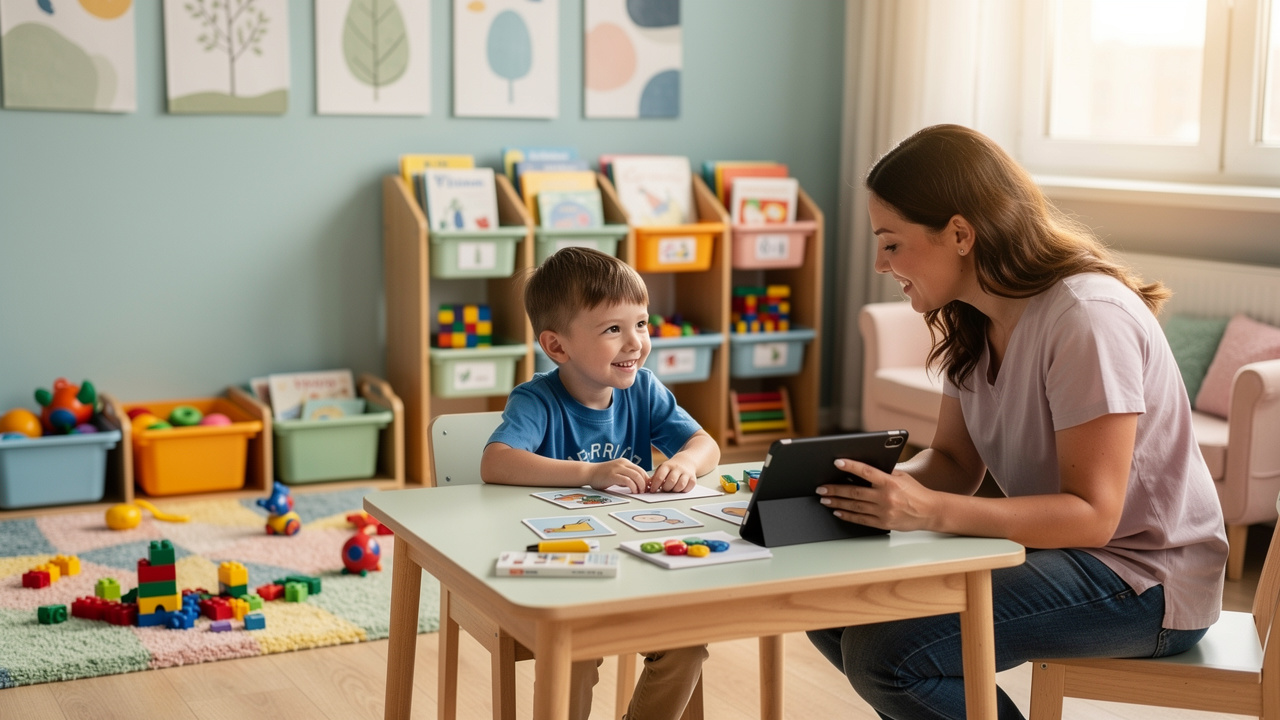
Graphic aids have become wonderful tools for supporting children with autism, helping them improve their communication and social skills. By using pictures, symbols, and written words, these visual supports not only clarify expectations but also encourage independence and ease anxiety during social interactions.
But here’s the question: how can caregivers effectively use these strategies to make the most of their benefits? Let’s explore the different types of visual supports available, practical steps for weaving them into daily routines, and ways to evaluate their effectiveness. Together, we can empower parents to nurture their child's social development with confidence!
We’re here to help you every step of the way!
Graphic aids are such valuable tools! They use pictures, symbols, or written words to share information and boost communication, particularly for kids with autism, which is a method for enhancing social skills with visual supports in autism. Think about picture schedules, stories, and cues - these aids are essential for enhancing social skills with visual supports in autism, helping kids grasp what’s expected of them and navigate social interactions more smoothly.
What’s really great about graphic aids is how they can improve understanding, ease anxiety, and encourage independence. By showing clear visual representations of tasks or social situations, we can support enhancing social skills with visual supports in autism, allowing kids to engage more fully with their surroundings and express their needs more clearly. Research shows that using these aids can be effective in enhancing social skills with visual supports in autism, helping kids articulate their thoughts and feelings in a more concrete way. This bridges the gap between abstract ideas and verbal expression.
Plus, these strategies not only reduce confusion but also create a sense of security, allowing kids to thrive in different settings. At Rori Care, we focus on group therapy that hones interpersonal skills, guided by skilled therapists. This approach is focused on , improving how individuals interact and communicate within a group, which builds better skills and relationships.
And let’s not forget about caregiver training! It’s crucial for supporting youth development through ABA. This training equips caregivers with the knowledge and techniques they need to effectively help their children reach their behavioral goals, ultimately fostering their overall growth.
Let’s explore this together! We’re here to help you every step of the way!
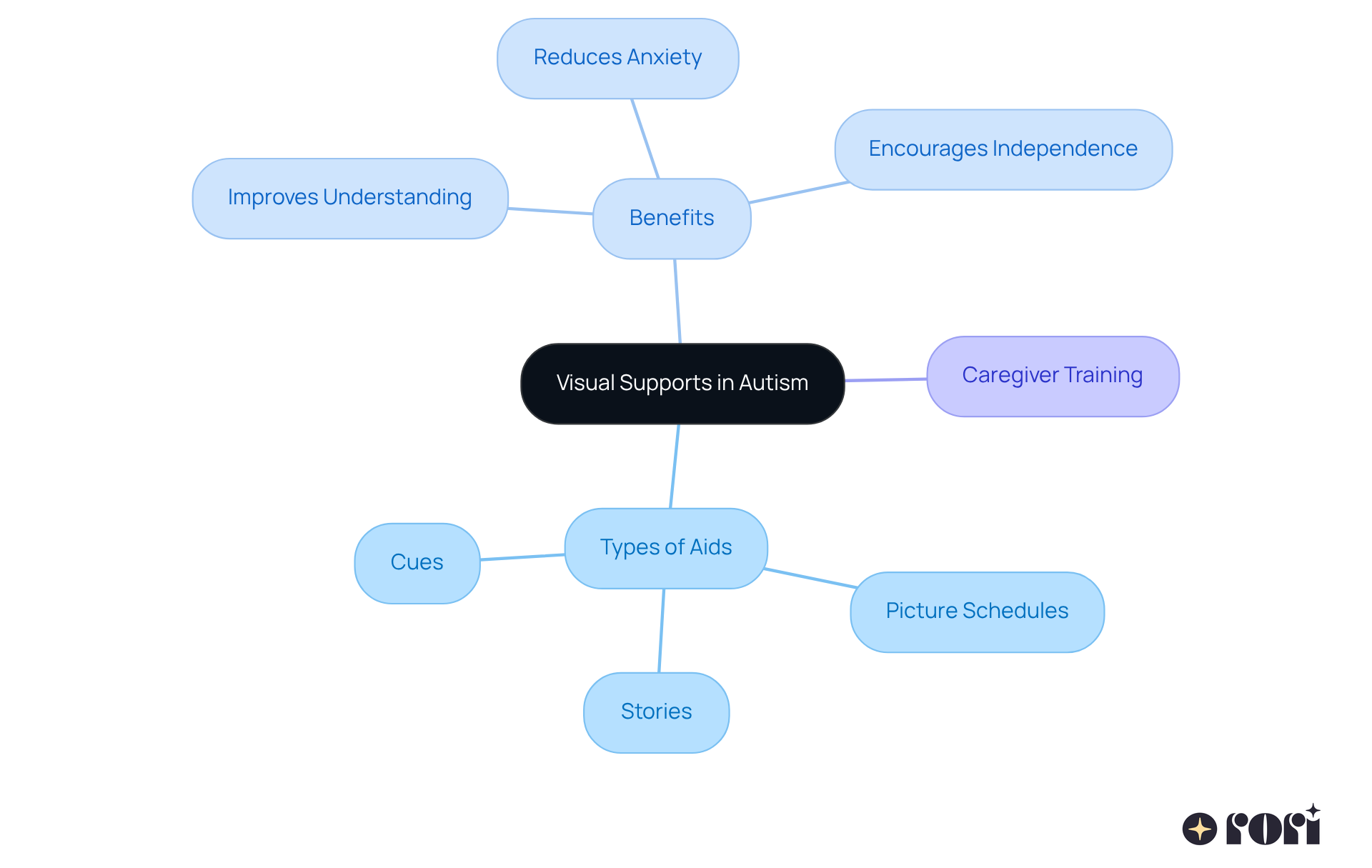
Different graphical aids can play a crucial role in enhancing [social skills with visual supports in autism](https://rori.care/post/10-essential-aba-therapy-resources-for-parents-of-children-with-autism) by offering organized support and encouraging independence. Let’s take a look at some effective types:
Integrating these aids into daily activities can create a structured environment that supports enhancing social skills with visual supports in autism, allowing kids to connect more effectively with their peers. Let’s explore this together!
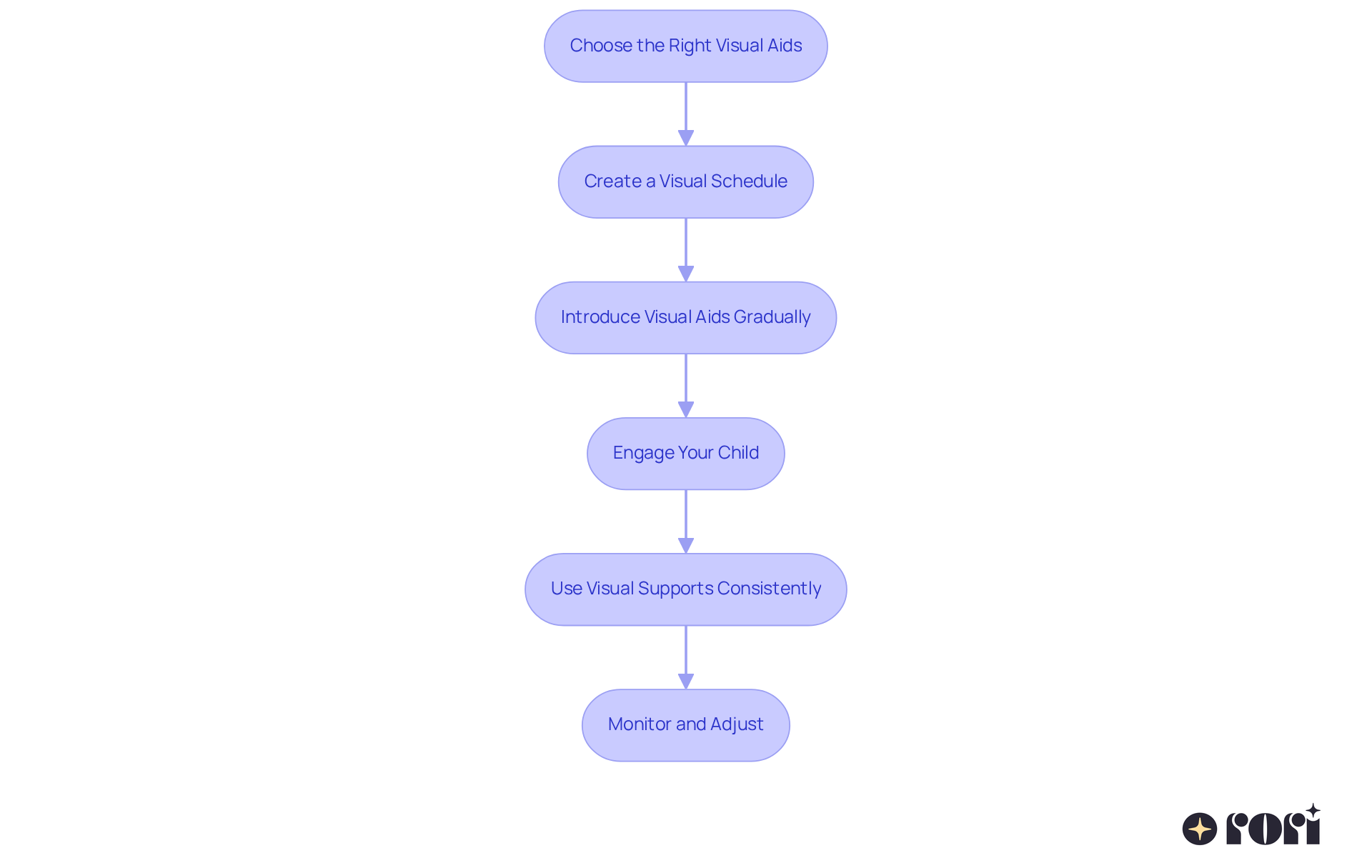
To effectively implement visual supports in daily routines, let’s explore these steps together:
Evaluating how well visual supports work for your child can be a game-changer! Here’s a friendly guide to help you through the process:
By regularly checking in on how effective those visual supports are, you’re ensuring that you’re enhancing social skills with visual supports in autism for your child’s development. This not only complements any they’re receiving but also promotes consistency at home. Let’s explore this together!
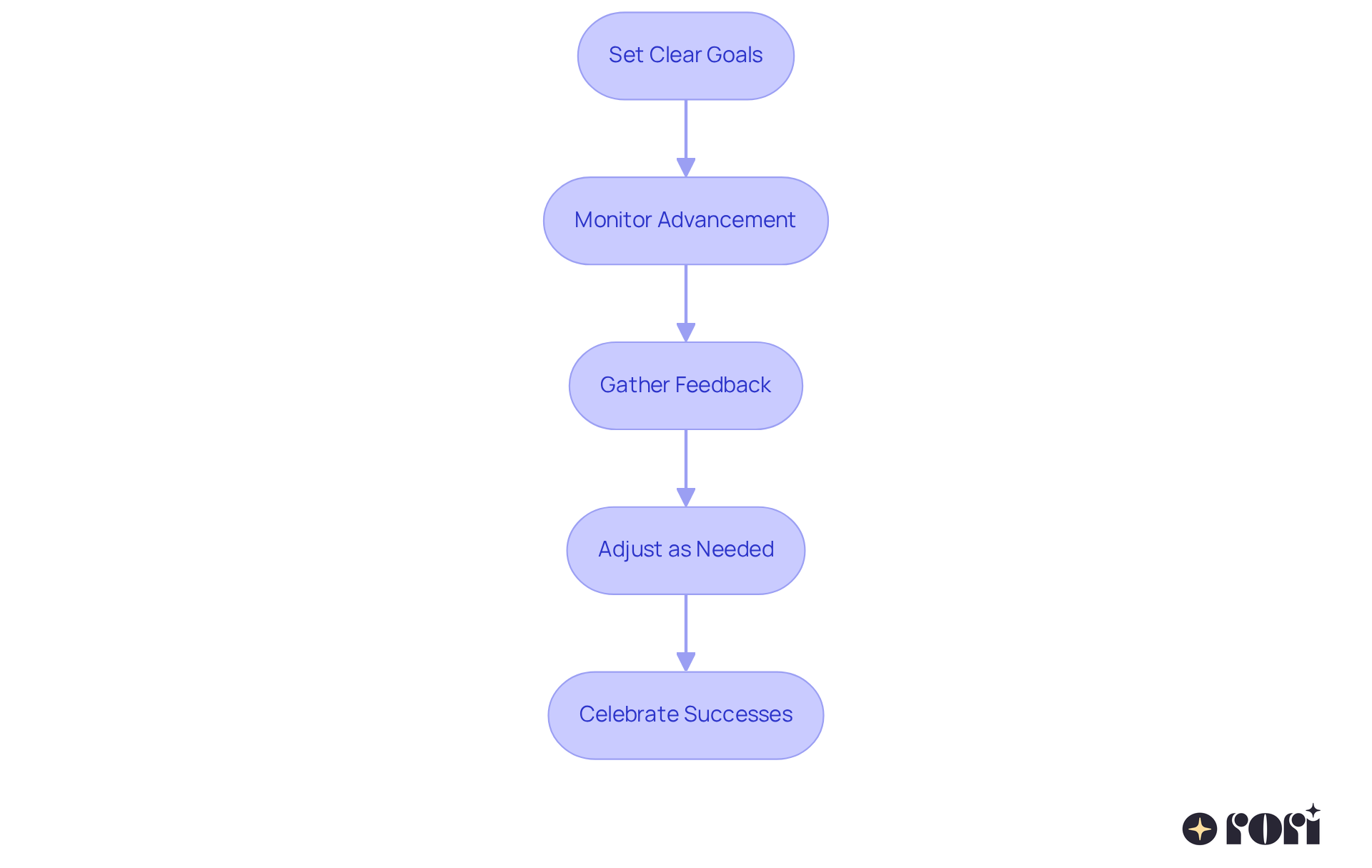
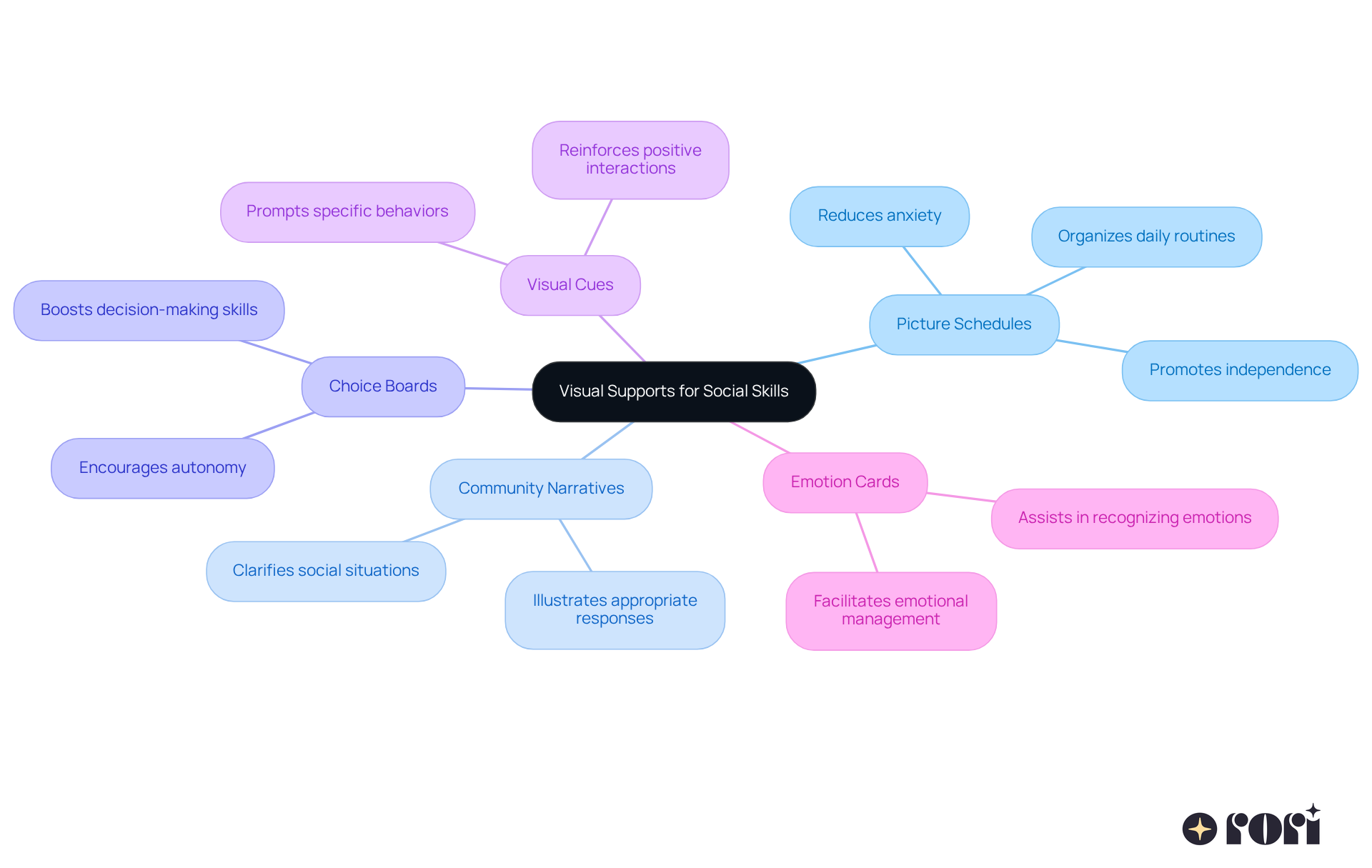
Using visual supports is a fantastic way to boost social skills in children with autism! These graphic aids act as essential communication tools, helping kids connect abstract ideas to real-life situations. This makes navigating social interactions a lot easier and boosts their confidence. By incorporating visual supports, caregivers can create a nurturing environment that encourages independence and eases anxiety, paving the way for better social engagement.
Let’s take a look at some types of visual supports!
Each serve a special purpose. They can help children anticipate daily routines or express their feelings more effectively. When these strategies are used consistently and tailored to each child’s needs, they can really enhance a child’s ability to interact and communicate in various settings.
Reflecting on the importance of visual supports, it’s clear they’re not just tools; they’re vital parts of the developmental journey for children with autism. By actively participating in choosing, implementing, and evaluating these supports, caregivers can empower their children to thrive socially. Embracing this approach not only fosters individual growth but also builds a sense of community and understanding, encouraging everyone to work together toward a more inclusive environment.
So, let’s explore this together! If you’re looking for ways to support your child, remember that you’re not alone. We’re here to help you every step of the way!
What are visual supports in the context of autism?
Visual supports are graphic aids that use pictures, symbols, or written words to share information and enhance communication, particularly for children with autism.
How do visual supports help children with autism?
They help children grasp what is expected of them, navigate social interactions more smoothly, improve understanding, ease anxiety, and encourage independence.
Can you give examples of visual supports?
Examples include picture schedules, social stories, and visual cues that represent tasks or social situations.
What benefits do visual supports provide for social skills development?
They help children articulate their thoughts and feelings more concretely, bridging the gap between abstract ideas and verbal expression, which enhances social skills.
How do visual supports create a sense of security for children?
By reducing confusion and providing clear visual representations, visual supports create a sense of security that allows children to thrive in different settings.
What is the focus of group therapy at Rori Care?
The focus is on honing interpersonal skills through guided therapy, which enhances social skills and improves communication within a group.
Why is caregiver training important in supporting youth development?
Caregiver training equips caregivers with the knowledge and techniques needed to help their children reach behavioral goals, fostering overall growth and development.