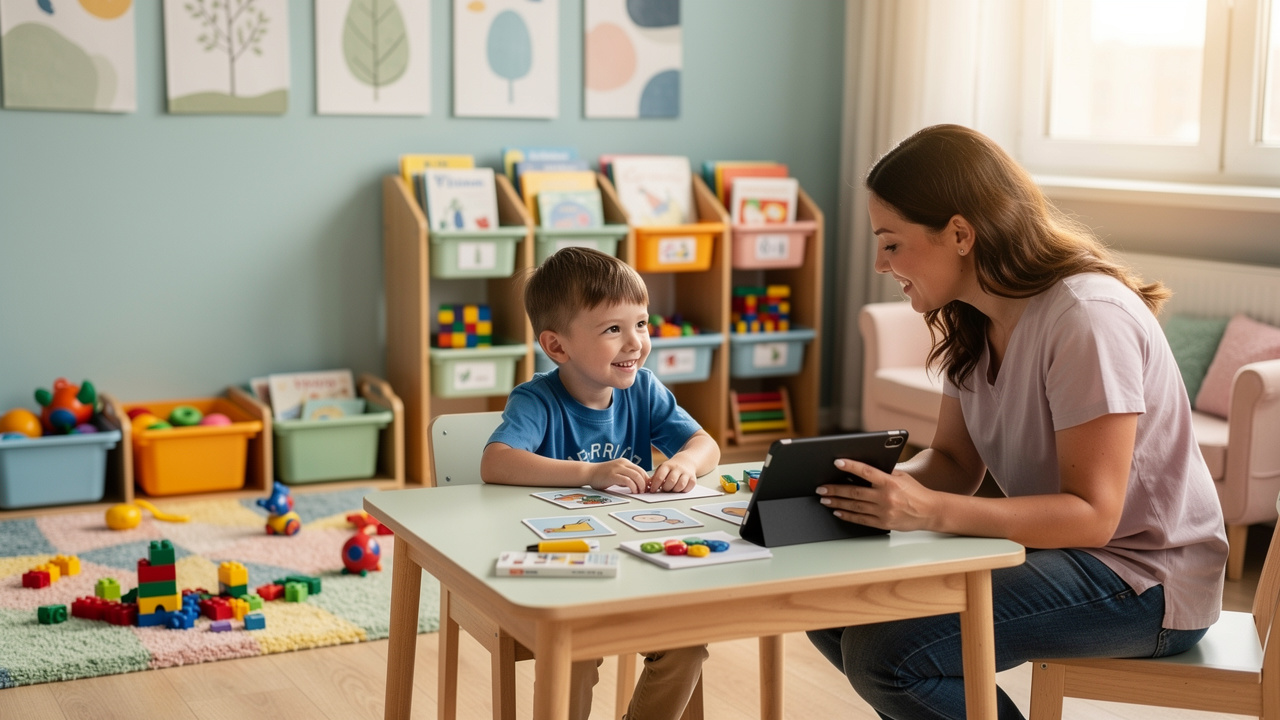
Navigating the world of autism spectrum disorder (ASD) can feel overwhelming, especially when it comes to social interactions. These challenges often make personal development and building relationships tough for many children. But here’s where role-playing comes in! This dynamic tool, often used in Applied Behavior Analysis (ABA) therapy, is shining a light on new ways for kids with ASD to learn how to handle social situations.
By participating in fun, simulated activities, children can really boost their communication skills and emotional understanding. But you might wonder, how does this approach compare to traditional methods? Let’s dive into the impact of role-playing on social interactions. Not only does it highlight some exciting benefits, but it also raises important questions about how effective our usual therapeutic practices really are.
So, let’s explore this together! We’re here to help you every step of the way!
Role-playing in Applied Behavior Analysis (ABA) therapy is such a valuable tool! It allows kids to step into different social situations, helping them practice and improve their interaction skills. This method is especially beneficial for children with autism spectrum disorder (ASD) because it demonstrates the impact of role-playing on social interactions in individuals with ASD by creating a safe and structured environment for exploration. By acting out real-life scenarios, kids can learn to recognize social cues, develop empathy, and boost their communication skills.
Did you know that studies show engaging in these simulated activities can enhance social interaction skills in children with autism by up to 40%? Plus, around 70% of participants see significant improvements in their behavior and communication through regular practice. This lively approach really stands out compared to traditional methods, which often lack the engagement and practical application needed for effective learning.
Case studies have highlighted the impact of role-playing on social interactions in individuals with ASD, significantly supporting the development of social skills and underscoring its importance in autism therapy. As we look toward 2026, the role of interactive scenarios in autism therapy continues to grow. Behavioral therapists are increasingly recognizing the impact of role-playing on social interactions in individuals with ASD, as these activities foster meaningful relationships and improve overall well-being.
And let’s not forget about the crucial role of caregiver education! When caregivers are empowered with ABA principles, they can provide better support at home, make informed decisions, and actively participate in their child’s development. Group therapy focused on social skills, led by qualified therapists, further enhances these role-playing scenarios, promoting better communication and connections among peers.
With ABA therapy showing an impressive success rate of over 89% in treating individuals with ASD, incorporating role-playing and caregiver involvement is essential for improving therapeutic outcomes. Let’s explore this together and see how we can make a difference!

Role-playing offers unique benefits compared to traditional methods by highlighting the impact of role-playing on social interactions in individuals with ASD and assisting them in developing their interpersonal skills. It creates a hands-on, experiential learning environment that encourages active participation, allowing kids to practice social interactions in a safe space. This approach can really help reduce anxiety and boost confidence, showcasing the impact of role-playing on social interactions in individuals with ASD.
Benefits of Role-Playing:
At Rori Care, our clinical leadership team is all about embracing neurodiversity and supporting youth in their journey. They use tailored simulation techniques that meet the unique needs of each child, giving caregivers the insights and tools they need to effectively support their child's growth. These techniques are crucial for developing essential social skills, like starting conversations and interpreting non-verbal cues.
Let’s explore this together! We’re here to help you every step of the way!

Implementing role-playing in ABA therapy can be a game-changer, but it requires a thoughtful approach that considers each child's unique needs. Imagine crafting realistic scenarios that reflect your child's everyday experiences! Using scripts can help facilitate those interactions, and visual aids can really boost understanding. It’s all about finding that sweet spot between structure and flexibility, allowing kids to explore different responses and outcomes.
Now, traditional therapy techniques often lean on more didactic methods, like lectures or worksheets. While these can lay down some foundational knowledge, they might not engage kids as effectively. That’s where role-playing shines! By integrating simulation activities into therapy, practitioners can create a lively and effective learning environment. This allows kids to practice and enhance their interpersonal skills in a supportive setting.
Did you know that acting out scenarios can improve interaction skills in kids with autism by up to 40%? That’s a significant boost compared to conventional methods! Plus, case studies show how successful simulated interactions can be in enhancing communication and social skills. It really highlights the importance of understanding the impact of role-playing on social interactions in individuals with asd as a vital resource in autism treatment strategies. Let’s explore this together and see how it can make a difference for your child!

When it comes to helping our kids with Autism Spectrum Disorder (ASD), thorough investigation shows that simulated interactions can really make a difference in their social skills. Research indicates that young people who participate in simulation activities often see significant improvements in starting and maintaining conversations, picking up on social cues, and showing appropriate emotional responses. In fact, about 70% of kids involved in regular imaginative play report better behavior and communication. This highlights how powerful these activities can be in Applied Behavior Analysis (ABA) therapy.
Now, traditional methods might not always deliver the same results. They often miss out on the practical application and engagement that simulated scenarios provide. Interactive scenarios can mimic various social situations, addressing the emotional and psychological needs of our kids-needs that are sometimes overlooked in conventional approaches. Plus, the feedback they receive after practice helps pinpoint their strengths and areas for growth, reinforcing a structured approach to simulation.
This compelling evidence really underscores the importance of incorporating role-playing into treatment plans, highlighting the impact of role-playing on social interactions in individuals with ASD. It can significantly boost their social skills and overall well-being. At Rori Care, our clinical leadership team is made up of experienced professionals who are passionate about neurodiversity. We’re dedicated to empowering caregivers and creating an environment where children can truly thrive. Let’s explore this together!

Role-playing is such a game-changer in Applied Behavior Analysis (ABA) therapy, especially for kids with autism spectrum disorder (ASD). It’s not just about practicing social interactions in a safe space; it’s also a fantastic way to boost their communication skills and emotional understanding. When kids dive into role-playing activities, they often see a real difference in how they handle social situations, highlighting just how impactful this approach can be for their growth.
Throughout this article, we’ve explored the many benefits of role-playing compared to traditional therapy methods. Research shows that kids who engage in these interactive scenarios can improve their social skills by up to 40%! Many even report better behavior and communication. The hands-on nature of role-playing encourages active participation and provides immediate feedback, which is crucial for effective learning. Plus, when caregivers get involved, it really amplifies the benefits, ensuring kids have the support they need both in therapy and at home.
We can’t stress enough how important it is to weave role-playing into autism therapy. As more research backs up its effectiveness, it’s vital for therapists, caregivers, and educators to embrace these techniques as part of a well-rounded approach to developing social skills. By prioritizing role-playing activities, we can pave the way for a brighter future for children with ASD, helping them build meaningful relationships and thrive in their social environments. Let’s explore this together and make a difference!
What is role-playing in ABA therapy?
Role-playing in Applied Behavior Analysis (ABA) therapy is a technique that allows children to engage in different social situations to practice and improve their interaction skills.
Why is role-playing particularly beneficial for children with autism spectrum disorder (ASD)?
Role-playing is beneficial for children with ASD because it provides a safe and structured environment for them to explore social interactions, recognize social cues, develop empathy, and improve communication skills.
What impact does role-playing have on social interaction skills in children with autism?
Studies show that engaging in role-playing activities can enhance social interaction skills in children with autism by up to 40%, with around 70% of participants experiencing significant improvements in behavior and communication through regular practice.
How does role-playing compare to traditional methods in autism therapy?
Role-playing stands out compared to traditional methods because it offers more engagement and practical application, which are essential for effective learning.
What evidence supports the effectiveness of role-playing in autism therapy?
Case studies have highlighted the positive impact of role-playing on social interactions in individuals with ASD, demonstrating its importance in developing social skills and improving therapeutic outcomes.
What role do caregivers play in the context of ABA therapy and role-playing?
Caregiver education in ABA principles is crucial as it enables caregivers to provide better support at home, make informed decisions, and actively participate in their child's development.
How does group therapy enhance role-playing scenarios?
Group therapy focused on social skills, led by qualified therapists, enhances role-playing scenarios by promoting better communication and connections among peers.
What is the overall success rate of ABA therapy in treating individuals with ASD?
ABA therapy has an impressive success rate of over 89% in treating individuals with ASD, highlighting the importance of incorporating role-playing and caregiver involvement to improve therapeutic outcomes.