Cognitive flexibility, the ability to adapt one's thinking to shifting circumstances, is a pivotal skill for children with autism, aiding them in navigating the complexities of everyday life. This mental adaptability is marked by a willingness to explore new ideas, an openness to different viewpoints, and the capacity to shift gears when confronted with changing scenarios or information. In this article, we delve into the concept of flexible thinking and its importance for children with autism.
We explore how cognitive flexibility manifests in real-life learning, reading and understanding texts, writing and communication, problem-solving and adaptation. We also discuss strategies to encourage flexible thinking in children and address the challenges and rigid thinking patterns faced by individuals on the autism spectrum. By understanding and nurturing flexible thinking, we empower children with autism to thrive and make meaningful contributions in various domains.
, the ability to adapt one's thinking to shifting circumstances, is a pivotal skill for children with autism, aiding them in navigating the complexities of everyday life. This is marked by a willingness to explore new ideas, an openness to different viewpoints, and the capacity to shift gears when confronted with changing scenarios or information.
Temple Grandin, a professor and renowned author, has contributed significantly to our understanding of neurodivergence through her work and life experiences. Dr. Grandin emphasizes the diversity within the , highlighting the importance of recognizing individual thinking patterns—visual, pattern, and word thinking. Each style brings unique strengths and insights, underscoring the need for to cultivate these abilities in children with autism.
Examples of in action include a case study where a boy with autism initially disengaged from a group activity transforms into a participant creating a memorial garden. This change exemplifies how can lead to increased involvement and learning. Another instance is Grandin's work in designing livestock systems, which showcases how her visual thinking led to innovative and humane solutions in animal processing.
Research underscores the significance of to enhance problem-solving skills. Studies involving children in elementary school demonstrate that those encouraged to adopt alternate perspectives, whether through imagining a skillful friend or recognizing their own special qualities, become more adept at finding solutions and devising alternative plans when faced with challenges.
In the context of children with autism, promoting is not only about supporting them in the present but also about paving the way for their in the future. It's about recognizing the unique perspectives they bring to the table and nurturing their potential to innovate and excel in various domains.

Adaptability and innovative thinking are crucial life skills, especially for children navigating their educational journey. In a dynamic school environment, such as at Evelyn Scott School, where is emphasized through a structured inquiry model, children are encouraged to harness their innate curiosity. This approach aligns with the ACT Future of Education Strategy and is guided by the 10 Shifts of Practice of Future Focused Learning.
As children engage with their environment, they learn to pivot gracefully when routines shift or when they encounter novel scenarios. This flexibility is not just beneficial; it's essential for academic success and peer collaboration.
Recent neuroimaging research has highlighted the impact of digital technology on children's , particularly on the pre-frontal cortex—home to and problem-solving. The studies, encompassing over 30,000 children, suggest that while digital experiences can shape brain plasticity, they also call for innovative, child-friendly strategies that go beyond limiting screen time.
This cognitive flexibility is evident in real-world examples, such as the mathematical explorations of children like 4-year-old Ben, who, through his unique problem-solving strategy, successfully counted yellow chips. These showcase the diverse and surprising ways children approach learning and problem-solving. They highlight the importance of that values creativity, perspective-shifting, and the utilization of cognitive science principles.
Moreover, the data suggests that early years providers must ensure children are assessed in a manner that reflects their developmental progress across multiple learning areas.
The profound influence of education on intelligence and is widely recognized. A comprehensive review of studies concluded that education is a key driver in raising intelligence. This underscores the that extend learning beyond conventional methods, embracing the interconnectedness of the mind with our physical and social worlds to enhance children's cognitive capabilities.

is indispensable when it comes to and interpretation. Children adept in this skill can navigate through complex texts, discern intricate concepts, and employ to piece together diverse ideas. Such mental agility also enables them to appreciate multiple perspectives in literature, sparking richer engagement with the material.
Authors craft their books intending to convince readers of particular viewpoints or to incite specific actions. They construct intricate meaning structures that readers must decode to grasp the book's full message. Unfortunately, many readers falter early, either unable to begin or losing interest quickly due to the daunting volume of text or a disconnect with the content.
Recent pedagogical strategies in England highlight a dichotomy in teaching . The focus has been heavily on decoding—converting letters to sounds—using 'narrow synthetic phonics' and 'decodable books,' sidelining the equally essential skill of comprehension. This approach fails to account for the of reading and writing, which draws from a common pool of knowledge encompassing syntax, vocabulary, and text understanding.
Experts suggest that a more integrated method, combining phonics with comprehension and writing, could foster a more robust .
Alarmingly, there has been a decline in reading enjoyment among children and young people, with only 43.4% expressing enjoyment in 2023, the lowest since 2005. The drop is more pronounced among girls and those aged 8 to 11, who have traditionally been more inclined toward reading. This suggests that current reading strategies may not be tapping into the intrinsic interests that spark a love for reading.
Furthermore, the misconception that for children with autism persists among educators, despite evidence to the contrary. In fact, emerging research suggests that bilingualism may have cognitive benefits, including enhanced executive function skills, and can deepen familial and cultural connections.
A comprehensive understanding of reading must encompass not just the phonetic elements but also the rich tapestry of comprehension, critical analysis, and the joy of engaging with literature. Education systems must evolve to nurture flexible thinkers who can decode not just the words on a page but the intentions and ideas they convey, thereby enriching both their learning experience and their lives.

The concept of is not just about adaptability in social situations or overcoming obstacles; it's also intrinsically linked to their learning and creativity, particularly in areas like writing and communication. When children learn to , they can enhance their , as seen in studies where children who practiced perspective-shifting displayed an ability to think of novel solutions to problems. Likewise, in writing, this cognitive flexibility allows them to conjure a multitude of ideas, effectively organize their thoughts, and tailor their communication style to suit various audiences and genres.
It's evident that are interwoven skills. According to the Education Endowment Foundation, when children engage in writing, they are drawing upon their reading experiences, encompassing a shared knowledge base of text understanding, syntax, and vocabulary. For instance, during the early stages of literacy, children learn the relationship between sounds and letters, which is fundamental to both reading comprehension and the development of writing skills.
Furthermore, by embracing , children can devise alternative plans when facing challenges, which is crucial not only in their but also in personal development. Engaging with mathematical concepts, for instance, can spur this kind of imaginative thinking. The 'Thinking Stories' resource illustrates how children as young as three begin to develop mathematical minds, often employing unexpected strategies to solve problems.
This demonstrates the importance of from an early age, which are essential for a love of learning and the exploration of subjects like mathematics through a child's perspective.
Moreover, the importance of flexible thinking extends to cultural and linguistic diversity, as seen in the teaching of reading in England. Recent educational approaches have been critiqued for not encompassing the diverse languages and dialects spoken by children. A holistic approach to literacy that integrates phonics with comprehension and real-book experiences is crucial for developing well-rounded communicators.
In sum, can be fostered through a combination of perspective-shifting exercises, a balanced integration of across various subjects, and an educational environment that values creativity and diversity. This approach will not only bolster their writing and communication skills but also build the foundation for strong interpersonal relationships and a lifelong passion for learning.

For children with autism, is a powerful asset that catalyzes and adaptation to new challenges. Such mental agility allows them to consider various solutions and revise their strategies when confronted with obstacles, embodying a that enables them to 'think outside the box.' Whether it's navigating new environments, adjusting to shifts in their routines, or tackling complex problems, their innovative approach is a testament to resilience.
This skill draws parallels with the strategic maneuvers required in games like Tetris, where players must continuously adapt and reposition shapes to clear lines and accumulate points. The game's creator, Alexey Pajitnov, may not have realized it, but the principles of his creation align with the transformative thinking skills beneficial to children on the autism spectrum.
The importance of such is reinforced by the work of mathematics educator Leah McCoy, who emphasizes the role of spatial visualization—a skill that is nurtured through games like Tetris—in problem-solving and mathematics. This connection highlights the interplay between cognitive and emotional domains, as noted in studies exploring the . Children who are adept at understanding their emotions can apply this awareness to navigate and adapt to change, mirroring the adaptability seen in gameplay.
Moreover, the development of is increasingly recognized as a critical component of education frameworks globally, underscoring its value in fostering creativity and problem-solving abilities. As we strive for equity in autism support, programs like Gemini, founded by Laura Kasbar, emerge as beacons of hope. They echo the sentiments of experts like Dr. Kristin Sohl, who advocate for to bridge disparities in autism care.
This collective endeavor to cultivate and harness in children with autism not only enhances their individual potential but also contributes to a broader societal good.
Nurturing in children with autism is pivotal for their development. This can be achieved by introducing them to a variety of experiences, which promotes adaptability and . Visiting new places, engaging in , and imaginative play are practical ways to broaden their horizons and encourage them to think in unconventional ways.
Stimulating discussions that involve open-ended questions can also be a powerful tool in fostering , as it pushes children to explore different viewpoints and enhances their .
Games and puzzles that challenge children to find alternative solutions can be particularly effective in developing flexibility in thinking. These activities encourage children to shift perspectives, a strategy shown to improve problem-solving skills according to studies that have children imagine receiving assistance from a skilled friend. This concept of perspective-shifting not only enriches their ability to approach problems from various angles but also reinforces the notion that there are multiple ways to reach a solution.
plays a crucial role in motivating children to engage in . Recognizing and praising their efforts to adapt and think outside the box reinforces adaptive behaviors and contributes to their sense of accomplishment. As Dr. Dan R. Offord, a renowned child psychiatrist, emphasized, creating a fair and is essential for the well-being of children, especially those with disabilities.
It's about acknowledging their unique abilities and ensuring they have the support they need to thrive.
Furthermore, is intertwined with emotional understanding. Research suggests a connection between the ability to navigate changing circumstances and the capacity to comprehend the relationship between situational changes and corresponding behaviors. Children's skills are influenced by their motivation and emotional state, indicating the importance of a nurturing environment that takes into account their fluctuating abilities.
In essence, fostering in children with autism is a multifaceted endeavor that involves exposing them to new experiences, encouraging perspective-shifting, engaging in stimulating conversations, and providing supportive feedback. By doing so, caregivers can significantly contribute to their children's ability to adapt and succeed in an ever-changing world.
Parents and caregivers are instrumental in teaching children how to navigate life's uncertainties and solve problems creatively. For instance, a study involving third to fifth graders showed that those who engaged in perspective-shifting, imagining how a friend with special skills would solve a problem, were better problem-solvers. This approach, a form of , encourages children to consider different viewpoints and come up with .
Incorporating flexibility into daily routines can take many forms. One method is to involve children in discussions about changes in plans, allowing them to witness and participate in problem-solving firsthand. For example, if an outdoor activity is canceled due to weather, parents might involve their child in brainstorming other fun alternatives.
This not only demonstrates adaptability but also invites the child to practice .
Moreover, research indicates that children are naturally inclined to explore and try new things, which is an essential aspect of learning. By providing opportunities for exploration, whether it's trying a new food or creating a second plan when the first doesn't work out, caregivers can foster a . This mindset is characterized by a love for challenges and the understanding that effort leads to mastery, which is particularly evident among those training to teach mathematics, as they relish the struggle involved in grappling with complex problems.
Furthermore, can aid in translating tactile sensations into visual and auditory stimuli, catering to the heightened sensitivities of individuals with autism. This approach can be applied in various settings, like dental offices, to create a more comfortable experience for patients with autism by addressing their unique sensory needs.
Lastly, the importance of and support is underscored by medical experts. Dr. Kristin Sohl highlights the significant disparities faced by children of color and those in underserved communities, who are often diagnosed later than their peers. Improving early diagnosis rates through new tools and resources can lead to more timely interventions and better outcomes for these children.
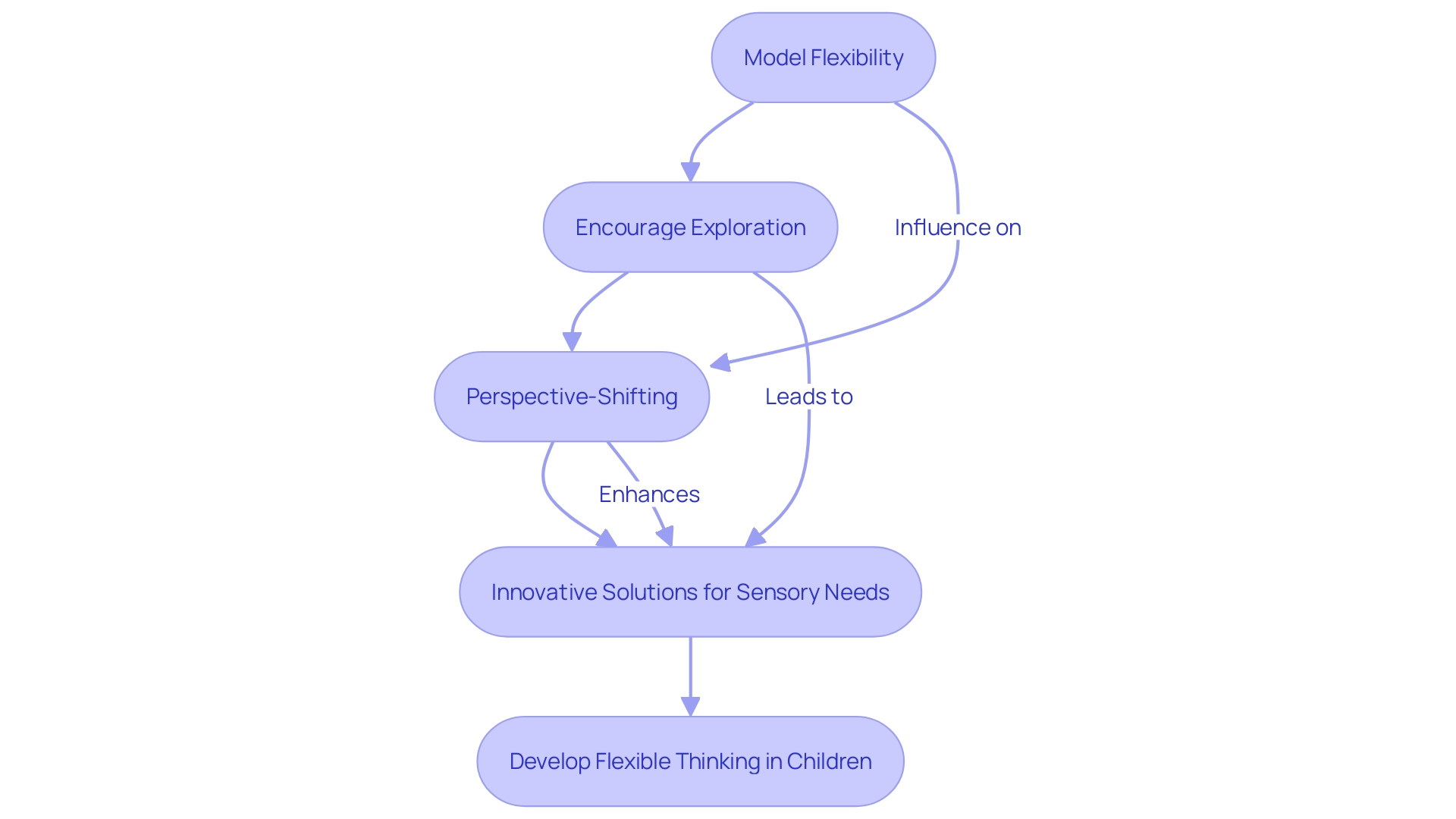
In summary, by modeling flexibility, encouraging exploration and perspective-shifting, and utilizing innovative solutions to cater to sensory needs, parents can significantly aid their children in developing the vital skill of .
Fostering in children with autism involves incorporating a variety of engaging activities tailored to their unique interests and abilities. serve as excellent tools to encourage children to step into various roles and scenarios, thereby enhancing their ability to consider different perspectives. This mirrors a real-world application, as demonstrated in a classroom where children to create a memorial garden, allowing a child with autism to participate at his own pace.
Puzzle-solving and board games are not just entertainment; they are strategic exercises in that can significantly boost skills. Similarly, open a world of imagination, which is a crucial component of . These activities help children explore and express themselves, leading to a richer, more nuanced understanding of the world around them.
Humza's story, an 11-year-old with a passion for aviation, exemplifies how aligning activities with a child's interests can lead to an immersive learning experience. His deep engagement with his favorite airline, Emirates, culminated in a rehearsal flying experience, highlighting the importance of practical, for neurodivergent children.
The scientific underpinnings of , as laid out by Guilford, stress the significance of divergent thinking—a process that values the fluency, flexibility, originality, and elaboration of ideas. It's about stepping outside the box to view challenges from various angles and develop a multitude of innovative solutions. By nurturing these cognitive abilities through targeted activities, parents and educators can significantly contribute to the development of in children with autism.
Autism Spectrum Disorder (ASD) is characterized by a wide range of symptoms, abilities, and levels of impairment, and affects individuals across all ethnic, racial, and socioeconomic groups. Parents and caregivers fostering in children with ASD face unique challenges, as these children may display rigid thinking patterns due to the neurological differences in their brains that impact communication and behavior.
To support the development of , it's essential to provide where expectations are clear and consistent. can serve as powerful tools to facilitate understanding and help break down tasks into smaller, achievable steps. This scaffolded approach not only aids in skill acquisition but also fosters an environment where children with ASD can safely take risks and learn from their mistakes.
It is critical to stay informed about the in the field of autism research. Caregivers must discern between credible sources and questionable information, especially when considering the benefits and risks of medications and therapies for their child. Professional guidance from specialists in autism, such as therapists and educators, is invaluable.
They can offer tailored strategies and interventions to address the faced by each child with ASD.
Moreover, engaging in can enhance perspective-shifting abilities in children, equipping them with the skills to devise alternative solutions when faced with obstacles. Encouraging a compassionate mindset is also beneficial as it promotes understanding and optimism, which are vital for emotional and physical well-being, as well as cognitive development.
Ultimately, understanding and supporting the unique interests of children with autism is a dynamic process that requires ongoing education, research, and a willingness to adapt strategies in accordance with the evolving needs of each child.

Flexible thinking is a pivotal skill for children with autism, aiding them in navigating everyday life. By nurturing this ability, we empower children with autism to thrive and make meaningful contributions. In real-life learning, flexible thinking is essential for academic success and peer collaboration.
Personalized learning approaches and the balanced use of digital technology play a role in fostering cognitive development.
Flexible thinking is crucial in reading and understanding texts, allowing children to navigate complex concepts and appreciate multiple perspectives. It also plays a vital role in writing and communication, enabling children to generate ideas, organize thoughts, and adapt to different audiences and genres.
Flexible thinking is a powerful asset for problem-solving and adaptation. Early diagnosis and intervention are key in bridging disparities in autism care and cultivating flexible thinking. Strategies to encourage flexible thinking include exposure to new experiences, stimulating conversations, and positive reinforcement.
Parents and caregivers play a vital role in modeling flexible thinking in daily activities. Involving children in discussions, providing opportunities for exploration, and utilizing technology can foster growth mindsets and cater to sensory needs. Engaging activities tailored to the unique interests and abilities of children with autism can enhance their ability to consider different perspectives and develop innovative solutions.
Addressing challenges and rigid thinking patterns requires structured environments, clear expectations, visual aids, and staying informed about the latest research. By understanding and supporting the unique interests of children with autism, we can foster their flexible thinking skills, empowering them to navigate life's uncertainties, solve problems creatively, and make meaningful contributions.
What is cognitive flexibility, and why is it important for children with autism?
Cognitive flexibility is the ability to adapt one's thinking to changing circumstances. It is important for children with autism because it helps them navigate everyday life by allowing them to explore new ideas, consider different viewpoints, and adjust to new scenarios or information.
How does cognitive flexibility manifest in real-life situations?
Examples include a child with autism becoming involved in a group activity like creating a memorial garden when engaged in their interests, or Dr. Temple Grandin's innovative designs in livestock systems stemming from her visual thinking.
What role does flexible thinking play in education?
Flexible thinking in education enables children to adapt to changing routines and novel scenarios, which is crucial for academic success and collaboration with peers. It also involves harnessing curiosity and employing cognitive science principles to foster an educational climate that values creativity and perspective-shifting.
How can technology affect children's cognitive development?
Neuroimaging research suggests that digital experiences shape brain plasticity, particularly in the pre-frontal cortex, which is responsible for adaptability and problem-solving. However, this also underscores the need for child-friendly strategies that foster cognitive development beyond limiting screen time.
Why is flexible thinking important for reading and understanding texts?
Children adept in flexible thinking can better navigate complex texts, understand intricate concepts, and employ critical thinking. This skill helps them appreciate multiple perspectives in literature and engage deeply with the material.
What is the current challenge with teaching reading in England?
The focus has been heavily on decoding text using synthetic phonics, which has overshadowed the equally important skill of comprehension. This approach does not fully account for the interconnected nature of reading and writing, which involves syntax, vocabulary, and text understanding.
How does flexible thinking benefit writing and communication?
Flexible thinking in writing allows children to generate ideas, organize their thoughts, and adapt their communication style to different audiences and genres. It also encourages them to think of novel solutions to problems and fosters a love for learning.
What strategies can encourage flexible thinking in children, especially those with autism?
Strategies include exposing children to new experiences, engaging in perspective-shifting activities, stimulating discussions with open-ended questions, playing games and puzzles, and providing positive reinforcement for adaptive behaviors.
How can parents and caregivers model flexible thinking in daily activities?
Parents can involve children in problem-solving discussions, encourage exploration and creativity, utilize technology like augmented reality (AR) to cater to sensory needs, and ensure equitable access to autism diagnosis and support.
What activities promote flexible thinking in children with autism?
Activities that promote flexible thinking include role-playing, puzzle-solving, board games, and creative pursuits such as art, music, and storytelling. Tailoring activities to a child's interests can also significantly enhance their learning experience.
How can challenges and rigid thinking patterns in children with ASD be addressed?
Providing structured environments with clear expectations, using visual aids, staying informed about autism research, seeking professional guidance, and engaging in creative problem-solving exercises can help address rigid thinking patterns in children with ASD.