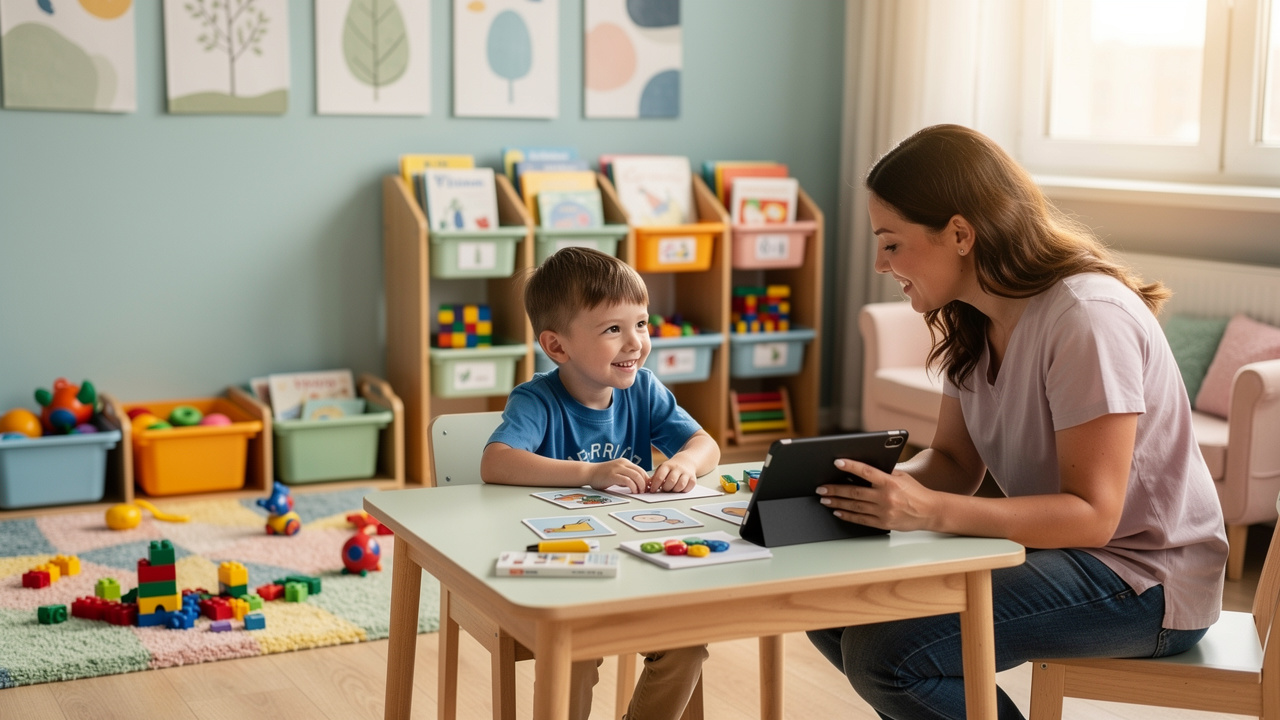
Children on the Autism Spectrum (ASD) require specialized care and understanding due to their unique needs. Challenges in social interactions, communication difficulties, and repetitive behaviors can significantly impact their daily lives. To address these needs, technology-enhanced strategies for behavior modification have emerged as a promising solution. By utilizing apps or virtual reality programs, children with ASD can learn and practice social skills in a structured environment, receiving immediate feedback and reinforcement. Additionally, tailored communication strategies, such as visual supports and collaboration with professionals, can help enhance comprehension and communication for children with ASD. Understanding and meeting the individual differences and challenges of children with ASD is crucial, as it allows for the development of personalized education plans, specialized therapies, and interventions that target social, communication, and behavioral skills. Furthermore, innovative therapeutic services, such as Applied Behavior Analysis (ABA), speech therapy, occupational therapy, and social skills training, have shown promise in improving independence, daily functioning, and reducing problem behaviors. This article will explore the unique needs of children with ASD and the various strategies and treatments available to support their development and well-being.
is a developmental disorder that affects communication and behavior. It's not a single condition but a spectrum of disorders with a , skills, and levels of disability. Over the past few decades, the prevalence of ASD has been on the rise globally, making it a significant . This increase underscores the urgent need for to address the .
Children with ASD have that require and attention. They may struggle with , have difficulty with communication, and exhibit . These challenges can lead to significant distress and impact their ability to function in various aspects of life. Understanding these is the first step towards providing and treatment.
is a scientifically validated approach to understanding behavior and how it is affected by the environment. In the context of ASD treatment, ABA focuses on , such as , communication, and . ABA therapy can significantly improve the and their families by reducing problematic behaviors and .
Innovative therapeutic services for ASD incorporate and to provide . These services may include , , and . These advancements are revolutionizing the field of ASD treatment, making therapy more accessible, effective, and empowering.
Innovative therapeutic services offer numerous benefits for . They allow for that address the unique needs of each child, leading to more . These services also empower parents by providing them with the they need to . Furthermore, the use of for children, leading to increased motivation and adherence to treatment.
There are numerous success stories that highlight the effectiveness of in . For instance, the use of has enabled therapists to analyze data more efficiently and accurately, leading to more . Similarly, has been used to in children with ASD, leading to significant improvements in their ability to interact with others.
The combination of and technology has the potential to . Technology can by providing , making therapy more engaging, and allowing for . This is paving the way for a future where every child with ASD has the opportunity to thrive.
Parents play a crucial role in the journey of autism care. Innovative therapeutic services empower parents by providing them with the they need to . This includes , , and support for .
The field of is continually evolving, with leading the way. These services are revolutionizing by , effective, and empowering. As technology continues to advance, we can expect to see even more innovative solutions that will further for .
In conclusion, children on the Autism Spectrum (ASD) have unique needs that require specialized care and understanding. Challenges in social interactions, communication difficulties, and repetitive behaviors can significantly impact their daily lives. However, technology-enhanced strategies for behavior modification have emerged as a promising solution. By utilizing apps or virtual reality programs, children with ASD can learn and practice social skills in a structured environment, receiving immediate feedback and reinforcement. Tailored communication strategies, such as visual supports and collaboration with professionals, can also enhance comprehension and communication for children with ASD.
The main takeaway from this article is the importance of understanding and meeting the individual differences and challenges of children with ASD. This understanding allows for the development of personalized education plans, specialized therapies, and interventions that target social, communication, and behavioral skills. Innovative therapeutic services like Applied Behavior Analysis (ABA), speech therapy, occupational therapy, and social skills training have shown promise in improving independence, daily functioning, and reducing problem behaviors in children with ASD. It is crucial for parents and caregivers to be aware of these strategies and treatments to provide the best possible support for their child's development and well-being.
To provide your child with the necessary support they need to thrive, consider starting ABA therapy now through Rori. This comprehensive therapy approach can make a significant difference in your child's life by improving their social interactions, communication skills, and overall quality of life. Don't hesitate to take action and give your child the best opportunities for growth and success.