Exploring the Effectiveness of Mindfulness in Autism Therapy

Exploring the effectiveness of mindfulness in autism therapy enhances emotional regulation and social skills.

Introduction

Mindfulness has become a wonderful approach in autism therapy, offering a way for children on the spectrum to find emotional balance and improve their social skills. By encouraging present-moment awareness, mindfulness gives kids the tools they need to manage anxiety and navigate social situations more smoothly. But here’s the big question: how can caregivers and therapists effectively use these techniques to really make a difference?

Let’s dive into the effectiveness of mindfulness in autism therapy! We’ll explore its key benefits and share some practical strategies that can be tailored to fit each child’s unique needs. Together, we can uncover how mindfulness can be a game-changer for families navigating this journey.

Define Mindfulness and Its Role in Autism Therapy

Mindfulness is all about being aware of what’s happening right now - our thoughts, feelings, and even the world around us. For parents of children with autism, exploring the effectiveness of mindfulness in autism therapy can be a game-changer. It helps kids manage their emotions better, boosts their social skills, and can even ease anxiety.

Imagine your child feeling overwhelmed in a social setting. With mindfulness, they can learn to take a step back, breathe, and focus on the present moment. This non-judgmental awareness can really help them navigate their experiences, leading to better behavior and overall happiness.

Research shows that exploring the effectiveness of mindfulness in autism therapy can significantly enhance social responsiveness and emotional regulation in kids with autism. This makes mindfulness a fantastic addition to traditional therapies, especially when exploring the effectiveness of mindfulness in autism therapy.

So, let’s explore this together! Mindfulness isn’t just a buzzword; it’s a supportive tool that can help your child thrive. We’re here to help you every step of the way!

The central node represents mindfulness, while the branches show its benefits in autism therapy. Each sub-branch provides more detail on how mindfulness can help children with autism thrive.

Identify Key Benefits of Mindfulness for Autistic Individuals

The benefits of mindfulness for autistic individuals are significant, which is why exploring the effectiveness of mindfulness in autism therapy can truly enhance their overall well-being and therapeutic outcomes.

  1. Improved Emotion Control: Mindfulness techniques help kids recognize and manage their feelings more effectively, leading to fewer outbursts. Research shows that mindfulness-based interventions (MBIs) can significantly boost emotional regulation, making it easier for young ones to handle their emotions.

  2. Enhanced Social Skills: By becoming more aware of social cues and nurturing empathy, being present can really improve interactions with peers. Studies have found that kids involved in awareness programs often show better social responsiveness, which helps build healthier relationships and communication. Plus, there’s evidence that social communication issues decrease for youth with ASD after practicing mindfulness.

  3. Reduced Anxiety and Stress: Techniques like deep breathing and meditation are fantastic for lowering anxiety levels and promoting a sense of calm. Data suggests that mindfulness practices can ease anxiety and tension for both kids and their parents, creating a more nurturing family environment. A systematic review even indicates that MBIs can significantly reduce parental stress, anxiety, and depressive symptoms.

  4. Enhanced Focus and Attention: Mindfulness training can really sharpen concentration, allowing kids to stay engaged in activities and learning environments. Research highlights that mindfulness can improve sustained attention, which is so important for academic success and social interactions.

  5. Better Coping Mechanisms: Mindfulness equips kids with essential tools to navigate challenging situations, fostering resilience and independence. These techniques help them develop strategies to manage sensory overload and psychological distress, leading to better overall functioning. Programs like MYmind, which blend mindfulness practices for both children with autism and their parents, have shown promising results, like reduced anxiety and improvements in psychological well-being.

Overall, the practice of exploring the effectiveness of mindfulness in autism therapy has shown such encouraging results! It’s a valuable approach for enhancing emotional regulation, social skills, and overall well-being. Let’s explore this together!

The central node represents the overall theme of mindfulness benefits, while each branch highlights a specific benefit. The sub-branches provide supporting details or evidence, making it easy to understand how mindfulness can enhance well-being.

Implement Effective Mindfulness Techniques in Autism Therapy

To effectively implement mindfulness in autism therapy, let’s explore some techniques that can make a real difference:

  1. Mindful Breathing: Encourage young individuals to focus on their breath with simple exercises like counting breaths or using visual aids. This practice helps them stay grounded and can really enhance their ability to manage anxiety and stress.

  2. Body Scans: Guide young individuals through a body scan exercise, prompting them to notice sensations in different body parts. This technique not only encourages body awareness but also promotes relaxation, helping them connect with their physical selves.

  3. Mindful Movement: Incorporate activities like yoga or tai chi, which blend physical movement with mindfulness. These practices can assist young individuals in fostering a deeper connection with their bodies while enhancing focus and emotional regulation.

  4. Sensory Mindfulness: Utilize sensory experiences, like various textures and sounds, to anchor young individuals in the present moment. This approach can enhance their sensory processing skills and help them manage sensory overload.

  5. Guided Imagery: Use storytelling or visualization techniques to help young individuals envision calming scenarios. This promotes relaxation and mood regulation, offering a mental escape from stressors.

These methods can be tailored to personal preferences and needs, ensuring that exploring the effectiveness of mindfulness in autism therapy remains engaging and accessible for every young person. By consistently engaging in these exercises, you might notice significant improvements in emotional resilience and overall well-being.

Let’s take this journey together and see how these techniques can support your child!

The central node represents the overall theme of mindfulness in autism therapy, while each branch highlights a specific technique. The descriptions provide insights into how each technique can benefit young individuals.

Customize Mindfulness Practices for Individual Needs

Tailoring awareness practices is all about understanding the unique needs and preferences of each young person. Here are some friendly strategies to consider:

  1. Evaluate Personal Preferences: Take some time to chat with the young individual. Get to know their likes and dislikes when it comes to relaxation activities. This way, they’ll feel comfortable and inspired to engage.

  2. Adjust Duration and Intensity: It’s important to match the length and complexity of relaxation exercises to their attention span and cognitive abilities. Start with shorter sessions and gradually increase the duration as they become more at ease.

  3. Incorporate Interests: Why not weave in their favorite toys or themes during guided imagery or conscious movement? This makes the experience more enjoyable and relatable for them.

  4. Offer Visual Assistance: Visual tools like charts or images can be super helpful! They assist youngsters in understanding and following relaxation exercises more easily.

  5. Collect Input: Keep the lines of communication open with the young one and their guardians. Regular check-ins can help you assess how well the awareness techniques are working and make any necessary adjustments.

By personalizing mindfulness practices and aligning them with the individualized behavior intervention plans crafted by the skilled analysts at Rori Care, therapists can boost engagement while exploring the effectiveness of mindfulness in autism therapy. This not only supports children's behavioral goals but also empowers caregivers through education and strategy alignment.

Let’s explore this together! We’re here to help you every step of the way!
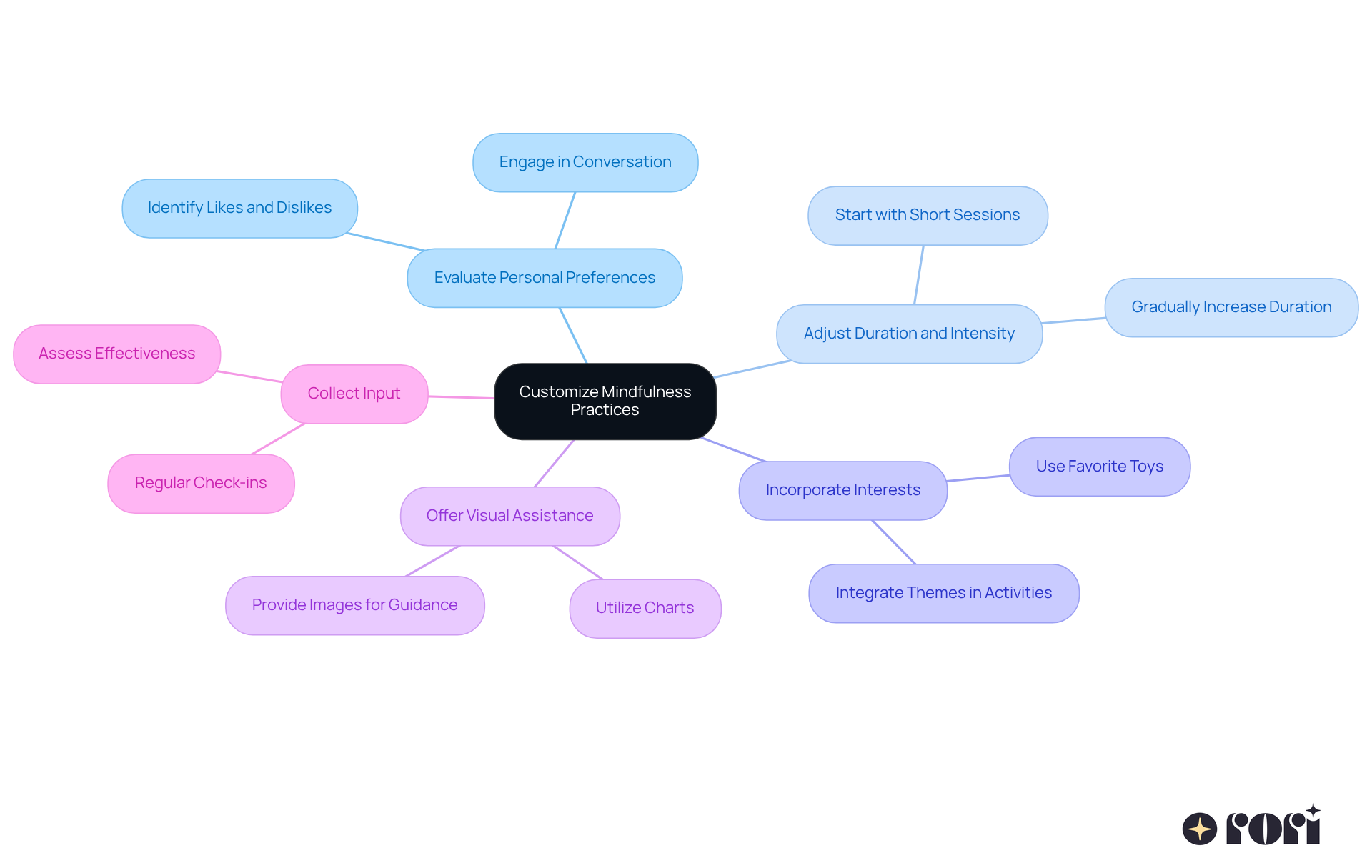
The center represents the main goal of customizing mindfulness. Each branch shows a different strategy, and the sub-branches provide additional details or examples. This layout helps you see how each strategy contributes to the overall goal.

Conclusion

Exploring how mindfulness can help in autism therapy shows just how much it can enhance the lives of children on the spectrum. By encouraging present-moment awareness, mindfulness gives autistic individuals the tools they need to manage their emotions, improve social interactions, and ease anxiety. It’s a wonderful addition to traditional therapies, offering a holistic way to support emotional and social growth.

Let’s look at some of the key benefits of mindfulness! It can lead to:

  1. Better emotion regulation
  2. Improved social skills
  3. Reduced anxiety
  4. Increased focus
  5. Stronger coping mechanisms

Each of these aspects plays a vital role in the well-being of children with autism. By using effective mindfulness techniques like mindful breathing, body scans, and guided imagery, caregivers and therapists can tailor strategies that truly resonate with each child’s unique needs.

Ultimately, embracing mindfulness in autism therapy empowers children to navigate their experiences more effectively while creating a nurturing environment for families. As research continues to reveal the positive impacts of mindfulness on autism symptoms, it’s clear: integrating these practices into therapy can make a real difference in the lives of autistic individuals. By prioritizing mindfulness, caregivers and therapists can help cultivate resilience, emotional awareness, and social connections, paving the way for a brighter future. Let’s explore this together!

Frequently Asked Questions

What is mindfulness?

Mindfulness is the practice of being aware of the present moment, including our thoughts, feelings, and surroundings.

How does mindfulness benefit children with autism?

Mindfulness helps children with autism manage their emotions better, enhances their social skills, and can reduce anxiety.

How can mindfulness assist a child feeling overwhelmed in social situations?

Mindfulness teaches children to take a step back, breathe, and focus on the present moment, which can help them navigate social experiences more effectively.

What does research say about mindfulness in autism therapy?

Research indicates that mindfulness can significantly improve social responsiveness and emotional regulation in children with autism, making it a valuable addition to traditional therapies.

Is mindfulness considered a legitimate tool for helping children with autism?

Yes, mindfulness is recognized as a supportive tool that can help children with autism thrive in various aspects of their lives.