Understanding Extinction Bursts in ABA Therapy
Extinction bursts are a crucial aspect of Applied Behavior Analysis (ABA) therapy that caregivers need to comprehend. These bursts involve an increase in challenging behavior when a child's previously reinforced behavior is no longer rewarded. It can range from harmful actions like head-banging to less harmful but still troubling behaviors such as unusual responses to the environment.
Extinction bursts are not a sign of regression but rather a part of the learning process, indicating that the child's behavior is being reshaped.
In this article, we will explore the concept of extinction bursts in ABA therapy and the significance of understanding them for parents and caregivers. We will delve into real-life examples and discuss the impact on a child's mental health and well-being. Additionally, we will examine the role of technology solutions and individualized approaches in providing high-quality ABA therapy.
Join us as we empower parents with valuable insights and expert advice, aiming to enhance their understanding of extinction bursts and equip them with the tools they need to support their children's development in ABA therapy.
Understanding the nuances of extinction bursts during Applied Behavior Analysis (ABA) therapy is crucial for caregivers. These bursts are an uptick in challenging behavior, often seen when a child's previously reinforced behavior is no longer rewarded. The behavior could range from harmful actions like head-banging to less harmful but still troubling behaviors such as unusual responses to the environment.
Extinction bursts are not a sign of regression; rather, they are part of the learning process, signaling that the child's behavior is being reshaped.
A case in point is of a child in France who experienced an extinction burst during ABA therapy in 2008. The behavior targeted by the therapy might have been deemed abnormal or problematic, yet the ultimate objective was to teach the child to interact differently with their surroundings. While the immediate goal is to decrease these challenging behaviors, it's essential to consider the on the child's mental health and well-being.
The National Institute of Mental Health's Research Domain Criteria offers insight into understanding these behaviors through a mechanistic lens, focusing on constructs like response selection and inhibitory control. These constructs are vital in decision-making, helping individuals discern relevant factors and suppress automatic responses to make more adaptive decisions.
As autism diagnoses increase, as noted by Dr. Jan Blacher, the diversity in the autism spectrum becomes more apparent, prompting the need for individualized approaches in ABA therapy. Meanwhile, professionals in the field, such as Board-Certified Behavior Analysts, emphasize the importance of technology solutions that enhance coordinated care, ensuring best practices and high-quality treatment.
Misconceptions about autistic individuals lacking social skills are being challenged, as it's becoming clearer that autistic people possess their unique set of social skills. The assertion that ABA is the only pathway to independence for autistic children is being scrutinized due to a lack of evidence supporting such claims. The conversation around ABA therapy continues to evolve, with a focus on individual needs and the avoidance of one-size-fits-all solutions.
An extinction burst can be likened to a last-ditch effort by an individual to continue a behavior that once garnered positive reinforcement but no longer does so in the realm of ABA therapy. When a child engaged in ABA therapy realizes that their established behavior is not yielding the expected rewards, they may temporarily escalate the behavior, a phenomenon known as an . This increase can manifest in heightened frequency, intensity, or even a prolonged duration of the behavior in question.
The rationale behind this is to reclaim the lost reinforcement, a concept that reflects broader cognitive control mechanisms such as response selection and inhibitory control. These mechanisms are crucial in decision-making processes where the goal is to prioritize relevant factors and suppress impulsive, potentially maladaptive responses.
In the case of children with autism, this process is delicate and multifaceted. Some behaviors that become targets for extinction may pose risks to the child or become burdensome for caregivers. For instance, a child might engage in physical self-harm or exhibit disruptive behaviors.
The primary objective within ABA therapy is to guide a child to adaptively engage with their environment, which sometimes involves reducing behaviors considered atypical. The challenge lies in balancing the reduction of such behaviors with the child's overall mental well-being, as there is a risk that, in pursuit of appearing more 'neurotypical,' the child could face adverse mental health outcomes.
Experts in the field, such as Board-Certified Behavior Analysts, have contributed significantly to refining ABA therapy practices. They leverage their extensive clinical experience to enhance technology solutions that support quality, coordinated care, and streamline review processes for both healthcare providers and plans. These advancements aim to facilitate the best possible outcomes for children undergoing ABA therapy.
Despite the intent to improve social integration and autonomy, it's important to recognize that the social skills of autistic individuals may differ from neurotypical patterns, yet are valid in their own right. Assertions that ABA therapy is the sole pathway for autistic children to thrive in mainstream settings, or to achieve autonomy, have been made without conclusive evidence. Hence, it is imperative to approach ABA therapy with a nuanced understanding of its potential effects on the spectrum of autistic behaviors and the individual's long-term mental health.
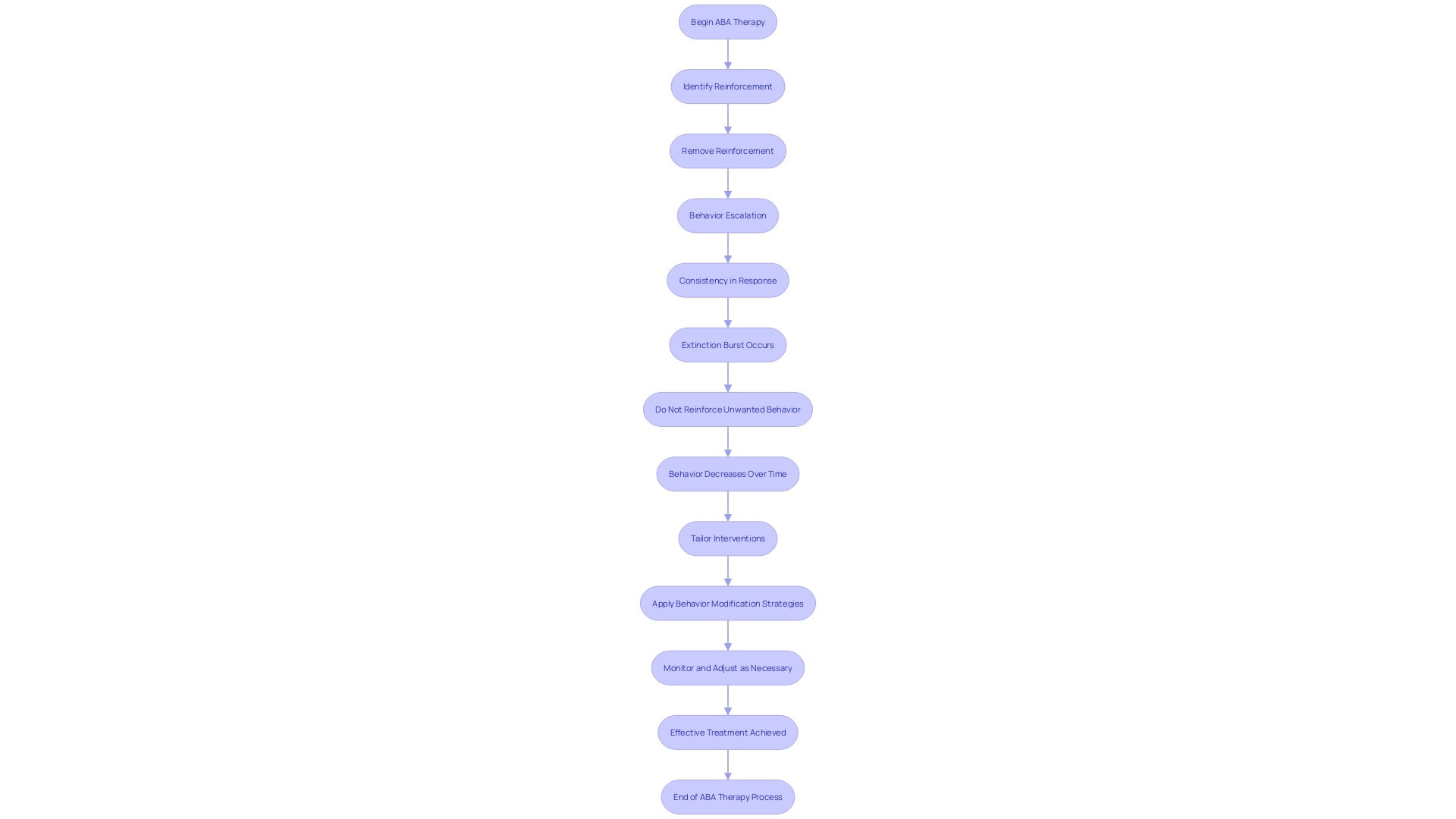
Consider a scenario where a child typically exhibits tantrums to obtain a toy. Historically, acquiescing to the tantrum by providing the toy would reinforce this behavior. However, within the framework of ABA therapy, the strategy shifts: the child's tantrums are met with no response.
As a result, the child may initially intensify their tantrums—a manifestation known as an extinction burst. This is an expected reaction when a behavior that was previously reinforced is no longer acknowledged.
The phenomenon of extinction bursts is not solely about tantrums for toys but can extend to a range of behaviors. In some cases, such as those described in a French child's ABA therapy from 2008, behaviors may pose harm to the child or create significant challenges for caregivers. These behaviors might include self-injury like head-banging or socially disruptive actions.
ABA therapy aims to modify the child's response to their environment, which, while it may lead to appearances of 'normalcy,' raises concerns among some adults with autism about the potential for burnout and subsequent mental health issues.
This potential for an extinction burst is for both practitioners and parents navigating ABA therapy. The goal is to achieve a balance in behavioral responses, allowing for cognitive control where the individual can make optimal decisions by assessing environmental cues and suppressing impulsive reactions. The latest guidelines from the Council of Autism Service Providers emphasize the importance of high-quality, properly implemented ABA therapy, reflecting the growing understanding and prevalence of autism spectrum disorder.
In light of the nuanced spectrum of autism and varied treatment responses, it is crucial for those involved in ABA therapy to be equipped with expansive clinical knowledge and technology solutions that support best practices and coordinated care. This approach ensures that each individual's needs are met with the highest quality of care and that treatment is tailored to their specific circumstances.
When reinforcement for a behavior is discontinued in ABA therapy, children might exhibit what is known as an . This is a phenomenon where the frequency or intensity of the behavior temporarily increases. This happens because the child is trying to comprehend why their behavior, which previously garnered a positive result or attention, is no longer effective.
It's not simply an act of defiance; it reflects the child's effort to make sense of the change in their environment and the rules that govern it.
The concept of extinction bursts is not limited to ABA therapy but is also observed in Functional Analytic Psychotherapy (FAP). FAP views behaviors as adaptations to an individual's history and context, which can become problematic in different environments. This perspective aligns with the understanding that an extinction burst is a logical reaction to changes in reinforcement patterns.
This understanding of behavior is critical, especially in light of the challenges faced by individuals with autism. For instance, research during the pandemic indicated that behavioral issues intensified for many with autism, demonstrating the need for tailored, function-based interventions. Techniques such as the Interview Informed Synthesized Functional Analysis (IISCA) have been developed to address these needs more precisely.
In practice, Board-Certified Behavior Analysts, with extensive experience in various treatment settings, emphasize the importance of creating and utilizing technology solutions to ensure best practices and high-quality, coordinated care. This approach helps in streamlining processes and effectively managing extinction bursts alongside other behavioral challenges.
Despite the difficulties that extinction bursts present, they are a natural part of the learning process when behaviors are being reshaped. Recognizing them as such allows therapists and caregivers to better support children through these challenging phases, facilitating progress and positive outcomes in ABA therapy.
Extinction bursts, a phenomenon in ABA therapy, present challenges that require a strategic approach. By remaining steadfast in the new behavior plan, caregivers can reinforce that past behaviors will no longer yield the same outcomes, thus maintaining consistency. Introducing alternative communication methods enables children to articulate their needs constructively, potentially reducing the occurrence of extinction bursts.
Supporting children through these challenging episodes involves providing reassurance—affirming that their needs are acknowledged and will be met, albeit through new, acceptable behaviors. The underscore the importance of quality implementation, which aligns with seeking expertise from ABA therapists who are equipped to navigate the complexities of extinction bursts.
The social model of disability reminds us that disability is not merely a medical issue but a social construct, and thus our responses should reflect an understanding of the child's identity and rights. This perspective is critical when addressing challenging behaviors in autistic children, ensuring that interventions are respectful of the child's sense of self and not solely focused on conformity to societal norms.
As the prevalence of autism increases, reflected in the rise from 1 in 2,500 to 1 in 36 over recent decades, so does the need for tailored interventions. The broad spectrum of autism necessitates an individualized approach to ABA therapy, recognizing that the same methods may not be suitable for all. Leveraging technology solutions can promote best practices and high-quality care, ensuring that children receive coordinated support that is mindful of their unique abilities and needs.
Understanding extinction bursts in ABA therapy is crucial for caregivers. These bursts signify a part of the learning process, indicating that a child's behavior is being reshaped. By comprehending the mechanisms behind extinction bursts and implementing individualized approaches, caregivers can provide high-quality support to children with autism.
Extinction bursts are a temporary increase in challenging behavior when a previously reinforced behavior is no longer rewarded. They are not a sign of regression but rather a natural part of the learning process. The National Institute of Mental Health's Research Domain Criteria highlights the constructs of response selection and inhibitory control, which are important in decision-making.
Individualized approaches are necessary in ABA therapy as autism diagnoses increase. Technology solutions and coordinated care play a vital role in providing effective treatment. It is important to recognize that autistic individuals possess their own unique social skills.
When responding to extinction bursts, caregivers should remain consistent in the new behavior plan and introduce alternative communication methods. Reassurance and acknowledgment of the child's needs are important in navigating these challenging episodes.
The social model of disability reminds us to approach interventions with respect for the child's identity and rights. Tailoring interventions to the individual is crucial, avoiding a one-size-fits-all approach.
In conclusion, understanding extinction bursts in ABA therapy is essential for caregivers. By recognizing their role in the learning process and implementing individualized approaches, caregivers can support children with autism effectively. Leveraging technology solutions and promoting coordinated care are key in providing high-quality ABA therapy for children on the autism spectrum.
What is an extinction burst in ABA therapy?
An extinction burst is a temporary increase in the frequency, intensity, or duration of a challenging behavior when a previously reinforced behavior is no longer rewarded within ABA therapy. It can be seen as an attempt by the individual to reclaim the lost reinforcement.
Why do extinction bursts occur?
Extinction bursts occur because the individual is trying to understand why a behavior that used to be positively reinforced and effective in getting their needs met is no longer working. It reflects their effort to make sense of the changes in their environment and the rules that now govern it.
Are extinction bursts considered a sign of regression in behavior?
No, extinction bursts are not a sign of regression. They are actually a part of the learning process and indicate that the child's behavior is being reshaped.
How should caregivers respond to an extinction burst?
Caregivers should remain consistent with the new behavior plan and not reinforce the past behavior. Introducing alternative communication methods and providing reassurance can help children express their needs in more acceptable ways and potentially reduce the occurrence of extinction bursts.
Why is it important to consider an individual's mental health when dealing with extinction bursts?
While the goal of ABA therapy is to guide adaptive engagement with the environment, there is a risk that the pursuit of 'neurotypical' behavior could negatively impact the child's mental health. Balancing behavior modification with the child's overall well-being is essential.
What is the role of Board-Certified Behavior Analysts in ABA therapy?
Board-Certified Behavior Analysts contribute to refining ABA therapy practices by using their clinical experience to enhance technology solutions that support quality, coordinated care and streamline the review process for healthcare providers and plans.
How does the diversity of the autism spectrum influence ABA therapy?
The diversity of the autism spectrum requires individualized approaches to ABA therapy, as one-size-fits-all solutions are not suitable. Each child's unique abilities and needs must be considered to ensure the highest quality of care.
Are social skills of autistic individuals considered in ABA therapy?
Yes, the social skills of autistic individuals are taken into account. Misconceptions about autistic individuals lacking social skills are being challenged, recognizing that they possess their own unique set of social skills.
What is the social model of disability, and how does it relate to ABA therapy?
The social model of disability suggests that disability is a social construct rather than just a medical issue. In the context of ABA therapy, it reminds us that interventions should respect the child's identity and rights, not just aim for conformity to societal norms.
Has the conversation around ABA therapy evolved in recent times?
Yes, the conversation around ABA therapy continues to evolve with a focus on individual needs, avoiding one-size-fits-all solutions, and considering the long-term impact on the child's mental health and well-being.