How Autism Care Specialists Promote Positive Communication Skills

Discover the vital role of an autism care specialist in fostering positive communication behaviors.

Introduction

Navigating the world of autism care can feel like a rollercoaster ride for families, especially when it comes to communication! These specialists are like guides, using personalized strategies to help kids not just talk, but also understand through gestures and visuals!

So, how can you, as a parent, join forces with these amazing specialists to boost your child's communication skills? Let’s dive into some key techniques and insights from these specialists that can help your child - and your family - shine in communication!

Define Autism Care and the Importance of Communication in ABA

Navigating autism care can feel like a daunting journey for many parents. It’s all about finding the right support to help your child develop essential life skills. Interaction plays a huge role in this process, highlighting the role of an autism care specialist in promoting positive communication behaviors, not just through words but also through gestures and other forms of communication. When considering the role of an autism care specialist in promoting positive communication behaviors, it’s all about helping kids express what they need and connect with others.

At Rori Care, we offer social skills group therapy where kids can learn and grow together, guided by our friendly therapists. This setting helps them build connections and improve their social interactions in a supportive environment. Plus, we know that caregiver education is key! By equipping families with the right knowledge and resources, we can help you support your child’s development effectively.

When we emphasize the role of an autism care specialist in promoting positive communication behaviors, we create a warm and welcoming space for kids to thrive. Remember, you’re not alone on this journey; we’re here to help you every step of the way!

Outline Responsibilities of Autism Care Specialists in Communication Development

Navigating the communication journey with a child on the autism spectrum can feel daunting for many parents. The role of an autism care specialist in promoting positive communication behaviors is vital in fostering communication development through several key responsibilities.

These specialists start by getting to know your child, understanding their unique strengths and challenges in communication. This initial evaluation is crucial for setting personalized goals that cater to your child's specific needs.

Next, they craft personalized plans that use proven techniques to help your child express themselves better. These methods might include visual supports, social stories, and modeling, all designed to make learning engaging and effective.

In therapy, they engage with your child, creating fun opportunities for them to practice speaking in everyday situations. This hands-on approach ensures that the strategies are not just learned but also applied in real life.

They team up with you, teachers, and other caregivers to ensure your child gets the same support everywhere they go. This collaboration is essential for reinforcing the skills learned in therapy and highlighting the role of an autism care specialist in promoting positive communication behaviors as part of a well-rounded support system.

Finally, they keep a close eye on your child's progress, making adjustments to their plan as needed to keep things on track. With the right support, you can help your child find their voice and thrive in their communication skills.
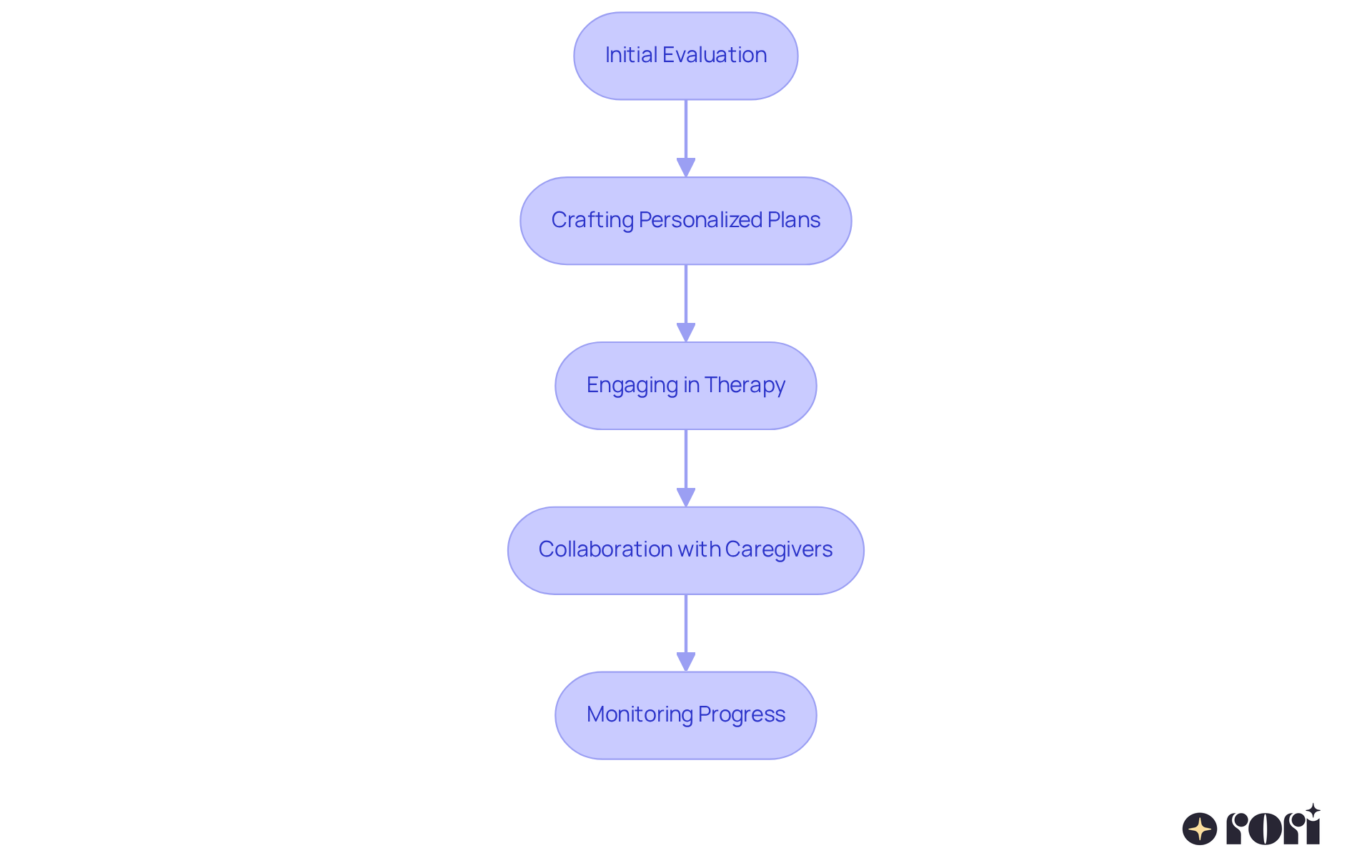
Each box represents a key responsibility of the autism care specialist. Follow the arrows to see how each step builds on the previous one, showing the comprehensive approach to supporting a child's communication journey.

Explore Techniques for Enhancing Positive Communication Behaviors

For parents, navigating the world of positive interaction behaviors for children with autism can feel overwhelming, but understanding the role of an autism care specialist in promoting positive communication behaviors can make it easier. Here are some friendly strategies that can make a real difference:

  1. Modeling: Show your child how to interact by using clear language, making eye contact, and using gestures. Kids learn a lot by watching, so being a good role model is key! When parents comprehend the role of an autism care specialist in promoting positive communication behaviors, they can create a supportive environment at home.
  2. Customized Positive Reinforcement: Celebrate your child's successes with rewards that resonate with them. This not only boosts their confidence but also encourages them to keep using their interaction skills. When parents know what motivates their kids, it makes a world of difference!
  3. Visual Supports: Use fun visual aids like picture cards or social stories to help your child express their thoughts and feelings. These tools can make communication easier and more effective. With a little training, parents can create these supports and use them in everyday conversations.
  4. Functional Communication Training (FCT): Let’s teach kids some fun ways to express what they want and need! This can help reduce frustration and make interactions smoother. When parents are equipped with FCT knowledge, they can better support their child's learning.
  5. Social Skills Training: Get your child involved in activities that promote social interactions, like role-playing or group games. These fun settings provide a safe space for kids to practice their skills. When parents join in, it reinforces learning and gives kids more chances to shine!
  6. Naturalistic Teaching: Look for opportunities to practice communication during daily activities. This approach helps kids learn in real-life situations, making it more effective. Parents can easily spot these moments throughout the day to encourage their child's growth.
  7. Family Involvement: Encourage everyone in the family to help reinforce learned behaviors outside of therapy. This support is crucial for long-term success! When parents are educated about the role of an autism care specialist in promoting positive communication behaviors, they feel more confident in their role.
  8. Measuring Success: Keep track of how often your child uses positive behaviors and how you reward them. This helps you see progress and adjust your strategies as needed. Understanding these principles allows parents to make informed decisions that positively impact their child's journey.

When parents actively engage in these strategies, they not only support their child's growth but also create a more harmonious family environment. Let’s explore this together and make a positive impact on our kids' lives!
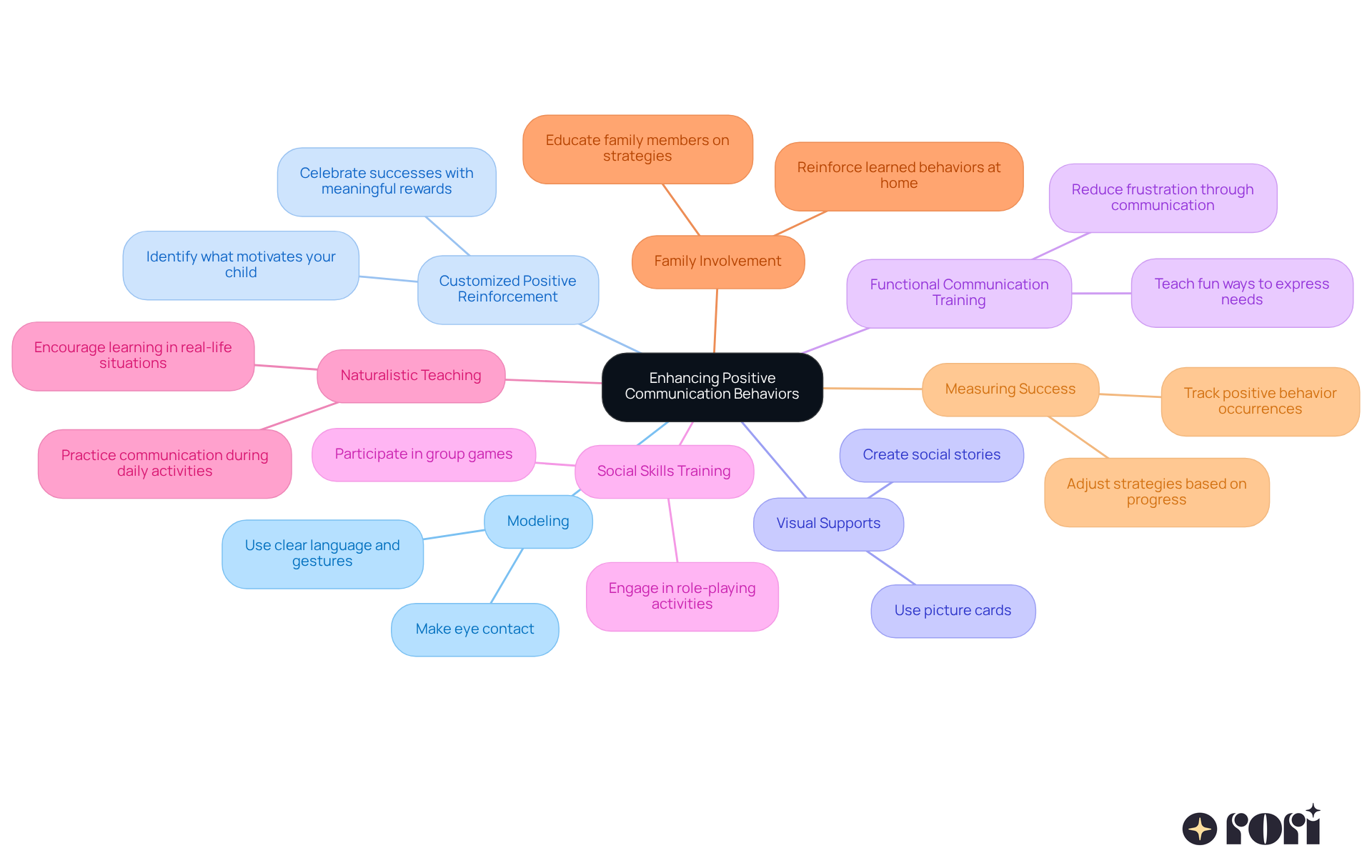
This mindmap shows various strategies to help improve communication for children with autism. Each branch represents a different technique, and the sub-branches give a quick overview of how to implement them. Follow the branches to see how each strategy connects to the overall goal of fostering positive interactions!

Engage Parents in the Communication Development Process

Have you ever wondered how your involvement can make a difference in your child's communication skills? Engaging with your child is so important, particularly in relation to the role of an autism care specialist in promoting positive communication behaviors for individuals with autism. Here are some friendly strategies to help you get involved in this vital process:

  1. Education: Let’s share some helpful tips on how you can engage with your child and boost their communication skills! Understanding interaction strategies and the role of an autism care specialist in promoting positive communication behaviors can empower you to actively participate in your child's growth.
  2. Instruction: Consider joining some fun instructional sessions that teach you how to apply interaction techniques at home. You might find it helpful to use visual aids or see demonstrations of behaviors that can make a big difference.
  3. Regular Communication: Keeping the lines of communication open with specialists is key! Regular chats about your child's progress and any challenges can help you understand the role of an autism care specialist in promoting positive communication behaviors, which can make you feel more connected and informed.
  4. Involvement in Therapy: If possible, why not join in on therapy sessions? Observing and practicing techniques alongside your child can significantly highlight the role of an autism care specialist in promoting positive communication behaviors while also providing an opportunity to learn and bond.
  5. Home Activities: There are so many easy activities you can do at home to strengthen interaction skills! Reading together, playing turn-taking games, or using daily scenarios to practice can be both fun and beneficial.
  6. Feedback and Support: Continuous feedback and support are essential. Celebrate those little victories and address any concerns together. This collaborative approach emphasizes the role of an autism care specialist in promoting positive communication behaviors, fostering a strong partnership between families and specialists.

When you get involved in your child's journey, it opens up a world of possibilities for both of you! Research shows that parent training greatly enhances youngsters' communication skills, and many parents feel more satisfied in their parenting experience. Remember, when parents step in, it’s not just the child who benefits; the whole family grows stronger together!
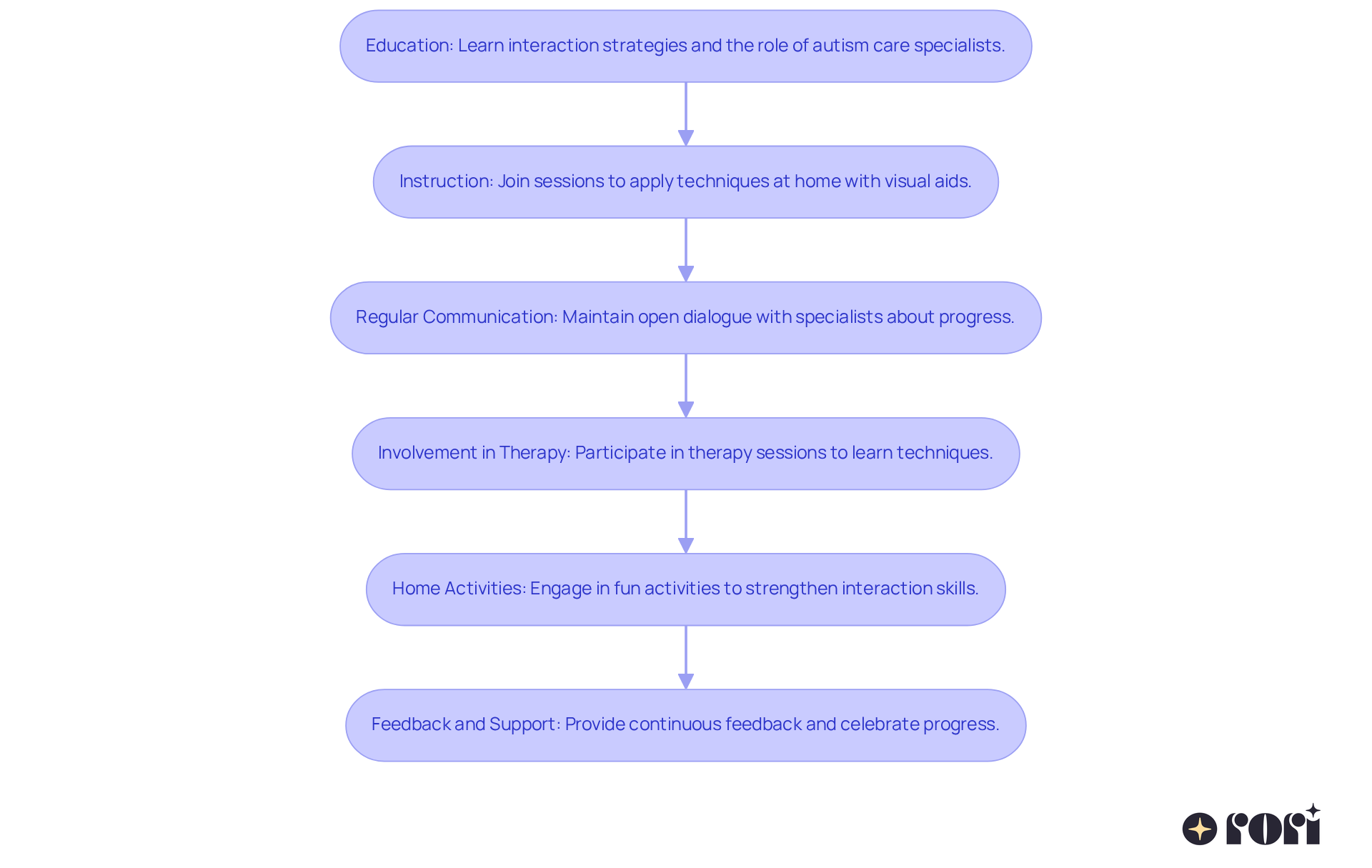
Each box represents a strategy for parents to help improve their child's communication skills. Follow the arrows to see how each strategy connects and builds on the others, creating a comprehensive approach to support your child's growth.

Conclusion

Navigating the world of autism care can feel overwhelming, especially when it comes to communication challenges. But fostering effective communication skills is essential for children to express their needs and connect with others. Autism care specialists are here to help, using tailored strategies that empower children and support families. Together, they create a nurturing environment where kids can truly thrive.

Key insights from this article highlight the diverse responsibilities of autism care specialists:

  1. They conduct personalized assessments.
  2. They design engaging communication plans.
  3. They involve parents every step of the way.

Techniques like modeling, positive reinforcement, and naturalistic teaching are vital in building those all-important communication skills. Plus, when families get involved, the support extends beyond therapy sessions, reinforcing learned behaviors in everyday life.

When it comes to autism care, positive communication skills are truly a game changer. By teaming up with autism care specialists and trying out some strategies at home, you can really make a difference in your child's communication journey. This collaborative approach not only fosters individual growth but also strengthens family bonds, creating a supportive network that enhances the overall development of children with autism. Embracing these practices opens doors to improved interactions and a brighter future for both children and their families.

Frequently Asked Questions

What is autism care?

Autism care involves providing support to help children with autism develop essential life skills, focusing on promoting positive communication behaviors through various forms of interaction.

Why is communication important in autism care?

Communication is crucial in autism care as it helps children express their needs and connect with others, facilitating their overall development and social interactions.

What role does an autism care specialist play?

An autism care specialist promotes positive communication behaviors in children with autism, helping them to express themselves effectively through words, gestures, and other forms of communication.

What services does Rori Care offer for children with autism?

Rori Care offers social skills group therapy, where children can learn and grow together under the guidance of friendly therapists, enhancing their social interactions in a supportive environment.

How does caregiver education contribute to autism care?

Caregiver education is key as it equips families with the necessary knowledge and resources to effectively support their child's development in autism care.

What kind of environment does Rori Care aim to create for children?

Rori Care aims to create a warm and welcoming space where children can thrive and feel supported in their communication and social skills development.

How can parents feel supported in their journey through autism care?

Parents can feel supported by knowing that they are not alone in their journey; Rori Care is there to assist them every step of the way.


List of Sources

  1. Define Autism Care and the Importance of Communication in ABA
    • The Numbers Don't Lie: Revealing Autism Therapy Statistics | Above and Beyond Therapy (https://abtaba.com/blog/autism-therapy-statistics)
    • 81 ABA Therapy Statistics You Need to Know - apricott ABA (https://apricott.com/resources/aba-therapy-statistics)
    • Success Rates of ABA Therapy - Up & Up ABA (https://upandupaba.com/faqs-resources/success-rates-of-aba-therapy)
    • Success Rates of ABA Therapy | Advanced Autism Services (https://advancedautism.com/post/success-rates-of-aba-therapy)
    • The effectiveness of applied behavior analysis program training on enhancing autistic children’s emotional-social skills - PMC (https://pmc.ncbi.nlm.nih.gov/articles/PMC11487924)
  2. Outline Responsibilities of Autism Care Specialists in Communication Development
    • The Numbers Don't Lie: Revealing Autism Therapy Statistics | Above and Beyond Therapy (https://abtaba.com/blog/autism-therapy-statistics)
    • Autism statistics and facts | Autism Speaks (https://autismspeaks.org/autism-statistics-asd)
    • goldstarrehab.com (https://goldstarrehab.com/parent-resources/autism-therapy-statistics)
    • Autism Therapy: Key Statistics (https://ambitionsaba.com/resources/autism-therapy-statistics)
  3. Explore Techniques for Enhancing Positive Communication Behaviors
    • kidsfirstservices.com (https://kidsfirstservices.com/first-insights/autism-quotes)
    • Predictive modeling of adaptive behavior trajectories in autism: insights from a clinical cohort study - Translational Psychiatry (https://nature.com/articles/s41398-025-03592-0)
    • The Key Role of Autism Positive Reinforcement | Above and Beyond Therapy (https://abtaba.com/blog/autism-positive-reinforcement)
    • The Impact of Positive Reinforcement on ABA Therapy Outcomes (https://crossrivertherapy.com/articles/the-impact-of-positive-reinforcement-on-aba-therapy-outcomes)
    • The Benefits of Positive Reinforcement for Kids with Autism (https://elevationautism.com/blog/the-effects-of-positive-reinforcement-on-toddlers-with-autism)
  4. Engage Parents in the Communication Development Process
    • 10 Heartfelt Autism Mom Quotes That Celebrate the Journey of Parenting – Rori Blog (https://rori.care/post/10-heartfelt-autism-mom-quotes-that-celebrate-the-journey-of-parenting)
    • New Research: Parent Involvement Helps Autistic Children with Communication (https://expressable.com/learning-center/autism/new-research-parent-involvement-helps-autistic-children-with-communication)
    • 8 Meaningful Autism Quotes for Parents' Support (https://graciousgrowthaba.com/8-meaningful-autism-quotes-for-parents-support)
    • 10 Autism Quotes For Special Needs Parents - Achieve Beyond (https://achievebeyondusa.com/10-autism-quotes-for-special-needs-parents)