Introduction
Understanding the pivotal role of parental involvement in Applied Behavior Analysis (ABA) therapy can truly make a difference in your child's success. Research shows that when parents actively engage in their child's therapeutic journey, the outcomes can be significantly better. But let’s be real - many caregivers face challenges that can make participation tough. So, how can you overcome these hurdles and ensure you’re a key player in your child's progress?
This guide is here to explore essential strategies for fostering active parental engagement. We’ll dive into how your involvement can lead to remarkable success in ABA therapy. Let’s explore this together!
Understand the Importance of Parental Involvement in ABA Therapy
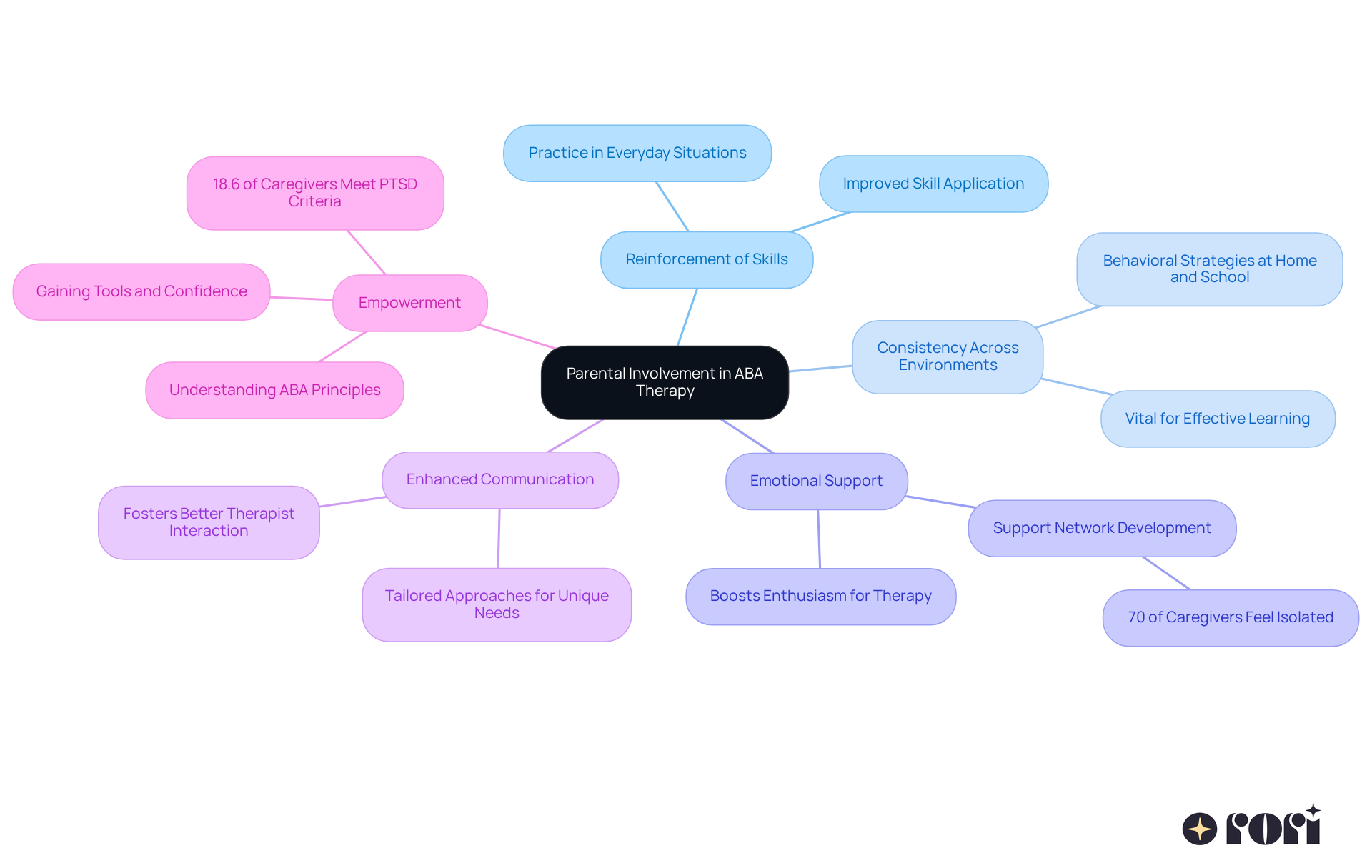
Understanding how is absolutely key, making a huge difference in outcomes for kids. Research shows how parental involvement drives success in ABA therapy, leading to significantly improved results when parents actively participate. Let’s dive into a few reasons why your involvement is so important:
- : You play a crucial role in helping your child strengthen the skills they learn during therapy. By practicing these skills in everyday situations, your child can really apply what they’ve learned.
- : When you’re actively engaged, it helps ensure that behavioral strategies are consistent at home and school. This consistency is vital for effective learning!
- : ! You provide the emotional backing and motivation that can really boost your child’s enthusiasm for therapy. It’s worth noting that nearly 70% of caregivers feel isolated and unsupported, highlighting the need for a strong support network that your involvement can help build.
- : Engaging with therapists fosters better communication, allowing for a more tailored approach to meet your child’s unique needs. As Ozonoff & Cathcart put it, "."
- Empowerment: Being part of the therapy process empowers you as a caregiver. You gain the effectively. Through education, you’ll understand ABA principles and strategies better, which helps you make informed decisions that positively impact your child’s progress. Just a heads up, though-, with 18.6% of caregivers of autistic individuals meeting criteria for a provisional diagnosis of PTSD.
Recognizing these points can help you see just how crucial your role is in the therapeutic process. It’s all about motivating you to get involved actively, demonstrating how parental involvement drives success in ABA therapy for your child. Let’s explore this together!
Implement Effective Strategies for Active Parental Engagement
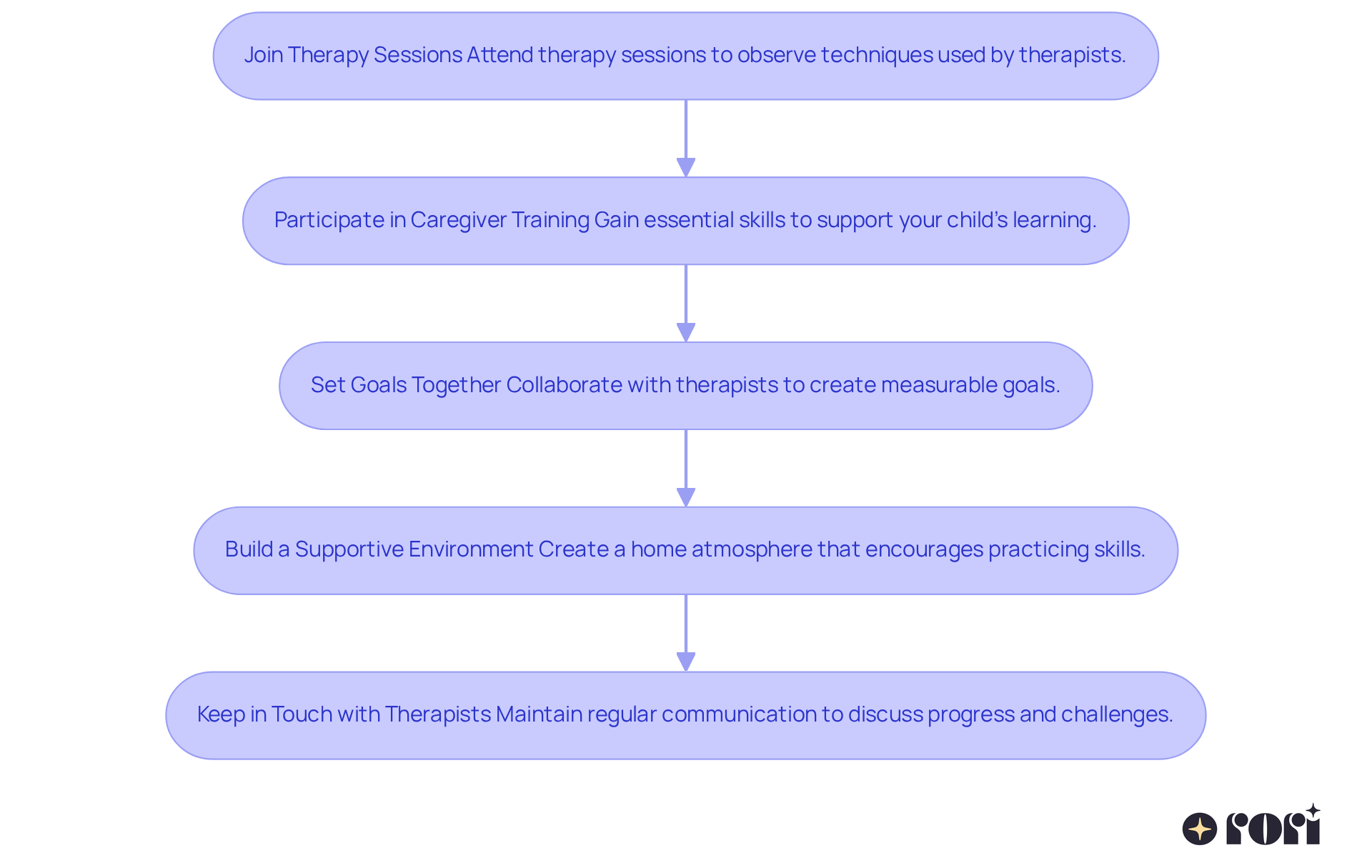
To really make the most of , parents can try out some effective strategies for getting involved:
- : Whenever you can, attend therapy sessions. Watching the techniques and strategies used by therapists firsthand helps you , reinforcing what your child learns in a familiar setting.
- Participate in : Many ABA programs offer training sessions just for parents. By joining these, you’ll gain essential skills to support your child’s learning and behavioral growth. Research shows that when caregivers learn ABA techniques, they feel more confident and effective in applying these strategies at home.
- : Work with therapists to create for your child. This teamwork ensures everyone is on the same page and striving for the same objectives. Plus, it fosters a sense of ownership and commitment from you, which can really boost the effectiveness of the treatment.
- : It’s important to create a home atmosphere that encourages practicing the skills learned in therapy. Think about establishing routines or using visual aids to remind your child of their goals. This helps reinforce learning and promotes consistency.
- : Regular communication with therapists is key. Discussing progress, challenges, and any needed adjustments to the treatment plan keeps you informed and strengthens the partnership between your family and the therapists, leading to better outcomes.
By embracing these strategies, you can actively engage in your child’s treatment, demonstrating how in ABA therapy and significantly enhancing the chances for positive developmental results. Let’s explore this together!
Foster Collaboration with Therapists for Optimal Outcomes
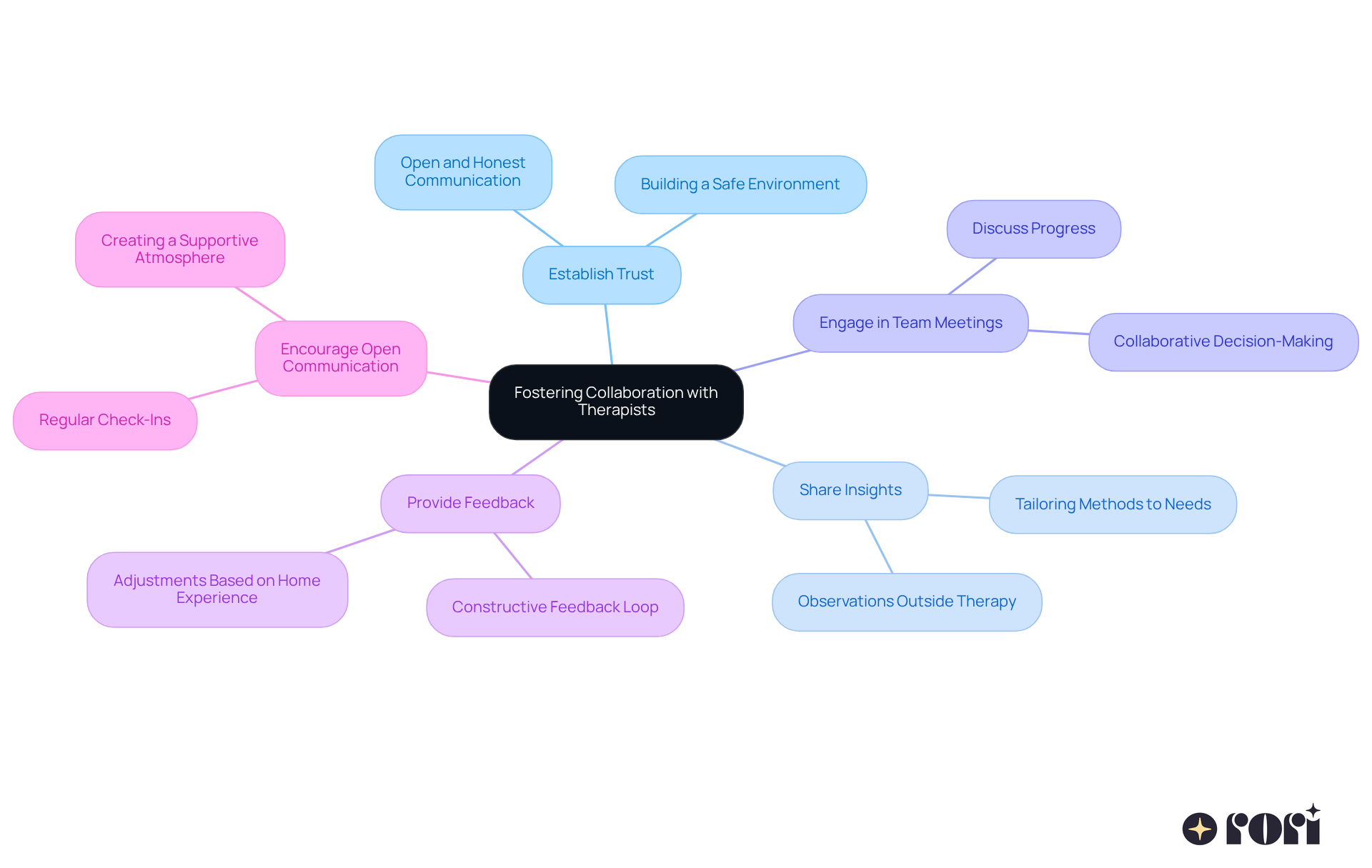
Cooperation between caregivers and therapists is essential for understanding how ! Here are some to :
- Establish Trust: is so important. Be open and honest about your concerns, expectations, and observations regarding your child’s behavior and progress. When trust is established, it helps young people , which is crucial for .
- : Don’t hesitate to share your observations about your child’s behavior outside of therapy sessions. This information can really help therapists tailor their methods to meet your child’s unique needs, making the treatment more effective overall.
- : Make it a point to attend scheduled meetings with the support team. Discussing your child’s progress and strategies together ensures that you’re informed and can actively participate in decision-making. This involvement really reinforces how parental involvement drives success in ABA therapy!
- Provide Feedback: Offering about what’s working at home and any challenges you’re facing is essential. This feedback loop helps everyone stay on the same page and allows for adjustments that align with your child’s evolving needs.
- : Create a space where questions and concerns can be discussed freely. Regular check-ins help maintain alignment between you and the therapists, fostering a supportive atmosphere that enhances trust and cooperation.
By actively participating in these strategies, you can understand how parental involvement drives success in ABA therapy, ensuring that your child’s treatment is consistent, comprehensive, and effective. Together, we can drive better outcomes in their ABA intervention journey! Let’s explore this together!
Encourage Skill Generalization and Independence Through Ongoing Support
To help ensure that the skills learned in truly stick and lead to greater independence, parents can try out these friendly strategies:
- Practice Abilities in Diverse Settings: Encourage your child to use their skills in different places - like at home, in the community, or at school. This variety helps them adapt their abilities to different situations, making it easier for them to operate independently.
- Make Use of : Look for everyday moments where your child can . For instance, if they’re learning to ask for help, create situations that encourage this, reinforcing its practical use in real life.
- : Start with simple tasks and gradually increase the complexity as your child gains confidence. This step-by-step approach nurtures their sense of autonomy.
- : Keep an eye on how well your child applies their skills outside of therapy sessions. Regular observation and data collection can help identify areas where they might need a little extra support. It’s worth noting that when suggested hours are fully completed with active caregiver involvement, 90% of youth show significant improvement! This highlights the importance of staying engaged. Plus, the behavior care engine updates intervention plans after each session based on progress, ensuring that treatment remains flexible and responsive to your child’s needs.
- : Involve other caregivers and teachers in the process to reinforce skills across different environments. Working together ensures that your child receives and practice opportunities, enhancing their learning experience. Caregivers who understand ABA principles can make informed choices that positively impact their child’s growth.
- Celebrate Achievements: Don’t forget to recognize and ! Positive reinforcement boosts motivation and encourages your child to keep practicing and refining their skills.
By actively and independence, you’re exemplifying how parental involvement drives success in ABA therapy for your child. This empowerment helps them thrive in various aspects of life. The knowledge and skills you gain through caregiver education not only boost your child’s confidence but also improve family dynamics and support their overall development. Let’s explore this journey together!

Conclusion
Parental involvement is truly a cornerstone of success in ABA therapy. It plays an essential role in enhancing outcomes for children. When parents actively participate in the therapeutic process, they not only reinforce the skills their children learn but also create a consistent and supportive environment that fosters growth and independence. This engagement is so important because it empowers caregivers with the knowledge and tools they need to make informed decisions that positively impact their child's development.
Throughout this guide, we’ve highlighted several key strategies to help parents engage effectively in ABA therapy. Whether it’s attending therapy sessions, participating in caregiver training, or collaborating with therapists, each approach significantly contributes to a child’s progress. Plus, encouraging skill generalization and independence through ongoing support ensures that the benefits of therapy extend beyond the clinical setting. This way, children can thrive in various aspects of their lives.
Ultimately, the message is clear: active parental involvement is vital for maximizing the success of ABA therapy. By embracing this responsibility, caregivers can create a nurturing environment that not only supports their child's development but also strengthens family dynamics. Engaging with therapists, sharing insights, and celebrating achievements together can lead to transformative outcomes. The journey may be challenging, but the potential for growth and success is immense when parents take an active role in their child's therapeutic journey. Let’s explore this together!
Frequently Asked Questions
Why is parental involvement important in ABA therapy?
Parental involvement is crucial in ABA therapy as it significantly improves outcomes for children. Research shows that when parents actively participate, it leads to better results in their child's therapy.
How does parental involvement reinforce skills learned in therapy?
Parents play a key role in helping their child practice and strengthen the skills learned during therapy by applying these skills in everyday situations.
What role does parental involvement play in ensuring consistency across environments?
Active parental engagement helps maintain consistency in behavioral strategies at home and school, which is vital for effective learning.
How does parental support impact a child's therapy experience?
Parental support provides emotional backing and motivation, which can enhance a child's enthusiasm for therapy. Many caregivers report feeling isolated, so parental involvement can help build a supportive network.
In what ways does engaging with therapists enhance communication?
Engaging with therapists fosters better communication, allowing for a more tailored approach to meet the unique needs of the child.
How does parental involvement empower caregivers?
Being involved in the therapy process empowers caregivers by equipping them with tools and confidence to support their child's development effectively. Education on ABA principles helps them make informed decisions impacting their child's progress.
What challenges might caregivers face in becoming involved in ABA therapy?
Stress can be a significant barrier to involvement, with a notable percentage of caregivers meeting criteria for provisional PTSD, which can hinder their ability to engage actively in the therapy process.
List of Sources
- Understand the Importance of Parental Involvement in ABA Therapy
- Autism Parenting Quotes (https://rainbowtherapy.org/autism-parenting-quotes)
- 10 Powerful Autism ABA Quotes That Inspire Change – Rori Blog (https://rori.care/post/10-powerful-autism-aba-quotes-that-inspire-change)
- 20 Inspiring Quotes About Autism Every Parent Must Read Today (https://circlecareservices.com/20-quotes-about-autism-and-parenting)
- The Power of Parent Involvement in ABA Therapy Outcomes: Maximizing Success Through Family Engagement - RightWay ABA (https://rightwayaba.com/parent-involvement-in-aba-therapy-outcomes)
- Parents: We Need You. (https://iloveaba.com/2011/08/importance-of-parent-education.html)
- Implement Effective Strategies for Active Parental Engagement
- 20 Inspiring Quotes About Autism Every Parent Must Read Today (https://circlecareservices.com/20-quotes-about-autism-and-parenting)
- Effective parent training techniques in ABA (https://mastermindbehavior.com/post/how-parent-involvement-enhances-aba-therapy-outcomes)
- ABA Therapy for Autism Family Support (https://goldenstepsaba.com/resources/aba-therapy-for-autism-family-support)
- What Parents Can Do to Support Center-Based ABA Therapy (https://crossrivertherapy.com/articles/what-parents-can-do-to-support-center-based-aba-therapy)
- Foster Collaboration with Therapists for Optimal Outcomes
- The Importance of Building Trust Between Child and Therapist - Kids First (https://kidsfirstservices.com/first-insights/the-importance-of-building-trust-between-child-and-therapist)
- Effects of Parent-Implemented Interventions on Outcomes of Children with Autism: A Meta-Analysis - PMC (https://pmc.ncbi.nlm.nih.gov/articles/PMC10539413)
- The Importance of Trust in ABA Therapy Relationships (https://yellowbusaba.com/post/the-importance-of-trust-in-aba-therapy-relationships)
- The Role of Parent Training in Supporting ABA Therapy Success | Discovery ABA (https://discoveryaba.com/aba-therapy/the-role-of-parent-training-in-supporting-aba-therapy-success)
- kidsfirstservices.com (https://kidsfirstservices.com/first-insights/the-importance-of-clear-communication-in-parent-therapist-relationships)
- Encourage Skill Generalization and Independence Through Ongoing Support
- gratefulcareaba.com (https://gratefulcareaba.com/blog/inspirational-quotes-about-autism)
- mastermindbehavior.com (https://mastermindbehavior.com/post/how-to-promote-generalization-of-skills-across-settings-with-aba-therapy)
- 10 Inspiring Autism Awareness Quotes to Foster Understanding – Rori Blog (https://rori.care/post/10-inspiring-autism-awareness-quotes-to-foster-understanding)
- Celebrating Neurodiversity: Inspiring Words on Autism | Step Ahead ABA (https://stepaheadaba.com/blog/autism-quotes)