Recognizing the signs of Autism Spectrum Disorder (ASD) in children is such an important step for parents who want to support their little ones. With autism diagnoses on the rise, understanding these signs can really empower caregivers to take action, making sure kids get the help they need to thrive.
But many parents might wonder: what specific behaviors should they be on the lookout for? And how can they navigate the complexities of early intervention effectively? Let’s explore this together!
In this guide, we’ll dive into the key indicators of autism, sharing insights and resources to help you on this vital journey. You’re not alone in this - we’re here to help you every step of the way!
Autism Spectrum Disorder (ASD) is a complex neurodevelopmental condition that can present unique challenges in social interaction, communication, and behavior. At Rori Care, our dedicated clinical leadership team is made up of skilled and caring professionals who truly understand and support neurodiversity. Every day, we strive to help young individuals achieve their fullest potential.
Understanding ASD means recognizing that it shows up differently in each person, with varying levels of severity. Here are some key aspects to consider:
Getting familiar with these traits can help you understand how to spot signs of autism in your child and recognize the broader context of developmental disorders. At Rori Care, we empower caregivers with ABA principles and strategies to support their children's behavioral goals through active involvement and data collection. We’re here to ensure that families receive the expertise and compassion they need to navigate challenges and foster growth.
Let’s explore this journey together! Your insights and experiences matter, and we encourage you to or questions with us.
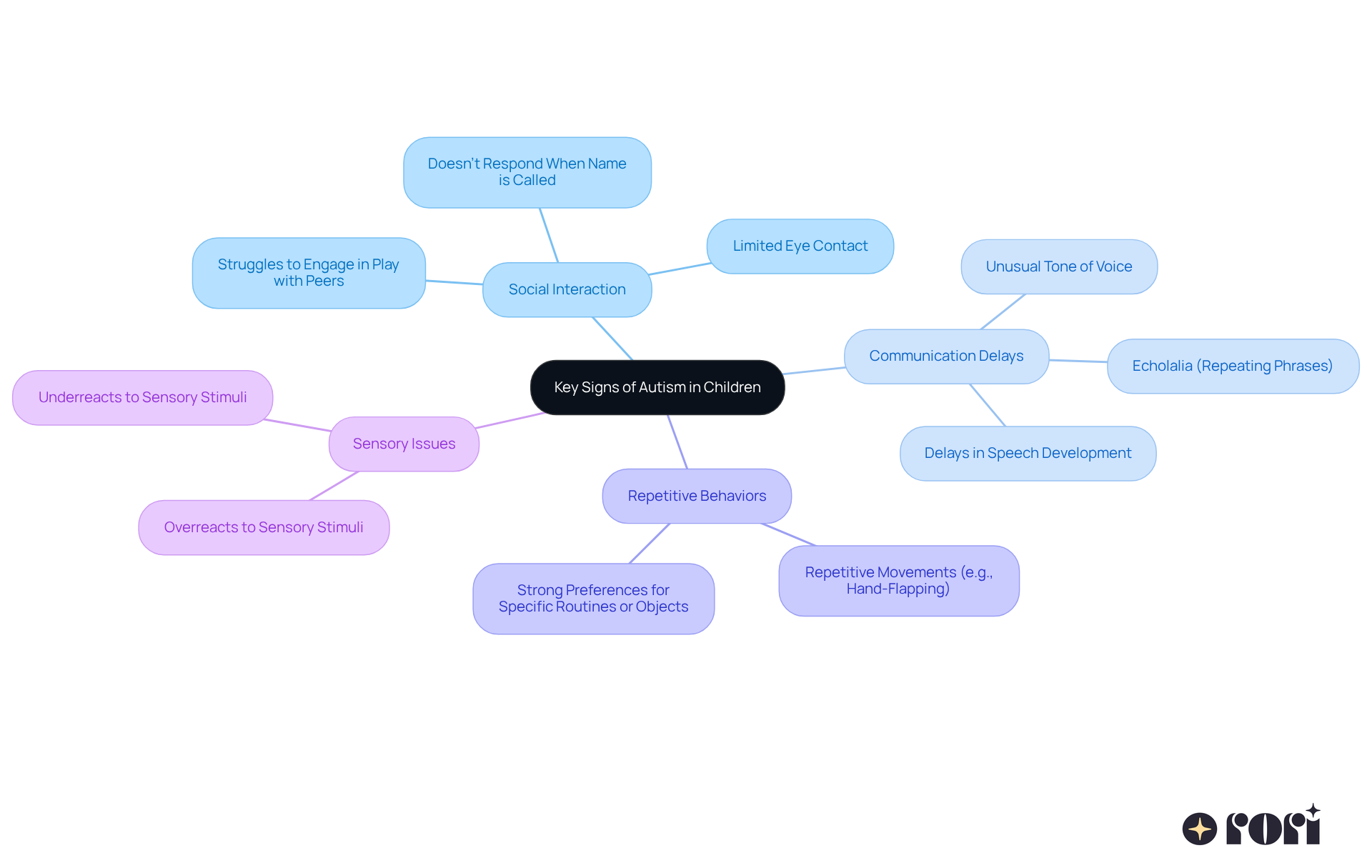
It is crucial to understand how to spot signs of autism in your child early in order to get the right support. Did you know that autism diagnoses have surged by about 300% over the last 20 years? That’s why being aware of how to spot signs of autism in your child is more important than ever! Here are some key indicators to keep an eye on:
If you notice any of these signs, it’s a good idea to jot down your concerns and chat with a healthcare professional. Early diagnosis and intervention can lead to better support and outcomes for your child. In fact, significant progress is seen in 90% of children when they receive the recommended hours of Applied Behavior Analysis (ABA) therapy, especially with active caregiver involvement. Plus, ABA therapy is the only scientifically validated treatment for autism that’s covered by insurance. Rori Care offers free consultations with Board Certified Behavior Analysts to help families navigate these challenges and implement ABA therapy, which is a flexible, patient-centered approach with proven success for treating developmental disorders. As Christine Ladd-Acosta, PhD, wisely points out, "We need to understand who in our community has this condition to better grasp their needs." Let’s explore this together!
If you think your child might have autism, it’s really important to understand how to spot signs of autism in your child and take action quickly. Here’s a friendly guide on what to do next:
Remember, ASD affects about 1 in 36 kids in the U.S., and only 47% of those children get early support services. Getting help quickly can really enhance your child’s growth, so don’t hesitate to reach out for support. We’re here to help you every step of the way!

There are so many resources out there to support families of children with autism, and they can really help you navigate this journey:
By tapping into these resources, you can empower both yourself and your child. Remember, you’re not alone on this journey, and there’s plenty of support out there to help you thrive!

Recognizing the signs of Autism Spectrum Disorder (ASD) in children is such an important step for parents who want the best for their little ones. By understanding the unique traits of autism-like challenges in social communication, repetitive behaviors, and sensory sensitivities, caregivers can spot potential concerns early on. This awareness opens the door to timely intervention, which is key to helping children thrive and reach their fullest potential.
Keep an eye out for some key indicators, such as:
It’s crucial to document your observations and chat with healthcare professionals for a thorough evaluation. Early diagnosis and evidence-based interventions, like Applied Behavior Analysis (ABA) therapy, can really make a difference in a child's development and overall quality of life. The statistics are eye-opening, showing that many children still lack the support they need.
Ultimately, the journey of understanding and supporting a child with autism can be navigated with the right resources and community support. Parents are encouraged to seek out educational websites, support groups, and therapy services tailored to their child's needs. By taking proactive steps and using available tools, caregivers can empower themselves and their children, ensuring they’re not alone in this journey. Embracing early intervention not only benefits the child but also enriches the entire family, creating a nurturing environment where every child can truly thrive. Let’s explore this together!
What is Autism Spectrum Disorder (ASD)?
Autism Spectrum Disorder (ASD) is a complex neurodevelopmental condition characterized by unique challenges in social interaction, communication, and behavior.
How does ASD present in individuals?
ASD shows up differently in each person, with varying levels of severity. This can include challenges in social communication, repetitive actions, and sensory sensitivities.
What are some social communication challenges faced by children with ASD?
Many children with autism struggle to pick up on social cues, maintain conversations, or engage in back-and-forth interactions.
What strategies does Rori Care use to improve social communication skills?
Rori Care emphasizes the use of Applied Behavior Analysis (ABA) strategies to help enhance social communication skills in children with ASD.
What are repetitive actions in children with ASD?
Repetitive actions can include movements like hand-flapping or rocking, as well as a strong insistence on sticking to routines.
How does Rori Care address repetitive behaviors?
Rori Care works closely with families to create personalized approaches that effectively address repetitive behaviors in children with ASD.
What are sensory sensitivities in children with ASD?
Sensory sensitivities refer to heightened or reduced responses to sensory stimuli, which can impact a child's comfort in various environments.
How does Rori Care assist with sensory sensitivities?
Rori Care provides caregivers with techniques to create nurturing spaces that cater to their children's sensory needs.
How does Rori Care support caregivers of children with ASD?
Rori Care empowers caregivers with ABA principles and strategies to support their children's behavioral goals through active involvement and data collection.
What is the mission of Rori Care regarding families and children with ASD?
Rori Care strives to ensure that families receive the expertise and compassion they need to navigate challenges and foster growth in children with ASD.