Introduction
Understanding the challenges of sleep for autistic children can feel overwhelming, can’t it? Many parents find themselves searching for effective solutions. That’s where Applied Behavior Analysis (ABA) comes in! Not only does it help tackle those pesky sleep disturbances, but it also encourages healthier routines that can boost overall well-being.
But here’s the big question: how can parents and caregivers navigate the complexities of ABA to create a restful environment that meets their child’s unique needs? This article is here to help! We’ll explore practical strategies and collaborative approaches that empower families to turn bedtime into a peaceful experience. Let’s dive in together!
Understand ABA Therapy and Its Role in Sleep Improvement
Applied Behavior Analysis (ABA) is a therapeutic approach that helps us understand and change behavior through systematic interventions. When it comes to implementing in autistic children, the therapy focuses on creating positive rest patterns and routines. Let’s break down some key components:
- Behavior Modification: ABA techniques use reinforcement strategies to encourage good behaviors, like sticking to bedtime schedules and staying in bed throughout the night. This is super important because research shows that up to 80% of individuals with autism experience sleep disturbances, which can lead to more behavioral challenges.
- Data-Driven Approach: ABA relies on careful data collection to assess how well interventions are working. This helps therapists look at rest patterns and make informed adjustments tailored to each child’s unique responses. At Rori Care, our behavior care engine updates intervention and skill acquisition plans after each session based on progress, ensuring we’re always evaluating and refining treatment plans.
- Individualized Treatment Plans: Every child faces different rest challenges, so ABA therapy emphasizes personalized treatment plans. These plans are crafted from thorough evaluations, including Functional Behavior Assessments (FBAs), which help pinpoint specific behaviors that disrupt rest. Each behavioral plan is designed to fit the unique needs, strengths, challenges, and goals of the child, ensuring they receive the best care possible.
- Measurable Goals: We set clear, measurable goals for behavior change and skill development, giving everyone a transparent way to track progress. This makes it easier for both therapists and caregivers to see improvements.
- Parent Training: Involving parents is key! Training equips them with strategies to reinforce healthy rest practices at home, boosting the effectiveness of ABA interventions. By empowering caregivers with ABA principles, we help them support their children’s behavioral goals through knowledge, strategy alignment, and data collection.
As one behavioral therapist put it, "To foster healthy rest patterns for youngsters with autism, consistency is essential." By understanding and applying these principles, parents and caregivers can effectively engage in implementing ABA techniques to improve sleep patterns in autistic children, ultimately enhancing their overall well-being. Let’s explore this together!

Apply Specific ABA Techniques for Sleep Challenges
Dealing with sleep challenges in autistic children can be tough, but implementing ABA techniques to improve sleep patterns in autistic children can be very effective! Let’s explore this together:
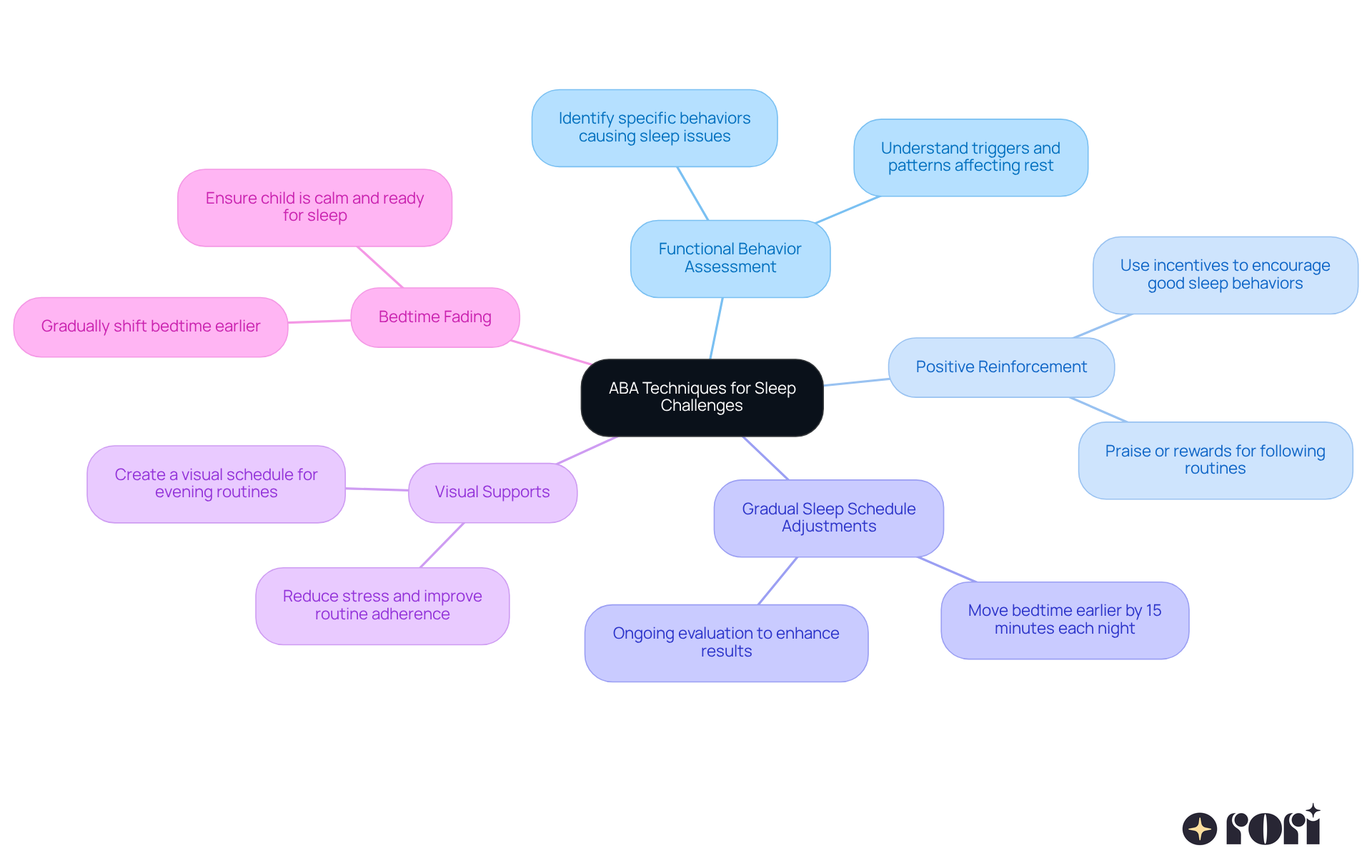
- Functional Behavior Assessment (FBA): Start by identifying the specific behaviors that might be causing sleep issues. This evaluation is key to understanding the triggers and patterns that affect rest. It helps you create targeted interventions that fit perfectly with Rori Care's personalized planning approach.
- Positive Reinforcement: Who doesn’t love a little reward? Using incentives to encourage good sleep behaviors can work wonders. For example, offering praise or small rewards when your child stays in bed or follows the evening routine can boost their motivation and adherence. It’s all about those evidence-supported methods!
- Gradual Sleep Schedule Adjustments: Try moving your child’s bedtime earlier by just 15 minutes each night until you reach the desired hour. This gentle approach helps them adjust without feeling overwhelmed. Plus, ongoing evaluation can really enhance the results, just like Rori Care’s program development service suggests.
- Visual Supports: Creating a visual schedule for the evening routine can be a game-changer. It helps your child know what to expect, reducing the stress that often comes with bedtime. Visual supports are fantastic for implementing ABA techniques to improve sleep patterns in autistic children, facilitating better routine adherence for caregivers.
- Bedtime Fading: This technique involves gradually shifting bedtime earlier while ensuring your child is calm and ready for sleep. It strengthens the connection between bedtime and relaxation, making the transition smoother. The qualified behavior analysts at Rori Care are here to help design these individualized plans for behavior change and skill acquisition.
These strategies can be tailored to fit each child’s unique needs, creating a more restful environment for everyone. Remember, as Temple Grandin beautifully said, 'I am different, not less.' It’s so important to recognize and adapt to each child’s individual requirements.
We’re here to !
Establish Consistent Routines and Sensory-Friendly Environments
Creating a calming nighttime routine can really help autistic kids get better rest. Let’s explore some effective strategies together:
- Consistent Bedtime Routine: Think of a soothing sequence of activities before bed-like reading a favorite book, enjoying a warm bath, or practicing some relaxation techniques. Keeping this routine consistent signals to your little one that it’s time to wind down, making the transition to sleep smoother. You might find it helpful to focus on to improve sleep patterns in autistic children, such as prompting and positive reinforcement, to encourage them to engage in this routine.
- Sensory-Friendly Bedroom: Design the bedroom to minimize sensory overload. Blackout curtains can block out light, while soft bedding and calming colors create a cozy atmosphere. A quiet room, free from distractions, sets the stage for peaceful sleep. This approach aligns with the goal of implementing ABA techniques to improve sleep patterns in autistic children by catering to your child’s sensory needs.
- Limit Screen Time: Try to reduce screen exposure for at least an hour before bedtime. The blue light from screens can mess with melatonin production and disrupt sleep patterns.
- Soothing Activities: Incorporate calming activities into the evening routine, like deep breathing exercises or gentle stretching. These can help your child relax and prepare for sleep. Plus, offering positive feedback can motivate them to participate regularly.
- Visual Timers: Using visual timers can help your child understand how much time is left before sleep, giving them a sense of control and predictability.
- Track Rest Patterns: Keeping a rest log can help you monitor how well these strategies are working and any changes in sleep quality. This way, you can adjust your approach as needed, which is key to maximizing the impact of your efforts.
- Positive Reinforcement: Encourage your child to stick to bedtime routines with positive reinforcement. Reward them for following bedtime guidelines and staying in bed throughout the night.
By implementing these strategies, you can create an environment that promotes restful sleep, making it easier for your child to settle down at night. Engaging in these practices not only supports your child’s development but also empowers you with the knowledge and skills to foster positive outcomes. We’re here to help you every step of the way!

Engage Parents and Collaborate with Professionals for Success
Cooperation between parents and experts is crucial when implementing ABA techniques to improve sleep patterns in autistic children. Let’s explore some ways to foster this collaboration:
- Parent Training: How about engaging in training sessions with ABA professionals at Rori Care? This way, you can learn how to implement techniques right at home! It really empowers you to take an active role in your child's rest interventions, making it easier to provide the right support.
- Regular Communication: Keeping those lines of communication open with therapists is key! Discussing progress, challenges, and any adjustments needed in the rest plan helps everyone stay on the same page. Regular updates promote informed decision-making, which is so crucial.
- Set Common Goals: Collaborating with experts to define clear, attainable objectives for rest enhancement is a great step. This shared vision aligns efforts and reinforces the importance of consistency in achieving those behavioral outcomes.
- Utilize Resources: Don’t forget to take advantage of the resources provided by ABA professionals! Visual aids, schedules, and behavioral charts can really support the implementation of rest strategies at home. These tools complement professional interventions and help maintain consistency.
- Feedback Loop: Establishing a feedback loop is essential! Share your insights about your child’s rest patterns and behaviors. This way, professionals can make informed modifications to the treatment plan. Your active involvement is key to based on progress reports.
By actively engaging in this process and collaborating with the wonderful professionals at Rori Care, you can significantly enhance the effectiveness of implementing ABA techniques to improve sleep patterns in autistic children. We’re here to help you every step of the way!

Conclusion
Helping your autistic child get better sleep can feel like a daunting task, but implementing ABA techniques can truly make a difference! This approach focuses on personalized care and structured routines, which are so important for your little one. By using behavior modification, data-driven strategies, and involving parents, we can tackle sleep disturbances and create a more peaceful environment for our children.
Throughout this guide, we’ve highlighted some key strategies that can really help, like:
- Functional Behavior Assessments
- Positive reinforcement
- Calming bedtime routines
Creating sensory-friendly spaces and keeping the lines of communication open with professionals empowers families to take an active role in their child’s sleep journey. It’s all about working together with ABA specialists to achieve the best outcomes for our kids.
So, as we wrap up, remember that the journey to better sleep for autistic children is a shared responsibility. It takes commitment, understanding, and teamwork. By embracing ABA therapy principles and getting involved in the process, you can make a significant impact on your child’s sleep patterns. Not only does this enhance their quality of life, but it also brings harmony to your family dynamic. Let’s take that first step together toward a brighter, more restful future for both your child and your family!
Frequently Asked Questions
What is ABA therapy and how does it relate to sleep improvement?
Applied Behavior Analysis (ABA) is a therapeutic approach that aims to understand and change behavior through systematic interventions. In the context of sleep improvement for autistic children, ABA focuses on establishing positive rest patterns and routines.
How does ABA therapy modify behavior to improve sleep?
ABA techniques utilize reinforcement strategies to encourage positive behaviors, such as adhering to bedtime schedules and remaining in bed throughout the night. This is crucial because a significant percentage of individuals with autism experience sleep disturbances.
What is the role of data in ABA therapy for sleep improvement?
ABA relies on careful data collection to evaluate the effectiveness of interventions. This data helps therapists assess rest patterns and make informed adjustments to treatment plans tailored to each child's unique responses.
How are treatment plans developed in ABA therapy?
Treatment plans in ABA therapy are individualized and based on thorough evaluations, including Functional Behavior Assessments (FBAs). These assessments identify specific behaviors that disrupt sleep, allowing for personalized plans that cater to each child's needs, strengths, challenges, and goals.
What are measurable goals in ABA therapy?
Measurable goals in ABA therapy are clear objectives set for behavior change and skill development. These goals provide a transparent way to track progress, making it easier for therapists and caregivers to monitor improvements.
Why is parent training important in ABA therapy?
Parent training is crucial because it equips caregivers with strategies to reinforce healthy sleep practices at home. This involvement enhances the effectiveness of ABA interventions by empowering parents with knowledge and tools to support their children's behavioral goals.
What is the overall aim of applying ABA techniques for sleep improvement in autistic children?
The overall aim is to foster healthy rest patterns for autistic children, which can lead to improved well-being. By implementing ABA principles consistently, parents and caregivers can effectively enhance their children's sleep quality and overall behavior.