Improve Results with Data-Driven ABA Therapy for Your Child

Enhance your child's progress with personalized, data-driven ABA therapy plans for better outcomes.

Introduction

Navigating the world of Applied Behavior Analysis (ABA) therapy can feel overwhelming for many parents. But guess what? Embracing a data-driven approach can make this journey a whole lot easier and even boost the effectiveness of interventions tailored just for your child's unique needs. As families strive to improve outcomes, a key question pops up: how can we use data to craft personalized therapy plans that grow and change alongside your child's progress?

In this article, we’ll dive into the core principles of ABA therapy, explore why data is so crucial for customizing treatment, and discuss the importance of collaborative communication in achieving the best results. Let’s explore this together!

Understand the Fundamentals of ABA Therapy

Supporting your child through ABA therapy can feel overwhelming at times, but understanding its foundational principles can make a world of difference. ABA, or Applied Behavior Analysis, is a scientific method that focuses on understanding and enhancing specific actions. Let’s break it down together:

  1. Reinforcement: This is a core principle of ABA. Think of positive reinforcement as a way to reward your child for their efforts. For example, when your child completes a task, a simple praise or a small reward can motivate them to do it again. It’s all about encouraging those preferred actions!

  2. Conduct Modification: ABA aims to change behaviors by identifying what triggers them. By understanding what prompts certain actions, you can develop strategies to encourage positive behaviors and reduce the negative ones. It’s like being a detective in your child’s world!

  3. Personalized Treatment Plans: Every child is unique, and that’s why improving results with data-driven ABA therapy plans is essential to tailor therapy to their specific needs. Assessments are conducted to create a personalized plan that addresses their challenges and goals. This ensures that your family member receives care that truly fits them, focusing on their strengths and aspirations.

  4. The evidence-based method of ABA focuses on gathering information to track progress, which is essential for improving results with data-driven ABA therapy plans. Our clinical team documents sessions, ensuring that everything is available for your child without interrupting their experience. All data is securely stored and anonymized, so you can rest easy knowing that interventions are effective and can be adjusted as needed.

By grasping these basics, you’ll feel more equipped to engage in your child’s treatment and advocate for their needs. Remember, you’re not alone in this journey! Let’s explore this together!
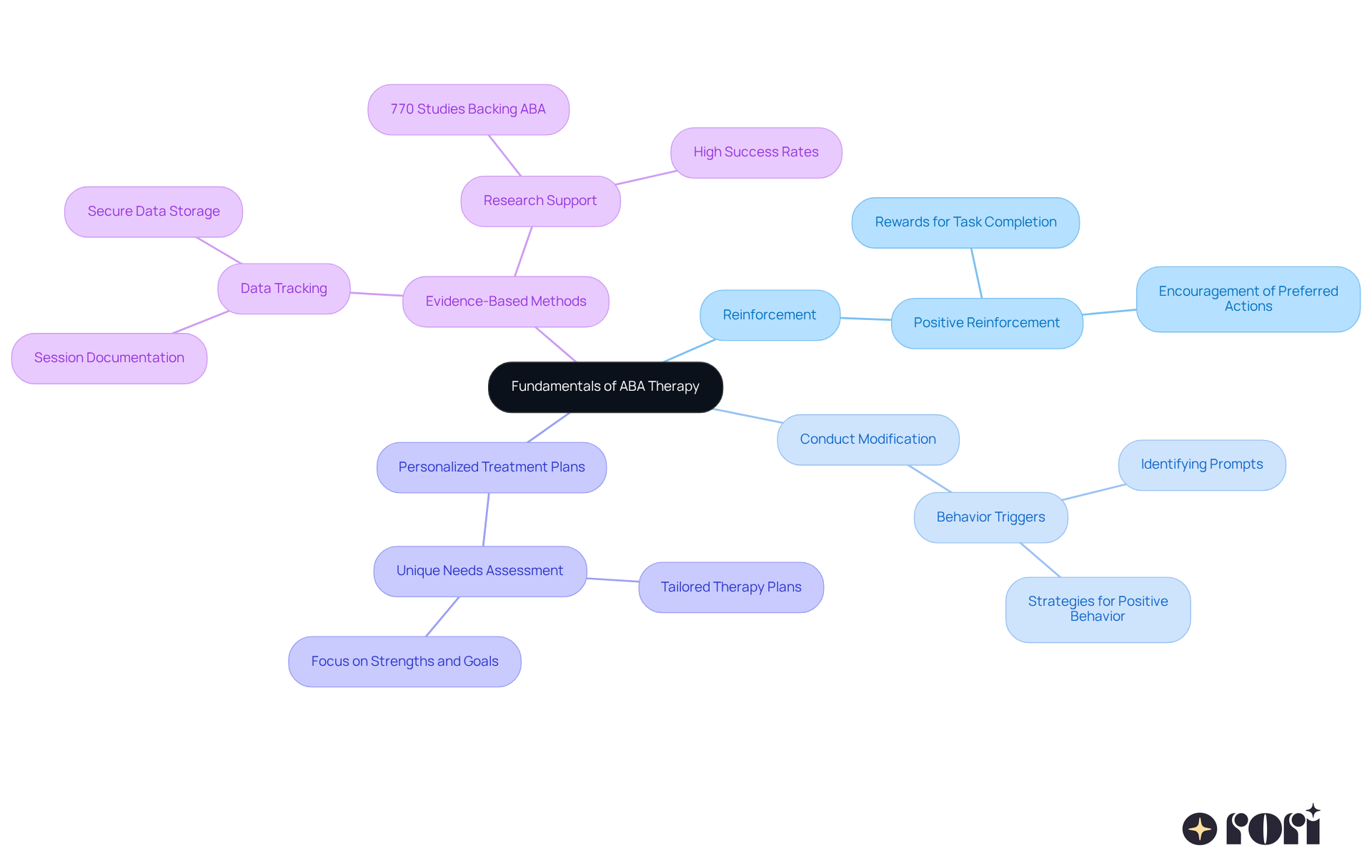
The center represents the main topic of ABA therapy, while the branches show the key principles that support it. Each branch can be explored to understand how it contributes to the overall understanding of ABA.

Utilize Data for Personalized Therapy Customization

Data is essential for improving results with data-driven aba therapy plans that are customized to fit your loved one's unique needs. Let’s explore how you can effectively utilize data:

  1. Gather Behavioral Information: Team up with your child’s therapist to create a system for collecting information on specific actions. This can include frequency counts, duration of actions, and the context in which they occur. Our clinical team documents sessions, ensuring they’re consistently available for your child without disrupting information collection. This way, insights can smoothly integrate into treatment.

  2. Analyze Patterns: Regularly review the gathered data to spot trends in your child’s behavior. For instance, if certain actions happen more often in specific environments, this understanding can guide adjustments in treatment. Our behavior care engine updates intervention and skill acquisition plans after each session based on progress, ensuring that treatment aligns with current needs.

  3. Establish Quantifiable Objectives: Use the information to set clear, quantifiable goals for your child’s treatment. If your little one struggles with social interactions, a goal might be to increase successful interactions with peers by a certain percentage over a specified time.

  4. Modify Approaches: Based on your analysis, collaborate with your therapy team to adjust strategies as needed. If a specific approach isn’t yielding the desired results, the data can help identify alternative methods that might work better. With active caregiver involvement, notable progress is observed in 90% of youth when recommended hours are fully implemented.

By actively engaging with data, you can ensure that your child’s treatment is personalized and dynamic, thereby improving results with data-driven aba therapy plans that adapt to their growth and evolving needs. As Dr. Temple Grandin said, 'Different, not less,' highlighting the importance of understanding and acceptance in the therapeutic process. Plus, studies show that kids undergoing ABA treatment before age five demonstrate improved results, underscoring the value of early intervention and evidence-based methods.

We’re here to help you every step of the way!

Each box represents a step in the process of using data to customize therapy. Follow the arrows to see how each step builds on the previous one, leading to better outcomes for your child.

Monitor Progress and Adjust Plans Based on Data Insights

Keeping an eye on your child's progress in ABA therapy is super important for making sure they’re really moving forward. Here’s how you can track their progress effectively and make any necessary adjustments:

  1. Regular Check-Ins: Make it a point to have regular chats with your therapist about how your child is doing. These meetings are a great time to look over the information collected over time and see if goals are being met. Consistent data collection in ABA therapy is essential for improving results with data-driven ABA therapy plans, as it can significantly boost cognitive and social skills in kids with Autism Spectrum Disorder (ASD). Our behavior care engine updates intervention and skill plans after each session based on what’s been achieved, keeping treatment flexible and responsive.

  2. Use Visual Aids: Think about using charts or graphs to visualize your child’s progress. This can help both you and the therapist spot trends and areas that might need a little extra attention. As one expert wisely said, 'Improving results with data-driven ABA therapy plans is a cornerstone of ABA intervention, enabling therapists to track progress, measure behavioral changes, and make informed decisions regarding treatment plans.'

  3. Feedback Loop: Create a feedback loop where you can share what you notice at home with the therapist. This info can add valuable context to what’s gathered during therapy sessions. Your involvement is key, as it helps everyone understand your child’s behavior in different settings and gives you the tools to support their goals.

  4. Be Open to Adjustments: If it looks like your child isn’t progressing as expected, be open to discussing changes to the treatment plan. This could mean trying out new strategies or increasing session frequency. Understanding baseline information is crucial for evaluating how effective these interventions are, and our clinical team is always here for your child, ensuring a smooth experience without interruptions for data collection.

  5. Celebrate Milestones: Don’t forget to celebrate your child’s achievements, no matter how small! Positive reinforcement from you can really motivate them and help strengthen their progress.

By actively tracking progress and being open to making changes based on what the data shows, you can help in improving results with data-driven ABA therapy plans, ensuring that your child’s treatment remains effective and responsive to their needs. Let’s explore this together!

Each box represents a step in the process of tracking your child's progress. Follow the arrows to see how each step leads to the next, helping you stay engaged and proactive in their therapy.

Engage in Collaborative Communication with Your Therapy Team

Effective communication with your treatment team is key to your child’s success in ABA intervention. Let’s explore some steps to foster collaboration:

  1. Establish Open Lines of Communication: Keep those lines open! Regular emails, phone calls, or scheduled meetings with your therapist can help you discuss progress and any concerns you might have.

  2. Share Insights: Your insights from home are gold! Sharing details about your child’s behavior, preferences, and challenges can really help tailor the treatment to meet their unique needs. Studies show that when parents share these insights, therapy outcomes improve significantly, contributing to improving results with data-driven aba therapy plans as interventions align better with real-life situations.

  3. Participate in Team Meetings: If you can, attend team meetings with all the professionals involved in your child’s care. This collaborative approach ensures everyone is on the same page and can contribute to the discussion, creating a unified strategy for your child’s development.

  4. Ask Questions: Don’t hold back! Asking about your child’s treatment plan, progress, or any concerns you have is so important. Understanding the reasoning behind decisions can empower you and boost your confidence in the treatment process. Therapists often say that questions from parents are crucial for fostering a transparent and effective therapeutic environment.

  5. Provide Feedback: Your feedback matters! Offering constructive input about what’s working and what isn’t nurtures a sense of partnership and ensures your child’s treatment is always improving. Research indicates that ongoing feedback loops between families and support teams are vital for tracking progress and making timely adjustments to interventions.

By engaging in collaborative communication, you’re creating a supportive environment that enhances your child’s ABA therapy experience, ultimately improving results with data-driven aba therapy plans. This can lead to better outcomes and a more effective treatment journey. We’re here to help you every step of the way!

Each box represents a step you can take to improve communication with your therapy team. Follow the arrows to see how each step builds on the previous one, helping you create a supportive environment for your child's therapy.

Conclusion

Understanding and implementing data-driven ABA therapy can truly make a difference in the lives of children. By getting a handle on the core principles of Applied Behavior Analysis and using data to customize therapy for each child, caregivers can create a nurturing environment that promotes growth and development. This approach not only empowers parents but also makes sure that therapy adapts to each child’s changing needs.

The article shines a light on several important aspects of data-driven ABA therapy. It emphasizes the value of reinforcement, the necessity for personalized treatment plans, and the significance of ongoing data collection and analysis. When caregivers actively engage with therapists and take part in the treatment process, they can track progress, set achievable goals, and make informed tweaks to therapy plans. This teamwork fosters a unified strategy that ultimately leads to better outcomes for children.

In wrapping things up, embracing a data-driven approach in ABA therapy is key to unlocking each child's potential. By staying informed, getting involved in their child's therapy, and keeping those lines of communication open with the treatment team, caregivers can ensure that their child's unique needs are met. This commitment not only enhances the therapeutic experience but also paves the way for meaningful progress and success on their developmental journey. Let’s explore this together!

Frequently Asked Questions

What is ABA therapy?

ABA, or Applied Behavior Analysis, is a scientific method focused on understanding and enhancing specific actions to support individuals, particularly children, through behavioral therapy.

What is the principle of reinforcement in ABA therapy?

Reinforcement in ABA therapy involves rewarding a child for their efforts to encourage preferred actions. For example, praising or giving a small reward when a child completes a task motivates them to repeat the behavior.

How does conduct modification work in ABA therapy?

Conduct modification aims to change behaviors by identifying triggers that prompt certain actions. By understanding these triggers, strategies can be developed to encourage positive behaviors and reduce negative ones.

Why are personalized treatment plans important in ABA therapy?

Personalized treatment plans are crucial because every child is unique. Tailoring therapy to a child's specific needs through data-driven assessments ensures that the care provided addresses their challenges and focuses on their strengths and aspirations.

How does the evidence-based method of ABA therapy track progress?

The evidence-based method of ABA therapy involves gathering information to track progress through documented sessions. This data is securely stored and anonymized, allowing for effective interventions that can be adjusted as needed.

How can understanding the fundamentals of ABA therapy help parents?

By grasping the basics of ABA therapy, parents feel more equipped to engage in their child's treatment and advocate for their needs, making the process less overwhelming.