In a world where the complexities of autism can sometimes feel overwhelming, mindfulness shines as a beacon of hope. 🌟 This powerful practice not only boosts self-awareness but also helps children with autism navigate their emotions and social interactions more smoothly. But how can parents weave mindfulness into their child's therapy, ensuring emotional regulation and improved well-being?
As you embark on this transformative journey, it’s natural to feel a bit daunted by the challenges ahead. Yet, the rewards promise a brighter path for both children and families alike. Let’s explore this together!
Imagine a moment when your child feels anxious in a social setting. Mindfulness can be that gentle nudge, guiding them to breathe and find calm amidst the chaos. By integrating simple mindfulness techniques into daily routines, you can create a nurturing environment that fosters growth and connection.
We’re here to help you every step of the way! Remember, every small step counts, and together, we can make a difference.
Mindfulness is all about being aware of your thoughts, feelings, bodily sensations, and what’s happening around you, moment by moment. For kids with autism, incorporating can be a game-changer! It helps them build better. When they focus on the present, they can learn to , which leads to and overall well-being.
Research shows that can significantly enhance . They help kids recognize and manage their feelings more effectively. For instance, in reducing anxiety and improving social communication among participants. Isn’t that encouraging?
And let’s not forget about ! It’s impressive to note that 90% of kids show progress when the recommended hours are fully implemented with active caregiver involvement. Plus, it’s the only that insurance covers, making it more accessible for families.
Parents who engage in often report feeling less stressed and enjoying better mental well-being. This not only helps them but also strengthens family relationships. Understanding mindfulness is crucial for parents, as it empowers them in incorporating for their child. Together, we can promote a greater sense of calm and resilience in our families. Let’s explore this journey together!
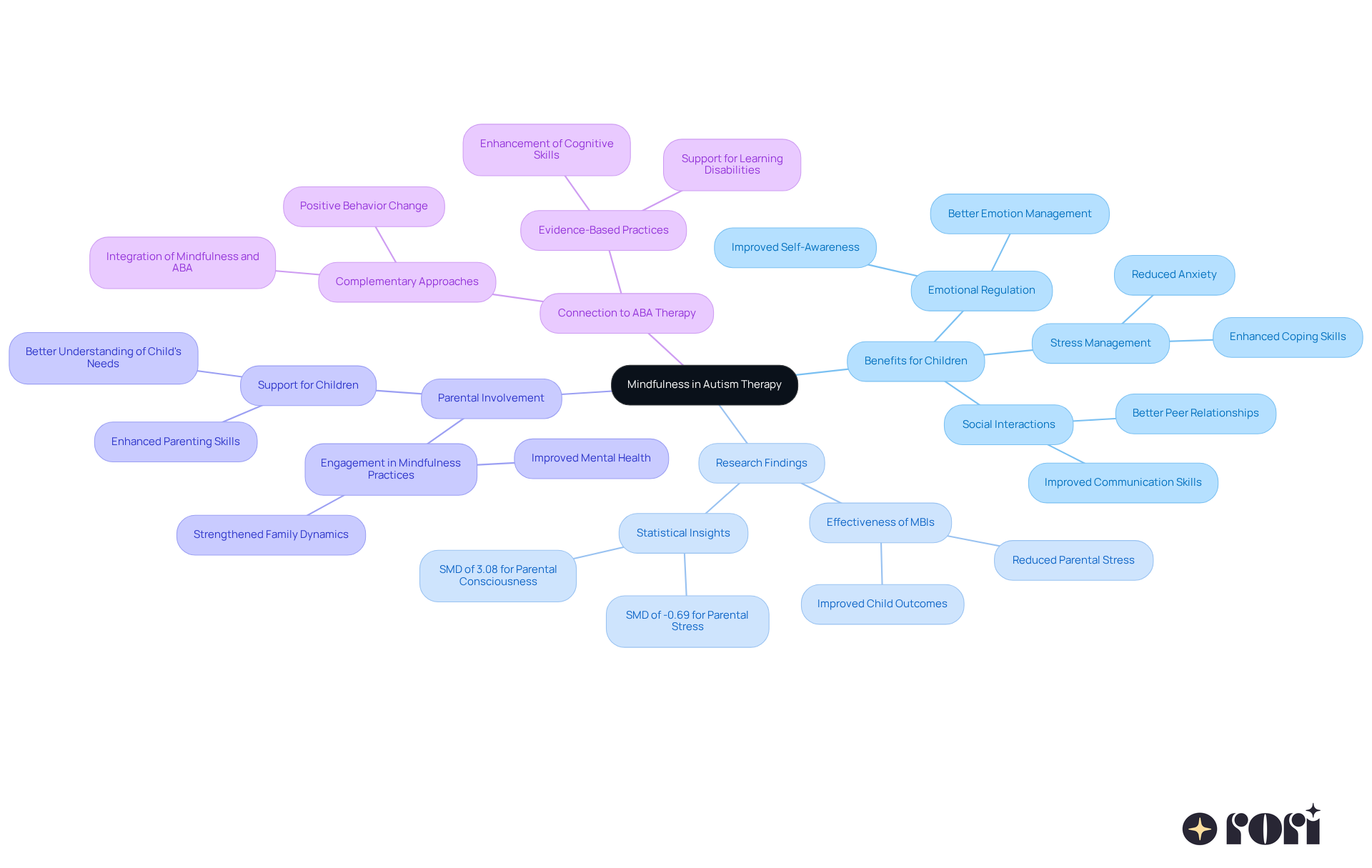
Mindfulness offers a range of significant benefits for children with autism, and it’s truly heartwarming to see how it can make a difference. Let’s explore this together!
These benefits really emphasize the essential role of , making it a valuable complement to traditional approaches. can lead to better emotional and behavioral outcomes, ultimately improving the quality of life for kids with autism. Plus, the systematic review registered under CRD42023424059 adds even more credibility to the effectiveness of these practices.
So, let’s keep the conversation going! What are your thoughts on mindfulness for your child? We’re here to help you every step of the way!

Incorporating sessions for children can be a game-changer! Here are some friendly techniques to consider:
These techniques can be tailored to fit each child’s unique needs, which is essential when incorporating as a flexible and adaptable part. By integrating these methods, you can help your child develop and improve their emotional well-being. Let’s explore this together!

To foster mindfulness at home, parents can take several friendly steps:
By actively participating in these at home, you can reinforce the skills learned in therapy, which is important for and helping your kids develop a lifelong habit of mindfulness. This approach not only enhances but also supports overall well-being, demonstrating the effectiveness of incorporating .
Studies show that (SMD) for parental stress reduction of −0.69 with a 95% CI of (−1.36, −0.02). That’s a significant benefit for both parents and their children! As Jon Kabat-Zinn wisely noted, ", increase ability to cope with pain and chronic illness, reduce stress in patients and practitioners." Plus, a systematic review of randomized controlled trials backs up the effectiveness of mindfulness routines, providing solid evidence for these claims.
And let’s not forget about caregiver education! It enhances support, informed decision-making, and better behavioral outcomes, empowering you to make choices that positively impact your child's journey.
Let’s explore this together! We’re here to !

Implementing mindfulness practices can be a bit tricky for parents, right? Here are some common challenges you might face:
By tackling these challenges head-on, you can create a nurturing environment that supports , ultimately enhancing your child's . Let’s explore this together!

Incorporating mindfulness into autism therapy offers a wonderful approach for both children and their families. By nurturing awareness of thoughts, emotions, and the present moment, mindfulness gives children with autism essential tools for emotional regulation, improved focus, and better social skills. This holistic practice not only supports the child but also helps create a healthier, more connected family dynamic.
Throughout this article, we’ve explored some key insights that highlight the significant benefits of mindfulness techniques. Think about enhanced emotional regulation, reduced anxiety, and improved social interactions. Practical strategies for parents - like mindful breathing, body scans, and establishing a mindfulness routine at home - empower families to support their children’s journey. Plus, by addressing common challenges in implementing these practices, we can ensure that mindfulness becomes a consistent and enjoyable part of daily life.
Ultimately, integrating mindfulness into autism therapy isn’t just an innovative treatment option; it’s a pathway to fostering resilience, emotional well-being, and stronger family bonds. Parents, we encourage you to embrace these techniques and stay engaged in your child's mindfulness journey. The benefits can lead to lasting positive changes! By committing to this practice, families can create a nurturing environment that supports growth and understanding, paving the way for a brighter future. Let’s explore this together!
What is mindfulness and why is it important in autism therapy?
Mindfulness is the practice of being aware of thoughts, feelings, bodily sensations, and the environment moment by moment. In autism therapy, it helps children build self-awareness, manage emotions, reduce stress, and improve social interactions, leading to overall well-being.
How does mindfulness benefit children with autism?
Mindfulness offers several benefits including enhanced emotional regulation, improved focus and attention, reduction of anxiety and stress, and better social skills. It helps children recognize and manage their emotions, concentrate better, lower anxiety levels significantly, and enhance their interactions with peers.
What evidence supports the effectiveness of mindfulness in autism therapy?
Research shows that mindfulness-based interventions can significantly improve emotional awareness and response control in autistic individuals. Programs like MYmind have demonstrated positive outcomes in reducing anxiety and improving social communication. Additionally, systematic reviews provide further credibility to the effectiveness of these practices.
How does mindfulness compare to traditional therapies for anxiety?
Mindfulness techniques can reduce anxiety symptoms by 40% to 60%, which is considerably more effective than traditional therapies that typically reduce anxiety by 25% to 45%.
What role does Applied Behavior Analysis (ABA) therapy play in autism treatment?
ABA therapy is a scientifically proven treatment for autism that is covered by insurance, making it accessible for families. It has shown that 90% of children make progress when the recommended hours are fully implemented with active caregiver involvement.
How can parents incorporate mindfulness techniques into their child's therapy?
Understanding mindfulness empowers parents to engage in mindfulness practices with their children, which can lead to reduced stress for parents and improved mental well-being, ultimately strengthening family relationships.
What are the long-term outcomes of incorporating mindfulness into autism therapy?
Incorporating mindfulness can lead to better emotional and behavioral outcomes, improving the quality of life for children with autism by promoting stability, focus, and social skills.