Integrating Applied Behavior Analysis (ABA) strategies into daily routines can be a game-changer for parents looking to boost their children's development. These evidence-based techniques not only encourage positive behaviors but also help kids build essential communication and social skills. But let’s be real - navigating this journey can be tough! How do you assess your child's unique needs and consistently apply these strategies amidst the daily hustle and bustle?
It’s a challenge many parents face, and you’re definitely not alone. Picture this: you’re trying to implement a new ABA strategy, but life throws a curveball - dinner needs cooking, homework is piling up, and the kids are bouncing off the walls! It’s easy to feel overwhelmed. Yet, with the right tools and support, you can create an environment where your child can truly thrive.
So, how can you embrace the full potential of ABA? Let’s explore this together! By understanding your child’s individual needs and finding ways to incorporate these strategies into your daily life, you can make a significant impact. Remember, we’re here to help you every step of the way!
Applied Behavior Analysis (ABA) is a fantastic method for understanding and changing behavior. It focuses on reinforcement, prompting, and task analysis to encourage positive behaviors while reducing challenging ones. For parents, these strategies are invaluable, offering .
Research shows that ABA techniques can really boost . Kids who engage in often see remarkable improvements in how they communicate and interact with others. By , parents can create a and nurtures their children's independence.
This organized approach aligns with findings that . It really highlights how important these techniques are in helping young people reach their full potential. Plus, Rori Care's ensures that caregivers receive ongoing support, allowing them to focus on implementing these techniques effectively.
Family involvement in therapy sessions can make a big difference, too! When families participate, they and create a supportive atmosphere. Did you know that ? This dedication can lead to long-term benefits for individuals with autism.
Additionally, . This leads to informed decision-making and better behavioral outcomes, ultimately enhancing the overall effectiveness of ABA interventions. Let’s explore this together! We’re here to help you every step of the way!

As you start this journey, take a moment to closely observe your child's daily activities. Look for routines that could really benefit from integrating into daily routines. Think about key moments like mealtime, bedtime, and playtime. Notice any specific behaviors that might need a little boost, such as or finishing tasks.
Connecting with your child's clinicians or BCBAs is super important! They can offer valuable insights into your child's strengths and challenges. This will help you figure out where to focus your efforts and which might work best.
Did you know that kids who begin ABA therapy at an earlier age often show ? That’s why is so crucial! By tailoring your approach based on your observations and the guidance from professionals, you can really enhance your child's learning and behavioral outcomes by .
Getting involved in your child's therapy and using what you learn through will empower you to make informed decisions. Together, we can work towards ! Let’s explore this journey together!

To effectively implement , consider by using that clearly outline the activities. These schedules can include pictures or drawings to help your little one understand what to expect throughout the day. This not only promotes independence but also .
is key! Each strategy should be tailored to your child’s unique needs, strengths, and challenges. plays a huge role here; using verbal praise or small rewards can really encourage your child when they complete a task. For example, during mealtime, show them table manners and celebrate when they imitate those actions. It’s all about .
Breaking down complex tasks into manageable steps can make a world of difference in comprehension and execution. gives you a transparent benchmark for progress. Consistency is crucial; will strengthen learning and promote lasting change in behavior.
Research shows that significantly boosts the chances of preferred actions being repeated, making it a powerful tool for shaping behavior. Plus, , guided by certified analysts, ensure that the interventions remain effective and adaptable to your child’s evolving needs.
Let’s explore this together! We’re here to help you every step of the way!

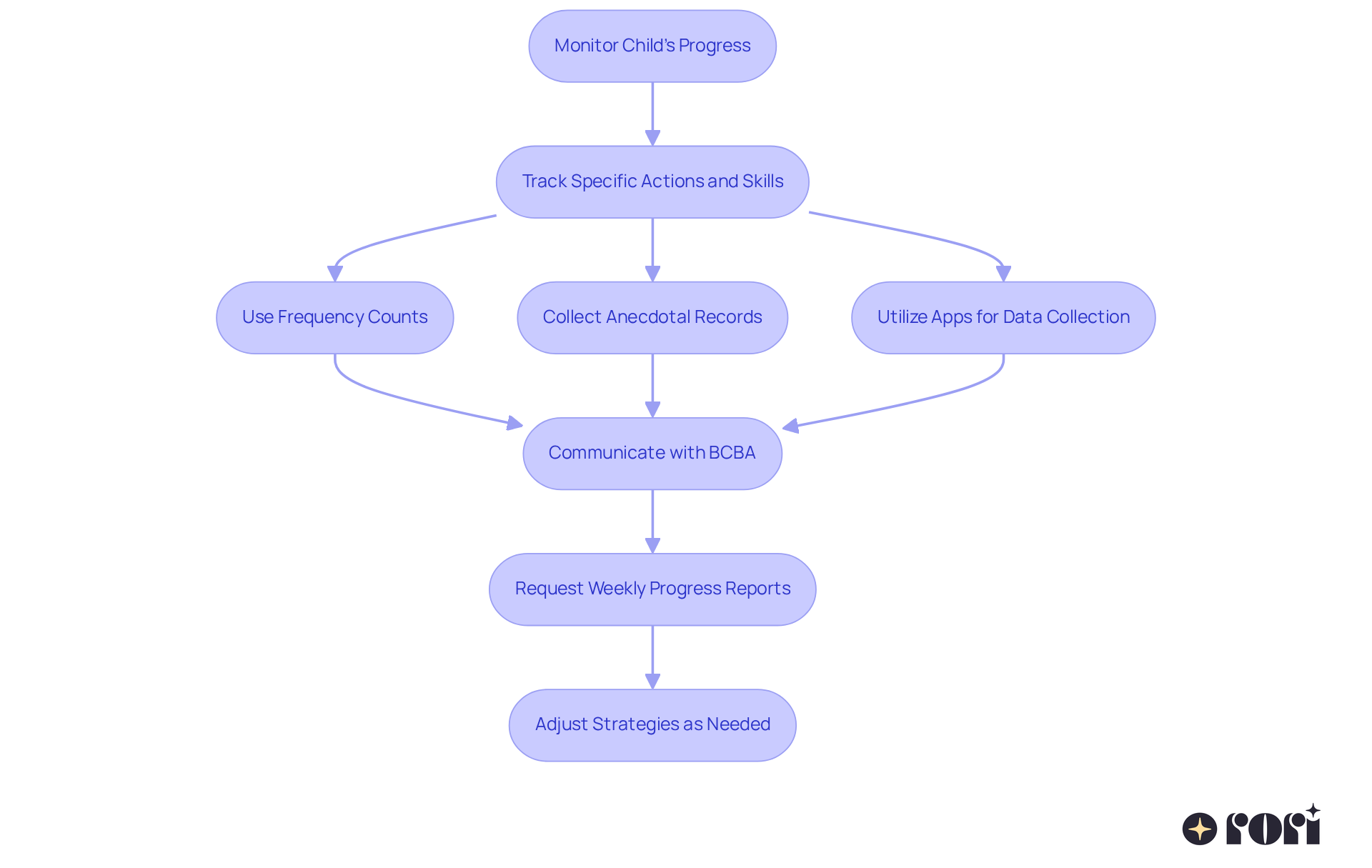
Tracking your child's progress can feel overwhelming at times, right? Keeping a detailed record of specific actions and skills is a great way to stay on top of things. You might find methods like helpful, as they show how often certain behaviors happen. Anecdotal records can also be a treasure trove, capturing those little moments of interaction and response that tell you so much about your child.
Have you thought about using apps or software for ? They can really streamline the process and help you keep everything organized. Regular chats with your child's BCBA about these observations are super important, too. If a isn’t working as you hoped, it might be time to try something new or tweak the task demands a bit.
Don’t forget to ask for weekly ! Staying informed about your child's development is essential for integrating into daily routines, ensuring that their therapy is tailored to their changing needs, which is key for ongoing growth. At Rori Care, our updates intervention and skill acquisition plans after each session based on what’s been achieved, making sure the treatment is always responsive to your child’s needs.
can be a game changer, too! They provide a clear picture of how your child is doing over time. As one therapist put it, "Regular data collection allows you and your therapy team to see precisely where your child stands and make informed decisions about treatment adjustments." This , supported by AI-driven progress report automation, keeps your child's therapy relevant and effective.
Let’s explore this together! We’re here to help you every step of the way!
Integrating Applied Behavior Analysis (ABA) strategies into daily routines can really make a difference for parents and caregivers. It’s all about empowering you to positively influence your child’s behavior and development. By understanding and applying these techniques, you can create an environment that not only supports learning but also helps your child grow in essential life skills.
Throughout this article, we’ve highlighted some key strategies. Think about:
Each step is about personalizing approaches to fit your child’s unique strengths and challenges, ensuring that the interventions are effective and relevant. Plus, family involvement and consistent communication with professionals are crucial. They enhance the learning experience and reinforce those positive behaviors.
Ultimately, integrating ABA strategies into your everyday life isn’t just about managing behaviors; it’s about unlocking your child’s full potential. By committing to this structured approach, you can truly make a significant impact on your child’s developmental journey. Embracing these techniques can lead to lasting benefits, creating a supportive and nurturing atmosphere that encourages your child to thrive.
So, why not take action today? Let’s explore this together and pave the way for a brighter future filled with opportunities for growth and success!
What is Applied Behavior Analysis (ABA)?
Applied Behavior Analysis (ABA) is a method for understanding and changing behavior, focusing on reinforcement, prompting, and task analysis to encourage positive behaviors while reducing challenging ones.
How can ABA strategies benefit parents and children?
ABA strategies provide parents with effective tools to support their children's growth, helping to improve communication, social skills, and independence.
What improvements can children see from engaging in ABA therapy?
Children who engage in ABA therapy often experience remarkable improvements in communication and interaction with others.
How can parents integrate ABA strategies into daily routines?
Parents can create a structured environment that fosters learning and nurtures their children's independence by integrating ABA strategies into daily routines.
What is the significance of early and intensive ABA intervention?
Early and intensive ABA intervention is linked to better developmental outcomes, highlighting the importance of these techniques in helping young people reach their full potential.
How does Rori Care support caregivers during ABA sessions?
Rori Care ensures automatic data collection during sessions, providing ongoing support to caregivers so they can focus on effectively implementing ABA techniques.
What role does family involvement play in ABA therapy?
Family involvement in therapy sessions reinforces learning and creates a supportive atmosphere, contributing to better outcomes.
What percentage of youth referred for ABA services stay in therapy for 12 months?
Approximately 66% of youth referred for ABA stay in services for 12 months, indicating dedication to long-term benefits for individuals with autism.
How does educating caregivers impact ABA interventions?
Educating caregivers empowers parents with knowledge and skills, leading to informed decision-making and better behavioral outcomes, which enhances the overall effectiveness of ABA interventions.