Sensory overload can be a significant challenge for individuals with autism and ADHD, as their brains become overwhelmed with sensory input. This can lead to distress, anxiety, and difficulties with concentration. Managing sensory information is a daily struggle for those on the autism spectrum, as their senses can be either hypersensitive or hyposensitive, impacting their behaviors and ability to learn.
Understanding and supporting the tactile, proprioceptive, and vestibular sensory systems are essential in helping individuals with sensory processing differences. Practical strategies like sensory integration therapy play a pivotal role in enabling neurodivergent individuals to navigate various environments and thrive. Recent studies have highlighted the impact of sensory processing issues on social and anxiety-related behaviors, emphasizing the need for tailored strategies.
The expertise of professionals in sensory integration therapy offers hope in addressing everyday challenges and enhancing functional abilities for those affected by sensory overload. By developing personalized strategies and providing the right support, individuals with sensory processing differences can improve their quality of life.
Individuals with ADHD and Asperger's syndrome may encounter considerable challenges due to overwhelming sensory stimulation, a condition where the brain is inundated with more stimuli than it can process. This can result in distress, anxiety, and concentration issues. For individuals on the , handling information from the senses is a daily challenge, as their senses can be either hyperresponsive, hyporesponsive, or fluctuate between the two, impacting their behaviors and capacity to acquire knowledge.
Experts have identified that comprehending and assisting the is crucial. Practical strategies, such as integration therapy, are pivotal in helping navigate various environments. These can range from personal care routines to coping in open spaces, ultimately enabling them to thrive.
Recent studies have emphasized the significant impact of processing issues on social and anxiety-related behaviors, emphasizing the need for tailored strategies. Furthermore, the identification that in peripheral neurons related to sensation can result in tactile overreactivity highlights the intricate character of overload in ASD.
Autism specialists have developed online learning series to enhance the understanding of processing. These webinars provide , demonstrating that with the right support, individuals with processing differences can improve their quality of life. Moreover, the proficiency of professionals like Alison, an advanced practitioner in integrating senses treatment, provides optimism in addressing everyday challenges and enhancing functional abilities for those affected by .

Comprehending and dealing with excessive stimulation is a crucial aspect of and ADHD. occurs when one or more of the body's senses experiences over-stimulation from the environment. Typical signs include a heightened sensitivity to inputs such as sound, brightness, contact, scent, or flavor. Physical manifestations may also present as headaches, fatigue, irritability, or extreme stress responses like meltdowns.
, as may experience heightened or diminished sensitivity in their senses, which can significantly influence their behavior and learning. Such challenges related to the senses are often constants, requiring parents and caregivers to be vigilant and proactive in .
Assisting a child with sensitivities to touch involves comprehending the complex operations of the tactile, proprioceptive, and vestibular systems. This knowledge can inform that accommodate the distinct needs of autistic children, whether at home, in school, or other settings. It is crucial to establish environments and routines that decrease the likelihood of excessive stimulation, thereby fostering a better quality of life for those with processing challenges.
For children with autism and ADHD, overload can be a daily struggle, but by , we can significantly improve their comfort and well-being. The offers a pioneering approach with its seven architectural notions, guiding us in creating spaces that are considerate of their perception needs. Acoustics is a critical elementâby reducing noise levels, we can alleviate one of the most common stressors. Similarly, is vital; it ensures that spaces are not just static but are arranged to facilitate ease of movement and experience.
Soft lighting can create a more calming ambiance, and the use of provides comfortable and supportive seating. By organizing the environment in a structured way and keeping it clutter-free, we can help minimize confusion and anxiety. Furthermore, acknowledging and catering to specific sensory preferences, such as tactile sensitivities, is crucial. that transform tactile feelings into visual and auditory signals have demonstrated potential in aiding people navigate difficult experiences, such as a trip to the dentist.
These strategies are grounded in the understanding that a wide range of cognitive differences, including the perception and interaction with one's surroundings. Recognizing distinct triggers is an essential measure, enabling the creation of focused approaches to reduce their influence. By carefully building our environmentor our 'nests'âwe can support people with ASD and ADHD in feeling secure and connected, ultimately promoting their capacity to flourish in different contexts.
Understanding and managing excessive is crucial for individuals with autism and ADHD. Sensory over-stimulation happens when one or more of the body's senses experience excessive stimulation from the environment. Different approaches have been identified to assist in reducing overload, which can greatly enhance daily functioning and overall well-being.
A thorough examination of qualitative research on experiences related to the senses from the viewpoint of children and young people with autism has been enlightening. By encoding the data line-by-line, categorizing codes into descriptive themes, and then creating analytical themes, researchers have been able to develop a deeper understanding of processing challenges. The integration of this research implies that to the person's sensory inclinations and difficulties is crucial for effectively managing .
The effect of processing differences is significant, influencing behavior, development, and learning. It's crucial to acknowledge that sensitivities to stimuli can vary, with people being overly sensitive or less sensitive at various moments. By creating tailored approaches to tackle these sensitivities, people with ASD and ADHD can better navigate their surroundings.
Research funded by the National Institutes of Health is delving into the . By concentrating on the auditory system, researchers aim to identify common mechanisms at the neural circuit level that contribute to overload of the senses. This insight is crucial for developing targeted interventions to improve quality of life for those with ASD.
In summary, by identifying specific triggers related to the senses and implementing tailored approaches, people with Autism Spectrum Disorder (ASD) and Attention Deficit Hyperactivity Disorder (ADHD) can improve their management of sensory experiences, leading to enhanced daily functioning and engagement with their environments.
Enhancing sensory comfort and reducing anxiety is crucial in and ADHD by optimizing the environment. Careful attention to acoustics is paramount, as underscored by the , which highlights noise management as a top concern among stakeholders. This can be accomplished by establishing quiet areas where people can seek refuge from overwhelming auditory stimuli. Spatial sequencing is also crucial, involving thoughtful design of spaces that people can navigate and experience fluidly, rather than perceiving them as mere static areas.
Visual supports such as schedules and timers can provide a sense of predictability, while breaks and movement activities intersperse moments of relief throughout the day. For individuals with tactile sensitivities, innovations such as AR applications that transform tactile sensations into visual and auditory signals offer promising alternatives. Consistency in daily routines provides a backbone of stability, fostering a secure environment conducive to development and learning.
Comprehending the intricacies of processing information is crucialâbe it tactile, proprioceptive, or vestibular systems. Customizing environments to accommodate these different perceptual needs can greatly impact behavior and learning results. In line with this, Dr. Temple Grandin emphasizes the importance of to accommodate visual processing challenges, showcasing the depth of consideration required when adapting environments.
The also reflect growing awareness, aiming to assist health professionals in effectively managing people on the spectrum. These efforts, combined with and , pave the way for .
Discovering the appropriate for people with autism and ADHD is essential for managing overload of the senses. These tools are not just accessories; they are crucial for providing a sense of control and freeing people from the limitations of their sensory challenges. Advanced technologies, like virtual reality systems, have shown promise in , and are being investigated for their potential in educational settings to support students with ADHD. Seeking feedback from other users is important in selecting quality equipment that withstands the test of time and use.
Considerations such as the frequency of part replacements and battery life are practical aspects that need to be addressed. For example, offer tactile stimulation, while can ease transitions by providing clear visual cues. is designed to promote comfort and enhance concentration, serving not just as a aid, but as a means to empower people to engage fully in their daily activities.
In the perspective of someone who discovered freedom in utilizing a wheelchair for dance, adaptive equipment should be regarded not as a confinement, but as a tool for liberation, enabling people to achieve tasks that might otherwise be out of reach. This viewpoint is crucial in comprehending the in the lives of those with sensitivities to stimuli. By embracing these resources, we respect the autonomy and capability of individuals with autism and ADHD to navigate their environments more effectively.
, also referred to as , are a well-documented approach for managing overload of the senses in people with autism and ADHD. This method involves a gradual process where individuals are introduced to input at an extremely gentle and non-threatening level in the beginning, and then the level of intensity is gradually increased. The progressive characteristic of the exposure enables the person to adapt without getting inundated, making it a sympathetic approach to improve processing abilities and reduce related uneasiness.
The idea of desensitization is in line with the principles of , recognizing and valuing the distinctive ways in which neurodivergent people, including those with and Attention Deficit Hyperactivity Disorder, perceive the world. This method can be particularly effective as it allows individuals to engage with on their own terms, fostering both .
By incorporating desensitization strategies into , such as through the TEACCH program, educators can create a structured learning environment that respects the need for consistency and visual learning. Modifications to the classroom, including the use of visual schedules and clear instructions, can enhance the overall academic experience for students with .
Furthermore, recent research has shown that interventions for individuals with , including , are most beneficial when implemented early in a child's life. However, in order to maximize the effectiveness of such treatments, it is essential that they are customized to the unique requirements of each person, acknowledging that everyone's perceptual encounters and thresholds are different.
In essence, desensitization through controlled exposure offers a compassionate, personalized, and evidence-based approach to support individuals with and attention deficit hyperactivity disorder, helping them to navigate and adapt to experiences related to their senses more effectively.
Organized perceptual activities are not only regular components of everyday life; they are lifelines to individuals with autism and ADHD, providing them an opportunity to encounter input of the senses in a manner that is consistent and controllable. Engaging in , such as the use of weighted vests or blankets, provides the calming pressure that many with sensitivities find soothing. Similarly, through physical activities like bouncing on a trampoline or rolling on therapy balls can be essential for body awareness and motor control. The rhythmic motion of , such as swinging or spinning, also plays a critical role in helping regulate perception systems. These activities, when repeated regularly, can significantly enhance communication, , and self-regulation, leading to a more grounded and focused state of being.
Furthermore, the innovative solutions, like the AR application for dental visits, emphasize the importance of . This tool converts tactile experiences into visual and auditory stimuli, which caters to the distinctive processing preferences of individuals on the spectrum. It is a testament to the importance of understanding and respecting the perceptual experiences of individuals with autism and the profound impact such consideration can have on their ability to participate in everyday activities.
are more than just play; they are vital exercises that reinforce and emotional well-being. They are the building blocks for children to engage peacefully and supportively in their communities, contributing to a more equitable society. By incorporating these activities into everyday life, we are not only promoting the mental well-being of individuals with processing disparities but also advocating for their rightful position in the 'race' of life, as envisioned by the late Dr. David (Dan) R. Offordâa fair race where every child has the chance to flourish.
For people with autism and ADHD, managing excessive sensory stimulation is a crucial aspect of their daily lives. To address this, a variety of are employed. is one such intervention, customized to improve processing abilities and equip people with techniques for coping with excessive stimulation. Another approach is , which aims to help individuals in better integrating and interpreting information from the senses.
Additionally, therapies like mindfulness and have proven beneficial. These therapies offer methods for self-control and assist in decreasing the anxiety that frequently comes with overload. promote a present-moment consciousness, which can be especially helpful in handling overpowering perceptual experiences. , alternatively, provides structured methods that empower people to question and alter unhelpful thought patterns connected to their perceptual encounters.
These interventions are not only about dealing with challenges but also about acknowledging and nurturing the distinct strengths that autistic people bring to their communities. By reducing chronic stress and supporting caregivers, we create a more equitable society that values the mental health and well-being of all its members, including those with disabilities.
In the domain of health tech, groundbreaking solutions like Augmental's tongue-operated interface and other supportive technologies are emerging to offer different approaches for people with sensitivities to engage with their surroundings. Such advancements highlight the importance of to meet the specific needs of each individual.
Comprehending the diverse perceptual encounters of individuals with autism is crucial for offering efficient assistance. Sensory differences can significantly impact behavior, development, and learning, making it crucial for caregivers and professionals to be well-informed on how to support those on the autism spectrum in various settings, whether at home, school, or the workplace.
Regular physical activity and immersion in are not just refreshing pastimes; they play a significant role in modulating experiences, particularly for those with processing sensitivities such as in Autism and ADHD. Exercise, whether it's a brisk walk, a swim, or a game of basketball, serves to channel excess energy constructively. It also helps in and improving the integration of the senses, which is crucial for those who struggle with . This is backed by evidence that suggests , from mood enhancement to anxiety reduction, and even alleviates symptoms of depression.
Moreover, nature's inherent tranquility offers a unique form of solace, fostering a connection that transcends the physical and taps into our psychological affinity for the natural world—a phenomenon known as biophilia. The tranquility of green spaces and the gentleness of natural landscapes can serve as a remedy for overwhelmed senses, offering a soothing balance to the typically hectic rhythm of city surroundings that tend to worsen mood disorders and cognitive burdens.
Research, including that from the newly-formed Nature and Human Health Utah, underscores the profound impact of nature on cognitive functions. It's not merely about reducing stress or improving mood; nature has the power to enhance cognitive processes like memory, reasoning, and problem-solving. For instance, a mere 40-second gaze at a green roof can lead to fewer errors in subsequent tasks—a testament to nature's subtle yet powerful influence on our mental acuity.
Essentially, participating in regular physical activities and seeking the healing embrace of can be life-changing, especially for those dealing with the intricacies of . These strategies are not merely therapeutic but are grounded in an understanding of our fundamental need to harmonize with the world around us.
Nurturing a setting that aids people with autism and ADHD in handling overload requires considerate and the enhancement of coping abilities. By acknowledging their feelings and reinforcing that their emotions are valid, we start to build a bridge of understanding. For instance, asking a child if they're feeling anxious about a specific activity and acknowledging that it's normal to have such feelings, sets a foundation for . This can be as simple as saying, 'It seems like reading aloud is making you nervous, and that's completely okay. Can you share more about what you're feeling right now?'
Implementing an integrative and holistic framework designed for Highly Sensitive Children fosters self-awareness and . These abilities allow people to express their perceptual requirements and comprehend their feelings, opening the path for easier transitions into adulthood with empowered . The framework emphasizes key areas like , mindset, behavior, environmental connection, spiritual expression, and the nurturing of healthy relationships.
Incorporating routine adaptation into daily life serves as a practical application of this framework. By purposely introducing small disruptions into established routines, people learn to adapt and manage their responses effectively. This planned unpredictability can diminish the intensity of emotional reactions and prevent meltdowns, especially during periods like the holiday season when routines are often disrupted.
From an educational psychology perspective, it's recognized that all behavior is a form of communication. Children, whose pre-frontal cortexes are not fully developed until their mid-twenties, may exhibit strong emotional responses as their way of expressing needs that they can't articulate verbally. Understanding this can guide parents and caregivers to .
Self-calming techniques like deep breathing, visualization, and grounding exercises, including breathwork and tapping (Emotional Freedom Technique), are not only immediate tools for managing overload but also contribute to building long-term resilience. By equipping people with these techniques from an early age, we can empower them to navigate their sensory experiences with confidence.
Recent legislative efforts, such as those in Florida, indicate a growing awareness of the necessity for specific instruction in identifying and dealing with the distinct requirements of persons with autism. This demonstrates a wider societal recognition of the significance of informed .
Active engagement in programs that cater to people with developmental disabilities, such as The Arc's culinary arts program, showcases the positive outcomes of targeted skill development and real-world application. These initiatives provide evidence of how empowering neurodivergent people with appropriate coping skills can lead to successful integration into various societal roles.
For people with Autism Spectrum Disorder (ASD) and Attention Deficit Hyperactivity Disorder (ADHD), maneuvering through the day-to-day world can be like running an obstacle course. The key to success lies in creating an environment that reduces the perceptual and cognitive challenges they face. Establishing a and clear expectations can significantly alleviate , which is particularly beneficial for those who may feel lost in the chaos of life's unpredictable nature.
, like a peaceful room or a sensory-friendly area, empowers people with ASD and ADHD to have a sanctuary where they can decompress and regain control over their senses. These spaces become invaluable retreats during moments of , allowing for self-regulation and recovery.
Implementing these strategies aligns with the ethos of , as emphasized by Dr. David (Dan) R. Offord, who advocated for a fair 'race' for all children, including those with disabilities. This method not only caters to the unmet requirements of neurodivergent people but also utilizes their to their communities, thereby reducing chronic stress and supporting their mental health.
The shift towards more inclusive spaces is evident in the efforts of organizations like Microsoft, which are actively adapting their environments to better accommodate autistic employees, ensuring that they can prosper without the need to 'mask' their neurodiversity. As we foster these principles, we create a world where don't just survive; they thrive.
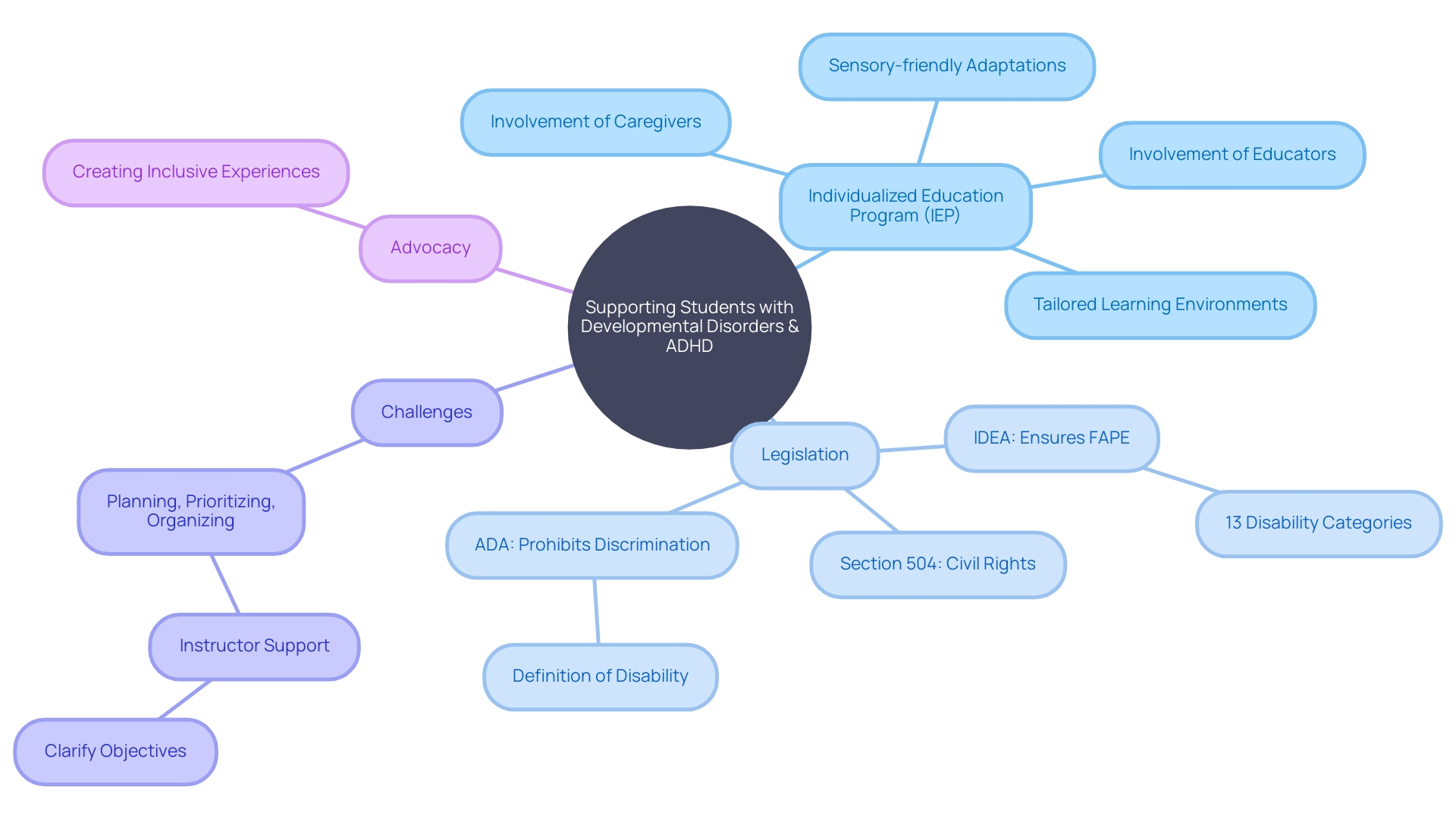
Comprehending and backing the perceptual requirements of students with developmental disorders and attention deficit hyperactivity disorder is crucial for their educational and interpersonal achievements. within the can be transformative. These adjustments can include strategic seating arrangements that minimize distractions, the use of visual schedules to provide structure and predictability, and the provision of tools such as fidgets or noise-canceling headphones to help manage input.
It's essential for schools to recognize the of , who may struggle in traditional classroom settings that emphasize prolonged focus and adherence to rigid protocols. By tailoring the learning environment to their needs, educators can significantly improve these students' ability to stay engaged and perform academically.
The involvement of is not only about complying with legal requirements; it's about building a fair race for every child, as emphasized by Dr. David (Dan) R. Offord. When the education system aligns with the principles of equity and inclusion, as supported by the Scottish Government's commitment to 'getting it right for every child,' students with additional support needs can thrive.
Advocacy is also a crucial component of this support system. Parents and caregivers can reach out to school board members and legislators to promote awareness and initiate changes that will benefit all students. By sharing knowledge and resources, stakeholders can work together to create that foster the mental health and well-being of children with disabilities, ensuring that every child has the opportunity to reach their full potential.
Effectively managing in individuals with autism or ADHD goes beyond behavioral strategies; it involves addressing potential medical issues that can exacerbate their . For instance, exposure to loud sounds, especially over prolonged periods, can lead to conditions like tinnitus or hyperacusis, where everyday noises become intolerably loud. These auditory issues are not only distressing in themselves but can also worsen the sensitivities common in these populations.
Sophie J. Balk, MD, FAAP, highlights the public health implications of noise exposure, noting that children are particularly vulnerable due to their smaller ear canals, which amplify high-frequency sounds. Consequently, even ordinary sounds from traffic or background television can disrupt sleep and learning. Addressing is therefore a critical component in reducing overload.
Innovations in healthcare environments, like Jefferson Health's new outpatient facility, demonstrate a growing recognition of the importance of sensory-friendly spaces. These areas cater to the needs of individuals with sensitivities by providing calming visuals and quiet areas, and they signify a larger movement towards . This approach, which views neurological differences as natural variations rather than deficits, is advocated by experts who underscore the importance of for those with ASD.
Given these factors, it's evident that healthcare providers should take into account the of their patients with autism or ADHD when managing excessive stimulation. This includes being vigilant for symptoms of hearing loss, tinnitus, or hyperacusis, and ensuring that therapeutic environments are designed to minimize stress and challenges related to the senses. By addressing these fundamental medical concerns, we can enhance the quality of life for those who are experiencing an overwhelming sensory sensation.
Assisting individuals with autism and ADHD in managing overwhelming sensory stimuli involves a comprehensive approach that is as unique as the individuals themselves. A child psychiatrist, Dr. David (Dan) R. Offord, once emphasized the importance of creating equitable conditions, suggesting that every child should have a fair start in the "race" of life. This philosophy can be applied directly to developing strategies to . By educating themselves on and the condition of individuals with autism, parents and caregivers can gain a better understanding of the challenges faced by their children. It is important to recognize both the unmet needs and the strengths that these children bring to their communities.
Reducing stress is critical, and one way to achieve this is by seeking support from professionals who understand the nuances of autism and ADHD. Support groups and professional guidance can offer valuable resources to families, assisting in reducing the . Parents can also benefit from to manage their own stress levels, as this directly impacts their ability to support their children effectively.
Advocating for children's needs in different settings, such as schools or social environments, is equally important. Recent research by Dr. Heather Henderson highlights that engaged and directive parenting behaviors may positively influence a child's ability to regulate their emotions and behavior. Moreover, the examination of neural circuits, especially the auditory system, by Auerbach and his team, highlights the importance of hypersensitivities in ASD and their influence on everyday life.
Using practical strategies, like , can aid children with integration of the senses. Engaging in simple practices like creating assessments together, and navigating open spaces with mindfulness can ease the challenges faced by neurodivergent individuals. According to Dr. Henderson's research, parents have the ability to impact the development of , which are vital for managing overload of the senses.
It is essential to equip parents and caregivers with the knowledge and tools to . With a better understanding of , the tactile, proprioceptive, and vestibular systems, and the application of sensory-regulating strategies, parents and caregivers can create a nurturing environment that fosters mental health and equity for children with autism and ADHD.

In conclusion, managing sensory overload is crucial for individuals with autism and ADHD. Tailored strategies, such as sensory integration therapy and personalized approaches, can significantly improve their quality of life. Creating sensory-friendly environments, understanding individual sensory preferences, and recognizing signs of sensory overload are essential in supporting individuals with sensory sensitivities.
Optimizing the environment through design and supportive technologies, such as adaptive tools and equipment, can empower individuals to manage sensory overload effectively. Gradual exposure and desensitization techniques, along with structured sensory activities and routines, promote self-regulation and enhance communication and social skills.
Therapeutic interventions, including occupational therapy, sensory integration therapy, mindfulness, and cognitive-behavioral therapy, play a vital role in managing sensory overload and supporting individuals' unique strengths. Engaging in regular physical exercise and outdoor activities positively modulates sensory experiences and promotes mental health.
Emotional coaching, coping skills, and creating predictable routines and safe spaces are crucial for individuals with sensory overload. Educating parents and caregivers, seeking support, and advocating for sensory needs are essential in providing a nurturing environment.
Addressing underlying medical issues, such as auditory health, is important in managing sensory overload. By implementing these strategies and providing the right support, individuals with sensory processing differences can improve their quality of life and thrive in various settings.
It is through a comprehensive and compassionate approach that we can empower individuals with autism and ADHD to navigate their sensory experiences and reach their full potential. By understanding and supporting their unique sensory needs, we can create inclusive environments that foster their well-being and success.
What is sensory overload?
Sensory overload occurs when the brain receives more sensory input than it can process, leading to distress, anxiety, and concentration issues. It is particularly common in individuals with ADHD and Asperger's syndrome.
How does sensory overload affect individuals with autism?
Individuals on the autism spectrum may experience challenges managing sensory information due to hyperresponsiveness or hyporesponsiveness, which can significantly impact their behavior and learning.
What are the common signs of sensory overload?
Signs include heightened sensitivity to stimuli (like sound or light), physical symptoms (headaches, fatigue), irritability, and extreme stress responses such as meltdowns.
How can I help a child experiencing sensory overload?
Recognizing symptoms is crucial. Strategies include understanding the child's sensory preferences, creating a structured environment, and employing customized strategies to minimize sensory triggers.
What strategies can create a sensorily safe environment?
Key strategies include reducing noise levels, using soft lighting, maintaining an organized and clutter-free space, and incorporating sensory-friendly furniture.
How can auditory and visual sensory overload be managed?
For auditory overload, noise-canceling headphones or earplugs can help. For visual overload, wearing sunglasses or using visual filters on screens can reduce discomfort.
What role does physical activity play in managing sensory overload?
Regular physical activity helps channel excess energy, calms anxiety, and improves sensory integration, making it essential for those with processing sensitivities.
What therapeutic interventions are effective for managing sensory overload?
Occupational therapy, integration therapy, mindfulness, and cognitive-behavioral therapy are effective in helping individuals cope with sensory challenges.
How important is creating predictable routines for individuals with autism and ADHD?
Establishing structured routines can significantly alleviate anxiety and provide stability, making it easier for individuals to navigate their daily lives.
What medical issues should be considered in managing sensory overload?
Conditions like tinnitus or hyperacusis can exacerbate sensory challenges. Addressing these auditory health issues is important for reducing overload.
How can parents and caregivers support children with sensory processing challenges?
Educating themselves on sensory processing, seeking professional support, advocating for their child’s needs, and practicing co-regulatory activities can all be beneficial.
What is the significance of sensory-friendly adaptations in education?
Sensory-friendly adaptations within Individualized Education Programs (IEPs) can enhance a child's learning experience by addressing their unique sensory needs.
Where can I find additional resources or support?
Online learning series, support groups, and professional guidance can provide valuable information and strategies for managing sensory overload and supporting individuals with autism and ADHD.