Understanding the complexities of autism spectrum disorder (ASD) opens up a world filled with unique communication challenges that can really impact a child's social interactions. Many autistic individuals face hurdles in verbal communication, and this presents a crucial opportunity for caregivers to implement effective strategies that foster understanding and connection.
So, how can parents and caregivers navigate these challenges to create a supportive and enriching communication environment at home? 🤔 This article dives into practical techniques and collaborative approaches that empower families to enhance communication for children with autism. Together, we can pave the way for more meaningful interactions! Let’s explore this together!
Autism spectrum disorder (ASD) brings along a variety of . Many kids on the spectrum find it tough to read social cues, body language, and the subtleties of conversation. For instance, they might take things literally, which can lead to some funny misunderstandings in everyday chats. Did you know that about 25-30% of ? This highlights just how common these are.
These challenges can make and fitting in socially quite difficult, highlighting the need for . That’s why it’s so important for caregivers to recognize and tackle these issues head-on by employing . By understanding the unique ways autistic kids express themselves, parents can utilize effective communication techniques for autism to provide better . This can lead to smoother interactions and richer social experiences.
Caregivers can utilize great strategies, such as effective communication techniques for autism and . Think about using , modeling appropriate social interactions, and encouraging positive interaction behaviors. These approaches not only help maintain consistency in therapy but also empower caregivers to make informed choices that can really boost their child’s progress.
Let’s explore this together! By sharing experiences and tips, we can create a supportive community that helps our kids thrive.

Enhancing with autistic children can be a rewarding journey for caregivers. Here are some friendly strategies to consider:
By applying these approaches, you can develop that assist autistic individuals in expressing themselves confidently and connecting meaningfully with their surroundings. Let’s explore this together!

Creating a nurturing environment is so important for kids with autism. Here are some friendly strategies to help you foster that kind of space:
By focusing on these aspects, you can really enhance your child’s interaction experience using effective communication techniques for autism, making it more enjoyable and effective. Consistent routines not only support but also boost interpersonal skills, laying a strong foundation for meaningful interactions. Just remember, it’s important to stay flexible within those routines to accommodate any unexpected changes. A rigid routine can sometimes increase stress when adjustments are needed.
Let’s explore this together! Your journey in creating a supportive environment for your child is so important, and we’re here to help you every step of the way!

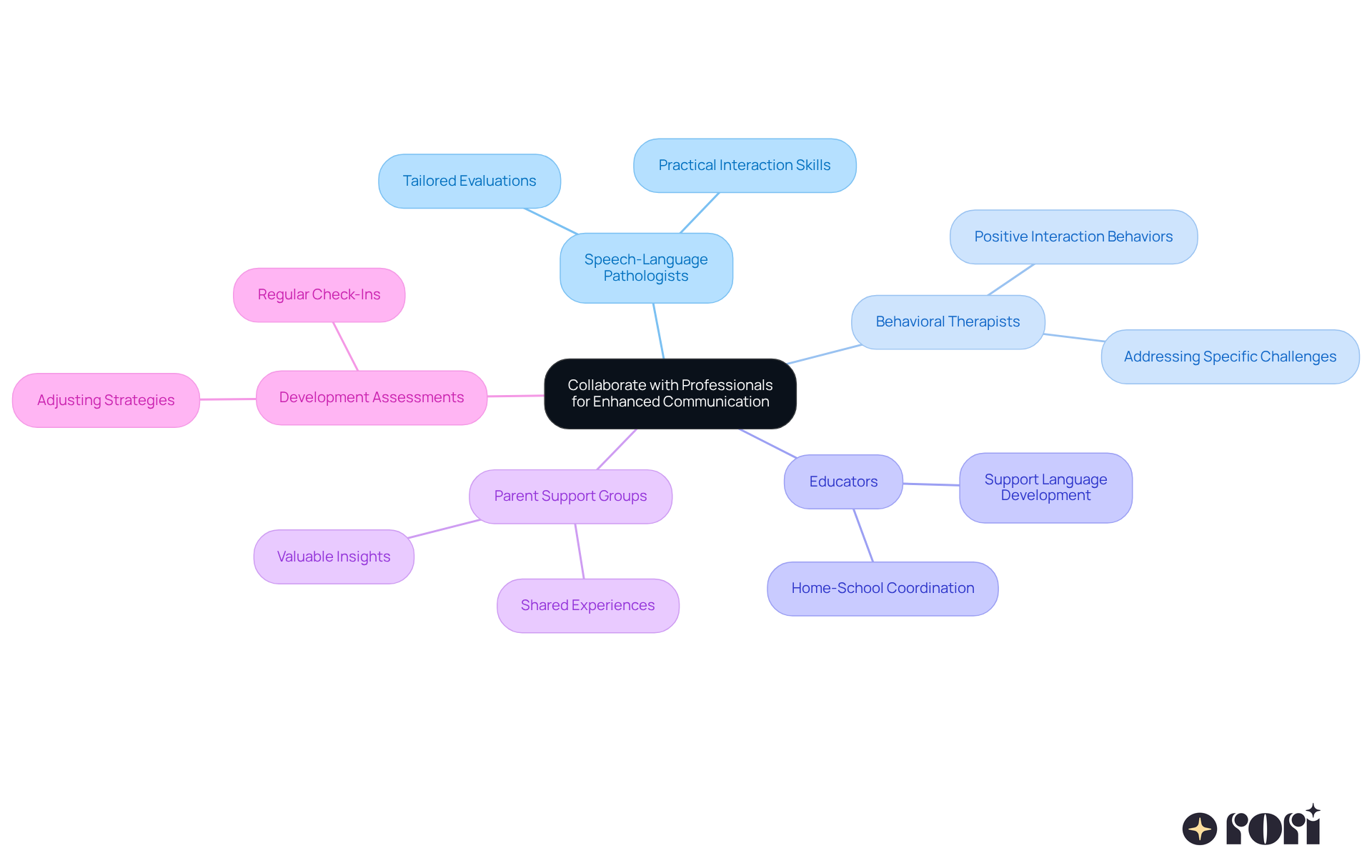
Working together with experts can really enhance the that young people use to interact. Here are some friendly ways to build effective partnerships:
By teaming up with a group of professionals, including Rori Care's compassionate clinicians, families can craft a comprehensive communication plan that incorporates to nurture their child's growth and enhance their ability to connect with others. Let’s explore this together!
Mastering effective communication techniques for autism at home is so important for nurturing meaningful interactions and supporting the growth of autistic children. By understanding the unique communication challenges that come with autism spectrum disorder, caregivers can create a space that encourages expression and connection. This commitment not only benefits the child but also strengthens family bonds and community ties.
Throughout this article, we’ve highlighted some key strategies, like:
These practices empower children to express themselves confidently while giving caregivers the tools they need for better interactions. Collaborating with professionals, such as speech-language pathologists and behavioral therapists, can really enrich this process, ensuring that each child's unique needs are met with tailored approaches.
Ultimately, embracing these effective communication techniques for autism is a journey that calls for patience, empathy, and support. By actively engaging in this process, caregivers can truly make a difference in their child's social experiences and overall development. It’s vital to foster a supportive community that shares insights and strategies. This collaboration not only enhances individual growth but also paves the way for a more inclusive society where every voice is valued.
Let’s explore this together! We’re here to help you every step of the way!
What is autism spectrum disorder (ASD) and how does it affect communication?
Autism spectrum disorder (ASD) is a condition that brings various interaction challenges, making it difficult for children on the spectrum to read social cues, body language, and the subtleties of conversation.
What percentage of autistic individuals are minimally verbal or do not develop functional language?
About 25-30% of autistic individuals are minimally verbal or do not develop functional language.
Why is it important for caregivers to recognize communication challenges in autistic children?
Recognizing these challenges is crucial for caregivers to employ effective communication techniques that can support the child's growth and lead to smoother interactions and richer social experiences.
What are some effective communication techniques for autism?
Effective communication techniques for autism include using visual aids, modeling appropriate social interactions, and encouraging positive interaction behaviors.
How can caregivers empower themselves to support autistic children?
Caregivers can empower themselves by utilizing effective communication techniques and specific ABA techniques, which help maintain consistency in therapy and enable informed choices that can boost the child's progress.
How can sharing experiences and tips benefit the community of caregivers?
Sharing experiences and tips can create a supportive community that helps children with autism thrive by providing mutual support and practical strategies.