Introduction
Positive reinforcement is a key player in autism therapy, acting as a powerful tool for managing behavior while promoting growth and learning. When we reward positive actions right away, it not only boosts a child's motivation but also creates a warm environment where they can truly thrive.
But here’s the thing: tailoring these reinforcement strategies to fit each child's unique needs can be a bit tricky. It’s all about making sure every child feels empowered and engaged in their own journey of development. So, how can caregivers navigate this path to build a supportive and effective behavior management plan?
Let’s explore this together! 😊
Define Positive Reinforcement in Autism Therapy
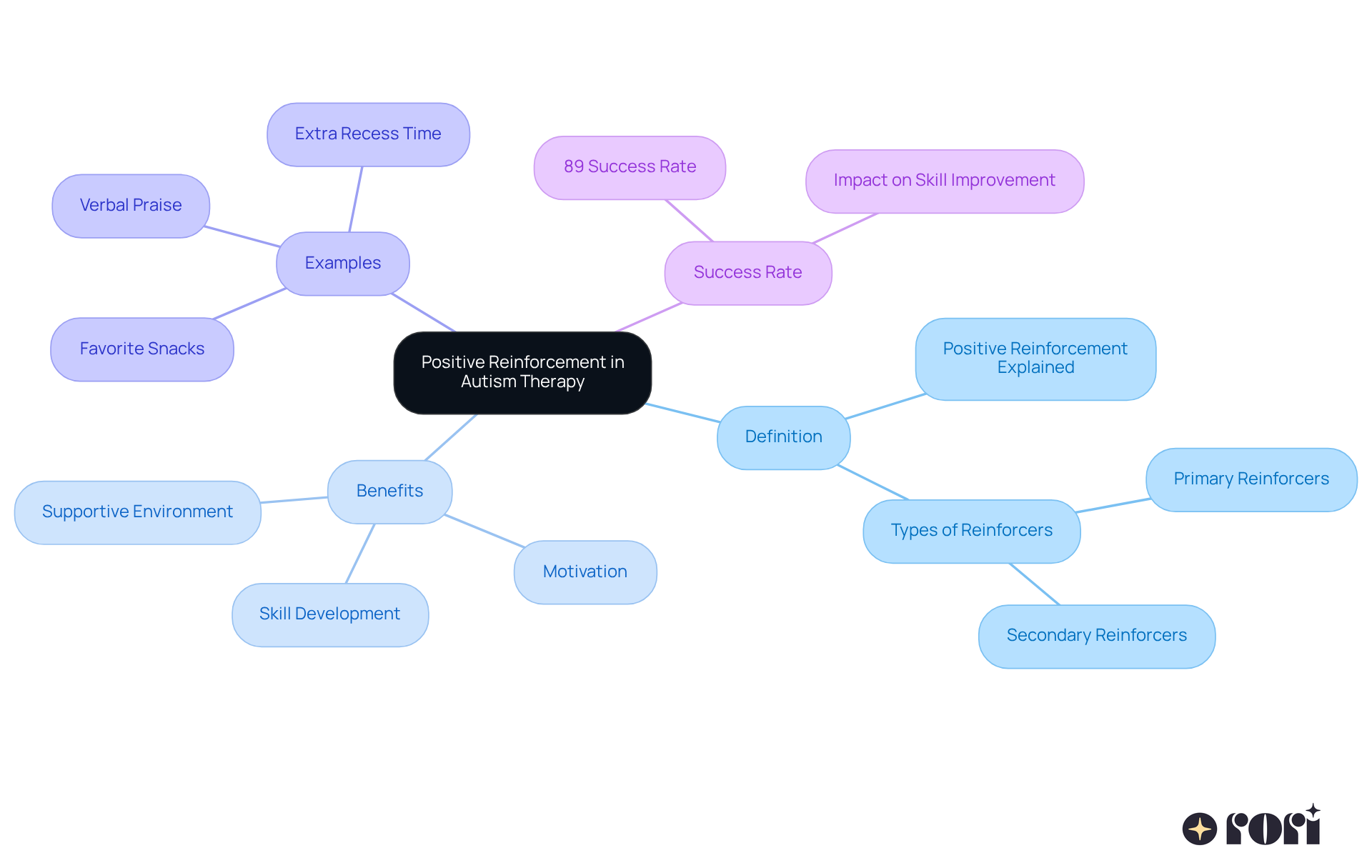
Positive reinforcement is such an important part of autism therapy! It’s all about giving a reward or incentive right after a child does something great. This approach helps them associate that action with something positive, making it more likely they’ll do it again. For instance, when a young person finishes a task and gets some praise or a little treat, they’re more inclined to repeat that behavior in the future.
In the world of autism treatment, using positive reinforcement for autism behavior management plays a vital role. It not only helps kids learn new skills but also boosts their motivation and creates a supportive learning environment. Imagine how wonderful it feels when your child achieves something and you celebrate that moment together! Studies show that personalized, data-informed strategies can significantly enhance communication and social skills in children with autism. This makes using positive reinforcement for autism behavior management a key element of effective therapy.
With a success rate of over 89% in improving skills among children with autism, using positive reinforcement for autism behavior management isn’t just helpful; it’s truly transformative! It creates a space where kids can thrive and develop essential life skills. So, let’s explore this together! If you’re looking for ways to support your child, remember that you’re not alone. We’re here to help you every step of the way!
Identify Effective Positive Reinforcement Techniques
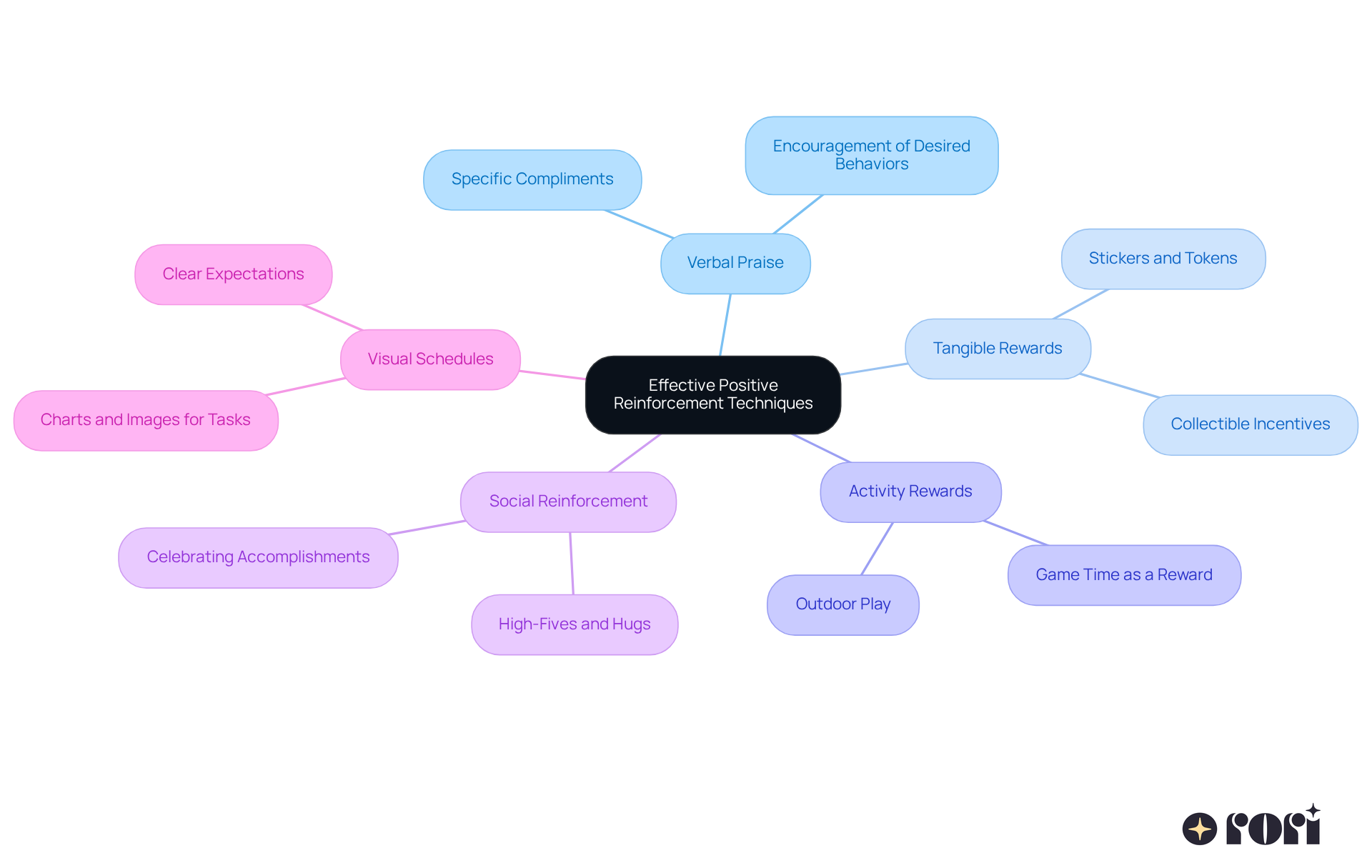
Effective positive reinforcement techniques can significantly impact outcomes when using positive reinforcement for autism behavior management! Here are some friendly ideas to consider:
- Verbal Praise: Imagine telling your child, 'Great job sharing your toys!' right after they do it. This kind of specific compliment not only reinforces the behavior but also encourages them to keep it up. When caregivers celebrate these moments using positive reinforcement for autism behavior management, it helps them make informed decisions that positively influence their child's progress.
- Tangible Rewards: Kids love small incentives! Think stickers or tokens they can collect and trade for something bigger. This approach encourages them to engage in positive behaviors consistently. By aligning this strategy with their understanding of behavioral goals, caregivers can promote a supportive environment at home by using positive reinforcement for autism behavior management.
- Activity Rewards: How about letting your child play a game or go outside as a reward for completing tasks? This creates a fun association with the desired behavior. When caregivers actively participate in using positive reinforcement for autism behavior management, it can lead to even better behavioral outcomes.
- Social Reinforcement: High-fives, smiles, or hugs can really celebrate accomplishments! These gestures nurture emotional bonds and motivate kids to seek positive interactions. Caregivers can enhance this by being involved and understanding ABA strategies, specifically using positive reinforcement for autism behavior management, which empowers them to support their child's emotional development.
- Visual Schedules: Using charts or images to show tasks and rewards can help kids understand what’s expected. Caregivers trained in these techniques can effectively implement visual schedules, making the learning experience even better for their children.
Let’s explore these techniques together! Remember, you’re not alone in this journey, and we’re here to help you every step of the way!
Customize Reinforcement Strategies for Individual Needs
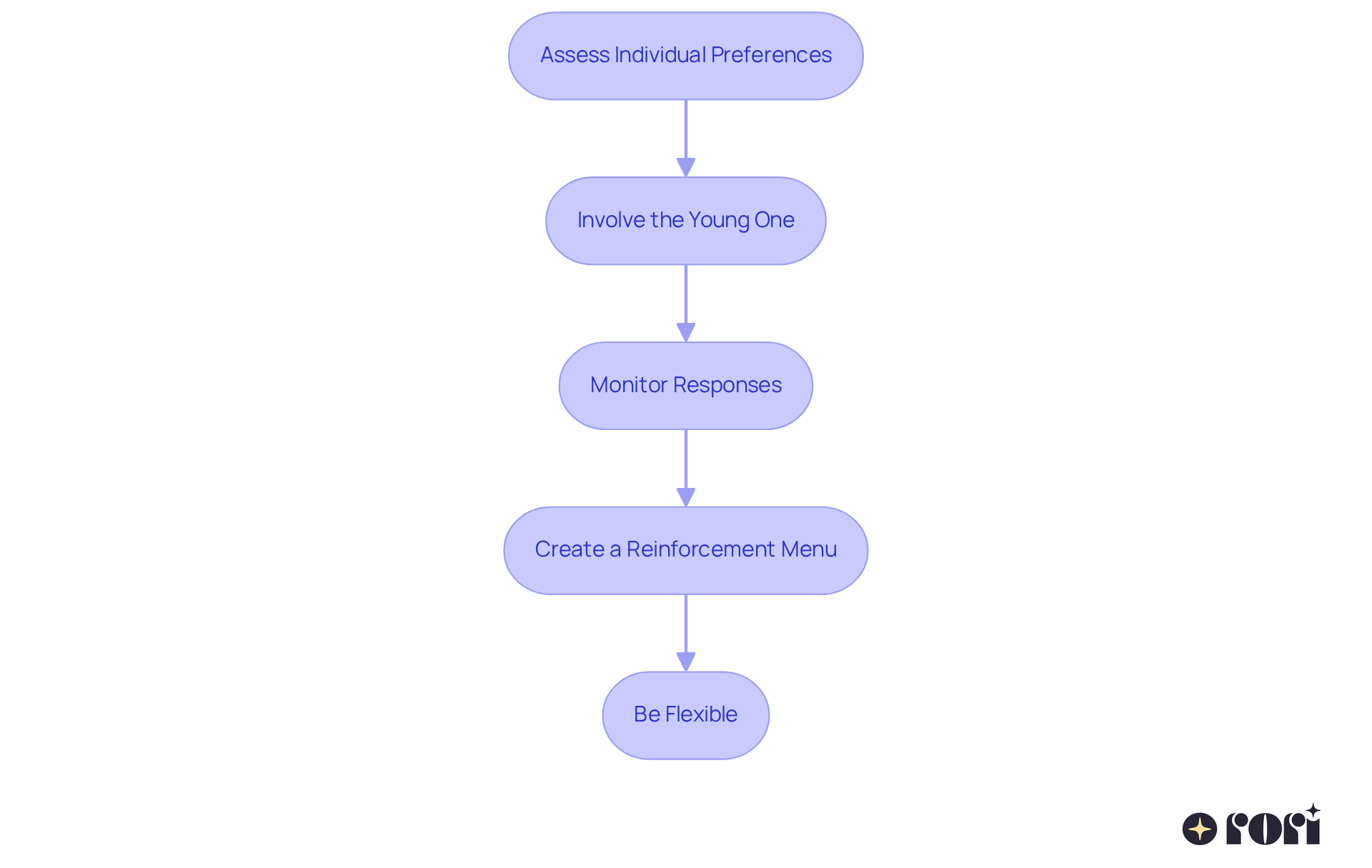
To effectively customize reinforcement strategies, let’s consider a few friendly steps:
- Assess Individual Preferences: Start by observing what your child enjoys or finds motivating. Think about their favorite toys, activities, or types of praise. Using methods like Free Operant Observation can really help you see what sparks their interest over time in a natural setting.
- Involve the Young One: Engage your child in conversations about the rewards they’d love to earn. This not only empowers them but also boosts their motivation and investment in the therapeutic process. It’s amazing how much more engaged they can be when they have a say!
- Monitor Responses: Keep an eye on how your child reacts to different reinforcers. If a particular reward doesn’t seem to motivate them, don’t hesitate to switch things up and explore new options. Regularly checking in on their preferences can help you find what really connects with them, enhancing those [positive behaviors](https://rori.care/post/10-art-therapy-interventions-for-communication-in-autism).
- Create a Reinforcement Menu: Put together a personalized list of potential reinforcers based on what your child loves. This menu can include a mix of tangible rewards, fun activities, and social interactions, ensuring that everything aligns with what excites them.
- Be Flexible: Remember, preferences can change! It’s important to frequently evaluate your [support strategies](https://rori.care/post/10-aba-strategies-for-social-skills-in-public-places-for-parents) to keep them effective and engaging. This way, you can adapt to your child’s evolving interests and motivations. Involving caregivers in this ongoing evaluation creates a supportive environment that truly enhances behavioral outcomes.
Let’s explore this together! Your journey in understanding and supporting your child is so important, and we’re here to help you every step of the way!
Consider Ethical Implications of Reinforcement Methods
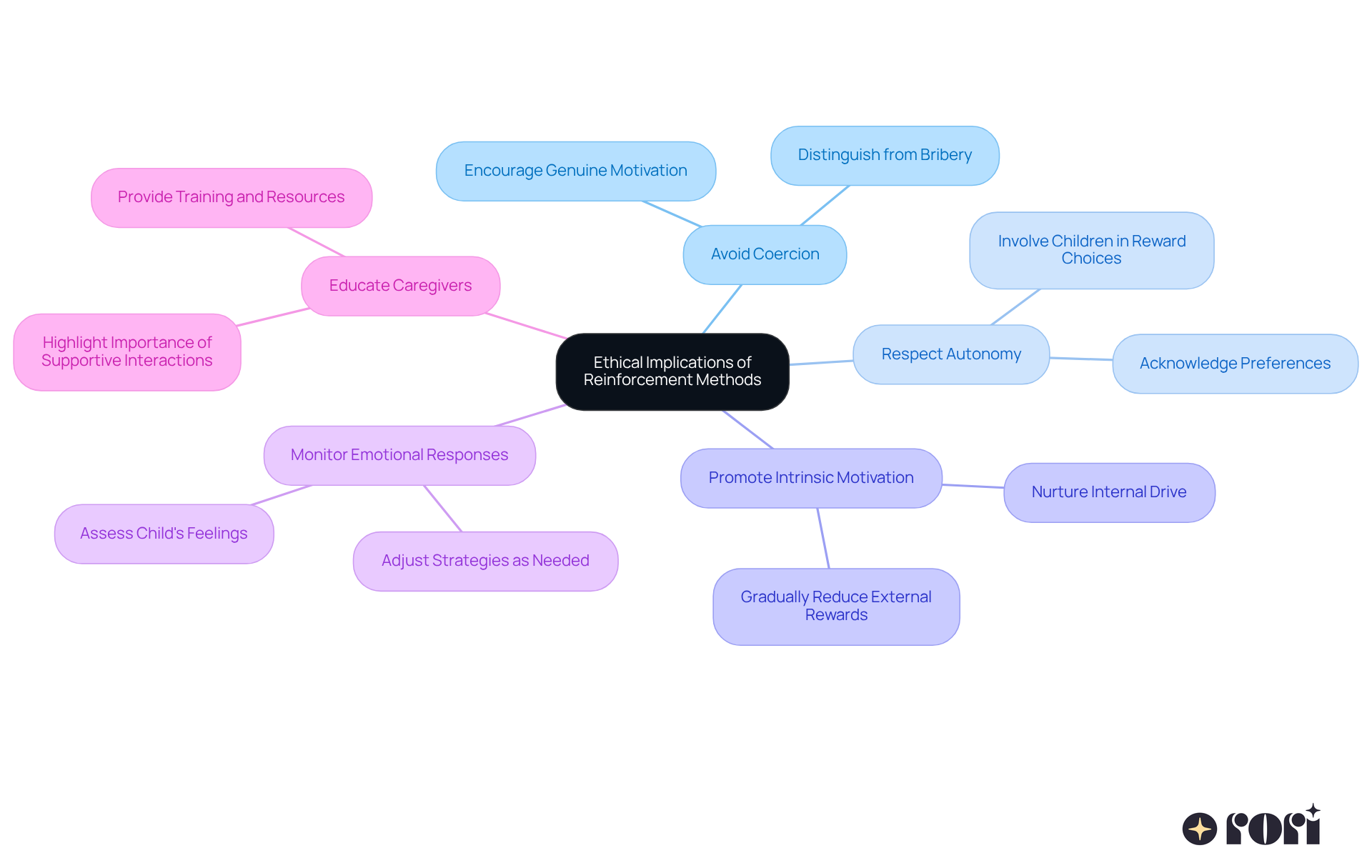
When it comes to using positive reinforcement strategies, there are some important ethical considerations to keep in mind:
- Avoid Coercion: It’s crucial that reinforcement doesn’t feel like bribery or manipulation. We want to encourage positive behavior through genuine motivation, not pressure.
- Respect Autonomy: Involving kids in choosing their rewards can make a big difference! This practice helps them feel more in control and acknowledges their preferences, which can really boost their engagement.
- Promote Intrinsic Motivation: Let’s focus on nurturing that internal drive! Gradually reducing external rewards as kids become more engaged in the desired behavior can help them develop self-regulation skills.
- Monitor Emotional Responses: Keep an eye on how your child feels about the encouragement strategies. If they seem distressed or resistant, it might be time to tweak your approach to better meet their emotional needs.
- Educate Caregivers: It’s super helpful to provide parents and caregivers with training and resources on ethical support practices. Ensuring they understand the importance of respectful and supportive interactions is essential for effectively managing behavior using positive reinforcement for autism behavior management.
Let’s explore this together! Your journey in parenting is unique, and we’re here to help you every step of the way!
Evaluate and Adjust Reinforcement Strategies for Success
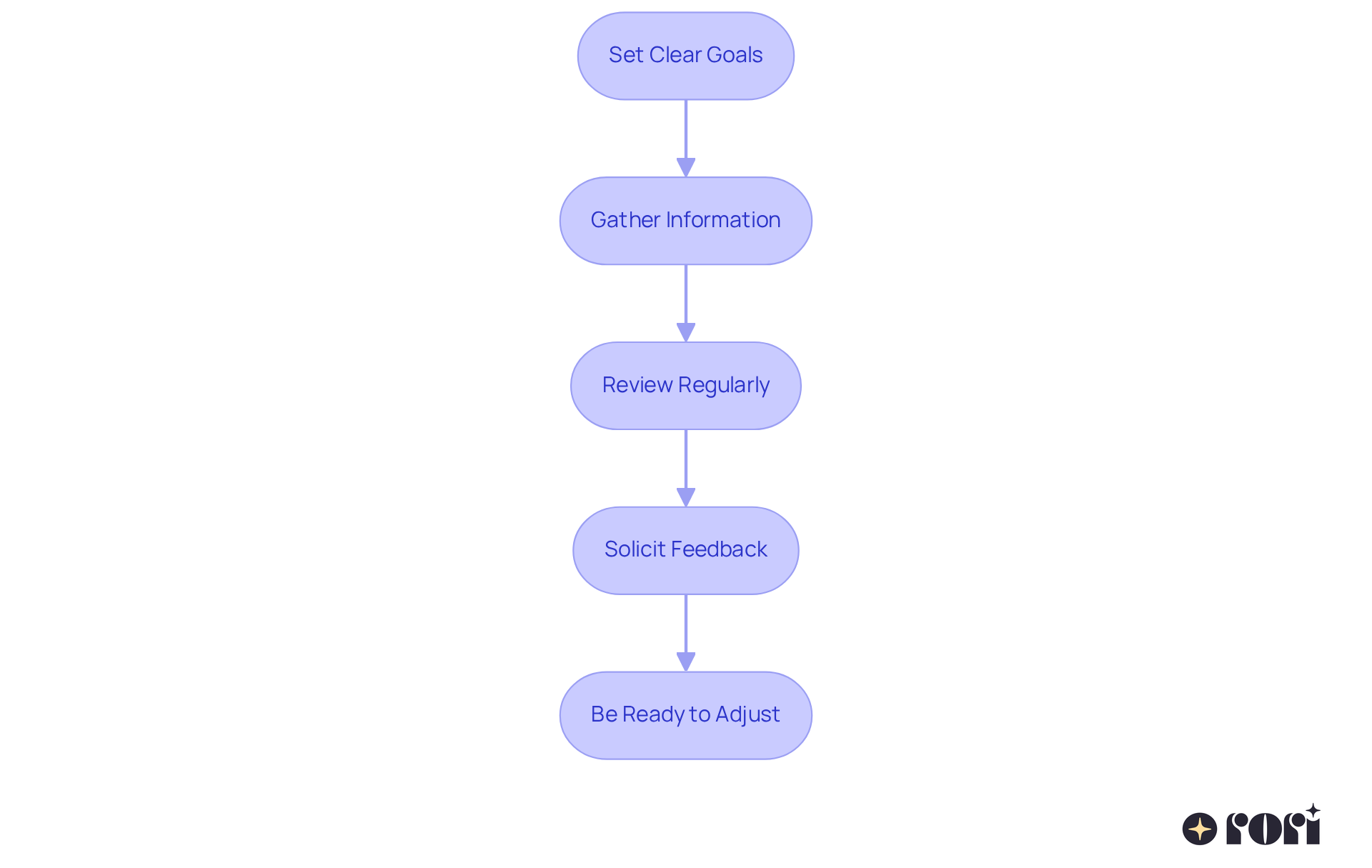
To effectively evaluate and adjust reinforcement strategies, let’s consider a few simple steps together:
- Set Clear Goals: Start by defining specific, measurable objectives for the actions you want to reinforce. This clarity gives you a solid benchmark to evaluate success and helps track progress effectively.
- Gather Information: Use a variety of data-gathering techniques to record occurrences of targeted actions and assess how well your reinforcement approaches are working. Think of methods like frequency/event recording, duration recording, and ABC data. These tools help you understand patterns and triggers. Continuous data collection methods, like those used in Rori Care’s ABA therapy, capture every instance of behavior throughout the observation period, giving you a complete picture of behavior change. This automatic data gathering means the clinical team is always available for your child without disrupting the session, ensuring secure storage and analysis of information.
- Review Regularly: Make it a habit to schedule consistent evaluations to check how effective your reinforcement strategies are. Depending on your child’s needs, these reviews could be weekly or monthly. This way, you can make timely adjustments based on progress reports and caregiver involvement.
- Solicit Feedback: Don’t hesitate to chat with your child and other caregivers to gather insights on what’s working and what’s not. This collaborative approach can offer valuable perspectives that enhance your treatment plan. As Dorothea C. Lerman wisely said, "A good observation system is objective, reliable, accurate, and sensitive, revealing changes in conduct."
- Be Ready to Adjust: If certain approaches aren’t yielding the results you hoped for, stay open to trying new methods or tweaking the ones you’re using. Being adaptable is key to effective management, allowing you to integrate creative strategies that better meet your child’s evolving needs.
By implementing these strategies, you can create a responsive and effective behavior management plan using positive reinforcement for autism behavior management, which promotes positive outcomes for children with autism. Let’s explore this together!
Conclusion
Positive reinforcement is truly a cornerstone in managing behaviors for children with autism, creating a space where they can learn and flourish. When caregivers reward positive behaviors right away, it builds a strong connection that encourages kids to repeat those actions. This approach not only helps them pick up new skills but also creates a warm atmosphere that celebrates their achievements, making it an essential part of effective autism therapy.
Throughout this journey, we’ve explored various techniques for implementing positive reinforcement, like:
- Verbal praise
- Tangible rewards
- Activity incentives
- Social reinforcement
Each of these methods brings its own unique benefits and can be tailored to fit individual preferences, keeping children engaged and motivated. Plus, we’ve highlighted the importance of ethical considerations, such as steering clear of coercion and promoting autonomy, which underscores the need for a respectful and supportive framework in behavior management.
Ultimately, using positive reinforcement in autism therapy is a journey that calls for ongoing evaluation and adaptation. By setting clear goals, gathering data, and being open to adjustments, caregivers can craft a responsive strategy that meets their children’s evolving needs. Embracing these practices not only boosts behavioral outcomes but also empowers children with autism to thrive, nurturing their independence and confidence along the way.
So, let’s explore this together! Remember, you’re not alone in this journey, and we’re here to help you every step of the way!
Frequently Asked Questions
What is positive reinforcement in autism therapy?
Positive reinforcement in autism therapy involves giving a reward or incentive immediately after a child performs a desirable behavior. This helps the child associate the action with something positive, increasing the likelihood of repeating that behavior in the future.
How does positive reinforcement benefit children with autism?
Positive reinforcement aids in learning new skills, boosts motivation, and creates a supportive learning environment. It enhances communication and social skills, with studies showing a success rate of over 89% in improving skills among children with autism.
What are some effective positive reinforcement techniques?
Effective techniques include:
- Verbal Praise: Specific compliments like "Great job sharing your toys!" reinforce positive behavior.
- Tangible Rewards: Small incentives like stickers or tokens can encourage consistent positive behavior.
- Activity Rewards: Allowing playtime or outdoor activities as rewards creates a fun association with desired behaviors.
- Social Reinforcement: Gestures like high-fives or hugs celebrate accomplishments and motivate children.
- Visual Schedules: Using charts or images to outline tasks and rewards helps children understand expectations.
How can caregivers implement positive reinforcement strategies?
Caregivers can implement these strategies by being actively involved, celebrating achievements, and understanding behavioral goals. This involvement helps create a supportive environment that promotes their child's progress.
What role does data play in using positive reinforcement for autism behavior management?
Personalized, data-informed strategies enhance the effectiveness of positive reinforcement, allowing caregivers to make informed decisions that positively influence their child's communication and social skills.
List of Sources
- Define Positive Reinforcement in Autism Therapy
- Success Rates of ABA Therapy - Up & Up ABA (https://upandupaba.com/faqs-resources/success-rates-of-aba-therapy)
- The Role Of Reinforcement In ABA Therapy Success: A Evidence-Based Approach - True U ABA (https://trueuaba.com/the-role-of-reinforcement-in-aba-therapy-success)
- (PDF) Effect of Positive Reinforcement on Social Skills of Students with Autism Spectrum Disorder at Primary Level 2431 LINGUISTICA ANTVERPIENSIA (https://researchgate.net/publication/357646609_Effect_of_Positive_Reinforcement_on_Social_Skills_of_Students_with_Autism_Spectrum_Disorder_at_Primary_Level_2431_LINGUISTICA_ANTVERPIENSIA)
- The Numbers Don't Lie: Revealing Autism Therapy Statistics | Above and Beyond Therapy (https://abtaba.com/blog/autism-therapy-statistics)
- 10 inspiring quotes from people with autism | Autism Speaks (https://autismspeaks.org/life-spectrum/autism-quotes)
- Identify Effective Positive Reinforcement Techniques
- The Benefits of Positive Reinforcement for Kids with Autism (https://elevationautism.com/blog/the-effects-of-positive-reinforcement-on-toddlers-with-autism)
- A COMPARISON OF GENERAL AND DESCRIPTIVE PRAISE IN TEACHING INTRAVERBAL BEHAVIOR TO CHILDREN WITH AUTISM - PMC (https://pmc.ncbi.nlm.nih.gov/articles/PMC3469295)
- Effective Reward Systems for Children With Autism (https://handscenter.com/effective-reward-systems-for-children-with-autism)
- Using Reward Programmes with Children with Autism - Niwrowahaniaeth Cymru | Neurodivergence Wales | National Neurodivergence Team (https://neurodivergencewales.org/en/parents-carers/information-for-an-autistic-child/advice-sheets/using-reward-programmes-with-children-with-autism)
- Expert Columns: Behavior-specific Praise Reinforces Good Behavior (https://mayinstitute.org/news/acl/asd-and-dd-adult-focused/behavior-specific-praise-reinforces-good-behavior)
- Customize Reinforcement Strategies for Individual Needs
- The benefits of using preference assessments in therapy (https://mastermindbehavior.com/post/the-benefits-of-using-preference-assessments-in-therapy)
- The Numbers Don't Lie: Revealing Autism Therapy Statistics | Above and Beyond Therapy (https://abtaba.com/blog/autism-therapy-statistics)
- Autism Preference Assessments | Grateful Care ABA (https://gratefulcareaba.com/blog/autism-preference-assessments)
- Using preference assessments to increase motivation (https://crossrivertherapy.com/articles/using-preference-assessments-to-increase-motivation)
- Autism Preference Assessments (https://supportivecareaba.com/statistics/autism-preference-assessments)
- Consider Ethical Implications of Reinforcement Methods
- What Are The Ethical Considerations In ABA Therapy? - The Play Base // Therapy For Children With Developmental Delays (https://us.theplaybase.com/what-are-the-ethical-considerations-in-aba-therapy)
- Positive Reinforcement in ABA Therapy for Autism | Inclusive ABA (https://inclusiveaba.com/blog/positive-reinforcement-in-aba-therapy)
- Ethical Reinforcement in Autism: Myths vs Facts for Parents (https://abajourney.com/ethical-reinforcement-autism-myths-vs-facts)
- ABA Ethical Considerations | Advanced Autism Services (https://advancedautism.com/post/aba-ethical-considerations)
- The Ethics of Reinforcement in ABA (https://bluegemsaba.com/the-ethics-of-reinforcement)
- Evaluate and Adjust Reinforcement Strategies for Success
- The Numbers Don't Lie: Revealing Autism Therapy Statistics | Above and Beyond Therapy (https://abtaba.com/blog/autism-therapy-statistics)
- A Comparison of Methods for Collecting Data on Performance During Discrete Trial Teaching - PMC (https://pmc.ncbi.nlm.nih.gov/articles/PMC3196207)
- ABA Therapy Guide: 15 Most Common ABA Data Collection Methods (https://passagehealth.com/blog/aba-data-collection)
- Applied Behavior Analysis (ABA) Statistics: Data, Effectiveness, and Evidence-Based Practices (https://nexoaba.com/applied-behavior-analysis-statistics)
- ABA Data Collection Methods for Autism Success | Achieve Better ABA (https://achievebetteraba.com/blog/aba-data-collection-methods)