Differential Reinforcement of Alternative Behavior (DRA) is a powerful strategy for promoting positive behavior in children with autism. This evidence-based approach focuses on reinforcing constructive alternatives to challenging or undesirable behaviors, ultimately shaping a more desirable behavior pattern. By consistently rewarding and reinforcing the preferred behavior, DRA helps children develop skills that are not only appropriate but also functional in various aspects of their lives.
This article explores the key concepts of DRA, its implementation process, and the benefits it offers to children with autism and their families. Additionally, it addresses common challenges in applying DRA and provides real-world examples that highlight the versatility and significance of this behavior modification strategy. With the aim of providing valuable insights and empowering parents, this informative and authoritative article delves into the intricacies of DRA and its potential to foster a supportive and inclusive environment for children with autism.
stands as an effective strategy for nurturing positive conduct in children with autism, directly addressing the challenge of inappropriate or disruptive behaviors. This method operates on the principle of reinforcing a preferable behavior—a . The desired outcome is a rise in these while diminishing the less desirable ones.
By doing so, DRA steers children towards acquiring , enhancing their ability to engage and participate in various life domains such as school, home, and leisure activities, which are critical for mental health and . Autistic children, especially those facing additional emotional and behavioral issues, are at a higher risk of social exclusion. Thus, DRA contributes to a , aligning with the vision of equitable mental health opportunities and reducing stress for families.
It is a reflection of our societal commitment to recognize the unique needs and strengths of children with disabilities, in fostering a healthy developmental trajectory and overall well-being.
To harness effectively, one must grasp the foundational concepts behind this . DRA revolves around the identification and reinforcement of a that serves as an alternative to an unwanted one. This approach doesn't just suppress the undesired action but encourages a positive substitute, thereby promoting a more desirable behavior pattern in the long term.
A clear understanding of the principles of reinforcement and behavior analysis is essential. It involves pinpointing the undesired behavior, determining an appropriate and , and consistently reinforcing the positive behavior with rewards that are meaningful to the individual. The goal is to increase the frequency of the positive behavior until it becomes more prevalent than the negative one, effectively reshaping the behavior through .
By focusing on the desired behavior, DRA helps to create an environment where are encouraged and rewarded, making it a powerful tool in behavior management.

(DRA) is an evidence-based strategy designed to encourage by consistently rewarding alternative, more adaptive behaviors. This method is particularly effective as it emphasizes the that can replace , fostering a more supportive and equitable environment for children. The implementation of DRA involves identifying an appropriate alternative behavior to the one that is challenging and then systematically reinforcing that behavior, while not reinforcing the challenging behavior.
Over time, this selective reinforcement helps to strengthen the alternative behavior, making it more likely to occur, while the challenging behavior naturally diminishes due to lack of reinforcement. By focusing on what children with autism can bring to their communities and reducing stressors, DRA aligns with the principle of creating fair opportunities for all children, as emphasized by the late Dr. David (Dan) R. Offord. It's a technique that not only promotes mental health but also plays a pivotal role in ensuring in key life domains such as school, home, and leisure activities.
The successful application of DRA can ultimately lead to a significant decrease in , enhancing the overall well-being of children with autism and their families.
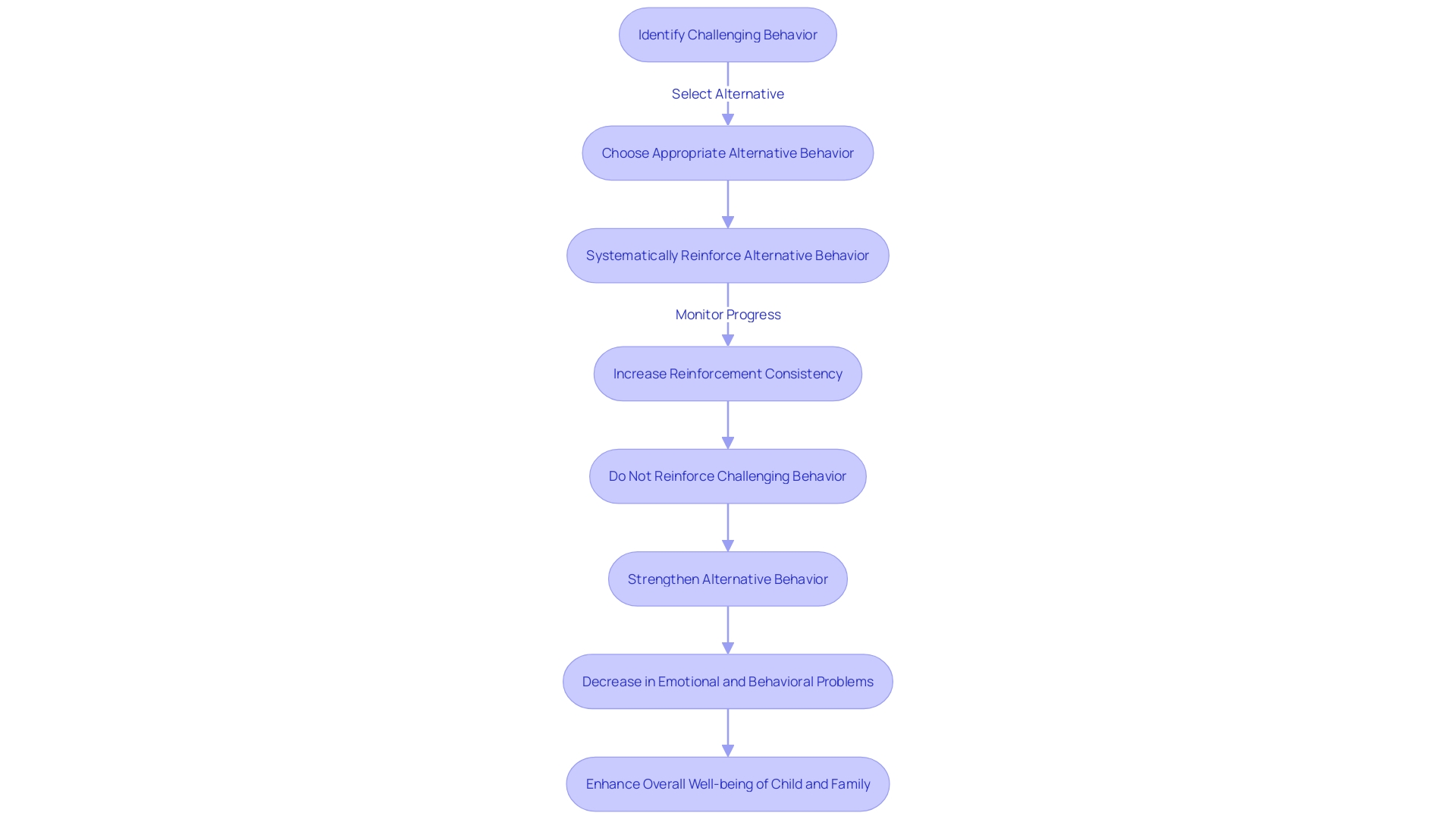
is an effective strategy in managing challenging behaviors in children with autism by promoting . This approach encourages children to develop alternative, more appropriate behaviors as a means to receive positive reinforcement, rather than engaging in less desirable behaviors. The practice of DRA aligns with the vital need for children, including those with disabilities, to experience engaged, peaceful, and well-supported participation in their daily lives—factors crucial for in society.
By focusing on fostering equitable opportunities for all children, especially those with autism who may face co-occurring emotional and behavioral problems, DRA contributes to reducing and .
The application of DRA is supported by the insights of experts like Dr. David R. Offord, who emphasized the importance of a fair and supportive environment for the development of children with disabilities. Additionally, the utilization of DRA can be seen as a part of a broader initiative to leverage , such as the use of AI and machine learning in predicting and mitigating challenging behaviors, as demonstrated in studies by The Center for Discovery. The research underscores the potential for DRA to be integrated into that address the unique needs of children with autism, offering a way to enhance their participation and mental health within school, home, and leisure environments.
(DRA) is a well-researched strategy to help children with autism overcome challenging behaviors by reinforcing desired behaviors instead of the problem ones. While this method is powerful, it's not without its hurdles. Here's a closer look at some typical challenges you might face with DRA and ways to navigate them successfully:
By understanding these challenges and preparing for them, you can enhance the effectiveness of your DRA approach and support your child's journey toward more positive behavior patterns.
Exploring the remarkable potential of , we can observe its application through various real-world examples. In robotics, for instance, when addressing the task of a robot pushing a T-shaped block to a designated location, the concept of DRA can be applied by learning a range of possible actions instead of a singular response. This approach accounts for the inherent multimodality of the task—whether the robot should navigate left or right around the block—thus recognizing multiple correct pathways to achieve the desired outcome.
This is akin to the , utilizing different grips and angles. It's evident that a single, rigid response is insufficient to capture the nuanced ways in which behaviors can be effectively reinforced. Similarly, in the context of artificial intelligence, the development of virtual worlds like GoalCycle3D demonstrates the shift towards AI learning through cultural transmission, mirroring the way humans learn with minimal examples.
Moreover, the application of DRA is not limited to robotics and AI. It plays a pivotal role in human behavioral interventions, as evidenced by an online parent survey revealing that over one-third of individuals with autism experienced worsening behavior problems during stressful periods such as the pandemic. Addressing these challenges, like the have been developed, allowing for the identification and reinforcement of alternative, in a more nuanced manner.
These examples underscore the importance of embracing a , moving beyond rigid programming towards recognizing and rewarding a spectrum of successful behaviors.

Differential Reinforcement of Alternative Behavior (DRA) is a powerful strategy that promotes positive behavior in children with autism. By reinforcing constructive alternatives to challenging behaviors, DRA shapes more desirable behavior patterns and helps children develop appropriate and functional skills.
To implement DRA effectively, it's important to understand key concepts such as identifying and reinforcing preferred behaviors as alternatives to unwanted behaviors. By consistently reinforcing positive behaviors and gradually increasing their complexity, DRA reshapes behavior patterns through positive reinforcement.
DRA works by consistently rewarding alternative, more adaptive behaviors while not reinforcing challenging behaviors. This approach creates a fair and supportive environment, reducing stress for families and promoting inclusive participation in various life domains.
The benefits of using DRA in managing challenging behaviors are significant. It encourages the development of more appropriate behaviors through positive reinforcement and fosters equitable opportunities for all children, including those with autism. DRA plays a pivotal role in enhancing the overall well-being of children and their families.
Implementing DRA effectively involves identifying suitable alternative behaviors, maintaining consistency, managing extinction bursts, and monitoring for unintended consequences. By understanding and navigating these challenges, the effectiveness of the DRA approach can be enhanced, supporting the child's journey towards more positive behavior patterns.
In conclusion, Differential Reinforcement of Alternative Behavior (DRA) is an evidence-based strategy that empowers parents and caregivers to promote positive behavior in children with autism. By reinforcing constructive alternatives, DRA creates a supportive and inclusive environment, enhancing the overall well-being and participation of children in various life domains.
Discover how DRA can empower your child and family today!
What is Differential Reinforcement of Alternative Behavior (DRA)?
Differential Reinforcement of Alternative Behavior (DRA) is a behavioral strategy used to encourage positive behavior in children, particularly those with autism. It involves reinforcing a desired, alternative behavior to replace an inappropriate or disruptive one.
How does DRA benefit children with autism?
DRA helps children with autism by reinforcing behaviors that are more appropriate and functional, leading to increased engagement in life domains such as school, home, and leisure activities. This supports their mental health, social inclusion, and provides equitable mental health opportunities.
What are the key concepts behind DRA?
The key concepts of DRA include identifying an undesired behavior, determining a constructive alternative, and consistently reinforcing the positive behavior with meaningful rewards. The goal is to make the positive behavior more prevalent than the negative one.
How does DRA work?
DRA works by identifying an appropriate alternative behavior and systematically reinforcing it while not reinforcing the challenging behavior. Over time, the alternative behavior is strengthened and becomes more likely to occur, reducing the challenging behavior.
What are the benefits of using DRA?
DRA promotes positive behavior changes, encourages development of appropriate behaviors, reduces chronic stress, and supports family well-being. It also aligns with creating fair and supportive environments for children's development.
What are the steps to implement DRA effectively?
To implement DRA effectively, you should: 1. Identify and reinforce an alternative behavior. 2. Monitor the child's behavior and provide immediate positive feedback for the alternative behavior. 3. Gradually increase task complexity associated with the alternative behavior. 4. Review and adjust the reinforcement plan based on the child's progress.
What challenges might arise when using DRA?
Challenges may include identifying suitable alternative behaviors, maintaining consistency in application, managing extinction bursts (where the undesired behavior initially worsens), and monitoring for unintended consequences.
Can DRA be applied beyond human behavioral interventions?
Yes, DRA principles can also be applied in robotics and artificial intelligence, such as teaching robots to perform tasks in a variety of ways or AI learning through cultural transmission. These applications demonstrate the flexibility and adaptability of DRA in different contexts.
Are there real-world examples of DRA application?
Real-world examples include robotics, where a robot learns multiple ways to perform a task, and AI, such as virtual worlds that simulate human learning. Additionally, human behavioral interventions, like those during the pandemic, have used DRA to address behavior problems in individuals with autism.